Metal Roofs and Lightning Protection
A steel roof is conductive, but it is not the same thing as a complete lightning protection system.
A properly designed lightning protection system is intended to intercept a strike and provide a deliberate route for lightning current toward ground. That generally involves more than a single rod.
Depending on the building, a system can involve strike termination devices, down conductors, bonding of conductive components and suitable grounding arrangements.
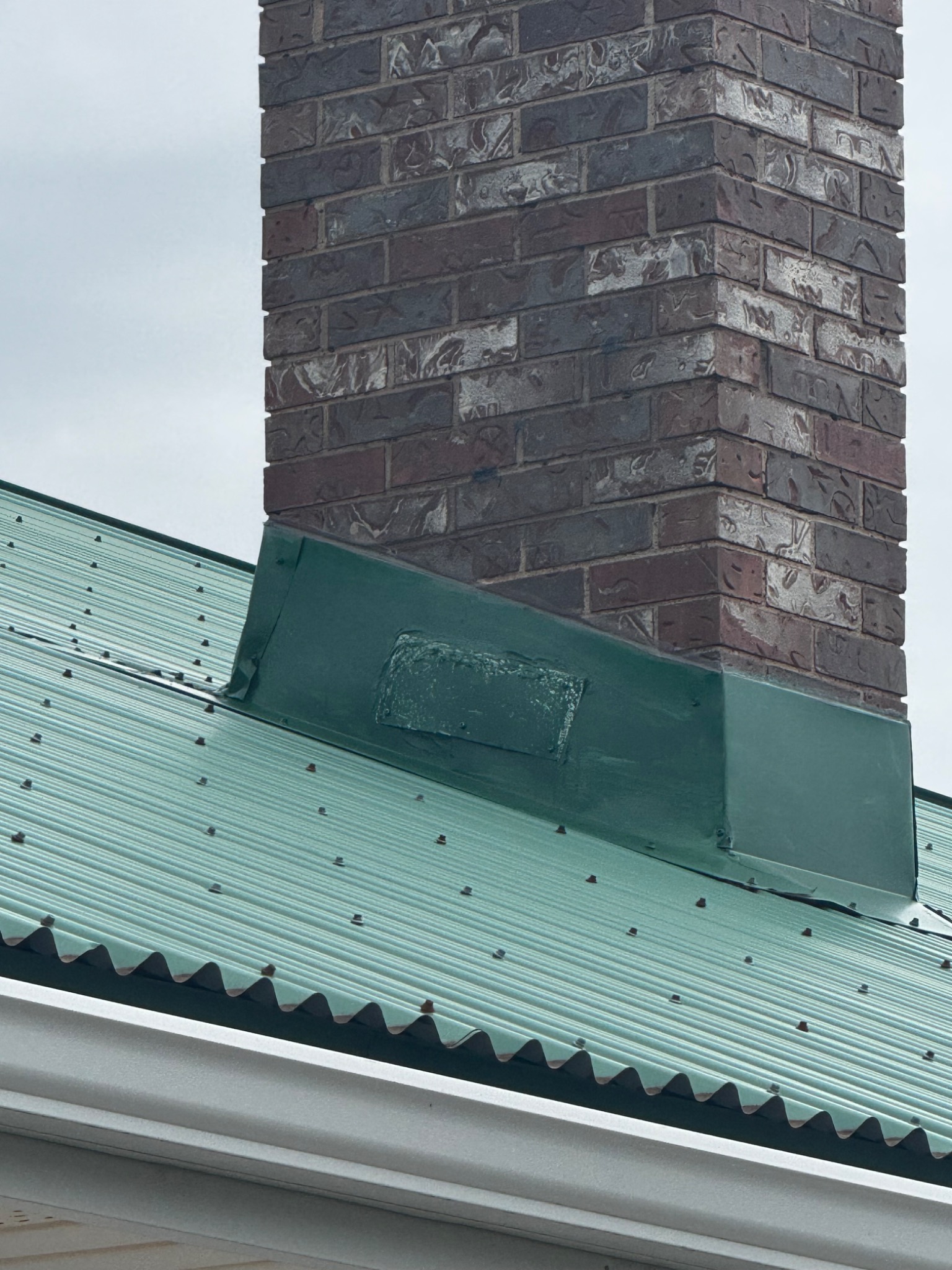
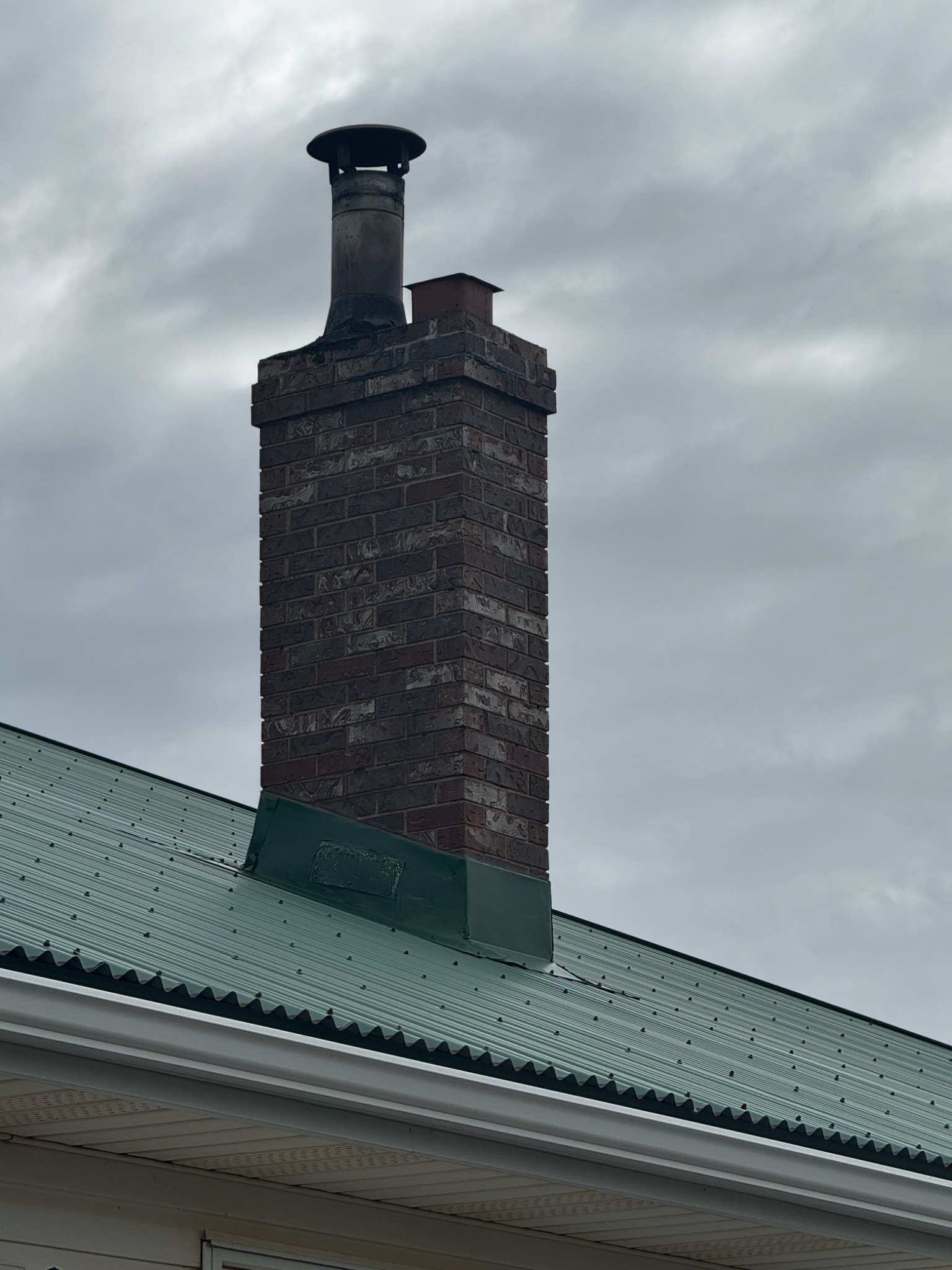
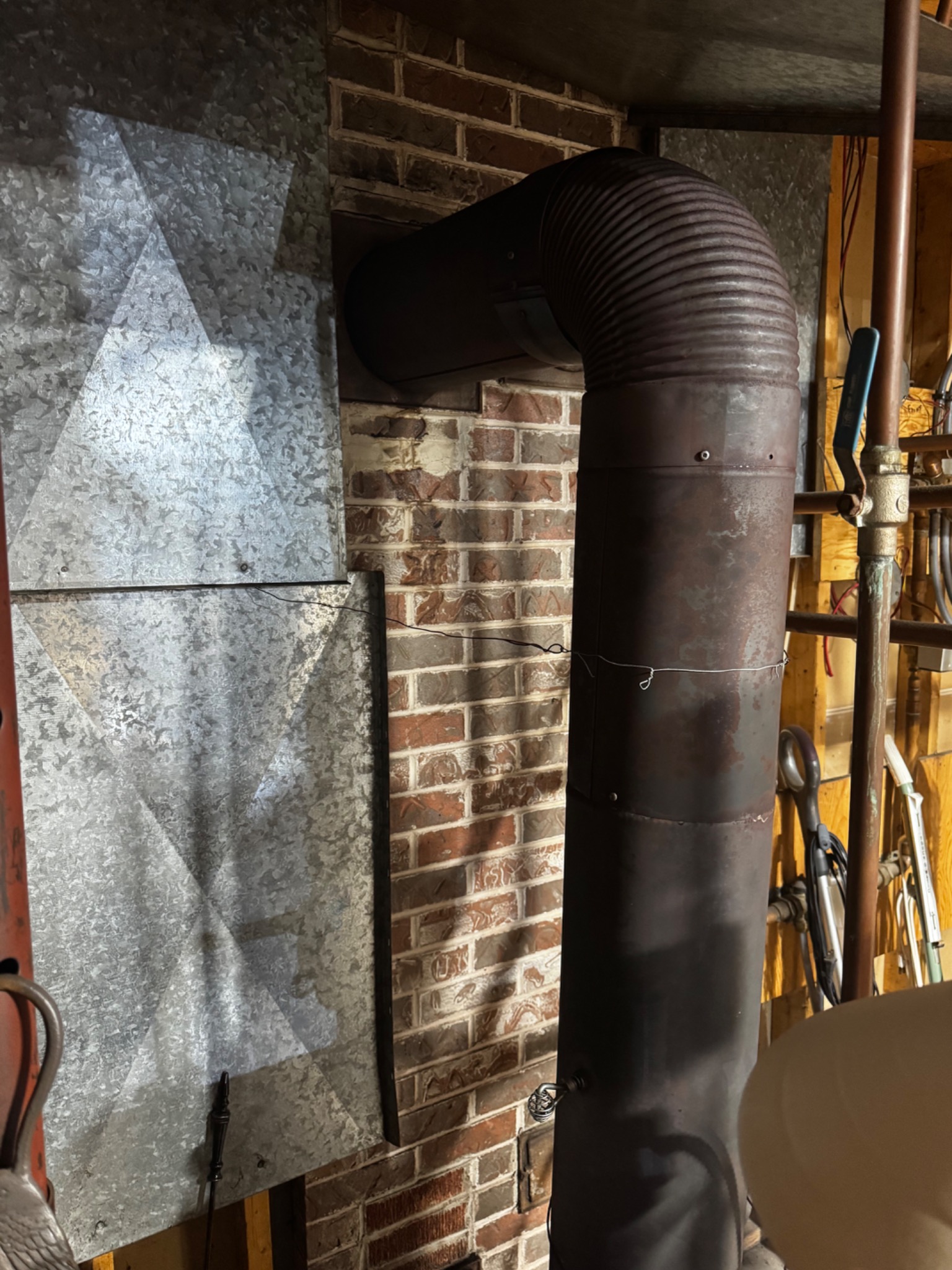
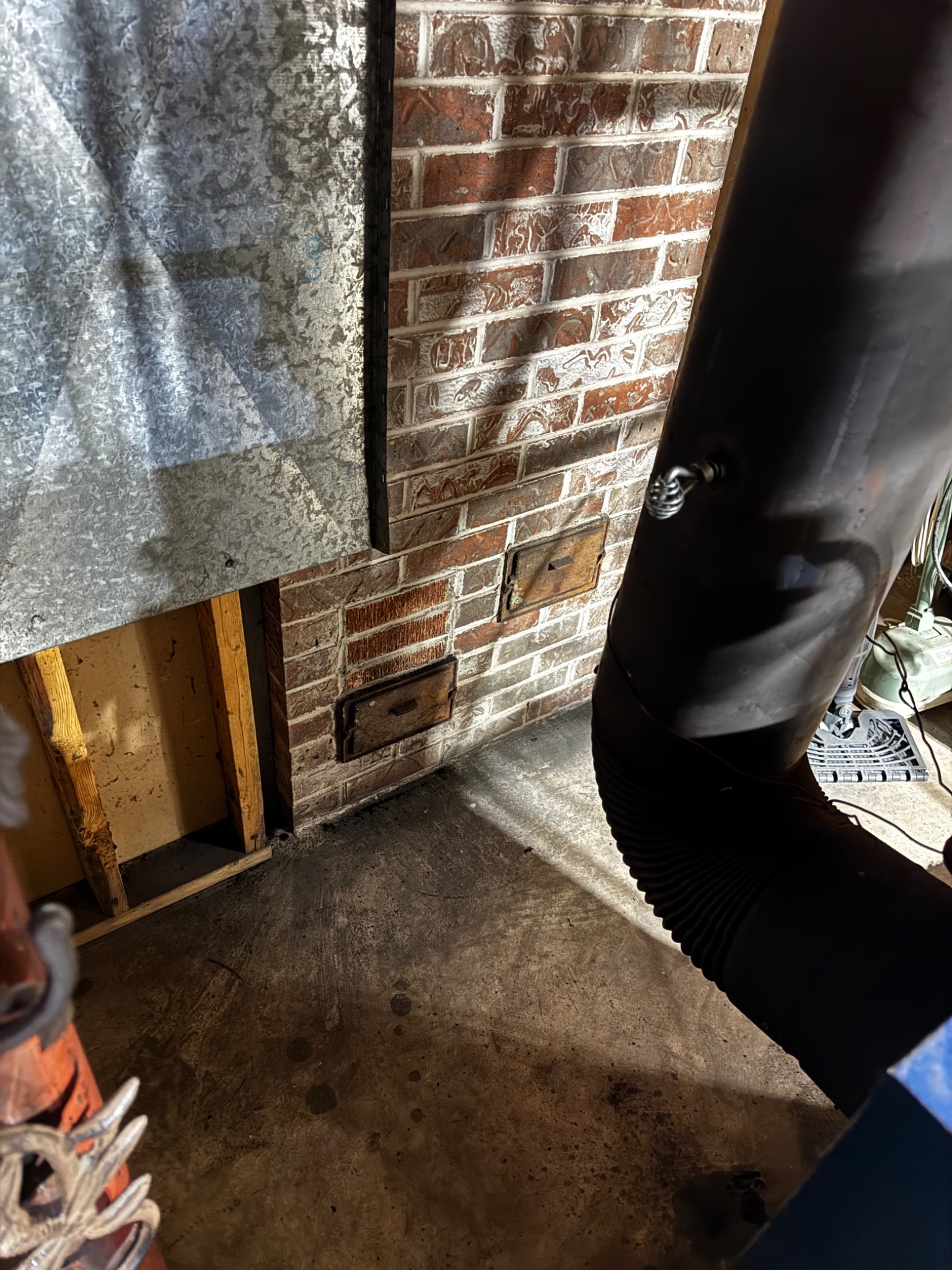
Because this property had already experienced a substantial strike involving a steel roof and chimney area, adding a properly designed lightning protection system was raised as something worth considering.
Lightning protection design and electrical grounding are outside the scope of masonry work and should be assessed by an appropriately qualified lightning protection contractor or electrician.
Why Bonding Matters
Lightning can side-flash between conductive components.
Canadian lightning safety guidance notes that lightning current can follow metal pipes and wires through a building. Canadian lightning-protection design is addressed by CSA B72, while NFPA 780 also provides recognized technical guidance on bonding and side-flash prevention.
Environment and Climate Change Canada: Lightning safety →
Technical context: CSA B72, Installation code for lightning protection systems, and NFPA 780, Standard for the Installation of Lightning Protection Systems.