Custom Masonry Fireplaces
New brick and natural stone fireplace masonry planned around the room, fireplace opening, intended use and required non-combustible details.
DinoMac Masonry builds, renovates and repairs masonry fireplaces across PEI, including natural stone and brick surrounds, custom hearths, firebox masonry, refractory repairs and selective rebuilding of older fireplaces.
Whether the project starts with a new fireplace, an existing appliance that needs a custom masonry finish, or an older masonry fireplace worth restoring, the visible stone or brick should be planned around the fireplace's actual use, clearances, proportions and construction rather than treated as decoration added at the end.
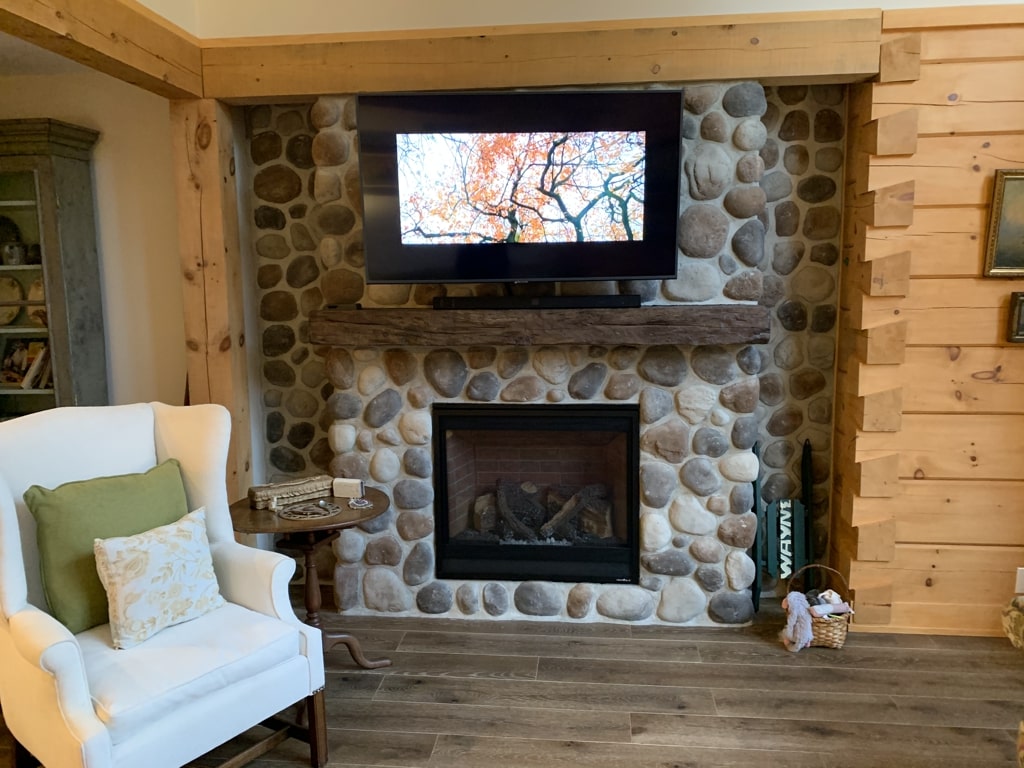
DinoMac's role is the masonry itself: building and restoring the brick, natural stone, firebrick and hearth work that gives a fireplace its structure, durability and finished appearance.
New brick and natural stone fireplace masonry planned around the room, fireplace opening, intended use and required non-combustible details.
Natural stone or brick facing for new and existing fireplaces, with attention to corners, proportions, joints, trim transitions and the visual weight of the finished work.
Custom masonry hearths and repairs using brick, natural stone and other appropriate non-combustible materials where the fireplace design requires them.
Replacement of damaged firebrick, refractory joint repair and selective rebuilding where heat-exposed masonry has deteriorated.
Update an older fireplace with new masonry proportions, stone or brick while coordinating the finished work with the existing or replacement fireplace system.
Preserve and repair existing masonry where the brick, stone or historic character is worth keeping instead of automatically removing the whole fireplace.
DinoMac combines third-generation masonry knowledge with more than 20 years of hands-on experience in natural stone, brick and restoration. That is particularly valuable when a fireplace is being designed as a permanent architectural feature rather than simply installed as an appliance.
DinoMac does not need to sell a particular fireplace brand. The masonry can instead be planned around the appliance or fireplace system that is right for the homeowner, provided its dimensions, clearances and installation requirements are established before the final masonry is built.
“Dean recently completed stone cladding of an indoor chimney in a heritage home in Charlottetown for us and the final result was outstanding! Would highly recommend Dean for any stone/masonry work.”
A traditional masonry fireplace can include structural brick or stone, firebrick, refractory mortar, a hearth, smoke chamber, damper area and a masonry chimney or flue system above.
The materials exposed directly to flame and very high temperatures are different from the decorative brick or stone surrounding the opening. That distinction matters when a repair is being planned.
A cosmetic joint on a stone surround and a failed joint inside a firebox are not the same repair, even if both appear to be "cracked mortar."
Damage can be limited to facing material, or it can involve heat-exposed firebrick, refractory mortar, the hearth, chimney connection or movement elsewhere in the structure.
The repair should match the location, temperature exposure and function of the material being repaired.
Some fireplace damage is mainly cosmetic. Other deterioration can affect the safe operation of the fireplace or indicate a larger chimney problem.
Firebrick can crack, loosen or deteriorate after repeated heating and cooling cycles or impact from wood. Individual units can sometimes be replaced without rebuilding the entire firebox.
Mortar inside a firebox is exposed to far greater temperatures than ordinary wall mortar. Failed joints should be repaired with materials suitable for that exposure.
Hearth masonry can crack, settle, loosen or become damaged from heat and use. Repairs may involve individual units, joint work or rebuilding sections of the hearth.
Decorative fireplace masonry can loosen because of movement, poor original bonding, moisture or unsuitable previous repairs.
Soot and smoke can stain brick and stone around a fireplace opening. Cleaning should be matched to the material so the cure does not damage the masonry.
Recurring cracks may point to movement in the fireplace, chimney, foundation or surrounding structure and should not automatically be treated as a simple surface patch.
The firebox is repeatedly heated to high temperatures and then allowed to cool. Firewood is placed against it, ash accumulates at the base and moisture can enter the system during periods when the fireplace is not in use.
Over time, refractory mortar can erode and firebrick can crack or loosen. A repair may involve replacing damaged firebrick, renewing refractory joints or rebuilding a larger section where deterioration is widespread.
The objective is not merely to make the inside look tidy. Heat-exposed masonry needs materials suited to the temperatures and conditions in which the fireplace operates.
Fireplace hearths can be built from brick, natural stone, tile or other non-combustible materials. They may be flush with the floor or raised as part of the fireplace structure.
Cracking can come from impact, movement, heat cycling or failure in the support below. Before simply replacing the visible surface, it is worth understanding whether the damage is isolated or whether the base itself has moved.
DinoMac can repair or rebuild selected masonry hearths and integrate new stone or brick where a fireplace is being restored or updated.
Natural stone and brick surrounds can be used to restore an older fireplace or completely change the character of an existing one.
The strongest designs usually work with the proportions of the room, fireplace opening and chimney breast instead of covering everything in material simply because space is available.
DinoMac's natural stone background allows fireplace surrounds to be laid with the same attention to stone selection, proportion and jointing used on exterior stonework.
Explore Natural Stone Masonry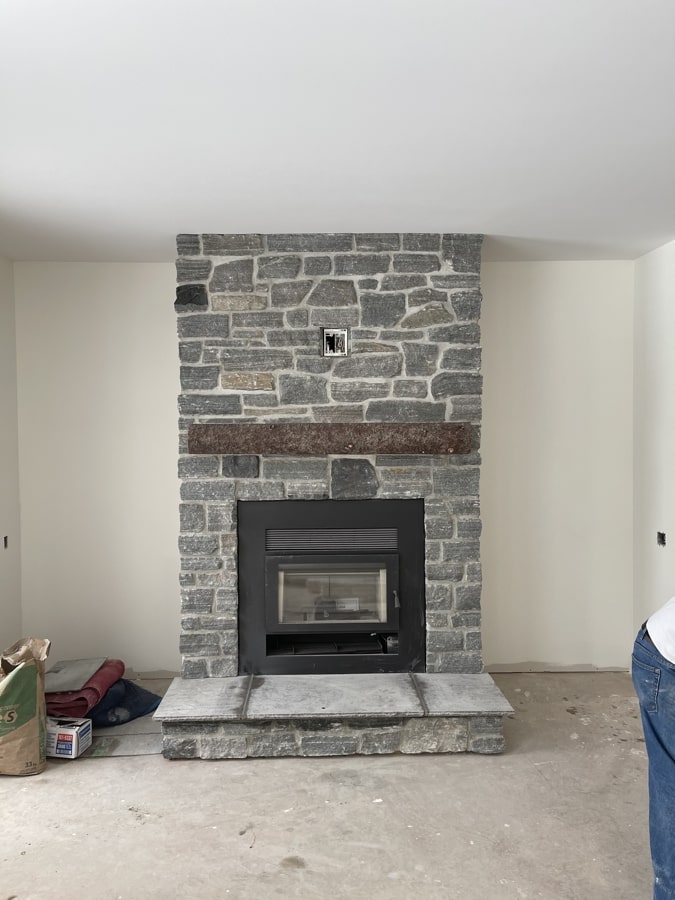
A homeowner searching for a fireplace builder may be planning anything from a traditional masonry fireplace to a factory-built wood, gas or electric unit surrounded by custom masonry. Those projects can look similar when finished while requiring very different construction behind the visible stone or brick.
For factory-built appliances, the exact model and manufacturer's installation instructions should be selected before the masonry opening, hearth, trim returns and final veneer thickness are locked in. For traditional masonry work, firebox, smoke chamber, chimney, hearth and structural support need to be considered as one system rather than separate decorative pieces.
DinoMac can coordinate the masonry around the project while appliance supply, fuel connections, certified inspections and appliance-specific work remain with the appropriate qualified trades.
PEI fireplace searches often mix appliance shopping, installation, chimney work, masonry construction and renovation into the same search result. Knowing which service you actually need can save a great deal of back-and-forth.
Custom stone or brick surrounds, masonry hearths, firebox and refractory repair, existing fireplace restoration, selective rebuilding and masonry chimney work.
Wood, gas, pellet and electric fireplace units have model-specific performance, venting and clearance requirements that should be established before surrounding masonry is finalized.
Gas connections, appliance servicing, formal solid-fuel inspections and other regulated or manufacturer-specific work should be completed by the appropriately qualified technician.
An open masonry fireplace, wood or gas insert, electric conversion and decorative fireplace renovation can preserve much of the same visible masonry while requiring very different work behind it.
Before the final stone or brick is selected, it helps to settle the intended use, firebox condition, chimney or venting needs, hearth geometry, appliance dimensions, clearances, combustion-air considerations and finished veneer thickness. Those decisions can change the opening and surround more than the colour of the stone ever will.
This is especially important when a renovation combines masonry work with a new appliance or a change in how the fireplace will be used.
The fireplace opening, smoke chamber, flue, chimney height, air supply, chimney temperature and surrounding building conditions all influence how a wood-burning fireplace drafts.
If smoke spills into the room, the cause should be identified before masonry is altered. A larger opening, different damper, chimney obstruction, cold flue, insufficient combustion air or venting issue can all produce symptoms that look similar to the homeowner.
DinoMac can address masonry defects, but diagnosis of the complete solid-fuel-burning system may also require an appropriately qualified chimney or WETT-certified professional.
WETT inspections evaluate solid-fuel-burning appliances and venting systems. WETT certifies individuals, not fireplaces, installations or companies.
Depending on the situation, the inspection may be visual, technical or invasive.
Learn About WETT InspectionsWater entering through a chimney crown, cap, flashing or deteriorated exterior masonry can travel through the chimney system and contribute to staining, rust, deteriorated joints or damaged masonry around the fireplace.
If a fireplace repeatedly shows moisture-related damage, repairing the interior surface without dealing with the exterior water source is unlikely to produce a lasting result.
Chimney Repair & RebuildingMany fireplaces can be repaired selectively. Others have enough movement, deterioration or poor previous work that rebuilding a section is the more durable answer.
Suitable for localized mortar deterioration, isolated cracks and small areas where the surrounding masonry remains sound.
Damaged firebrick, facing brick or stone can sometimes be replaced without disturbing the entire fireplace.
Where movement or deterioration is more extensive, sections of the fireplace can be carefully dismantled and rebuilt.
DinoMac's work is focused on masonry: brick, stone, hearths, fireboxes and surrounds.
Wood-burning fireplaces may also require chimney sweeping, venting evaluation or a formal inspection of the solid-fuel system.
Gas fireplaces and inserts involve fuel connections, controls, burners and manufacturer-specific components. Those portions should be serviced by an appropriately qualified or licensed gas technician.
Keeping those roles clear makes it easier to solve the real problem instead of asking one trade to guess at another trade's work.
Firebrick, refractory mortar, hearth masonry, natural stone surrounds, brick surrounds, selective masonry rebuilding, chimney-related masonry and restoration of older fireplace masonry.
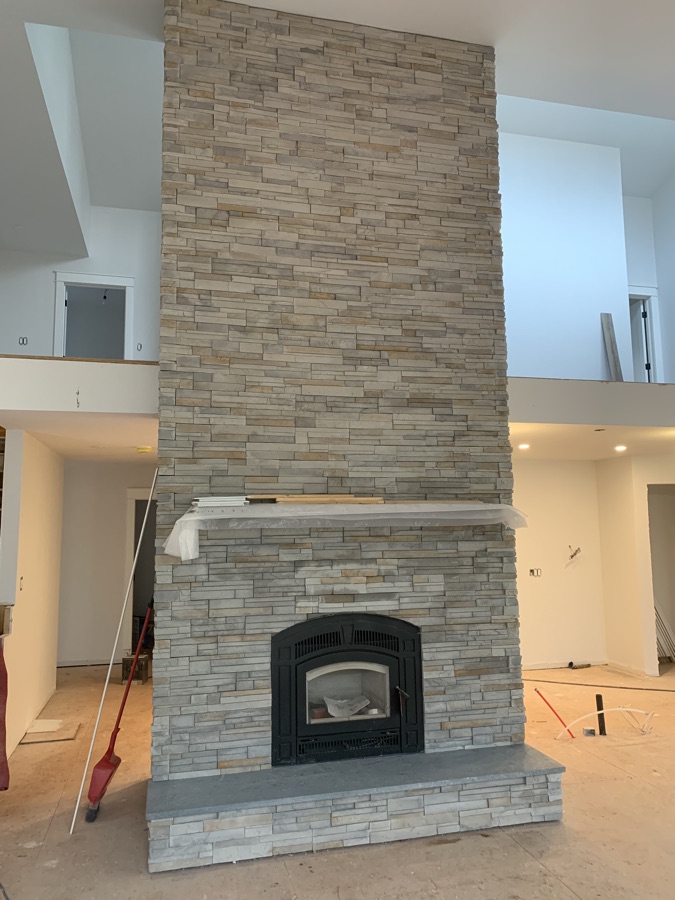
Fireplace masonry is highly visual. These existing DinoMac project images show the kind of material, proportion and detailing that can be developed around a new build, renovation or restoration.
Custom fireplace masonry: the fireplace should read as part of the room rather than a finish added after the fact.
Natural stone surround: stone selection, corners, joint flow and proportions shape the finished result.
Repair and restoration: existing hearth and fireplace masonry can often be renewed without replacing everything.
DinoMac combines generations of family stonemasonry knowledge with years of repair and restoration work across Prince Edward Island.
That matters on fireplaces because the finished work has to satisfy two very different demands: the heat-exposed masonry has to perform properly, while the visible stone or brick has to look deliberate in the room.
DinoMac is PEI's highest-rated masonry contractor on Google, with a long-standing reputation for detailed masonry work across the Island.
Identify what is actually failing, use the right material for the location, preserve sound masonry where practical, and make the visible repair fit the fireplace rather than advertise where the damage used to be.
DinoMac is based in Bonshaw and serves fireplace masonry projects across PEI, including Charlottetown, Stratford, Cornwall, Summerside and surrounding communities.
Projects can range from repairing a cracked firebox or rebuilding a hearth to designing a new natural stone fireplace surround as part of a renovation or new home. For new appliance-based projects, having the manufacturer and model selected before the final masonry is designed usually produces a cleaner and more predictable build.
View PEI Service AreasWide photographs help establish proportions and design possibilities. Include the fireplace or appliance model if one has already been selected, plus approximate wall dimensions, ceiling height and examples of the stone or brick style you like.
What photos should I send? →Yes. DinoMac can build custom masonry fireplace features in Prince Edward Island, including brick or natural stone surrounds, hearths and masonry work associated with new fireplace projects. Where a project includes a factory-built wood, gas or electric appliance, the appliance model, clearances, venting and required installation details should be established before the final masonry is built.
Often, yes. The exact appliance, manufacturer's clearance requirements, opening dimensions, hearth requirements, venting and finished veneer thickness should be confirmed first so the masonry surround is built around the correct dimensions.
DinoMac's specialty is the masonry portion of fireplace projects rather than appliance retail. Brick, natural stone, hearths, fireboxes, surrounds and masonry restoration are DinoMac's role, while appliance supply, gas connections and appliance-specific installation or servicing should be handled by the appropriate qualified supplier or technician.
Cost depends on whether the project is new construction, renovation or repair; the fireplace or appliance type; surround and hearth size; stone or brick selection; access; demolition; and the amount of custom cutting and fitting. Photos, dimensions and the intended fireplace type are useful for establishing an initial scope.
Often, yes. The correct repair depends on whether the crack is in decorative facing, the hearth, the firebox, refractory material or another part of the fireplace system. The cause should be identified before the crack is simply filled.
Repeated heating and cooling, impact from firewood, moisture, age and normal use can damage refractory mortar and firebrick. Loose or significantly deteriorated firebox material should be assessed before continued use.
Yes. Depending on the fireplace, work can include repointing, firebrick replacement, hearth repair, selective rebuilding and restoration of brick or natural stone facing.
In many situations, yes. The existing structure, clearances, fireplace type and supporting surface need to be considered before a new stone or brick surround is installed.
For a formal inspection of a solid-fuel-burning system in Canada, homeowners can use an appropriately qualified WETT-certified individual. WETT certification applies to individuals, not to appliances or companies.
DinoMac's role is masonry work such as surrounds, hearths, brick and stone repair. Gas appliance servicing, fuel connections and appliance-specific repairs should be handled by an appropriately licensed or qualified gas technician.
Firebox, hearth and surround repairs belong to the masonry side of the system. Broader solid-fuel appliance and venting questions may require the appropriate inspection specialist.
Learn when firebox cracks can be monitored and when refractory or firebrick should be repaired.
Follow the smoke path from the fireplace through the throat, smoke chamber and flue.
Water entering from above can affect the firebox, damper, flue and surrounding masonry.
Compare mortar loss, damaged units and movement before deciding how much masonry needs to come apart.
Tell DinoMac what you are seeing, where the property is located and what you would like to accomplish. If you have photos, they can help establish the next step.
Send clear photos of the full fireplace, close-ups of the damaged area and the project location. If the issue involves smoke, draft or the chimney, mention that as well.