Contains flue gases
The liner creates the intended passage for smoke and combustion products so they are not moving freely through cracks, voids or joints in the surrounding masonry.
A masonry chimney is more than the brick or stone you see from outside. Inside the chimney, the flue liner forms the passage that carries combustion gases upward and helps separate those gases and condensate from the surrounding masonry.
Older masonry chimneys commonly contain clay tile liners. Renovated chimneys may instead use a listed stainless steel relining system. Neither material is automatically “better” in every situation. The correct system depends on the appliance, fuel, flue size, condition of the masonry chimney and the installation requirements that apply to that system.
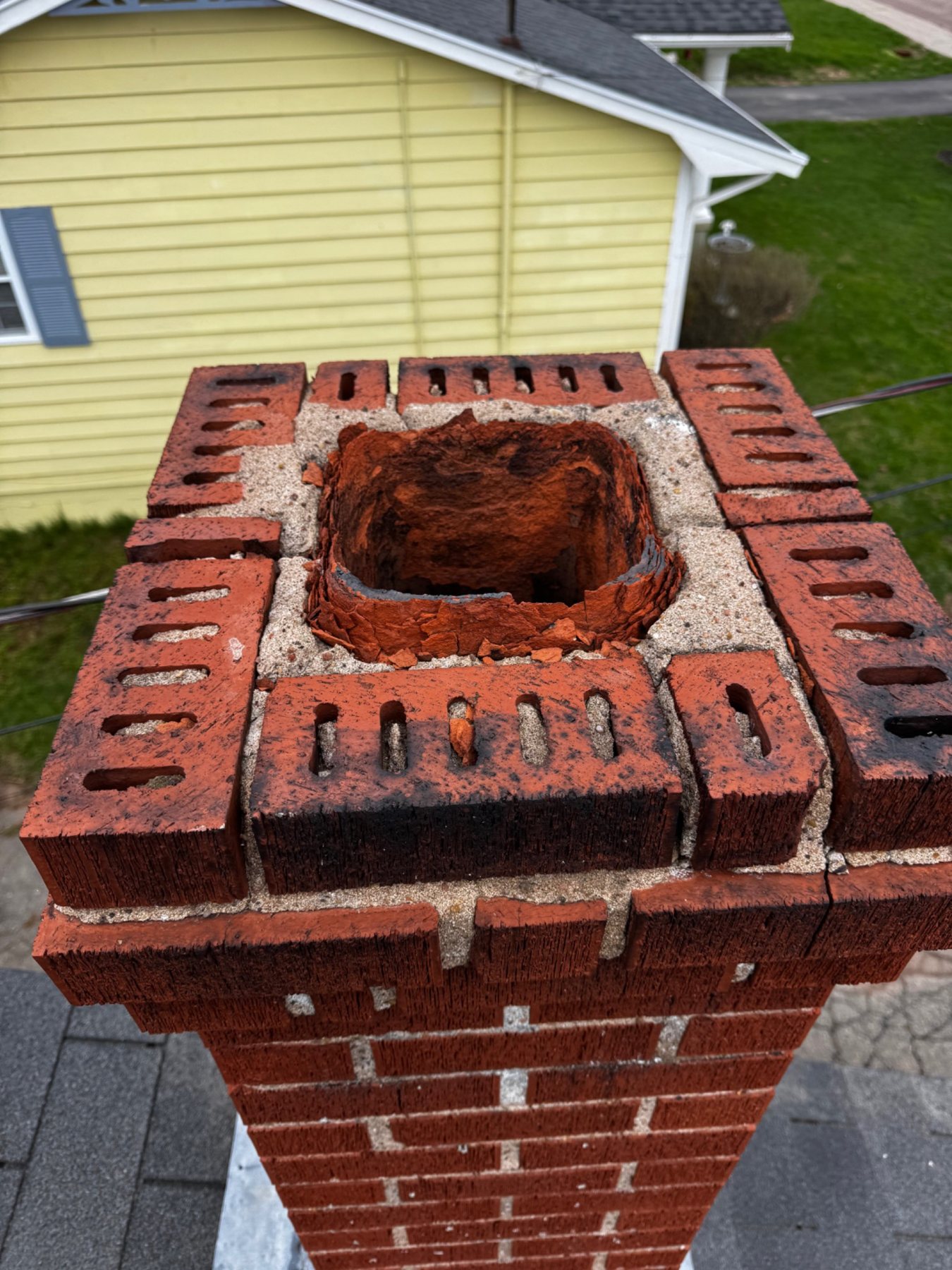
The top can reveal a problem, but not the whole flue. Cracked, missing or deteriorated clay at the chimney top is a reason to assess the liner farther down rather than assuming the visible section is the only damage.
The liner is part of the venting system, not simply a protective sleeve inside the brick.
The liner creates the intended passage for smoke and combustion products so they are not moving freely through cracks, voids or joints in the surrounding masonry.
Depending on fuel and operating temperature, flue gases can produce condensate. Liner joints and materials need to resist that environment so moisture and corrosive by-products are not directed into the chimney body.
A suitable liner helps isolate heat and combustion products from the chimney structure and nearby combustible building materials.
The flue cross-section affects draft and appliance performance. A liner that is too large, too small or poorly matched to an appliance can create venting or condensation problems.
Clay liner joints are intended to be aligned and struck smooth. Offset tiles, broken edges and obstructions can disrupt the flue and make inspection or cleaning more difficult.
Appliance, connector pipe, smoke chamber or thimble, liner, masonry chimney and termination all have to work together. Replacing one component does not automatically correct problems elsewhere.
The material alone does not tell you whether the liner is suitable for a particular fuel or appliance.
Clay tiles are traditional liner sections built into a masonry chimney as the surrounding brick, block or stonework is constructed. Joints between tile sections form a continuous flue from the appliance connection toward the top.
A sound clay liner can remain serviceable for many years. Problems include cracked tiles, failed joints, missing edges, offset sections, deterioration after high heat or chimney-fire events, and moisture-related damage around the chimney system.
Certified stainless steel liner systems can be installed inside an existing masonry chimney when the chimney is being renovated or when the appliance requires a different flue arrangement.
Systems may be rigid or flexible and may require insulation or other components depending on their listing, the chimney and the appliance. The liner must be installed for the fuel, temperature and use for which that specific system is certified.
A factory-built metal chimney is not the same thing as dropping a stainless liner into a masonry chimney. It is a complete listed chimney system made from manufactured sections, usually with an inner stainless flue and insulation between walls.
Its clearances, supports, offsets, terminations and compatible components are governed by the particular listed system and manufacturer instructions.
Clay liner sections are durable, but they are brittle. Cracking can result from thermal shock, chimney-fire temperatures, movement in the surrounding chimney, poor joints, impact during previous work or other stresses.
Joints can also become an issue. A masonry flue is intended to have joints that contain flue gases and condensate within the liner. Gaps, failed mortar, displaced sections or broken tile edges can compromise that continuous passage.
Water entering from the chimney top can also affect the entire system. A deteriorated crown, cap or flashing detail may wet the surrounding chimney masonry, while cold flues and certain appliance conditions can create condensation inside the liner itself.
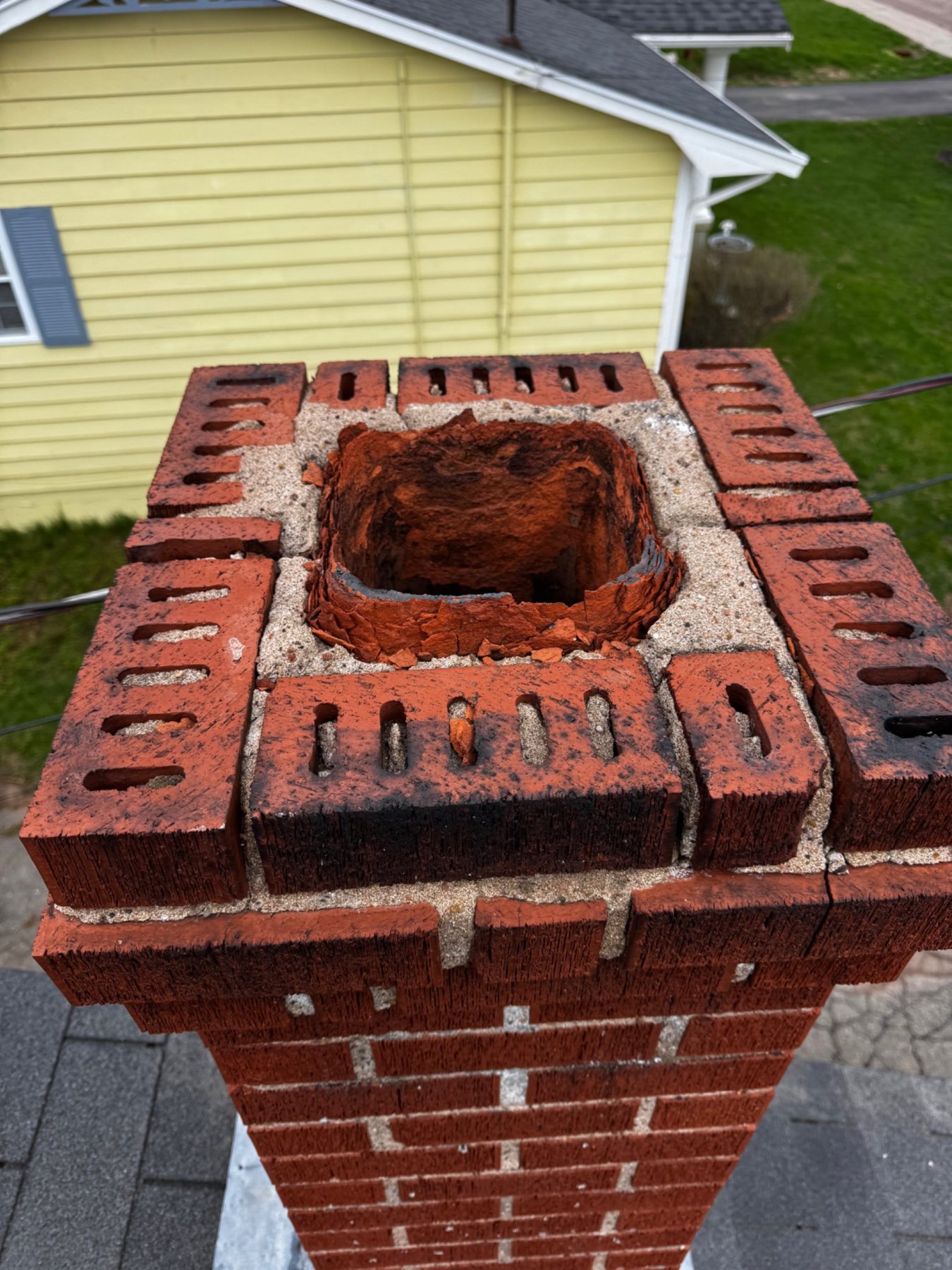
Top-of-chimney deterioration deserves a system view. Flue tile, crown or wash, brickwork and water shedding at the top should be considered together rather than treating one cracked edge in isolation.
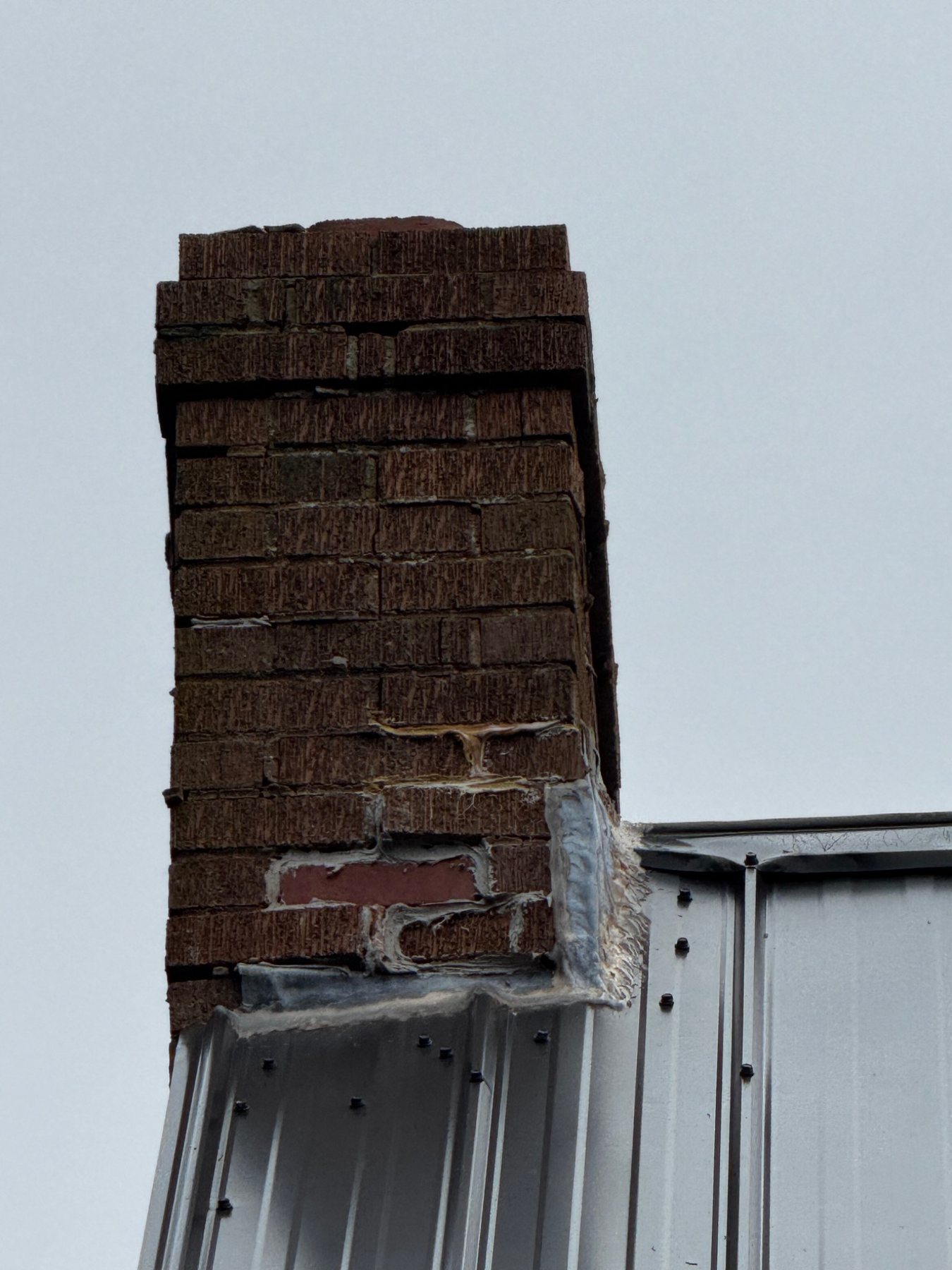
Exterior masonry and interior venting are connected but separate questions. A chimney can need masonry or flashing repair even when the liner is sound, and a liner can be defective while the exterior brick still looks acceptable.
Stainless steel relining is often useful when an existing masonry chimney can remain but the original flue is damaged, unsuitable, oversized for a new appliance or otherwise needs a new continuous vent passage.
Relining can avoid dismantling an entire chimney solely to replace the internal flue. It can also create a liner size that better suits a particular appliance where the existing masonry flue is too large.
However, stainless steel is not one generic product. The liner system, grade, insulation, connector components and installation method have to be suitable for the intended appliance and fuel. A liner approved for one application should not be assumed suitable for another.
Natural Resources Canada notes, for example, that oil-fired equipment may use masonry chimneys lined with clay tile or certified stainless steel liners, and that liner sizing must suit the oil-burning equipment. Solid-fuel systems have their own applicable requirements and should be assessed accordingly.
Cracks, missing corners or broken liner sections visible from the top, fireplace opening or cleanout are clear reasons to inspect farther.
Tiles that no longer line up can indicate movement, poor original construction or deterioration within the chimney.
Pieces of clay tile, refractory material or unexplained debris at the base of a chimney can indicate deterioration higher in the flue.
High temperatures can damage clay liners and other components. A suspected or confirmed chimney fire is a reason for a more detailed inspection before the system is returned to use.
Moisture, acidic condensate, staining or deterioration around a cool or oversized flue can indicate that the venting system and appliance relationship needs attention.
A new wood stove, insert, furnace, boiler or fuel type can change flue-size, temperature and material requirements even if the existing chimney worked with the previous appliance.
Not necessarily. The appropriate scope depends on both the liner and the surrounding masonry chimney.
A limited defect may sometimes be addressed as part of a targeted masonry or liner repair where the surrounding system is otherwise sound and the repair method is appropriate for that liner and appliance.
Where the masonry chimney remains serviceable but the original flue is extensively damaged or unsuitable for the appliance, a listed relining system may provide a new continuous flue within the existing chimney.
If the chimney masonry itself is unstable, badly displaced or extensively deteriorated, relining alone does not solve the structural problem. Sections of the chimney may still need to be dismantled and rebuilt.
The top few feet of a clay liner can look acceptable while a crack, failed joint or displaced tile exists lower in the chimney. The reverse can also happen: a visibly deteriorated top tile may not mean the entire flue is equally damaged.
Inspection therefore becomes more detailed as the concern increases. A visual review may identify obvious defects. Roof-level access, mirrors, lights or video scanning can reveal more of the flue. Invasive inspection may be appropriate where concealed components cannot otherwise be assessed.
For solid-fuel-burning systems, WETT's SITE® process defines Visual, Technical and Invasive inspection levels. WETT notes that an invasive inspection can include opening or disassembling parts of a masonry chimney and examining the chimney liner.
WETT certifies individuals, not chimneys or installations. A WETT-certified professional documents what was inspected and whether visible or accessible portions comply within the agreed inspection level.
WETT SITE® inspection levels →
An unusual field example is a chimney involved in a lightning event. In one PEI inspection, damage was evident around the chimney system, but the accessible metal liner remained visually intact, clear and unobstructed through to daylight. The event justified the inspection; it did not automatically justify replacing the liner.
Looking down from the chimney top or up through a fireplace opening can reveal obvious defects, but it does not reliably show the full length of the liner. Where liner condition is uncertain, an appropriate internal inspection can help document cracks, gaps between liner sections, displacement, obstructions and deterioration that may not be visible from either end.
This matters because the exterior chimney can look serviceable while the liner requires attention, or the liner can remain usable while the exterior brick, mortar, crown or flashing needs masonry repair. The two decisions are related, but they are not automatically the same repair.
See how the liner fits into the complete chimney →
No. A sound clay-tile liner in a properly built masonry chimney can continue to perform its intended function. Replacing it simply because stainless steel exists does not automatically improve the system.
Stainless relining becomes valuable when the existing flue is damaged, when renovation without dismantling the chimney is desirable, or when an appliance needs a different flue size or liner system.
The better question is not “Which material is best?” It is “Which listed and code-appropriate liner system suits this appliance, fuel, chimney and building?”
DinoMac can assess and repair the masonry portions of a chimney. Appliance, fuel, liner sizing and solid-fuel inspection questions may also require the appropriate installer, heating contractor, authority or WETT-certified individual depending on the system.
Atlantic Canadian chimneys often deal with exterior moisture, freeze-thaw exposure and long periods of cool weather.
Wind-driven rain and deteriorated crowns, caps or flashing can saturate chimney masonry and accelerate freeze-thaw damage around the flue.
A large or exterior masonry chimney can remain cold, which can contribute to condensation problems with some appliances and fuels when flue temperatures are low.
Long periods of disuse can hide deterioration until the system is needed again. A dormant solid-fuel system may deserve inspection before regular use resumes.
It provides the intended passage for combustion gases and helps keep flue gases, heat and condensate separated from the surrounding chimney masonry and building.
Sometimes a localized defect can be repaired, but widespread cracking, missing sections or offset tiles may make relining or rebuilding more appropriate. The full flue should be assessed first.
No. A sound clay liner can remain appropriate. Stainless relining is particularly useful when an existing flue is damaged, oversized, unsuitable for a new appliance or being renovated without dismantling the masonry chimney.
After a chimney fire or structural event, when visible defects appear, before returning a long-unused solid-fuel system to service, or when an appliance or fuel changes.
Not reliably. Hidden defects can exist farther down the flue, so video scanning or more detailed access may be needed where concerns exist.
No. WETT certification applies to individuals. A WETT-certified professional can inspect a solid-fuel system and document compliance or deficiencies within the inspection scope.
National Building Code provisions for masonry chimneys address liner materials, joints and the relationship between the liner and surrounding chimney construction.
National Building Code of Canada →Heating with Oil describes clay-tile-lined masonry chimneys, certified stainless steel liners, liner sizing and the importance of inspecting for flaking liner material, water and exterior deterioration.
NRCan Heating with Oil →WETT's SITE® inspection levels explain how solid-fuel systems can progress from visual inspection to technical and invasive inspection, including examination of concealed chimney liners.
WETT inspection levels →Include the chimney from the roofline up, the crown or cap, flashing, visible flue tile at the top, fireplace or appliance connection, and any debris or moisture at the cleanout.
Prepared by Dean MacArthur, DinoMac Masonry Ltd., a third-generation mason with more than 20 years of hands-on masonry experience.
This guide explains masonry-chimney liner concepts for homeowners. Appliance venting, fuel-specific sizing and solid-fuel compliance should be determined for the actual system by the appropriate qualified professional.
Reviewed September 1, 2026.
The chimney anatomy guide shows how the crown, stack, flue, flashing and appliance connection fit together.
Open Chimney Anatomy