Repointing may be enough when...
✓Brick or stone units are still hard and well bonded
✓Mortar loss is the main visible defect
✓The chimney is straight and stable
✓There is no widespread spalling or cracking
Chimney repointing is usually appropriate when the brick or stone remains sound and the main problem is deteriorated mortar joints. If bricks are badly spalled, masonry has moved, or large sections have lost their bond, selective replacement or rebuilding may be needed instead.
A deteriorated chimney does not automatically need to be torn down. The right repair depends on how much sound masonry remains, where the deterioration is concentrated and whether the conditions that caused the damage can be corrected.
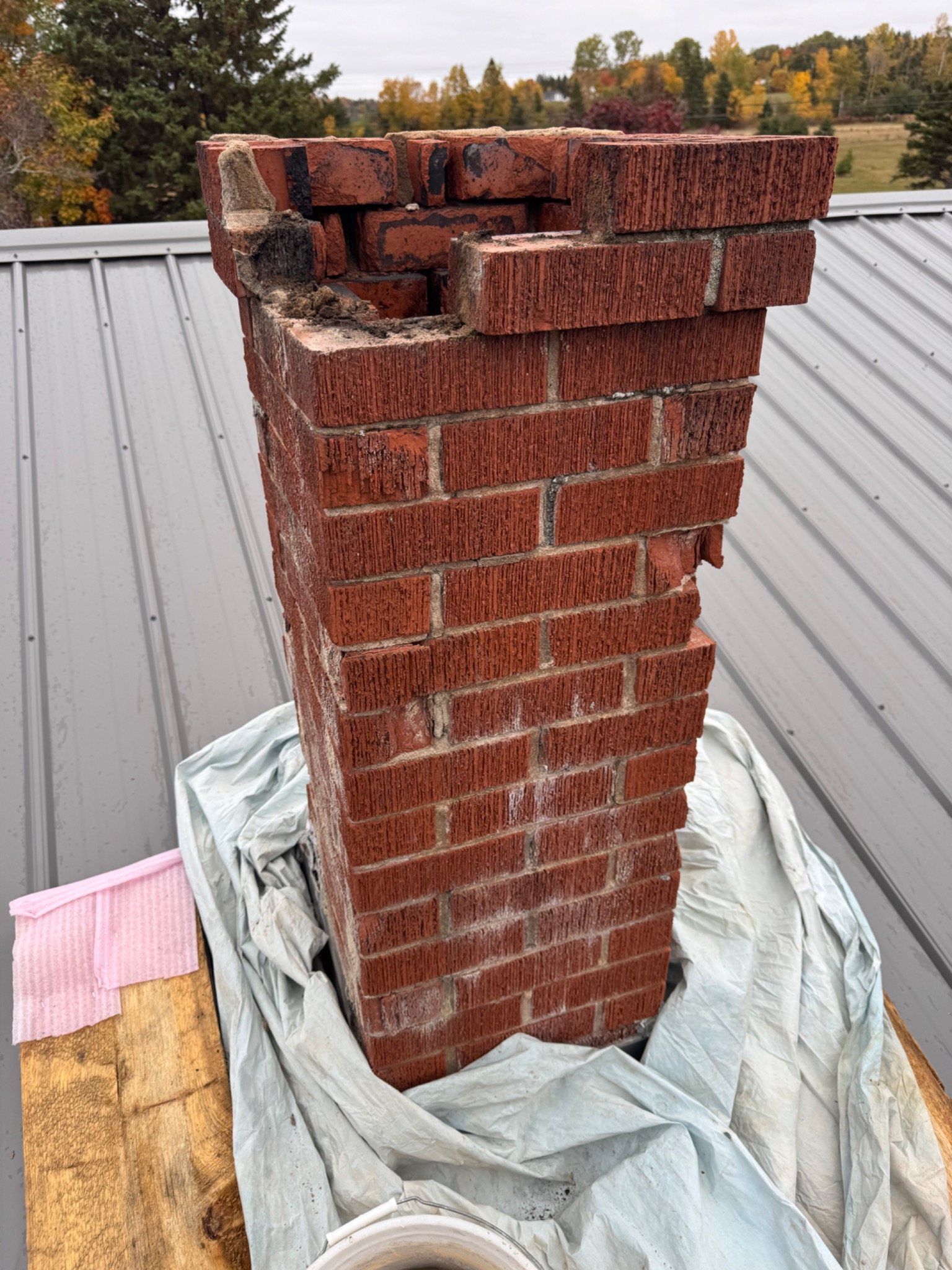
Repointing cannot restore missing geometry. Once upper chimney courses are loose, missing or displaced, the repair decision moves beyond simply replacing mortar joints.
Chimney masonry deteriorates unevenly. The top few courses may be badly weathered while the lower stack remains sound, or a chimney may look reasonable from the ground while open joints, failed flashing or a cracked crown are allowing water into the assembly.
Repointing is most useful when the brick or stone remains reasonably sound and the primary failure is mortar loss. If individual bricks have spalled or cracked, selective replacement may be added without rebuilding the entire chimney.
When deterioration is widespread, the stack has moved, large areas have lost bond, or there is too little sound material left to support a durable repair, rebuilding becomes more practical.
These are practical indicators, not a substitute for seeing the chimney in person. More than one condition can exist on the same stack.
The terms are different, but the decision is really about how much sound chimney can be retained.
Failed mortar is removed to sufficient depth and replaced with new mortar while sound brick or stone remains in place. Repointing is not a substitute for replacing units that have physically failed.
Individual damaged bricks or stones can sometimes be removed and replaced while the surrounding chimney remains intact. This is useful when deterioration is localized rather than widespread.
A failed section, often the most exposed portion above the roofline, can be dismantled and rebuilt while retaining sound lower masonry.
Complete reconstruction may be appropriate when deterioration, movement or previous poor repairs extend through most of the chimney and there is little value in preserving the remaining stack.
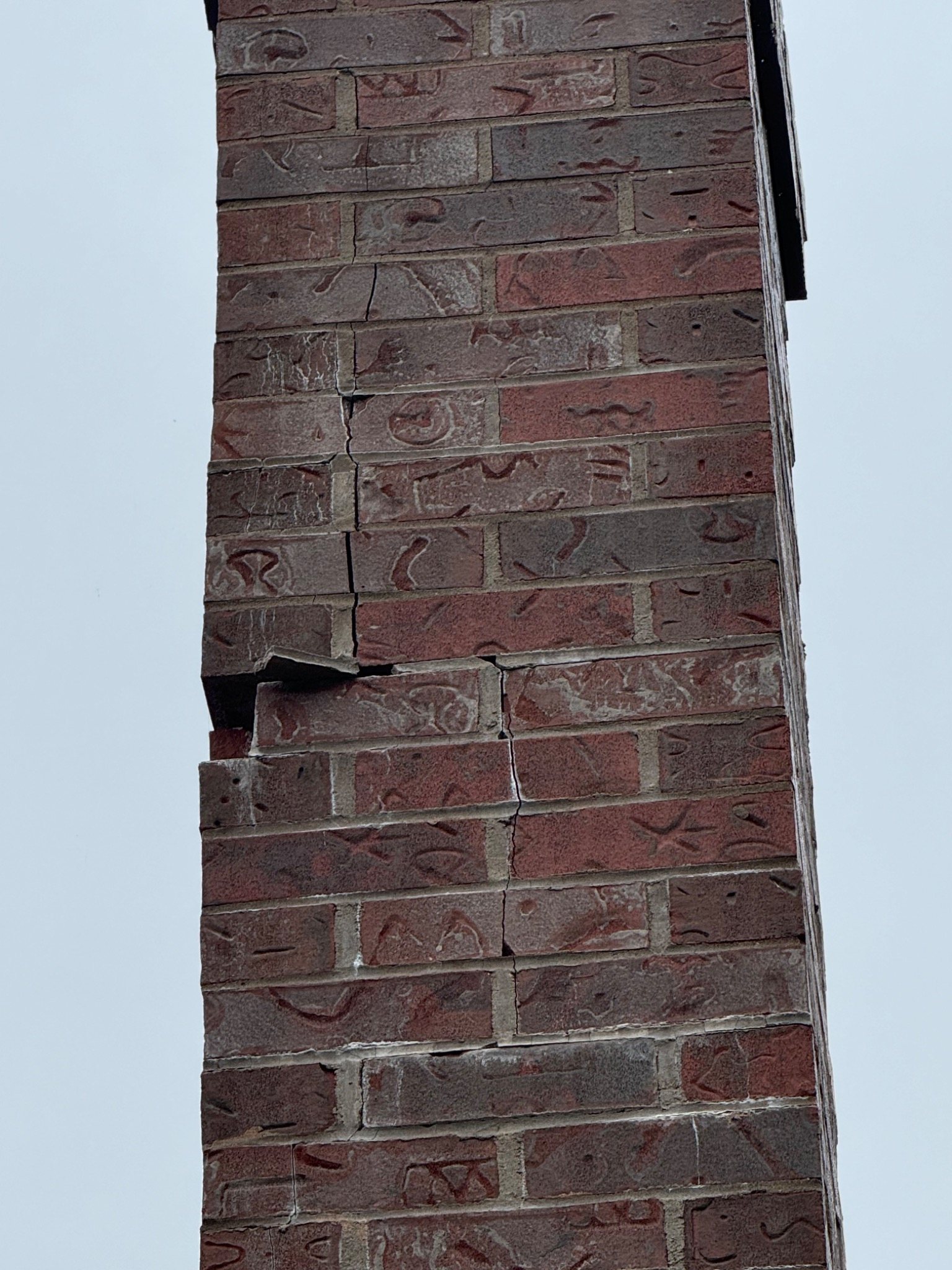
Movement matters: vertical cracking through units and joints, especially with visible displacement, raises questions that simple repointing cannot answer.
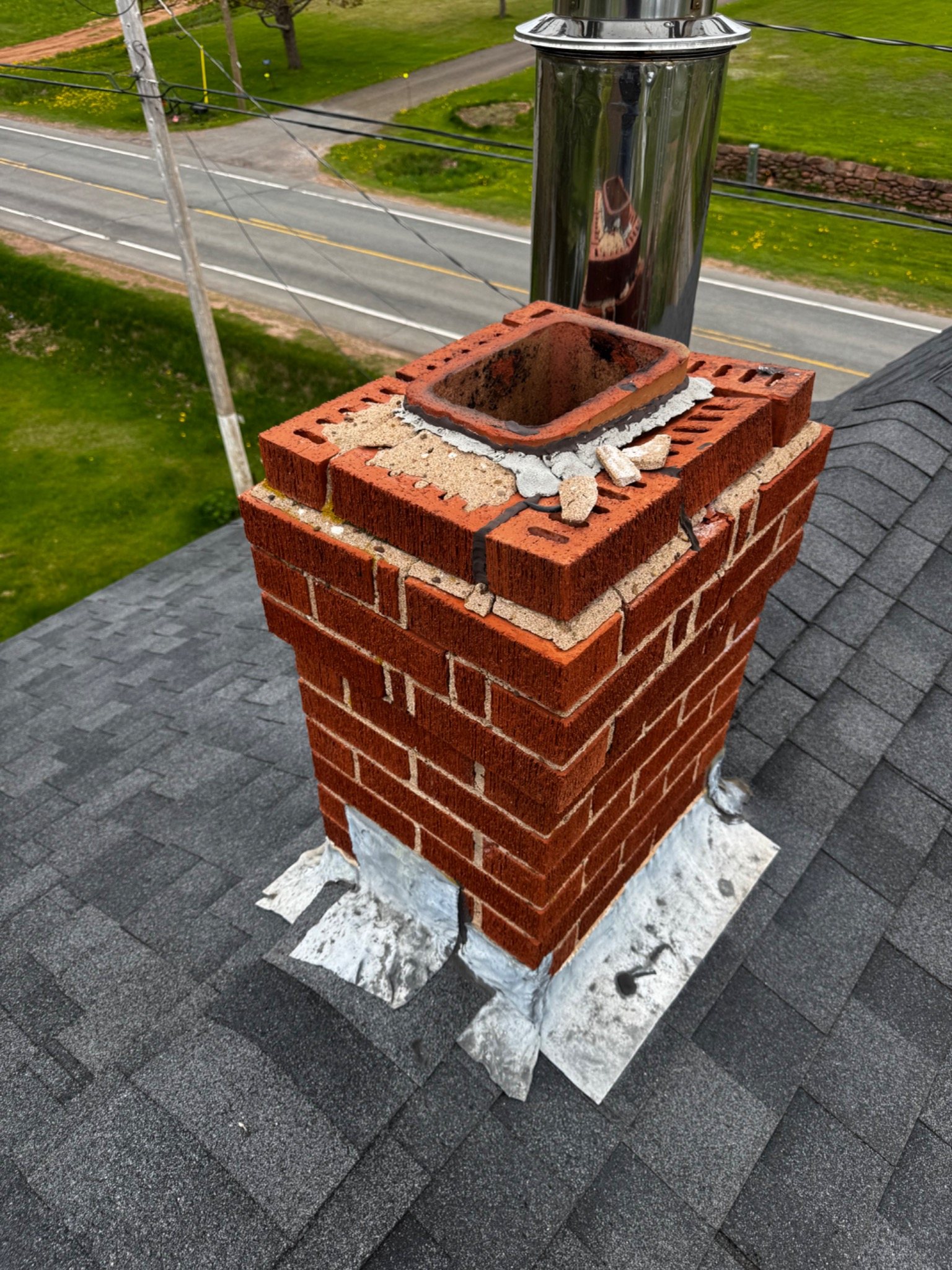
The top is a system: upper brick, flue interface, crown or wash, and water-shedding details should be considered together rather than repairing one isolated joint.
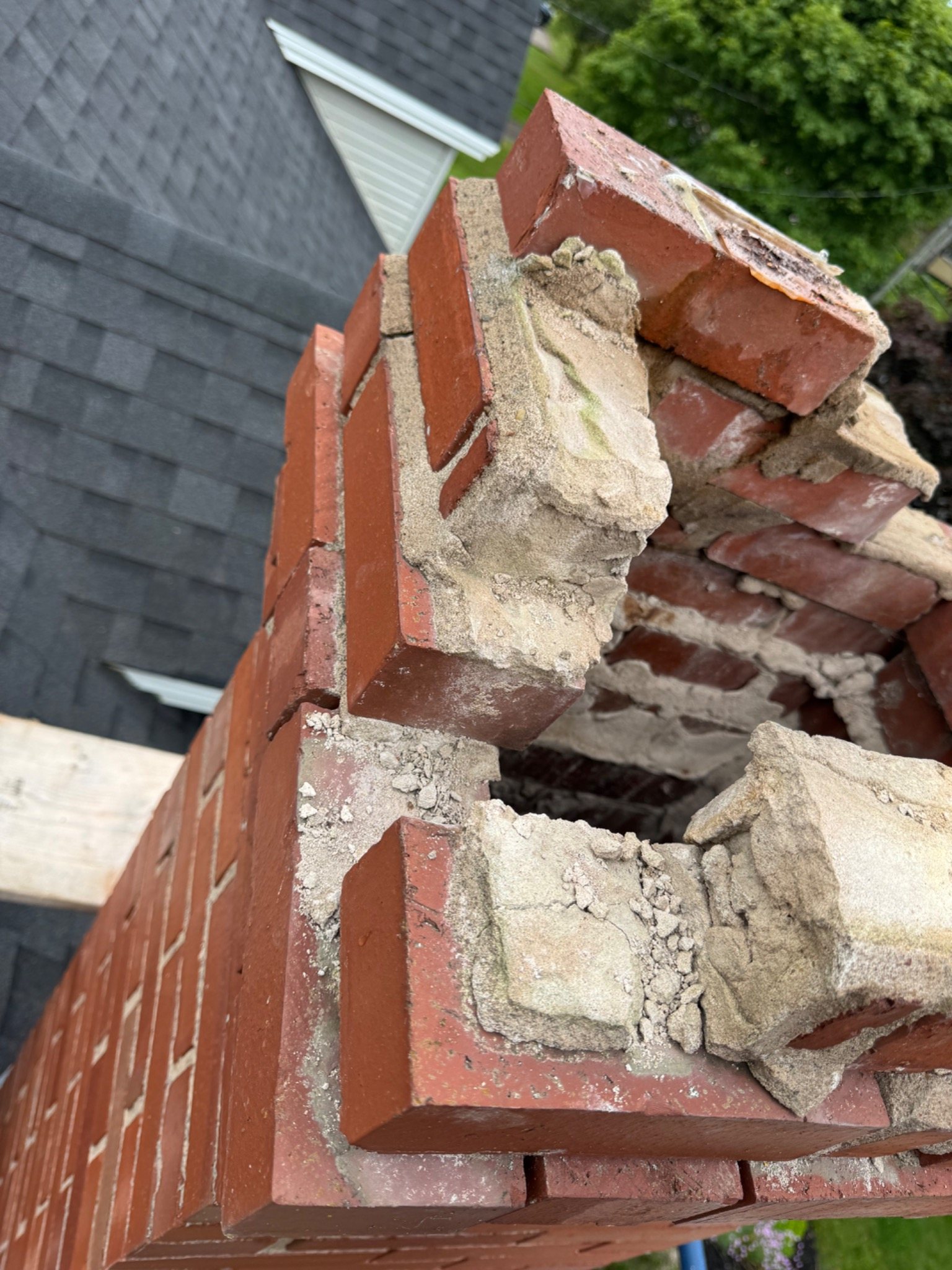
Dismantling can reveal more: weak bedding, voids and damaged units may only become obvious once unstable upper courses are safely opened.
Repointing addresses deteriorated mortar joints. It can restore joint depth, improve weather resistance and help retain sound brick or stone. It does not make a badly fractured brick whole again, straighten a moving chimney or correct a failed crown or flashing detail.
A useful assessment separates joint failure from unit failure and movement. If the mortar is deteriorated but the masonry units remain sound, repointing can be an efficient repair. If the units themselves are breaking down, they may need to be selectively replaced or the affected section rebuilt.
Thin surface smears of mortar are not the same as proper repointing. Failed material needs to be removed far enough to reach a sound joint and provide useful depth for the replacement mortar.
Crowns, caps, flashing and exposed horizontal surfaces all influence how much water reaches the masonry. Replacing brick without correcting a leaking crown or failed flashing can leave the same deterioration cycle in place.
In cold, wet climates such as Atlantic Canada, repeated freeze-thaw weather makes moisture control particularly important. Water absorbed into masonry can freeze, expand and accelerate loss of mortar and brick faces.
Masonry, crown, cap, flashing, flue and appliance requirements should be considered together when diagnosing recurring chimney problems.
Detailed Chimney GuideDinoMac's masonry assessment focuses on the condition of the brick, stone, mortar, crown, flashing-related masonry and rebuilding requirements. If the chimney serves a wood-burning appliance, the appliance, connector, liner, clearances and venting system may also need to be evaluated by an appropriately qualified professional.
WETT explains that its SITE® process includes Visual, Technical and Invasive inspection levels for solid-fuel-burning systems. Health Canada also recommends regular professional inspection of fuel-burning appliances, including chimneys and flues.
WETT: Levels of Inspections →
Health Canada: Fuel-burning appliance and chimney safety →
If there are concerns about a wood-burning appliance, liner, clearances, draft, a previous chimney fire or concealed venting components, have the appropriate system inspection completed before use.
Across PEI and Atlantic Canada, chimneys are exposed above the roofline to wind, rain, snow, salt-laden coastal air in some locations and repeated freeze-thaw cycles. The most durable repair is usually the one that deals with both deteriorated masonry and the moisture path that contributed to it.
Once mortar loss allows more water into the masonry, deterioration can accelerate. Small areas of failed joints or isolated spalling are usually easier to address than a chimney where multiple courses have become loose.
That does not mean every cosmetic crack is an emergency. It means changes in condition, loose material, active leaks and progressive deterioration deserve attention before they become larger repairs.
This guide combines hands-on masonry experience with recognized technical and conservation guidance. DinoMac's field context comes from Prince Edward Island, while the underlying repair principles are useful across Atlantic Canada and other cold, wet climates.
Dean is a third-generation mason with more than 20 years of hands-on experience working with brick, natural stone, chimneys, foundations, repointing and masonry restoration in Prince Edward Island.
Last reviewed: August 30, 2026
Chimney repointing is the process of removing deteriorated mortar from the joints between sound bricks or stones and replacing it with compatible new mortar. It restores the joints while preserving masonry that is still in good condition.
Yes, when the brick or stone remains sound and deterioration is mainly limited to failed mortar joints. Repointing is not a substitute for replacing badly spalled units, correcting movement or rebuilding unstable masonry.
A partial rebuild can be practical when deterioration is concentrated in one section, commonly the exposed portion above the roofline, while the lower chimney remains sound and stable.
Not necessarily. Water can enter through failed flashing, a cracked crown, damaged caps, open joints or another transition. The source should be diagnosed before deciding how much masonry needs to be rebuilt.
Often, yes. Where individual bricks are badly spalled, cracked or loose, selective replacement can be combined with repointing so sound surrounding masonry remains in place.
DinoMac's masonry work addresses the chimney structure and masonry. Wood-burning appliance, liner, venting and compliance inspections should be handled by an appropriately qualified professional, such as a WETT-certified individual where applicable.
Send clear ground-level photographs showing the full stack, roofline and visible damage. That can help determine whether a site visit or closer inspection is needed.
Send clear photos of the chimney from several angles, including the top, roofline and any visible damage. An on-site review may be needed for movement, hidden deterioration or active leaks.