Repointing
Remove failed mortar and refill sound brick or stonework with an appropriate compatible mortar.
DinoMac Masonry repairs and rebuilds brick and stone chimneys across PEI, from deteriorated mortar and spalled masonry to failed crowns, water-damaged sections and chimneys that require partial or complete rebuilding.
The approach is repair-first: preserve sound masonry where practical, identify the cause of deterioration, and rebuild only as much of the chimney as its actual condition requires.
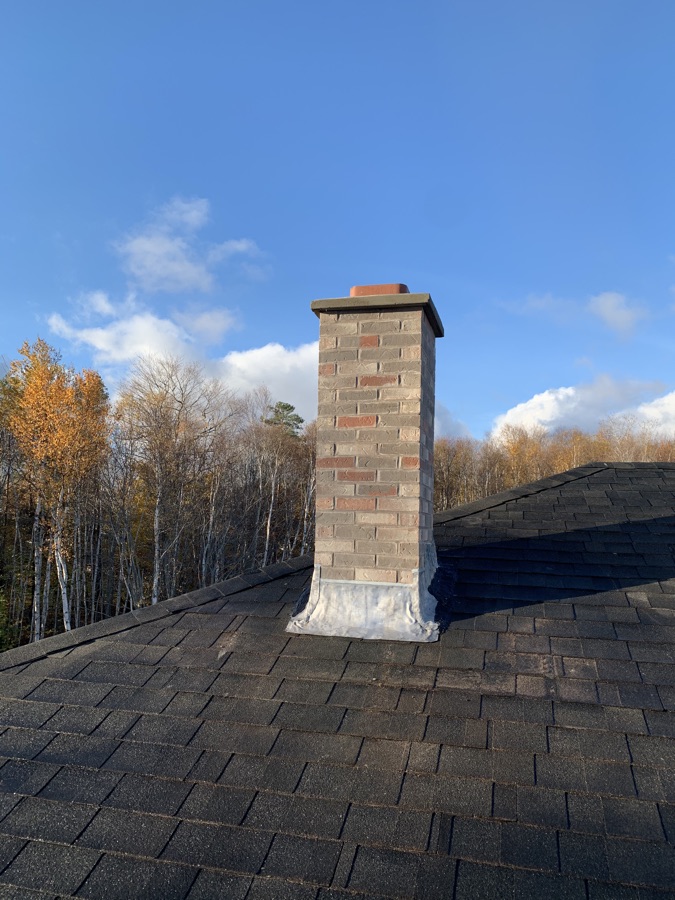
Chimneys rarely fail in only one way. The repair scope should match the condition of the existing masonry instead of assuming every chimney needs a full rebuild.
Remove failed mortar and refill sound brick or stonework with an appropriate compatible mortar.
Replace individual damaged masonry units where deterioration is localized and surrounding work remains sound.
Repair or replace failed crown masonry so the chimney top sheds water rather than feeding moisture into the stack.
Dismantle and rebuild unstable or heavily deteriorated sections while retaining sound masonry below where practical.
Rebuild the masonry stack when deterioration, movement or previous failed repairs make selective repair impractical.
Assess crown, masonry and flashing-adjacent conditions together so the visible leak is not mistaken for the whole problem.
DinoMac combines third-generation masonry knowledge with more than 20 years of hands-on experience, including older and heritage masonry. The goal is to explain the repair options clearly, retain sound work where it makes sense and avoid selling a larger rebuild than the chimney actually requires.
A traditional masonry chimney may contain brick and mortar, natural stone, concrete or concrete block, clay flue tile, stainless steel and metal components. Each material reacts differently to heat, moisture and weather.
Some materials are naturally porous. When water enters cracked mortar, brick, crowns or other openings and then freezes, expansion can accelerate deterioration. Over repeated Prince Edward Island freeze-thaw cycles, what begins as a small crack can become loose mortar, spalled brick or a larger structural repair.
That is why chimneys should be watched for visible deterioration rather than ignored until water appears indoors or pieces begin falling from the chimney.
Most chimney problems begin with some combination of heat, moisture, deteriorated materials, poor detailing or neglected maintenance.
Cracks in chimney masonry, fireboxes or flue components can allow heat, smoke or combustion byproducts to reach areas where they do not belong. Exterior cracks also create paths for water.
Wood-burning systems can accumulate soot and creosote. Heavy deposits, especially glazed or tar-like creosote, increase chimney-fire risk and can also contribute to unpleasant odours.
Water entering through cracks, crowns or flashing can freeze inside masonry and progressively break down mortar and brick.
A cracked or poorly detailed crown can allow water into the top of a chimney, often leading to deterioration below the surface.
Flashing seals the junction between the roof and chimney. When it is damaged or improperly installed, water can enter the roof assembly and remain hidden for some time.
Chimney height, flue sizing, appliance requirements, surrounding roof geometry and obstructions can all affect draft and safe venting.
In a wood-burning fireplace or stove, combustion produces smoke and particles that travel through the flue. Deposits can accumulate on the interior surfaces of the chimney, particularly when combustion is cool, wood is not properly seasoned, draft is poor or the flue itself remains cold.
Creosote can range from loose deposits to hard, glazed material. It is combustible, which is why regular inspection and cleaning of wood-burning chimney systems is an important part of fire prevention.
Cracked flue tiles, damaged fireboxes and gaps in chimney components should not simply be ignored because the exterior chimney still looks intact. Internal defects can require repair even when they are not obvious from the ground.
Some chemical creosote-reduction products are sold for use in wood-burning systems and may help alter certain deposits when used according to their instructions.
They do not tell you whether a chimney is blocked, structurally damaged or unsafe, and they do not replace professional inspection and mechanical cleaning.
A masonry assessment can tell you a great deal about the crown, brick, mortar, flashing, alignment and visible deterioration. It cannot, by itself, confirm the full condition of a concealed flue or every part of a solid-fuel system.
A more detailed chimney-system inspection becomes especially important after a suspected chimney fire, after a long period of disuse, when a fireplace or stove is being returned to service, when smoke is spilling into the room, or when visible liner damage, unusual debris, corrosion or another internal concern is found.
In Canada, WETT's SITE® process distinguishes between Visual, Technical and Invasive inspections according to the amount of access needed. If a Visual inspection identifies a concern, a Technical or Invasive inspection may be recommended rather than assuming an exterior masonry repair answers the whole question.
Useful documentation identifies which components were accessible, records the deficiencies that were observed, distinguishes visible masonry concerns from concealed venting concerns, and explains when further inspection is recommended.
Photographs are especially helpful for roof-level masonry, the crown, flashing and internal flue conditions that a homeowner cannot easily see. A report should not imply that concealed components were confirmed if they were outside the inspection scope.
Water can enter through a damaged crown, open mortar joints, cracks, deteriorated masonry or failed flashing. Once moisture is inside masonry, freezing temperatures can make the damage considerably worse.
As trapped water freezes it expands. Repeated cycles can loosen mortar and break the faces from brick, a failure commonly referred to as spalling.
Moisture inside a chimney can also interact with combustion deposits and contribute to corrosion of metal components and deterioration of mortar or flue materials.
Water-repellent treatments may sometimes reduce absorption on sound masonry, but they are not a substitute for repairing cracks, failed joints, damaged crowns or flashing leaks.
The chimney crown covers the top of the masonry around the flue and forms an important part of the chimney's weather protection.
A properly detailed crown is shaped to direct rain and snowmelt away from the flue and masonry below. Appropriate overhang and drip detailing can help keep runoff from repeatedly washing down the chimney face.
Crowns that are flat, cracked, deteriorated or poorly detailed can become a major source of water entry. Depending on the chimney, repairs may involve patching localized defects, replacing a failed crown or installing a new system suited to the chimney.
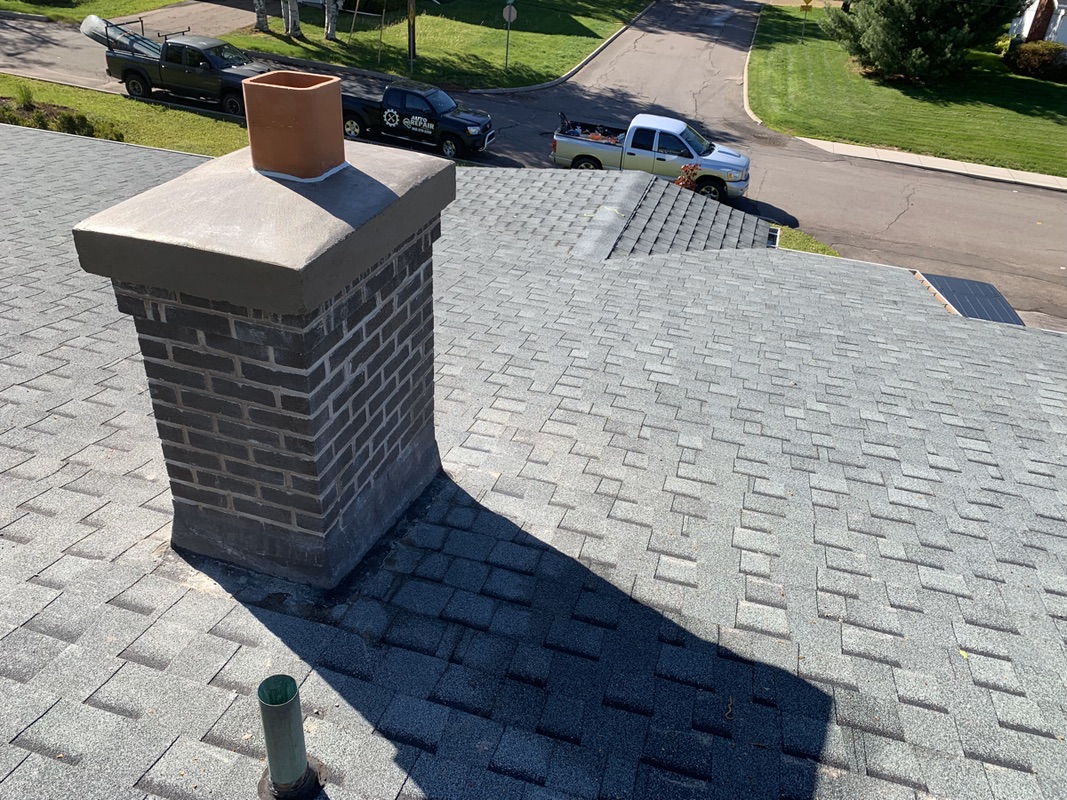
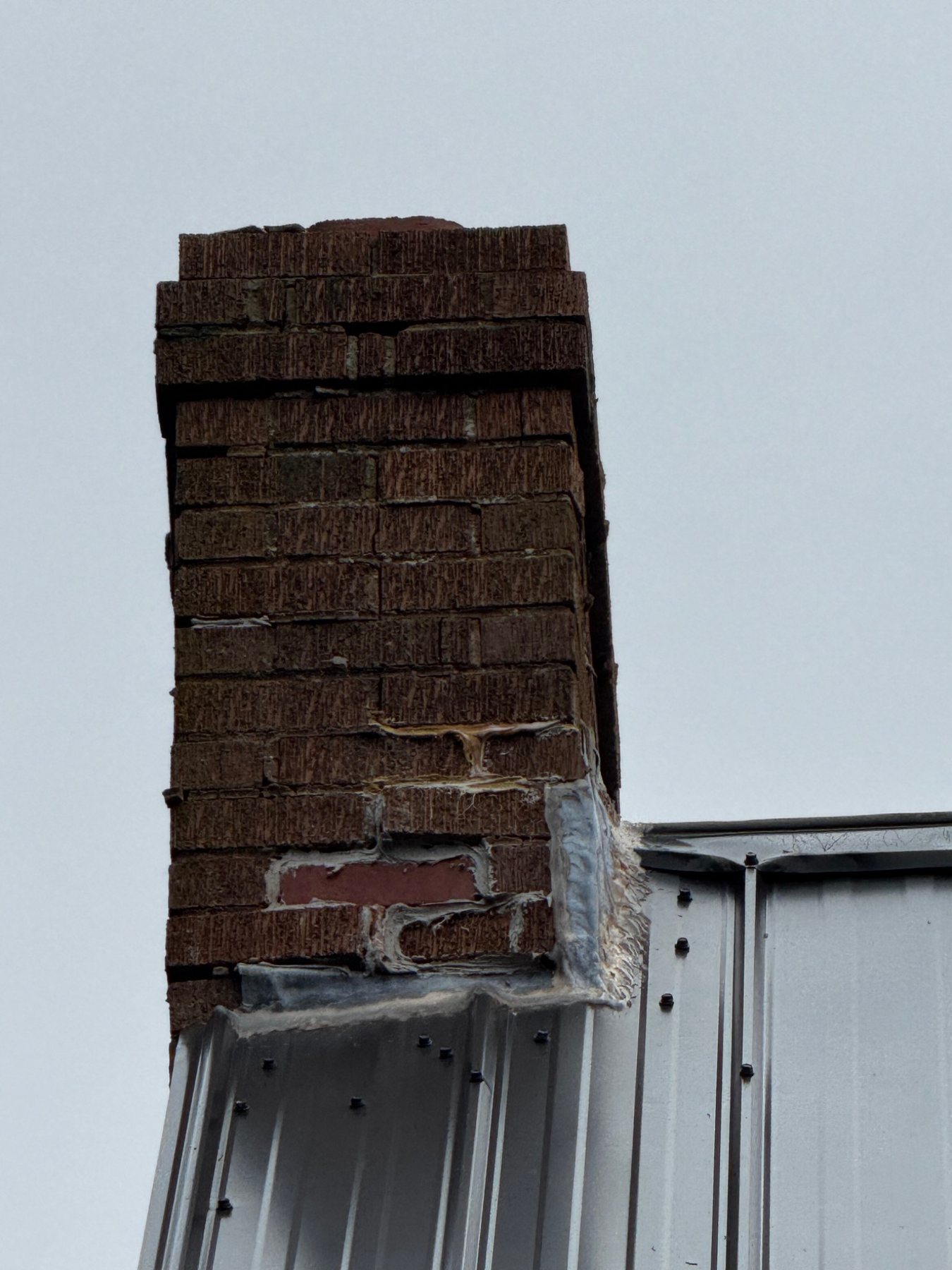
Flashing is the water-shedding system at the junction between a chimney and the roof. It must prevent rain and snowmelt from entering while allowing the roof and chimney to respond independently to normal movement and temperature changes.
Failed or poorly fitted flashing can leak whenever conditions are right, but a small leak may remain hidden until staining, mould or damaged finishes appear inside the building.
When diagnosing a chimney leak, the masonry, crown, cap and flashing should be considered together instead of assuming the first visible crack is the only source of water.
A chimney must terminate high enough and in the correct location for the particular building, roof geometry, appliance and applicable code requirements.
If a chimney termination is poorly located or too low for the surrounding roof and building conditions, wind pressure can contribute to downdraft and unreliable venting.
Chimney height should therefore be determined from the applicable building and appliance requirements rather than by appearance alone. Existing chimneys that have persistent smoke or draft problems may need the entire venting system assessed, not merely additional masonry added to the top.
Flue sizing, appliance condition, combustion air, chimney temperature, offsets, obstructions and surrounding structures can all influence draft.
Many PEI homes have masonry chimneys originally built around older oil-fired equipment. Replacement appliances may operate differently from the equipment the chimney was originally designed to vent.
Oil-fired appliances produce combustion residues. When moisture and corrosive byproducts remain inside a chimney, clay liners, mortar and metal components can deteriorate over time.
A replacement appliance may require a different vent size from an older unit. An oversized or otherwise unsuitable existing flue can contribute to poor draft, cooling of exhaust gases and condensation.
More efficient equipment can send cooler exhaust into a chimney. Depending on the appliance and chimney, cooler gases may increase the potential for condensation before combustion products leave the flue.
The right repair depends on how much sound masonry remains, where the damage is located and whether the causes of deterioration can be corrected.
Failed mortar is removed and replaced while retaining sound existing brick or stone.
Individual spalled, cracked or badly deteriorated units can sometimes be replaced without rebuilding the entire chimney.
When deterioration or movement is widespread, dismantling and rebuilding the damaged portion may be the most durable solution.
These reviews are from clients who specifically described chimney construction, repair or rebuilding in their feedback.
“Working with Dinomac was not only smooth and timely, but the knowledge that Dean shared with us was equally valuable. They rebuilt our stone chimneys to remedy water ingress and provided consultation and recommendations on other areas of our home - for which we will also be hiring Dinomac! Cost effective, skilled, personable and trustworthy - highly recommend.”
“Thank you to Dean and his crew for doing a great job in replacing our chimney! The men working were kind, courteous, considerate and hard-working. They were quick and cleaned up all debris from the old chimney. Thank you again for a job well done!”
“We have had Dean repair our stone foundation on one occasion and our chimney on another. Awesome person, excellent work and extremely easy too work with! Highly recommend!”
“The first project we worked on together I had hired another mason to do some chimney repairs above the roof line. The work that was completed by the other mason was below standard, the chimney flashing was poorly done, and improper mortar was used. Knowing of Dean and his professional background, I quickly contracted Dean to make it right for the customer for me. The results were astounding.”
Homeowners do not need to diagnose the chimney before contacting DinoMac. A few clear details are usually the best place to start.
Send the property location, a full view of the chimney, roofline photos and close-ups of visible deterioration where possible.
DinoMac reviews whether the concern appears primarily related to masonry, water entry, flashing, venting or a combination of conditions.
Some chimneys need an on-site look before repair scope can be established, especially where movement, access or concealed conditions are involved.
The recommendation may involve repointing, selective unit replacement, crown work, localized rebuilding or a more extensive rebuild.
The repair is carried out around the actual condition of the chimney, with attention to compatible materials, weather exposure and water shedding.
Chimney work produces debris at roof and ground level, so cleanup is treated as part of the job rather than an afterthought.
Clear photographs can often help establish whether the next step is a repair discussion or a closer site assessment.
Loose mortar, spalled bricks, pieces of masonry on the roof, cracking near the crown, water staining, deteriorated flashing, movement and damaged flue components are all reasons to have a chimney assessed.
Often, yes. If enough sound masonry remains, repointing, selective brick replacement, crown repair or localized rebuilding may extend the life of the existing chimney.
No. Chemical creosote-reduction products may be used as a supplement when appropriate, but they do not replace chimney inspection or mechanical cleaning.
Water can enter cracks, mortar joints, crowns and flashing areas. Repeated freezing and thawing expands trapped moisture and can break down mortar, brick and other chimney materials.
For additional homeowner information about chimney inspection, creosote, chimney fires and venting safety, the Chimney Safety Institute of America maintains a substantial homeowner resource library.
Visit CSIA Homeowner ResourcesSend the property location and several clear photos, including the full chimney, the area above the roofline and any visible damage.
Request an EstimateThe visible symptom is often only one part of a chimney problem. These guides help narrow the repair scope before work is priced.
Compare crown, flashing, cap and masonry water paths.
See when mortar repair may be enough and when damaged geometry calls for rebuilding.
Understand the flue, stack, crown, cap and roof intersection before evaluating a failure.
Learn how wall temperature, materials, enclosure and curing affect winter chimney repairs.
Tell DinoMac what you are seeing, where the property is located and what you would like to accomplish. If you have photos, they can help establish the next step.
Based in Bonshaw and serving residential, commercial and heritage masonry projects throughout PEI.