Old Stone Foundation Repair
Repointing, resetting loose stones, selective rebuilding and repairs to deteriorated areas while retaining sound original masonry where practical.
DinoMac Masonry repairs stone, concrete block and selected concrete foundations across PEI, including repointing, localized rebuilding, parging, crack-related masonry work, loose-stone repair and restoration of older foundation walls.
The first step is determining whether the visible problem is actually masonry deterioration, moisture, drainage, movement or a combination of conditions. DinoMac's repair-first approach is to preserve sound foundation masonry where practical and rebuild only what the wall's condition requires.
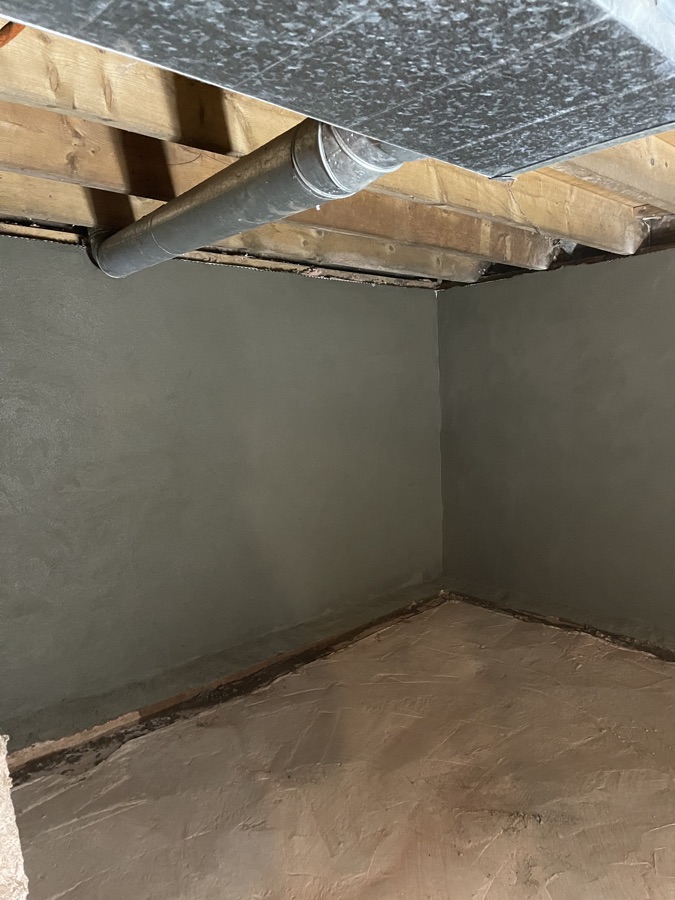
Foundation repair is a broad term. DinoMac's specialty is the masonry itself: stone, concrete block, mortar, parging and selected concrete repairs.
Repointing, resetting loose stones, selective rebuilding and repairs to deteriorated areas while retaining sound original masonry where practical.
Repair of failed mortar joints, localized unit damage, cracks and sections that require selective rebuilding rather than a surface-only patch.
Replace missing or deteriorated mortar and, where the wall construction makes it appropriate, address selected internal voids rather than only coating the face.
Dismantle and rebuild unstable or displaced masonry sections when the surrounding foundation remains serviceable.
Restore a protective or finished surface after the substrate has been assessed and repaired instead of using parging to hide active movement.
Localized concrete and concrete-masonry repair where it forms part of a broader foundation or masonry project.
DinoMac combines third-generation masonry knowledge with more than 20 years of hands-on experience. That is particularly useful on older PEI foundations, where stone, mortar, block, moisture and previous repairs can interact in ways that are easy to misread.
The goal is not to sell every homeowner the same basement system. It is to determine what part of the foundation is actually failing and repair the masonry portion appropriately.
“We have had Dean repair our stone foundation on one occasion and our chimney on another. Awesome person, excellent work and extremely easy too work with! Highly recommend!”
Cracking, water entry and surface deterioration can be caused by very different conditions. Soil pressure, frost movement, poor drainage, settlement, missing mortar, weak previous repairs and long-term moisture exposure can all create similar-looking symptoms.
That is why DinoMac does not treat every foundation problem as a parging job. The first question is what has moved, what has deteriorated and whether the wall is still stable.
Once the cause is better understood, the repair can be planned around the actual masonry instead of simply hiding the visible damage.
Many older PEI homes and buildings sit on stone foundations that have survived for generations. The masonry can still be serviceable even when the mortar has deteriorated substantially.
Deteriorated mortar can be removed and replaced where the stone remains stable and the wall has not significantly shifted.
Individual loose stones or localized areas can sometimes be reset and rebuilt without dismantling large sections of sound foundation.
Where a section has bulged, collapsed or lost stability, selective dismantling and rebuilding may be more appropriate than surface repair.
Traditional stone foundations often rely on wall thickness, stone bearing, multiple wythes and mortar working together. Some walls contain rubble or smaller infill material between larger face stones.
When mortar washes out or voids develop, simply smearing mortar over the face does not restore what has been lost inside the wall.
Depending on the construction and condition, repair may involve repointing, rebuilding, selected grouting or another method suited to the wall rather than a one-size-fits-all coating.
Older stone foundations can contain relatively soft stone and mortar. Repair materials should be chosen for the existing masonry rather than on the assumption that harder is automatically better.
Heritage Masonry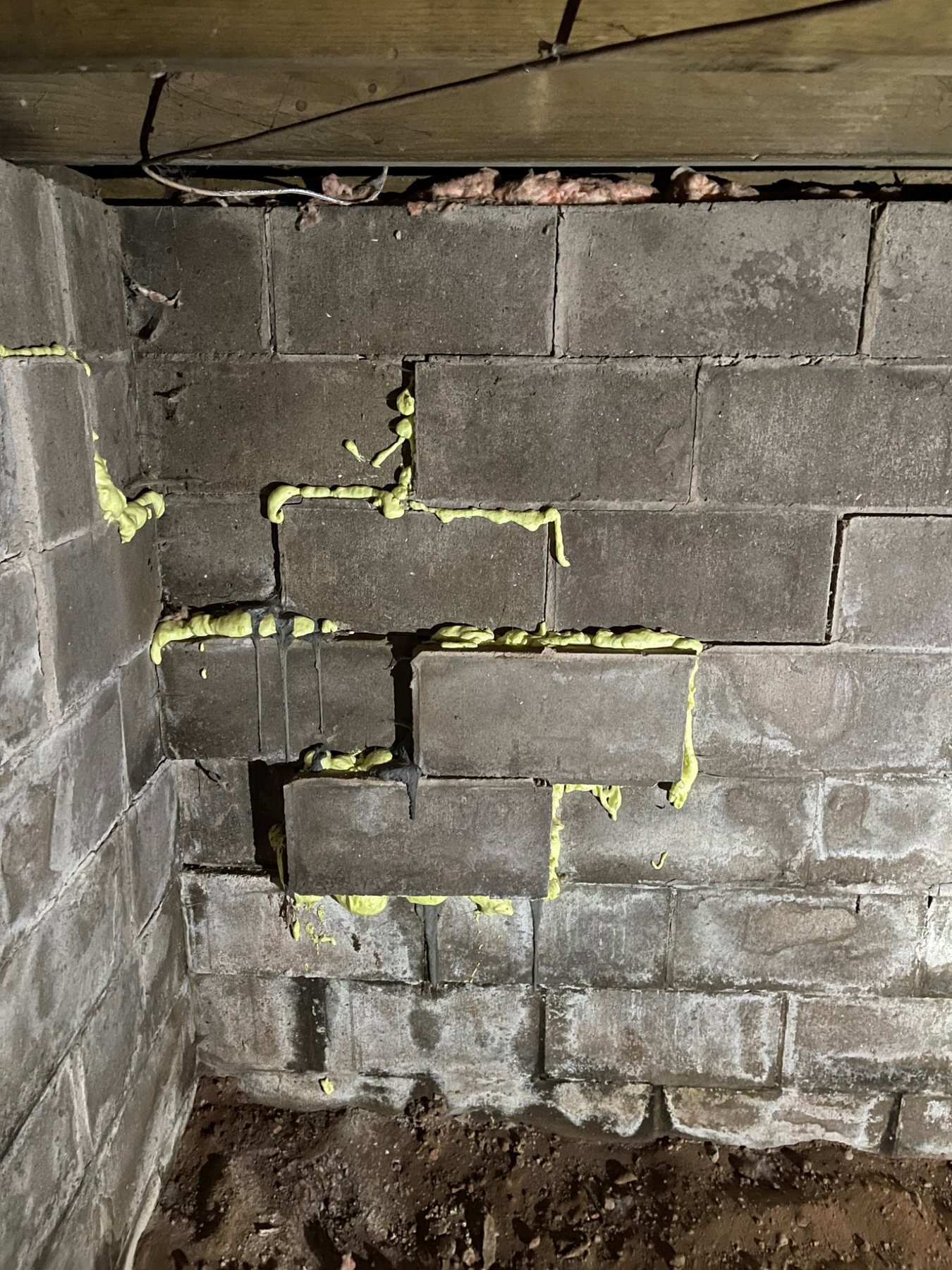
Concrete block foundation walls can crack through mortar joints, through the units themselves or in a stair-step pattern. Walls may also bow inward when soil pressure or other forces exceed what the wall can resist.
Small localized masonry defects can sometimes be repaired directly. Significant bowing, displacement or recurring structural cracking may require additional stabilization or engineering before masonry repairs are completed.
The important part is not pretending every crack is the same. A shrinking surface crack and a wall moving under lateral pressure need very different responses.
Parging can protect and finish exposed concrete or masonry surfaces, fill minor surface defects and improve appearance.
What it cannot do by itself is permanently correct significant movement, bulging, active structural cracking or water pressure behind a wall.
If the substrate is loose, moving or badly deteriorated, the underlying masonry should be repaired before a new parging coat is expected to last.
A cracked, loose or deteriorated stone or block wall may need masonry repair. A basement that is wet because of grading, failed perimeter drainage, groundwater or sump issues may need a drainage or waterproofing solution. Some properties need both.
DinoMac focuses on the masonry portion of foundation repair. If the condition points primarily to perimeter drainage, a dedicated waterproofing system, major excavation, underpinning or structural stabilization, the right next step may involve another specialist or a structural engineer alongside the masonry work.
Making that distinction early helps avoid paying to cover a wall when the actual problem is still active behind it.
Water can enter through cracks and deteriorated joints, but the amount of water reaching the wall is controlled by conditions outside the foundation too.
Ground that slopes toward the building can direct rain and snowmelt against the foundation instead of away from it.
Downspouts and roof runoff that discharge close to the foundation can dramatically increase the amount of water the wall must manage.
Once water reaches the foundation, cracks, missing mortar and failed penetrations can provide direct paths into the basement.
Some foundation moisture issues can be managed or repaired from the interior. Others are better addressed by reducing the amount of water reaching the wall from outside.
If the problem is failed exterior drainage, grading or a large crack, sealing only the visible interior surface may not provide a durable fix.
DinoMac's role is to repair the masonry portion of the problem and identify when drainage, excavation, structural work or another trade should be part of the solution.
If a wall is repeatedly patched in the same location, there is usually a reason the failure keeps returning. Finding that reason is more useful than applying another coat over the symptom.
DinoMac performs selected concrete and concrete-masonry repairs where they form part of a broader masonry project.
Small damaged areas can sometimes be repaired where the surrounding concrete remains sound and the cause of deterioration has been addressed.
Block walls can be repointed, selectively rebuilt or repaired where individual units and joints have deteriorated.
Selected masonry openings, close-ups and related concrete-block work can be completed where they form part of a properly planned renovation or repair.
Significant foundation movement, severe bowing, major settlement, large structural cracks or uncertainty about load-bearing conditions can go beyond ordinary masonry repair.
In those situations, a structural engineer may be appropriate to determine what is moving, why it is moving and what stabilization is required before masonry repair is finalized.
That does not mean every crack needs an engineer. It means the repair should match the seriousness of the condition instead of guessing.
DinoMac is based in Bonshaw and serves foundation repair projects throughout Prince Edward Island, including Charlottetown, Stratford, Cornwall, Summerside and surrounding communities.
Older Island buildings can include fieldstone foundations, rubble-filled walls, concrete block, poured concrete and later repairs from several different eras. The repair needs to respond to the wall that is actually there rather than assuming every PEI foundation is built or failing in the same way.
View PEI Service AreasInclude a wide view of the wall, close-ups of cracks or loose masonry, the exterior side if accessible, and any area where water appears. If a crack or bulge has changed over time, mention that as well.
What photos should I send? →DinoMac's restoration background is particularly useful on older PEI foundations, where stone, block, mortar and moisture can all interact in ways that are easy to misread.
Our approach is to preserve sound masonry where practical, repair the failed area properly and avoid pretending a cosmetic finish is structural work.
DinoMac is PEI's highest-rated masonry contractor on Google, with a long-standing island-wide reputation for detailed masonry repair and restoration.
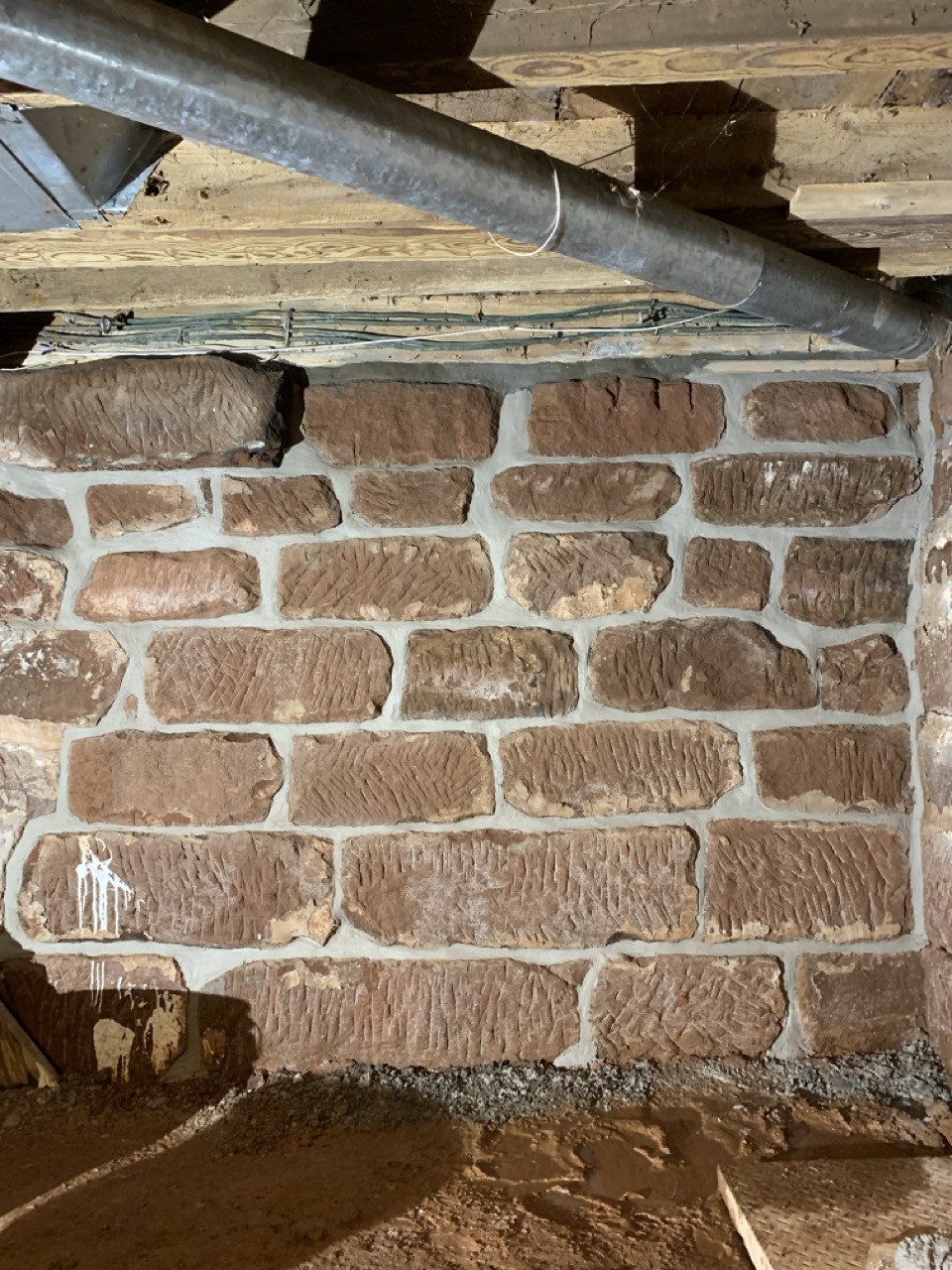
DinoMac focuses on masonry foundation repair, including old stone foundation repointing and rebuilding, concrete block wall repair, selected grouting, parging after underlying repairs, crack-related masonry work and selected concrete repairs. If a problem is primarily drainage, waterproofing-system or structural stabilization work, another specialist or engineer may also be appropriate.
Foundation repair cost varies widely because localized repointing or parging is very different from rebuilding a displaced wall or correcting a structural problem. Wall type, access, moisture conditions, movement, excavation requirements and how much sound masonry can be retained all affect the scope. Clear photos and a site assessment where needed are the best way to establish a realistic repair plan.
Sometimes parging is appropriate as a protective or finishing layer, but it is not a structural repair by itself. If a crack is caused by movement, water pressure, settlement or wall displacement, the cause should be addressed before the surface is simply covered.
Yes. Stone foundation work can include repointing, resetting loose stones, localized rebuilding, selected grouting and repair of deteriorated areas where the masonry itself is the problem.
Common causes can include soil pressure, frost movement, drainage problems, settlement, water pressure and deterioration of mortar joints. The visible crack alone does not always reveal the full cause.
A crack should be assessed if it is widening, recurring, associated with movement, accompanied by water entry, or if the wall is bulging, displaced or shedding masonry. Sudden or significant movement warrants prompt professional attention.
Sometimes interior repairs can reduce or manage water entry, but the correct solution depends on where the water is coming from. Exterior grading, drainage, cracks, joints and wall condition may all need to be considered.
If a foundation shows significant movement, bulging, major cracking, settlement, uncertainty about structural capacity or a repair that changes load-bearing conditions, an engineer may be appropriate before or alongside masonry work.
Those problems can appear together, but they do not have the same repair. Start by separating water management, material failure and movement.
Separate drainage, groundwater and condensation from actual foundation deterioration.
Learn what parging does, why it fails and what it cannot repair.
See what loose stone, mortar loss, bulging, moisture and previous patching can indicate.
Understand when ordinary masonry repair becomes a question of support, movement or structural design.
Tell DinoMac what you are seeing, where the property is located and what you would like to accomplish. If you have photos, they can help establish the next step.
Send clear photos of the full wall, close-ups of the damaged area and the project location. If the crack has changed over time or water is entering, include that information as well.