Long wall runs
Long uninterrupted brickwork accumulates movement and generally needs planned vertical expansion joints.
Brick walls move. Clay brick expands slowly with moisture, warms and cools with the seasons, and often sits in front of backing materials that move differently. Expansion joints give that movement a planned place to occur.
When movement is restrained, stress often appears as cracking at corners, openings, long wall runs or changes in support.
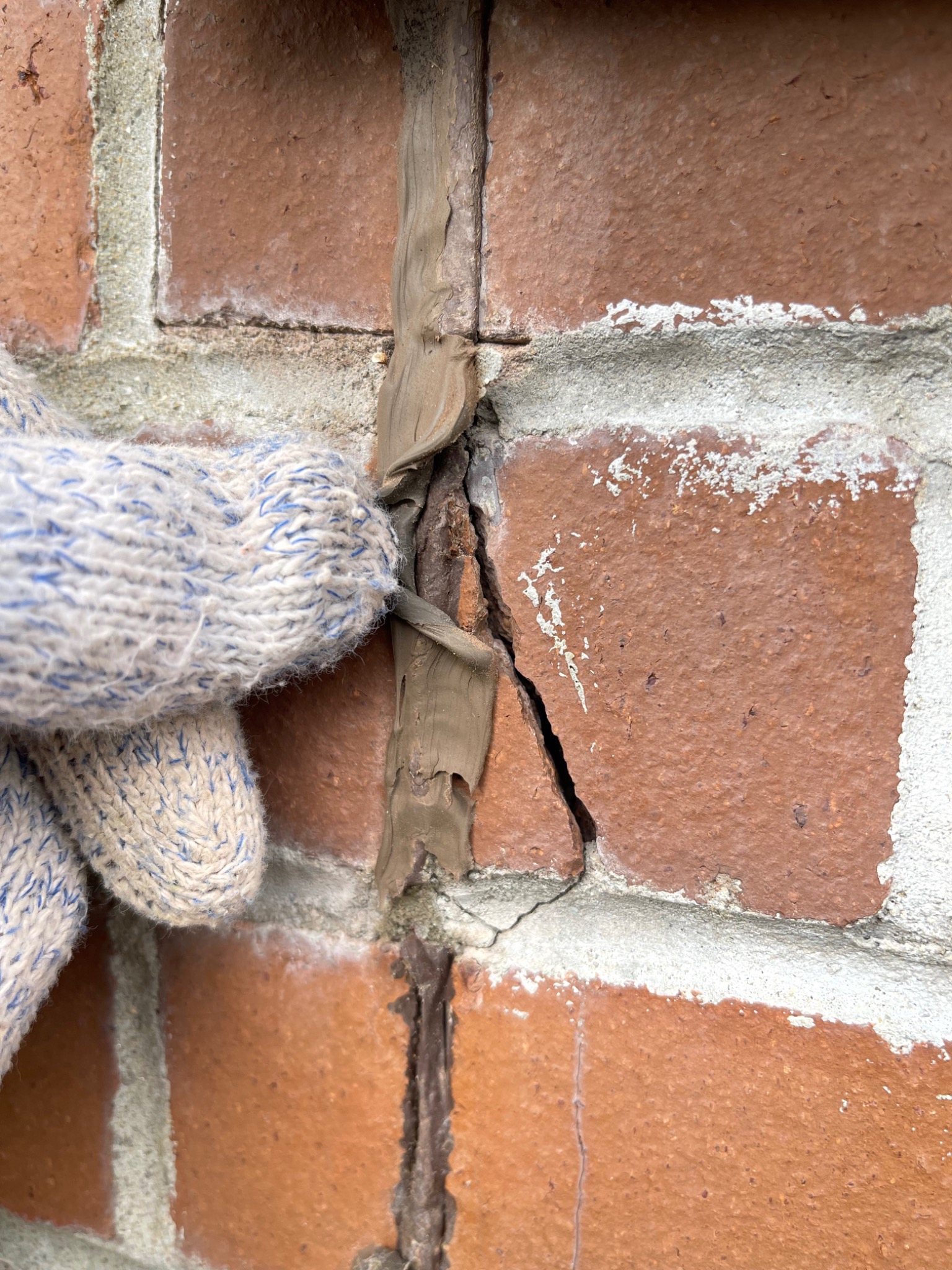
Movement needs somewhere to go. A properly detailed expansion joint gives brickwork room to move without forcing stress into random cracks.
Fired clay brick undergoes long-term moisture expansion and normal thermal movement.
Brick veneer, steel lintels, concrete slabs, wood or steel framing and foundations do not all move at the same rate.
A properly located joint with flexible sealant allows the brickwork to move without forcing stress into random masonry cracks.
Brick Industry Association guidance uses expansion joint for clay brick masonry because clay units experience net expansion. Control joint is more commonly used for concrete masonry, where shrinkage behaviour is different.
Homeowners often hear the terms used interchangeably, but the underlying point is the same: masonry and the materials around it need a deliberate way to accommodate movement.
Field example: a movement joint has to be continuous and detailed as a joint, not partially bridged with rigid masonry.
Long uninterrupted brickwork accumulates movement and generally needs planned vertical expansion joints.
Outside corners, setbacks and changes in direction can restrain movement and concentrate cracking.
Where walls meet or terminate, movement should not be locked together unintentionally.
Stepped rooflines, parapets and changes in wall height can create stress concentrations.
Movement can increase where veneer support changes, such as at shelf angles, foundations or different backing systems.
Windows and doors interrupt the wall and introduce lintels, sills and corners where several movements can meet.
BIA Technical Note 18A gives typical maximum spacing guidance for vertical expansion joints in brick veneer, including closer spacing where openings are present, and also lists specific locations where joints should be considered regardless of spacing.
Those values should not be used in isolation to retrofit joints into an existing house. Wall height, openings, corners, support, backing, exposure and existing crack patterns all affect layout.
BIA Technical Note 18A: Accommodating Expansion of Brickwork →
If a long brick wall repeatedly cracks in the same places after repointing, the repair should ask whether movement is being restrained rather than simply filling the crack again.
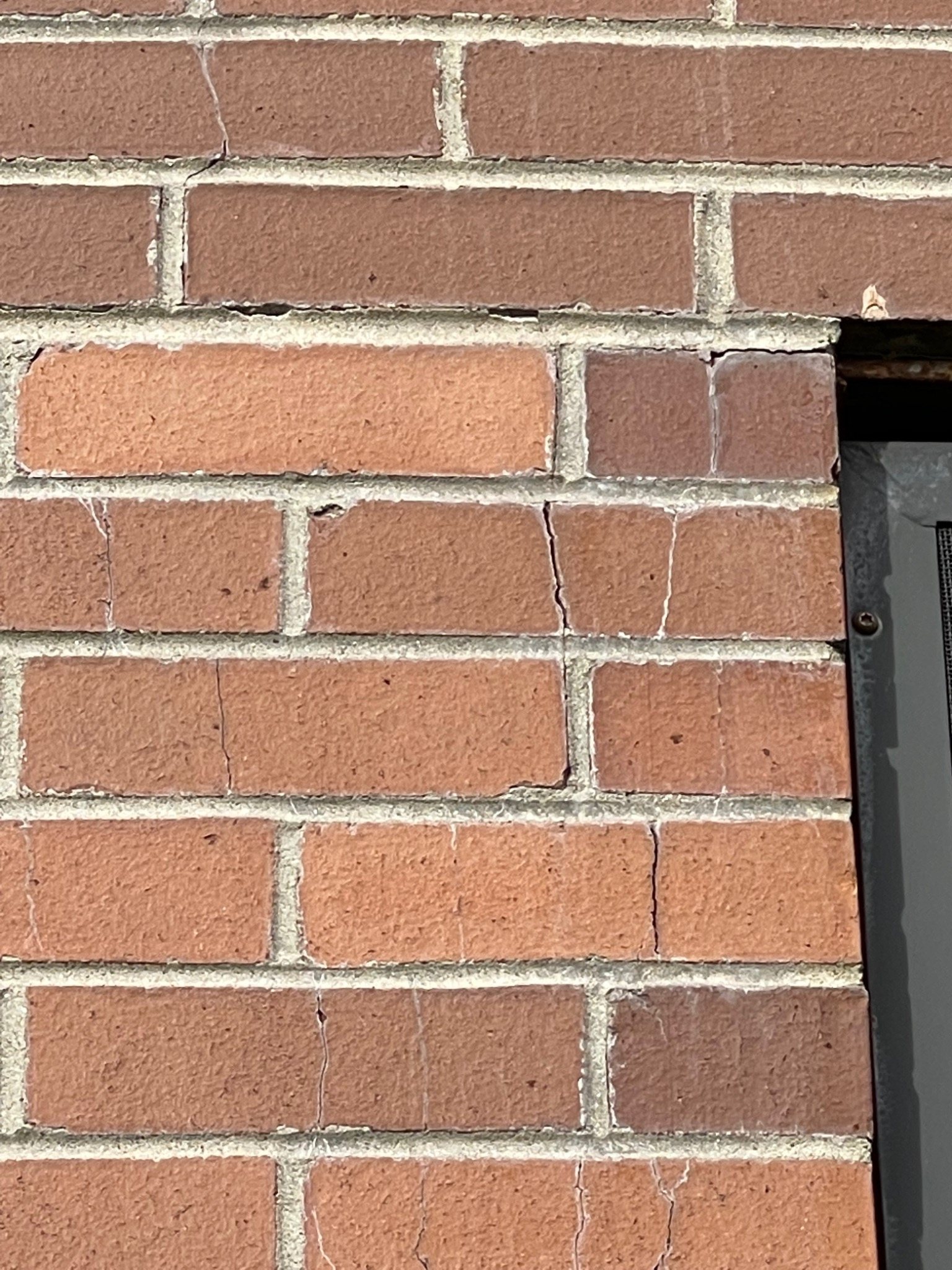
Cracks near openings have several possible causes. Movement joints, lintels, support and water all have to be considered together.
Steel lintel corrosion can lift brick. Settlement can pull an opening out of square. Inadequate bearing or flashing can create other failure patterns. Movement joints are one part of the diagnosis, not a universal answer.
At the J. David Stewart Armoury, lintel corrosion and movement-joint conditions were both relevant to the masonry around openings, illustrating why the whole assembly has to be opened and understood before repair.
A typical veneer expansion joint is kept free of mortar and uses a compatible backer and sealant system. The sealant must remain adhered to the joint sides while allowing extension and compression.
Rigid mortar, debris or brick bridges across the joint can prevent movement. A joint that looks present on the surface but is locked together behind the sealant may not function as intended.
Where brick veneer is supported at shelf angles or other horizontal supports, the brick below needs space to expand without being trapped against the support above. BIA guidance addresses horizontal joints below shelf angles and other support transitions.
This is more common on larger or multistorey buildings than on simple low-rise houses, but the principle is useful for understanding why brick cannot be wedged tightly between rigid building elements.
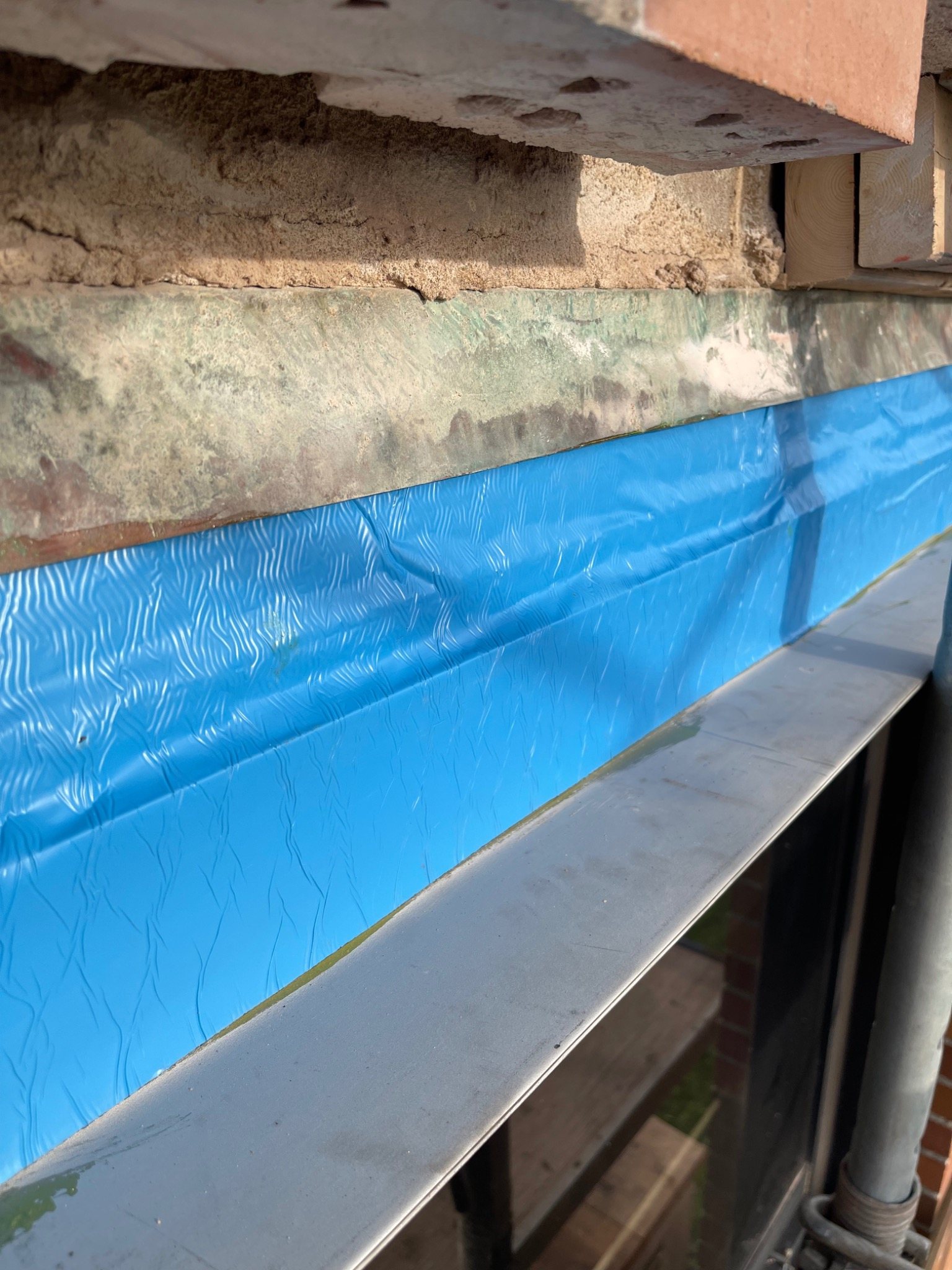
Support and movement work together. Lintels, shelf angles and veneer supports should not unintentionally restrain brick expansion.
If a crack has stopped moving and the cause was corrected, localized masonry repair may be appropriate. If movement is active or seasonal, rigid repointing alone may simply move the crack to the next weakest joint.
Dated photographs and simple monitoring can help show whether a crack is changing. Large, widening or structurally significant movement may justify engineering review.
Dean is a third-generation mason with more than 20 years of hands-on masonry experience.
Last reviewed: August 28, 2026
An expansion joint is a deliberate flexible separation that allows brickwork to move without concentrating stress into random cracks. In clay brick veneer, BIA generally refers to these as expansion joints rather than control joints.
Clay brick experiences long-term moisture expansion and also responds to temperature changes. Brick veneer can also move differently from concrete, steel, wood framing and other building materials.
Common locations include long wall runs, corners, offsets, wall intersections, changes in height, changes in backing or support, and areas around openings where movement can concentrate. Exact layout is a design decision.
No. A movement joint needs to remain capable of movement and is normally sealed with a compatible flexible sealant system. Filling it rigidly with mortar defeats its purpose.
BIA uses expansion joint for clay brick because brick has net expansion. Control joint is more commonly used for concrete masonry, which has different shrinkage behaviour.
No. Cracks can come from lintel corrosion, settlement, foundation movement, poor support, impact or other causes. Crack location and pattern should be diagnosed before adding a joint.
Include corners, windows, doors, rooflines, changes in wall height and any existing sealant joints. The surrounding geometry is often what explains why a crack keeps returning.