Mortar Condition
Joint depth, erosion, bond, hardness, previous repairs and whether repointing is actually needed.
Some masonry problems are straightforward repair work. Others raise questions about building movement, support, loading or structural stability. The useful question is not which profession is “better.” It is which question needs to be answered.
A mason understands masonry materials, deterioration, repair methods and how brick, stone and mortar behave in the field. A structural engineer evaluates structural behaviour, loads, support, movement and repair design when engineering analysis is required. Many significant projects need both.
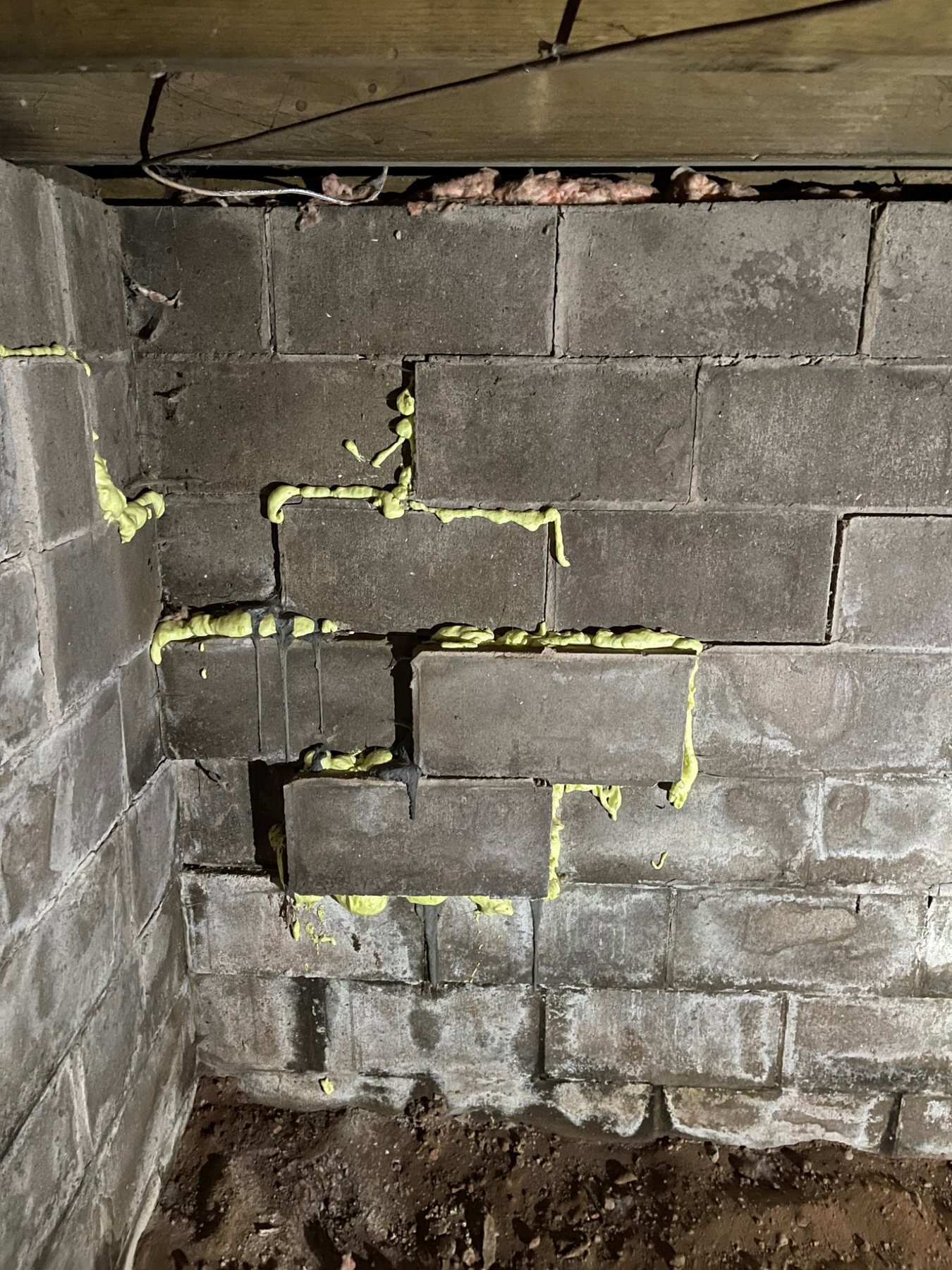
Movement changes the question. Once a wall is bulging, leaning or losing alignment, the issue is no longer simply how to replace mortar.
These categories are practical starting points, not substitutes for an on-site assessment.
Mortar erosion, localized repointing, isolated damaged brick or stone, chimney crown deterioration, ordinary water-entry repairs, masonry matching and repair-scope questions.
Bulging or leaning walls, significant displacement, uncertain bearing, major foundation movement, failed structural support, recurring movement after repair or any repair that needs structural calculations or design.
Large foundation rebuilds, structurally damaged lintels, unstable chimneys, masonry walls with active movement, underpinning, major opening alterations and heritage masonry where structural work must preserve historic fabric.
Some masonry-adjacent problems belong elsewhere: formal solid-fuel inspection, geotechnical soil investigation, roofing, window-system leakage or building-envelope analysis may need their own specialist.
The field question is often: what has deteriorated, why, and what repair will preserve the masonry?
Joint depth, erosion, bond, hardness, previous repairs and whether repointing is actually needed.
Spalling, cracking, loose units, salt damage, freeze-thaw deterioration and replacement options.
Crowns, caps, flashing, joints, sills, grade and other masonry-related water paths.
Whether masonry can be selectively repaired, reset, repointed or needs broader dismantling.
Mortar selection, unit matching, joint profile and compatibility with older masonry.
Access, sequencing, temporary support needs, weather protection and how a repair can actually be built.
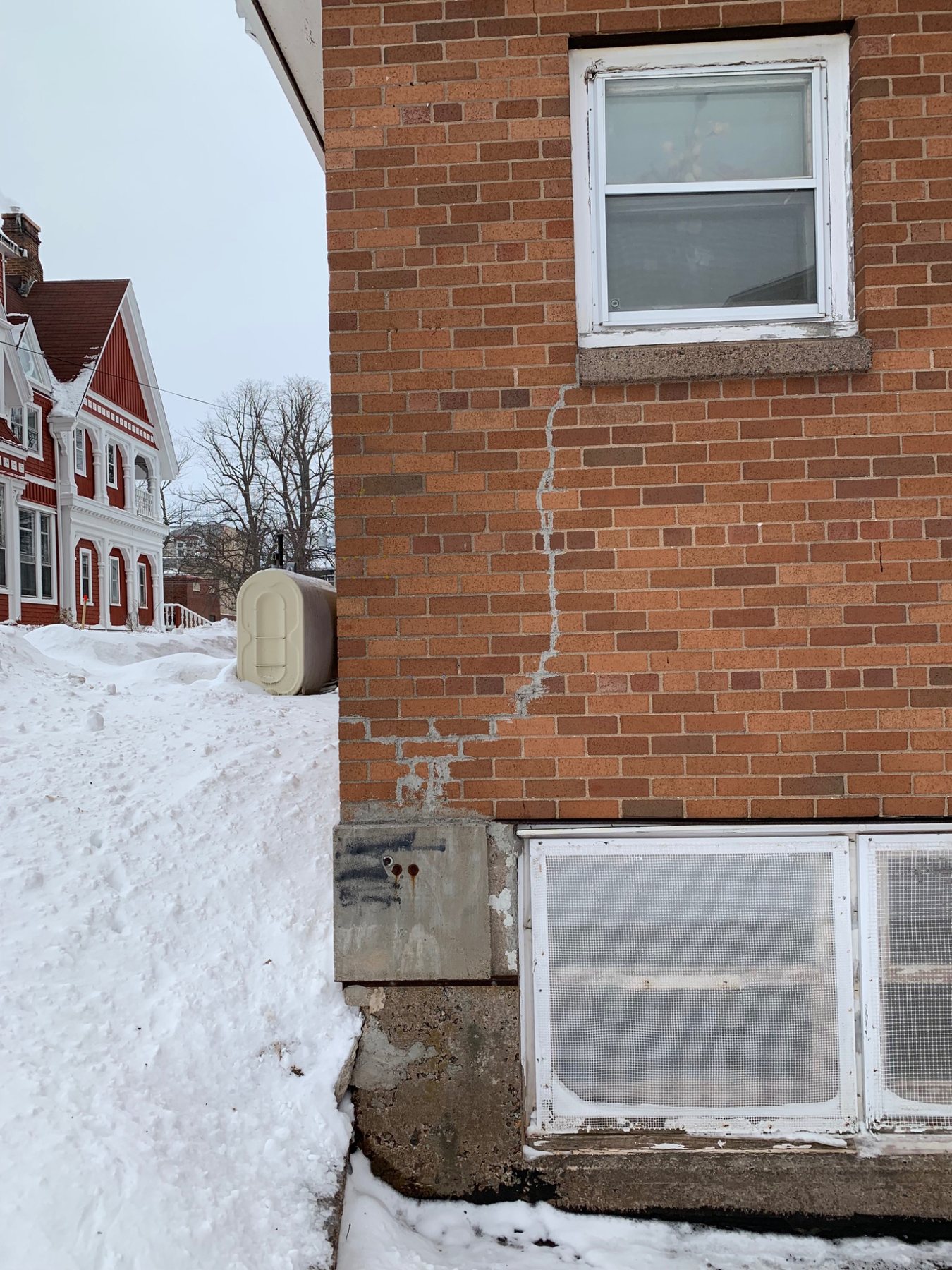
A crack pattern is evidence, not a diagnosis. A mason may recognize whether the immediate repair looks routine, while active movement or uncertain support can require engineering analysis.
A structural engineer can evaluate load paths, support, restraint, deflection, bearing, lateral pressure and whether movement affects the safety or serviceability of the structure.
Engineering may include measurements, calculations, drawings, specifications, monitoring recommendations or a designed repair. That is different from identifying which mortar should be used or how an old stone joint should be repointed.
In Prince Edward Island, professional engineering is regulated by Engineers PEI. Someone practising professional engineering in the province must be appropriately licensed.
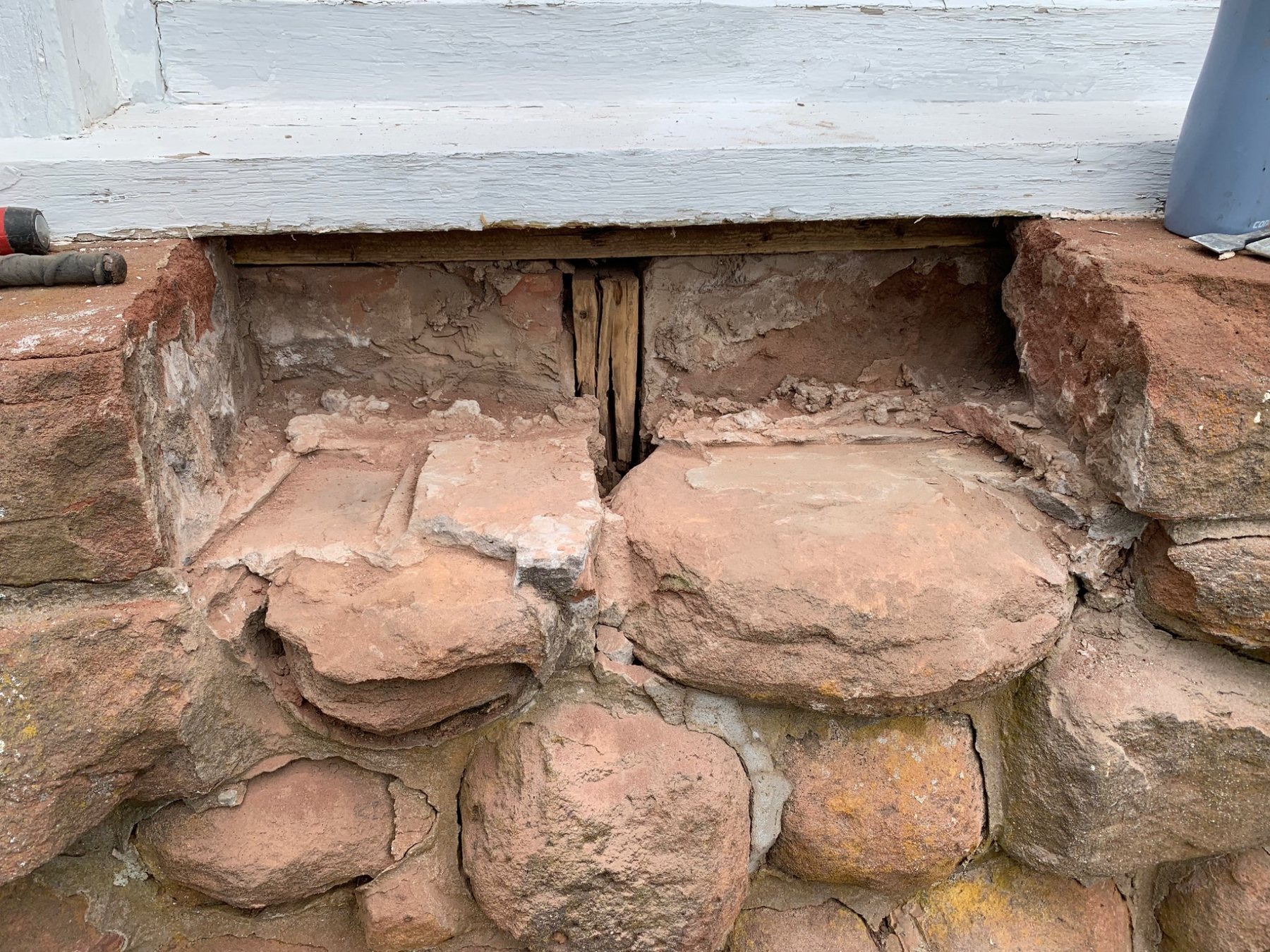
Bearing is a structural question. When beams, walls or other loads depend on a deteriorated masonry zone, the repair may need both masonry knowledge and engineering design.
Stair-step, vertical, horizontal and through-unit cracks can point toward different mechanisms.
Cracks at openings, corners, foundations, additions or bearing points deserve different questions.
A crack with one side pushed outward or dropped is more significant than a tight surface line alone.
Active widening, recurring seasonal movement or rapid change carries more information than one measurement.
Sticking doors, sloping floors, bulging walls and distorted openings can connect masonry cracks to broader movement.
Cracks returning through previous repairs suggest the visible joint was not the whole problem.
National Park Service structural-monitoring guidance notes that bulging or leaning in mass masonry can indicate local instability, but it can also be old, stable movement or even original construction irregularity.
That is why monitoring can matter. Crack gauges, repeat measurements and tilt monitoring can help establish whether a condition is still moving rather than simply documenting that it exists.
When a wall is actively bulging or leaning, the question is no longer only how to repoint the joints. Stability, restraint and load path need to be understood.
Shape matters. Wall alignment, displacement and whether the condition is changing can be more useful than the width of any single crack.
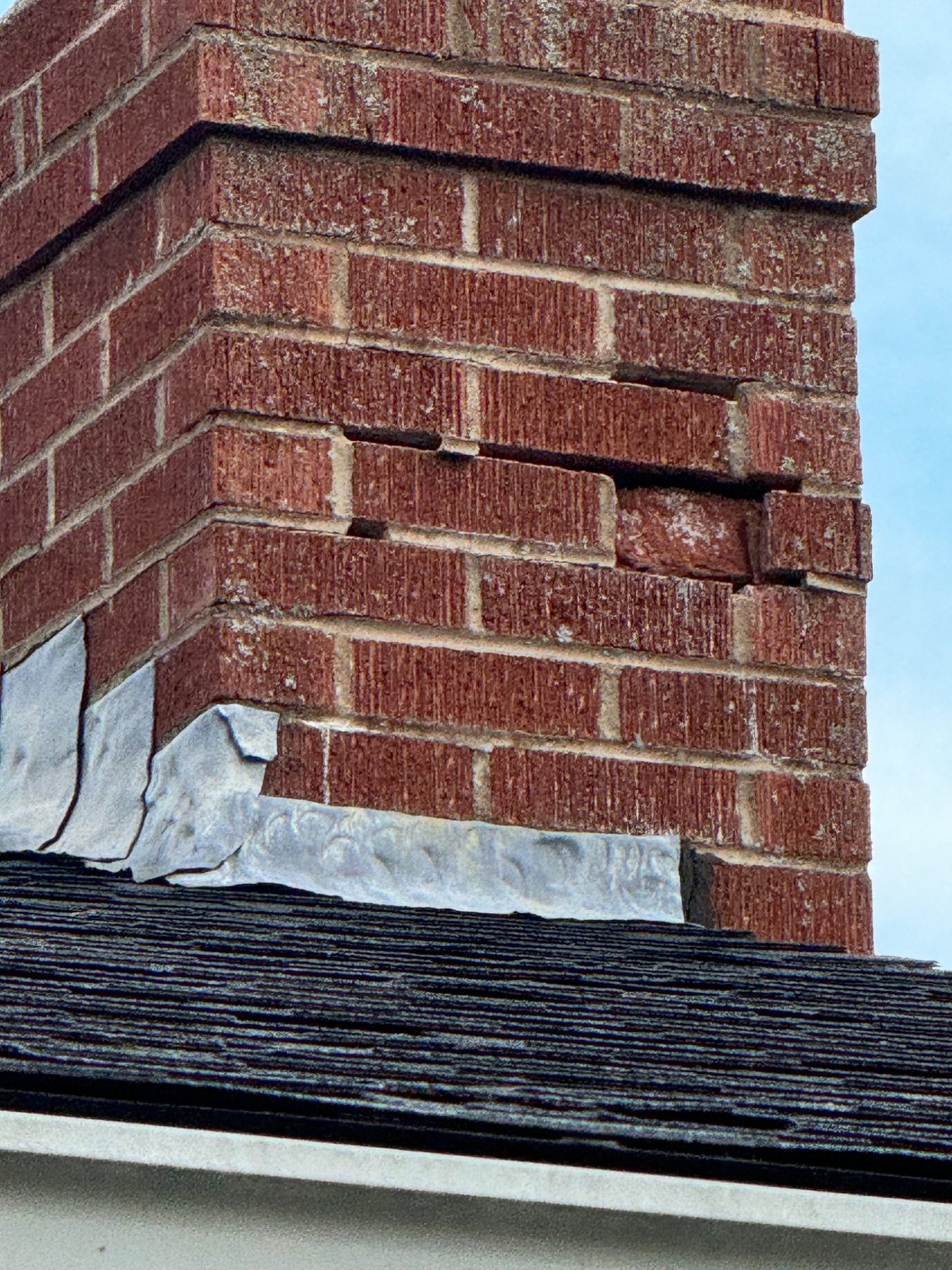
Loose overhead masonry is different from an ordinary maintenance crack. If material may fall, keep people away from the area and arrange prompt assessment.
Repointing, crown repair, unit replacement and localized rebuilding are usually within the mason's repair scope.
Engineering input becomes more relevant when a tall chimney is significantly leaning, separating from the building, losing support, structurally altered or difficult to stabilize safely during rebuilding.
The masonry and venting questions are also separate. For solid-fuel systems, formal appliance and venting inspection belongs with the appropriate solid-fuel specialist.
Read the masonry chimney anatomy guide →A mason can assess mortar loss, loose stone, parging failure, voiding and the repairability of old foundation masonry.
A structural engineer becomes more important when walls are bowing, bulging, losing bearing or require reinforcement, underpinning or designed reconstruction.
Soil can also be the driver. If settlement, slope instability or bearing capacity is the concern, a geotechnical engineer may be needed in addition to the structural engineer and mason.
Read the wet stone basement guide →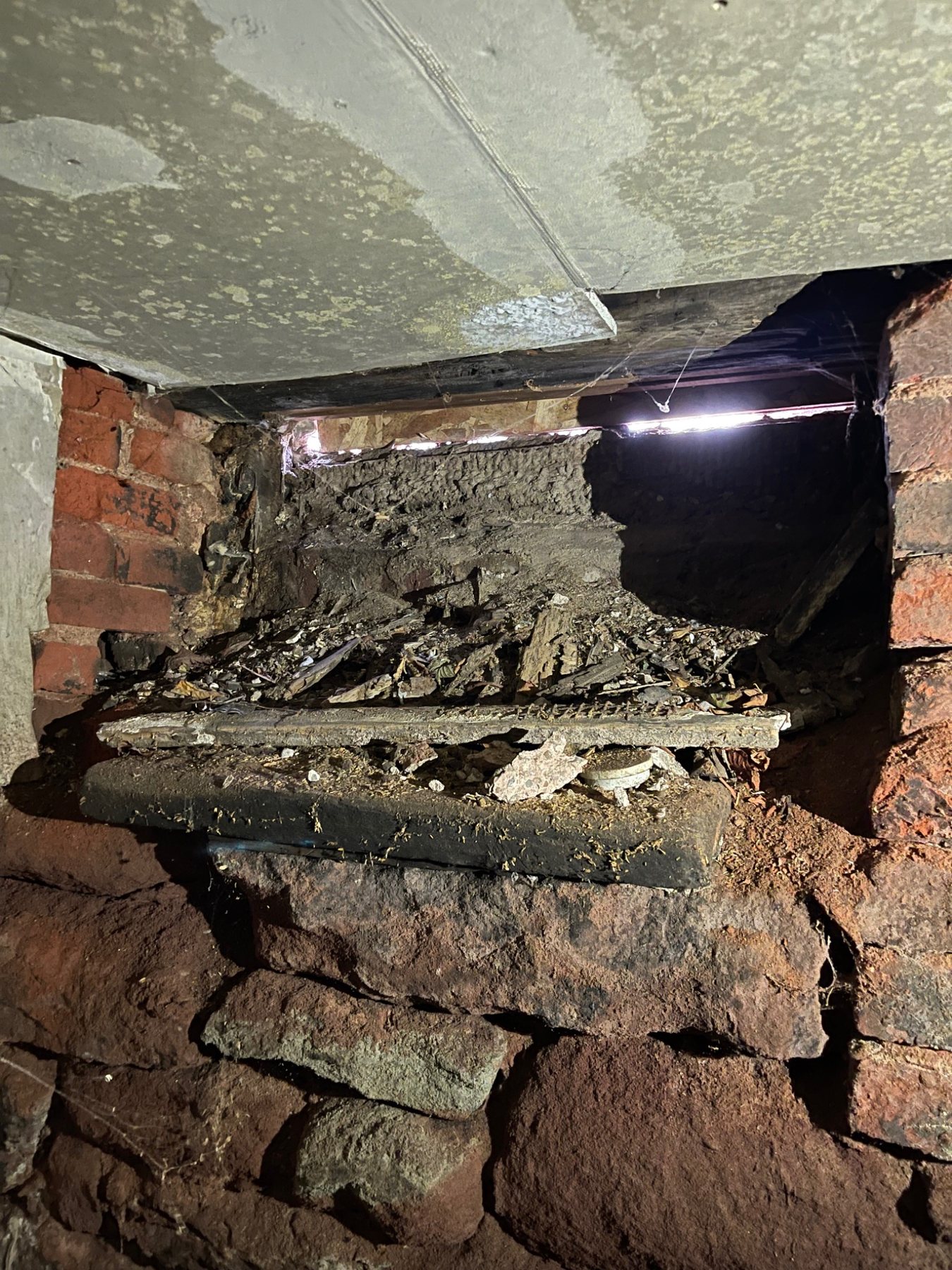
Not every ugly wall is unstable. Deep mortar loss can require substantial masonry repair without automatically meaning the building needs structural redesign.
A mason can identify corrosion, displaced brick, mortar failure and whether a lintel is visibly deteriorated or deflecting.
When the replacement support needs to be sized, when bearing is uncertain or when a large opening is being altered, structural design may be required.
A common arrangement is therefore straightforward: the engineer determines the support requirement, and the mason opens the wall, installs or coordinates the support and rebuilds the masonry around it.
Read the lintel and opening cracks guide →Engineer: What support is required?
Mason: How is the masonry safely opened, repaired and rebuilt around that support?
On complex work, those answers should be coordinated rather than competing.
Take wide and close photographs, note when the problem appeared and whether it is changing.
For ordinary masonry deterioration, a mason is often the practical first assessment.
Add an engineer when movement, support, loading or repair design is beyond routine masonry scope.
Separate masonry replacement, structural work, drainage and other building-system work into clear scopes.
On combined projects, the engineer's design and the mason's construction sequence should agree.
Photos, drawings, engineer reports and repair records can be valuable if movement is monitored later.
Engineers PEI states that anyone practising professional engineering in PEI must be appropriately licensed under the Engineering Profession Act and its bylaws.
Engineers PEI also maintains a public member and company directory. A company offering professional engineering services to the public requires the applicable Certificate of Authorization.
For a masonry-related structural problem, look for an engineer whose practice includes buildings and structural work relevant to the condition being assessed.
Keep people away from the hazard area and arrange prompt professional assessment. If collapse appears imminent, treat it as an immediate safety issue rather than waiting for an ordinary repair quote.
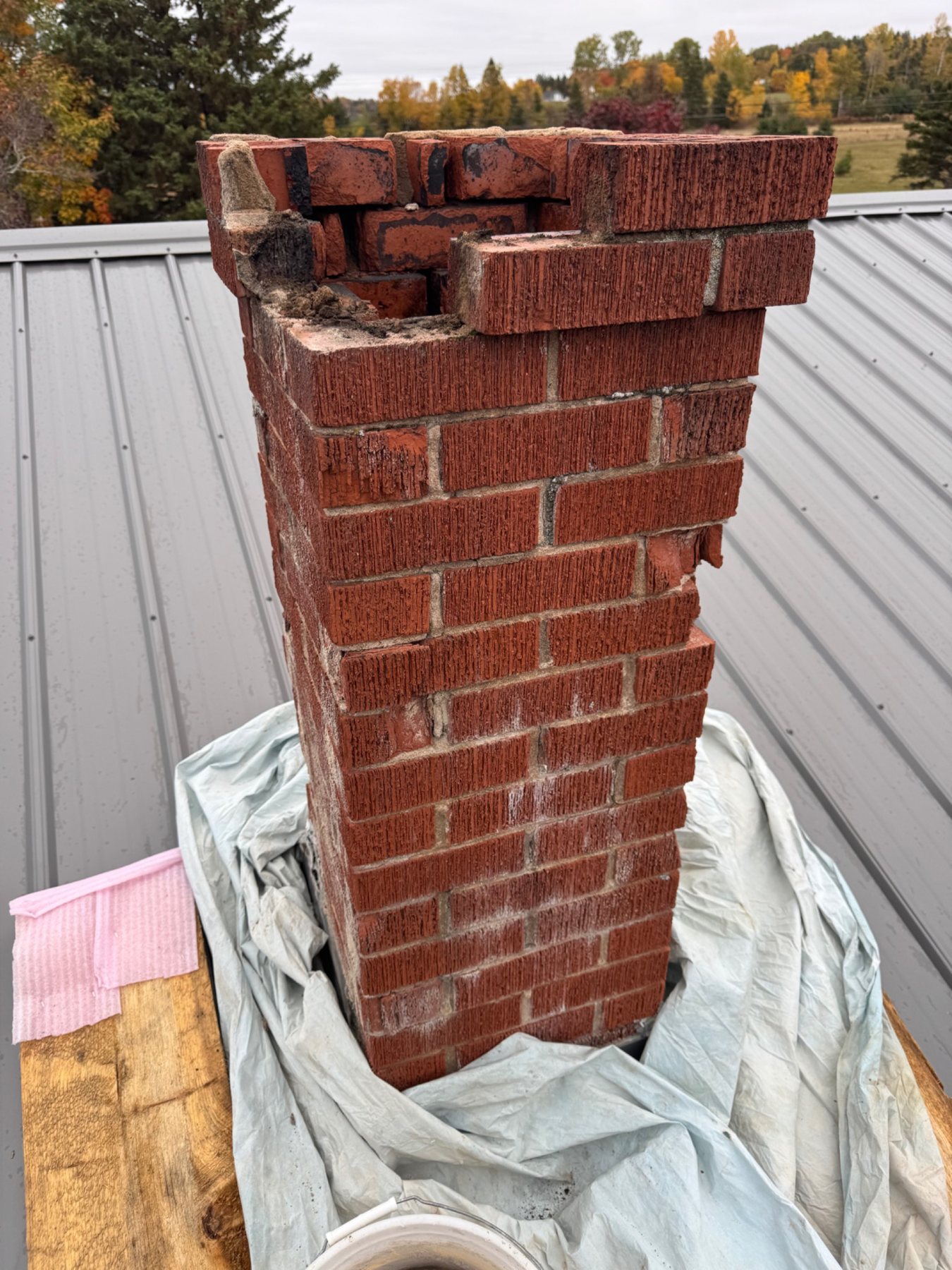
Safety changes priority. Once masonry becomes unstable enough to fall, diagnosis and repair scheduling come after keeping people out of the fall zone.
Across Prince Edward Island, Nova Scotia and New Brunswick, weathering can produce spalling, open joints, salt deposits and freeze-thaw damage that may look severe while remaining largely a material-deterioration problem.
At the same time, older buildings can have genuine settlement, wall movement, deteriorated lintels and long-term foundation displacement.
The useful regional approach is to separate material deterioration from structural movement rather than assuming every crack needs an engineer or every bulge can be fixed with mortar.
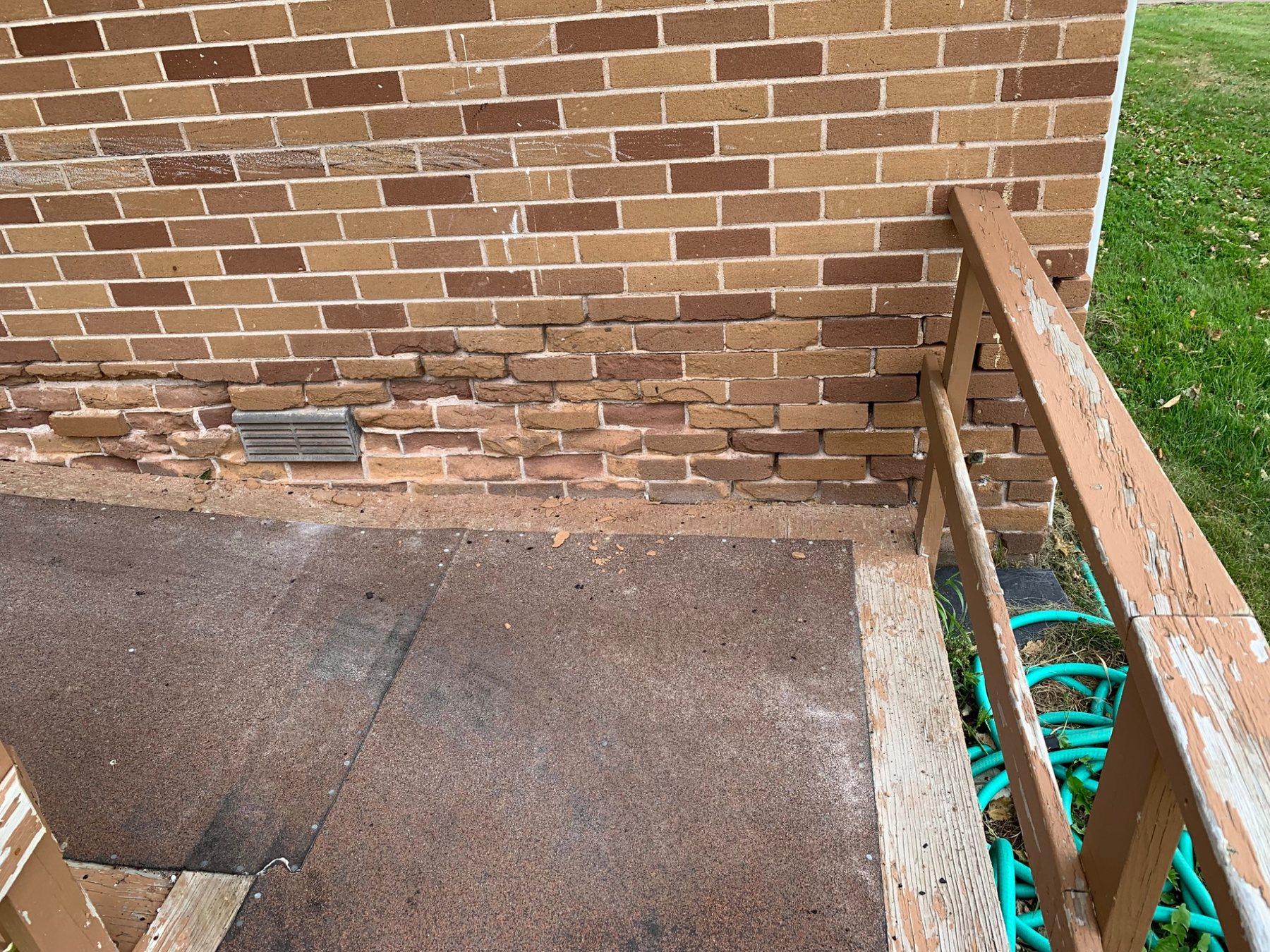
Deterioration can be dramatic without being the same as structural movement. That distinction is one reason an experienced masonry assessment is useful.
Show the full elevation or foundation section, not only the crack.
Show where it begins, where it ends and whether it follows joints or units.
Photograph bulging, leaning, displaced courses and wall transitions.
Include windows, doors, lintels, beams and bearing points near the damage.
Where possible, show both faces of the same wall or matching interior symptoms.
Repeat the same viewpoint with dates and a scale if movement is being monitored.
Engineers PEI regulates the practice of professional engineering in Prince Edward Island and provides a public directory for verifying licensed individuals and authorized engineering companies.
National Park Service structural-monitoring guidance for historic masonry describes crack and tilt monitoring as tools for determining whether observed cracking, bulging or leaning is actively changing over time. It also cautions that limited observations can be misleading because masonry movement can be seasonal or cyclical.
NRC Canada research on dimensional change in masonry similarly notes that cracking and bulging depend on material movement, restraint and structural design, and that a simple universal movement threshold is not realistic.
Engineers PEI: Is This Person Really a Professional Engineer? →
Engineers PEI: Member & Company Directory →
National Park Service: Best Practices in Stone Building Preservation Management →
Dean is a third-generation mason with more than 20 years of hands-on experience working with brick, natural stone, chimneys, foundations, repointing and masonry restoration in Prince Edward Island.
The DinoMac Masonry Knowledge Centre uses PEI field experience to explain masonry conditions that are also common across Atlantic Canada and other cold, wet climates.
Last reviewed: August 26, 2026
Start with a mason for ordinary masonry deterioration. Add an engineer when movement, support or structural repair design is uncertain.
A mason can recognize warning signs and repair patterns, but formal structural analysis and engineering opinions belong with a licensed professional engineer.
Bulging, leaning, major displacement, uncertain bearing or designed reinforcement and underpinning are strong reasons to involve one.
No. Pattern, displacement, location, progression and associated building movement matter more than the crack type alone.
Yes. The engineer can define structural requirements while the mason executes the masonry portion of the repair.
Engineers PEI maintains a public member and company directory for verifying registration and authorization.
Include wide and close photos, the age of the building if known, whether the condition is changing and the PEI property location. DinoMac can assess the masonry side of the problem and identify when structural engineering input should be added before a repair scope is finalized.