Lintel Deflection
A lintel that bends too much can allow the masonry above to settle or rotate, producing cracks at corners or through the units above the opening.
Cracks at the corners of a window or door often look like a simple mortar problem, but openings are some of the most mechanically complicated places in a masonry wall.
The masonry above an opening must be supported. It also has to accommodate building movement and, in many wall systems, drain water that gets behind the outer brick. When a steel lintel rusts, deflects or loses adequate bearing, or when the wall is moving around the opening, cracks can become the first visible clue.
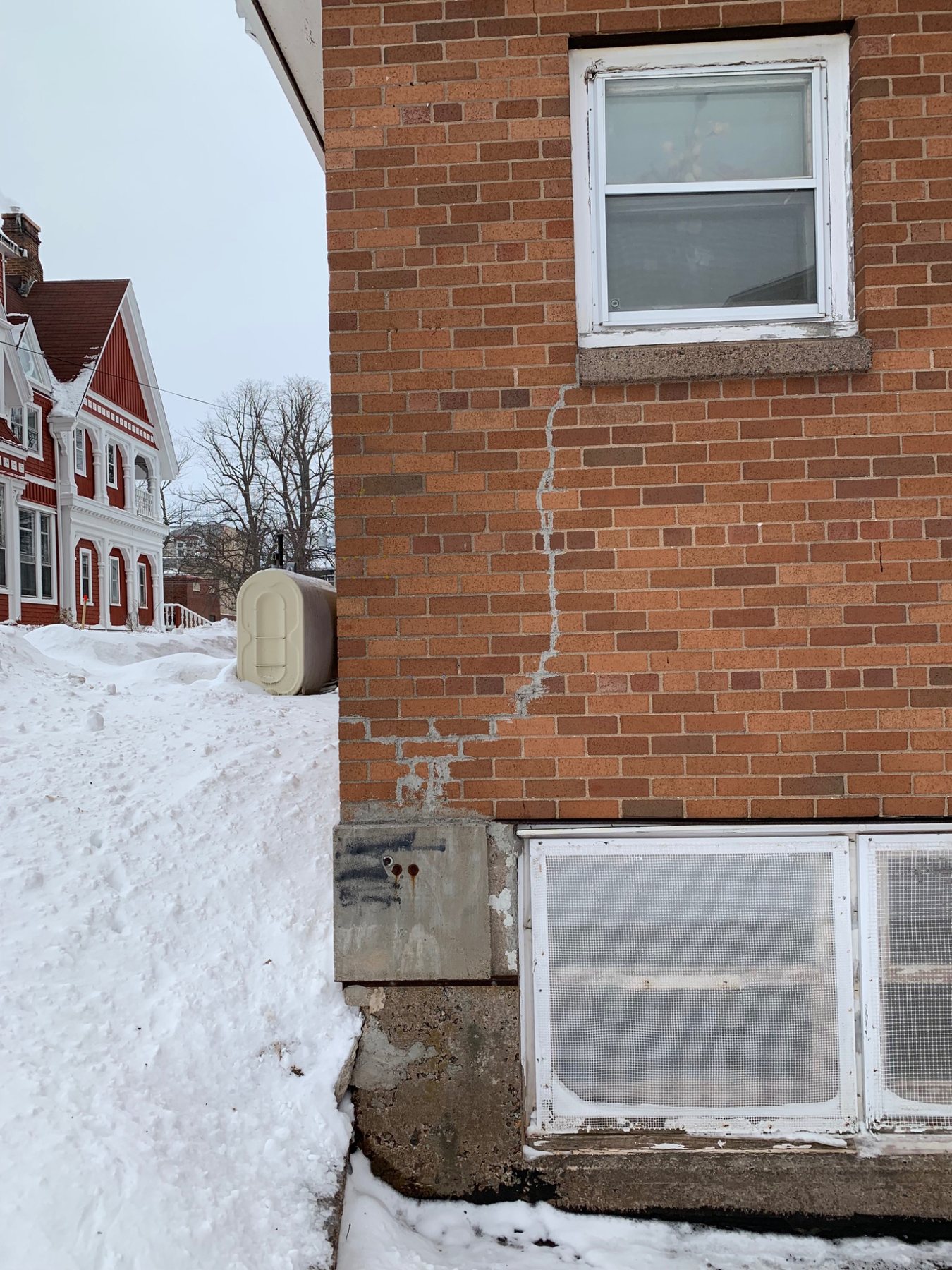
Do not photograph only the crack. Show the entire window or door, the masonry above it, the ends of the lintel where visible, the sill and several feet of wall on each side.
A lintel spans across an opening and supports the masonry above it. In many brick walls this is a steel angle or other steel member, although older buildings may use stone, reinforced masonry, arches, wood or other systems.
The lintel needs adequate strength, stiffness and bearing at each end. If it deflects too much, loses section through corrosion or does not bear properly into the surrounding masonry, the courses above can crack or move.
The opening itself also changes the geometry of the wall. Expansion, contraction and settlement often concentrate stresses at the corners because the continuous masonry has been interrupted.
The surrounding signs help separate corrosion, deflection, movement and moisture problems.
A lintel that bends too much can allow the masonry above to settle or rotate, producing cracks at corners or through the units above the opening.
Rust expansion can push upward and outward against surrounding masonry, opening joints, cracking brick and displacing courses near the lintel.
If the lintel does not have adequate support at its ends, concentrated stresses can damage the masonry where the support transfers into the wall.
Thermal, moisture and structural movement can concentrate at window and door corners even when the lintel itself remains sound.
Failed flashing, sealant or drainage can keep the lintel and nearby masonry wet, contributing to corrosion, staining and freeze-thaw deterioration.
Movement elsewhere in the building can use the opening as a stress concentration point, creating diagonal or stepped cracking from its corners.
Corner cracks are common clues. Their direction, whether they follow joints or break brick, and whether the courses above are displaced all help narrow the investigation.
A diagonal or stair-step crack from the corner of an opening can be associated with differential settlement, building movement, expansion and contraction, or movement of the support above the opening.
Brick Industry Association guidance on masonry movement specifically notes that openings can concentrate stresses when brick expansion and other building movements are restrained.
The crack direction is useful, but it does not identify the cause by itself. Look for rust, sagging, displaced courses, previous patching and movement elsewhere in the wall.
Compare masonry crack patterns →Steel does not simply become thinner when it corrodes. The corrosion products occupy more volume than the original metal. When that happens inside or directly beneath masonry, expansion can force against the surrounding brick and mortar.
Typical clues include rust staining, horizontal cracking near the lintel, lifted brick courses, cracked units, open joints and local outward displacement.
Corrosion also reduces the remaining steel section. A lintel can therefore have two related problems at once: rust expansion damaging the masonry and loss of steel capacity or stiffness.
The repair depends on how much corrosion has occurred, whether the lintel is still structurally adequate and whether the source of repeated wetting can be corrected.
Rust staining is evidence, not the whole diagnosis. The important questions are how much steel has deteriorated, whether the lintel has moved and whether the masonry above has lost support or alignment.
These are inspection clues, not automatic diagnoses.
Can point toward localized movement, settlement or stress concentration at the opening. Check whether the rest of the wall shows related movement.
May raise questions about support, lintel deflection, expansion restraint or movement of the masonry directly above the opening.
Corrosion, differential movement or separation along the support line should be considered, especially if rust staining or displacement is visible.
Upward displacement can be consistent with expanding corrosion beneath the masonry, although the steel condition must be inspected to confirm the cause.
Downward movement may indicate lintel deflection, inadequate bearing or loss of support and deserves closer structural assessment.
Through-unit cracking suggests the stress was not relieved by mortar joints alone and makes support and structural movement more important to investigate.
Loads from the masonry above must transfer through the lintel and into the wall at each end. If the bearing area is inadequate, deteriorated or disturbed by previous alterations, stresses can become concentrated in a small area of masonry.
Canadian building-code intent documents specifically identify inadequate lintel size, excessive span and inadequate bearing as conditions that can lead to cracking or structural failure of masonry veneer above openings.
On an existing building, the important visual clues are cracked bearing zones, crushed or displaced brick, sagging, altered openings and repairs that may have changed how the load is carried.
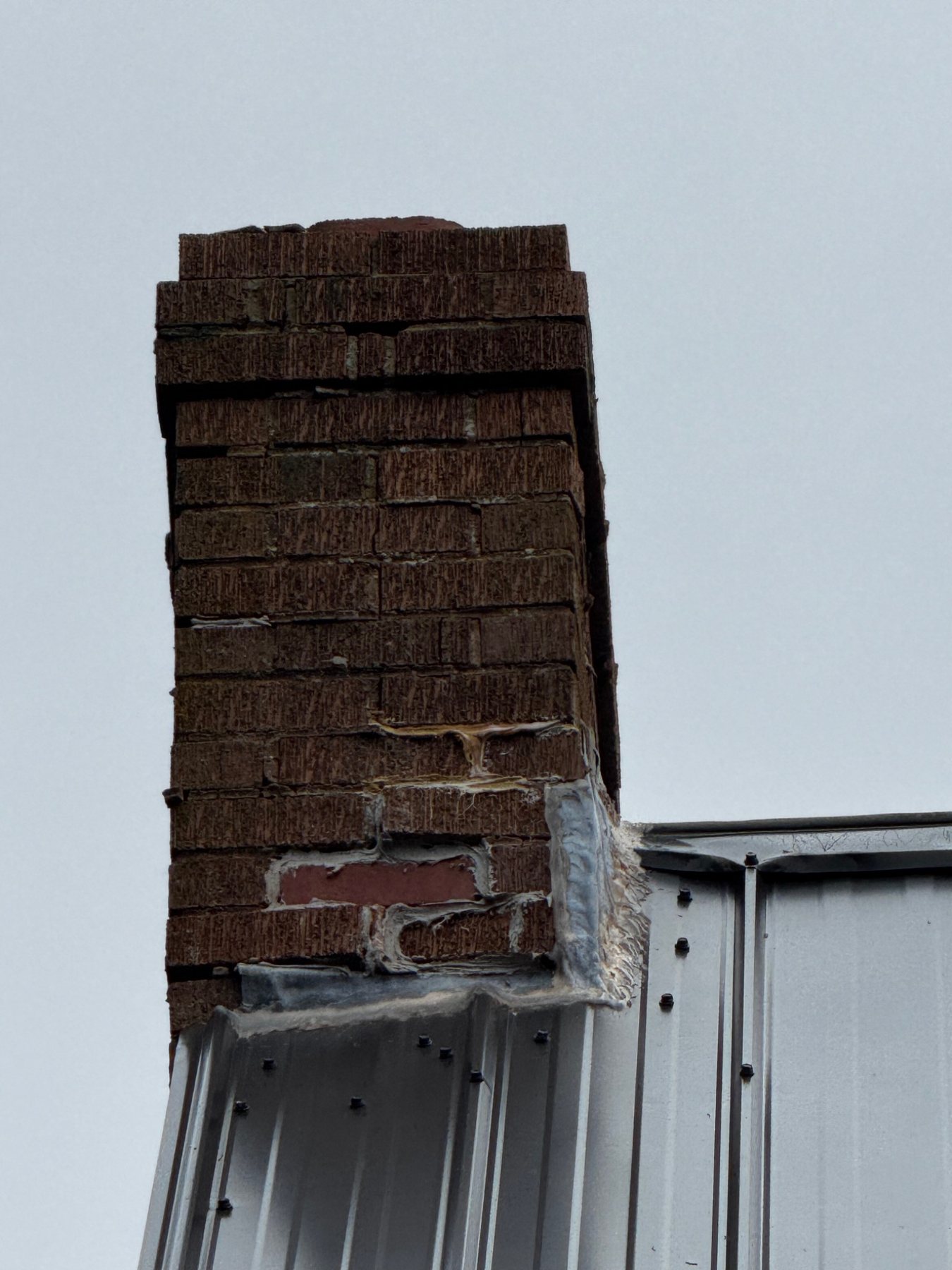
Corrosion needs moisture. If steel is rusting, ask how water is reaching it and whether the repair restores drainage as well as replacing or treating the metal.
Brick veneer is a drained wall system. Some rain can pass through the outer masonry, which is why concealed flashing and drainage paths are used to direct water back to the exterior.
At windows and doors, flashing above the opening, end conditions, weeps and perimeter transitions help prevent water from collecting around the lintel and entering the wall assembly.
When those details are missing, blocked or failed, the lintel can remain wet and corrosion can accelerate. Water may also show up as staining, efflorescence, interior leakage or freeze-thaw deterioration around the opening.
The exact wall detail varies with age and construction type. Older solid masonry walls do not necessarily contain the same cavity flashing details as modern brick veneer.
Read the brick veneer anatomy guide →Filling cracked joints can improve appearance and weather resistance after the underlying problem has been corrected. It does not stop an actively corroding lintel from expanding or a deflecting support from continuing to move.
Repeated mortar patches directly above windows and doors are therefore useful evidence. They can indicate that earlier repairs addressed the visible crack without changing the condition that created it.
A durable repair may involve removing masonry to expose the lintel, evaluating the steel, replacing or repairing the support as appropriate, restoring flashing and drainage, and then rebuilding the masonry with compatible materials.
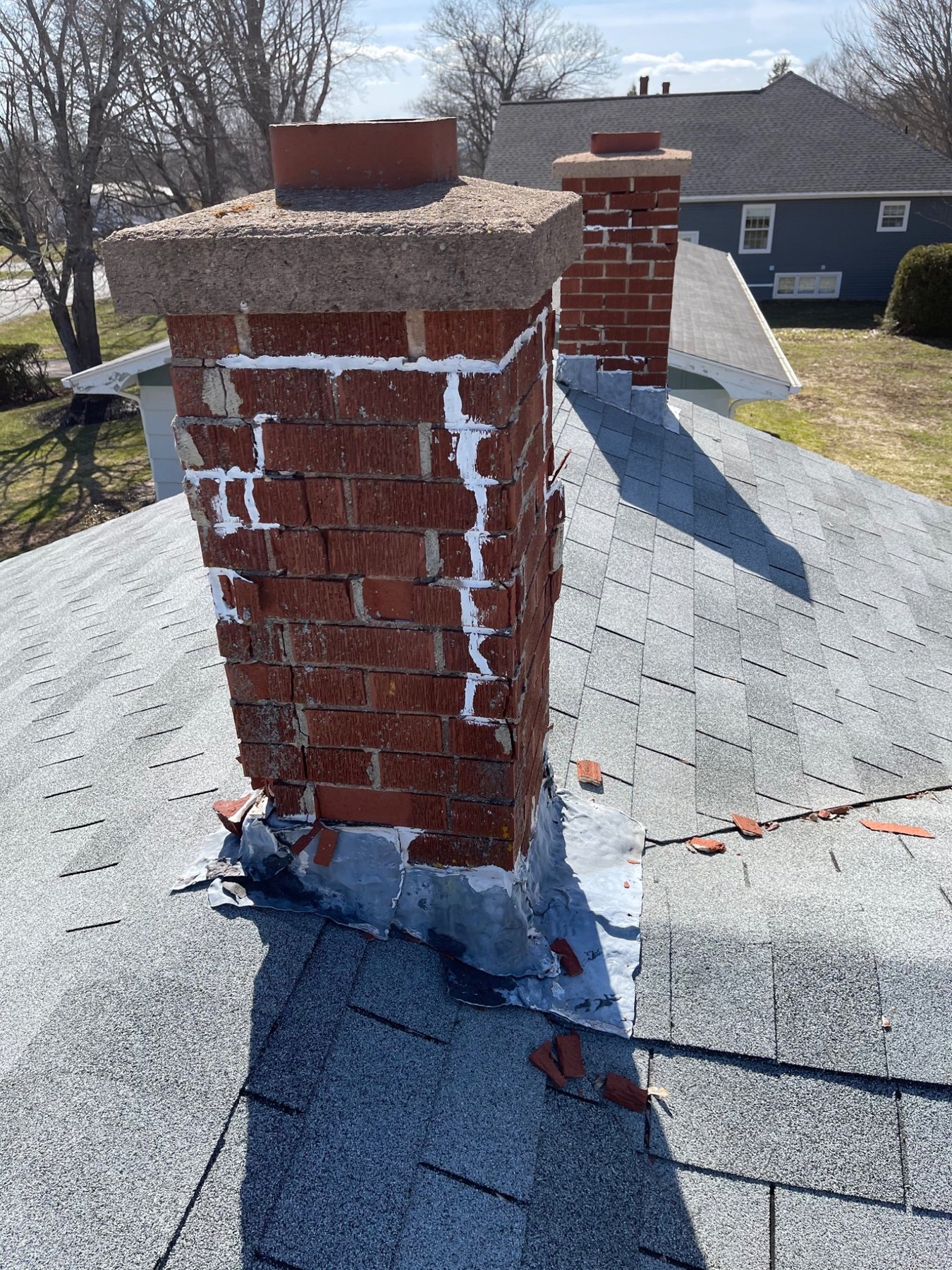
Previous patching tells a story. If the same crack repeatedly returns, the repair history should be part of the diagnosis rather than simply adding another layer of mortar.
Light surface corrosion on an otherwise sound and properly supported lintel is a different condition from deep section loss, heavy scaling, distortion or sagging.
Where the lintel is no longer serviceable, replacement may require temporary support of the masonry, selective dismantling above the opening, installation of a properly designed support, restoration of water-management details and rebuilding the brickwork.
Where structural design is required, the lintel should not be selected by a simple rule of thumb. Brick Industry Association guidance specifically treats structural steel lintels as engineered support elements for brick masonry.
The final repair method depends on wall type, opening width, loads, existing bearing, corrosion and local building requirements.
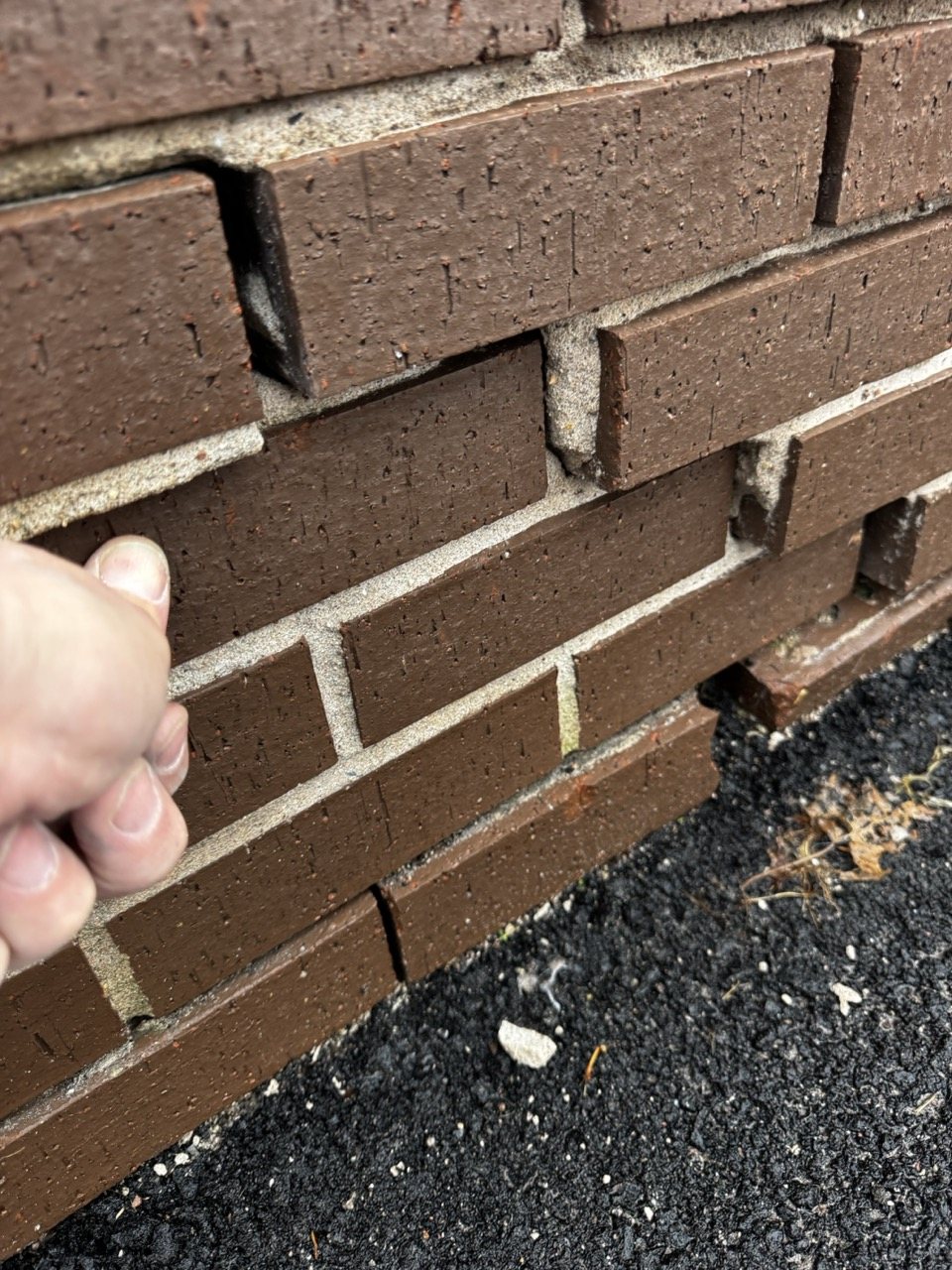
Loose units change the urgency. If cracking around an opening has produced displaced or unstable brick, keep people away from the fall zone and arrange prompt assessment.
Some conditions are primarily masonry repair. Others need engineering input to define the support requirement before the wall is rebuilt.
Across Prince Edward Island, Nova Scotia and New Brunswick, exposed openings can experience wind-driven rain, wet snow, freeze-thaw cycling and long periods of seasonal moisture.
Water reaching steel accelerates corrosion. Water reaching cracked brick and open joints can then contribute to freeze-thaw deterioration around the same opening. The result can be a combined corrosion, movement and masonry-damage problem rather than one isolated defect.
That is why the repair should restore both support and water management where either has failed.
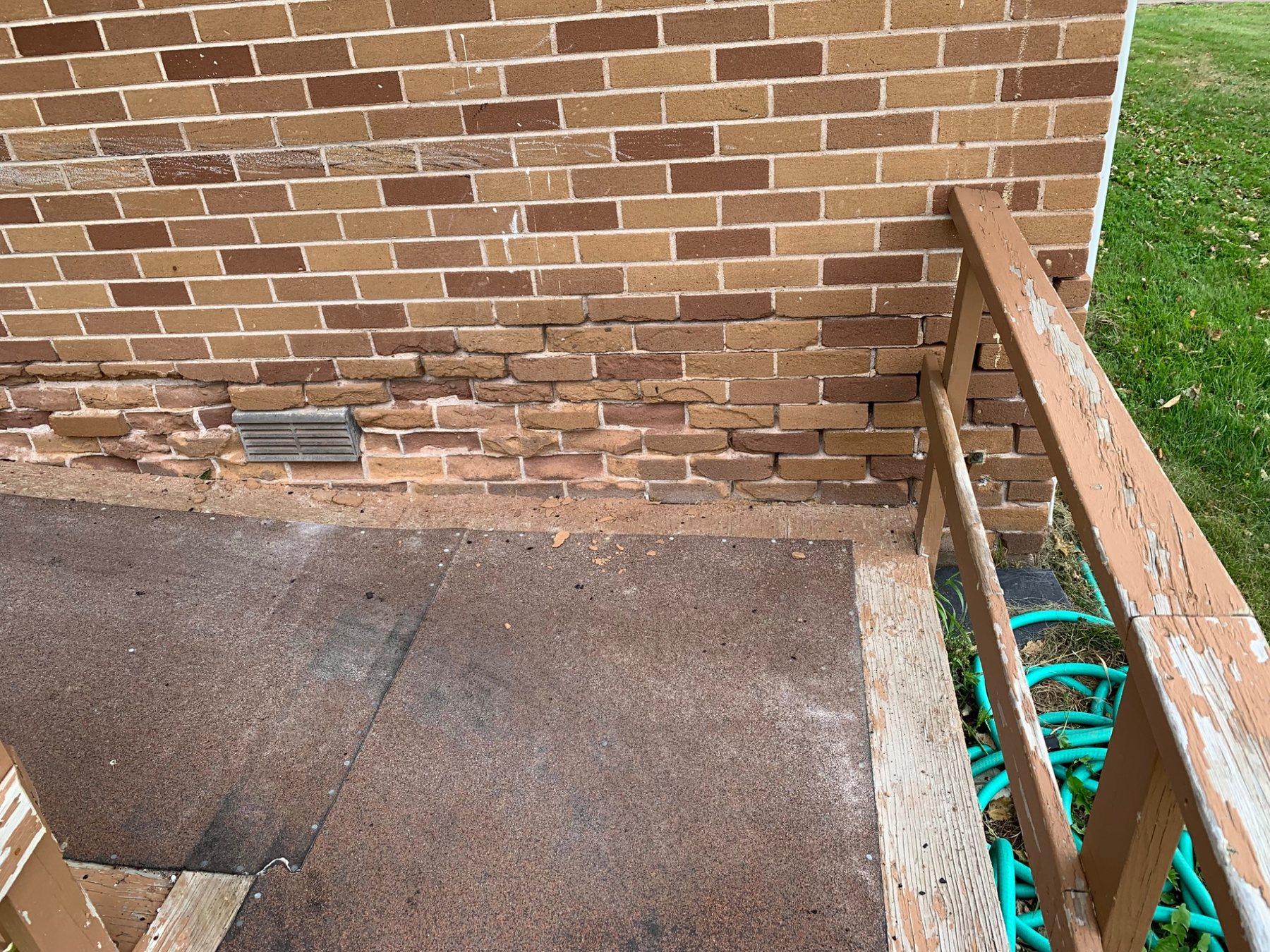
Regional lesson: A crack can create a water path, and the water can then accelerate deterioration. Movement and moisture often reinforce each other over repeated winters.
Show the entire window or door plus several courses above and masonry on both sides.
Photograph where the support bears into the wall and any cracks beginning at those areas.
Capture rust staining, visible scaling, distortion or separation where the lintel can be seen.
Show whether the crack follows joints, crosses bricks and has displacement across its face.
Include sills, sealant interfaces, weeps, overhangs and other nearby drainage conditions.
If present, photograph interior staining, distorted trim or cracking aligned with the exterior opening.
National Park Service guidance identifies cracking and displacement around openings as common signs of deflecting or failed lintels and arches. It also notes that iron and steel lintels can create cracking as they deflect or rust.
Brick Industry Association Technical Note 31B treats structural steel lintels as critical support elements whose loads, stresses and serviceability should be properly designed rather than selected by rule of thumb.
Canadian National Building Code intent statements identify excessive lintel deflection and inadequate bearing as conditions that can lead to cracking or structural failure of masonry veneer over openings.
Brick Industry Association movement guidance also explains how temperature, moisture and restraint can concentrate cracks around windows and doors even when the immediate support is not the only cause.
National Park Service: Common Problems with Brick Masonry →
Brick Industry Association: Technical Notes, including 31B Structural Steel Lintels →
NRC / National Building Code Intent: Masonry Lintels & Bearing →
Brick Industry Association Technical Note 18: Volume Changes & Movement →
Dean is a third-generation mason with more than 20 years of hands-on experience working with brick, natural stone, chimneys, foundations, repointing and masonry restoration in Prince Edward Island.
The DinoMac Masonry Knowledge Centre uses PEI field experience to explain masonry conditions that are also common across Atlantic Canada and other cold, wet climates.
Last reviewed: August 26, 2026
The cause may be lintel deflection, corrosion, inadequate bearing, wall movement, settlement, moisture or a combination.
Corrosion products expand around the steel and can push against the surrounding masonry, opening joints and displacing brick.
Not automatically. The steel condition, section loss, deflection, bearing and masonry displacement determine the repair scope.
Only after the cause is stable. Repointing will not stop an actively corroding or deflecting lintel from moving.
Drainage-type veneer generally relies on flashing and drainage details to redirect water, although exact construction varies by age and wall type.
When there is significant sagging, displacement, uncertain support or bearing, major through-unit cracking or repeated movement after repair.
Include wide and close photos, rust staining or visible steel, any sagging or displacement, nearby water-management details and the PEI property location. DinoMac can assess whether the visible problem appears primarily masonry-related or whether the support should also receive structural review.
At the J. David Stewart Armoury in Charlottetown, widespread lintel corrosion expanded beneath the brickwork and damaged many window openings. Opening the wall also exposed drainage and movement-joint problems that helped explain why an earlier lintel replacement had not lasted.
See the Armoury lintel & brick restoration →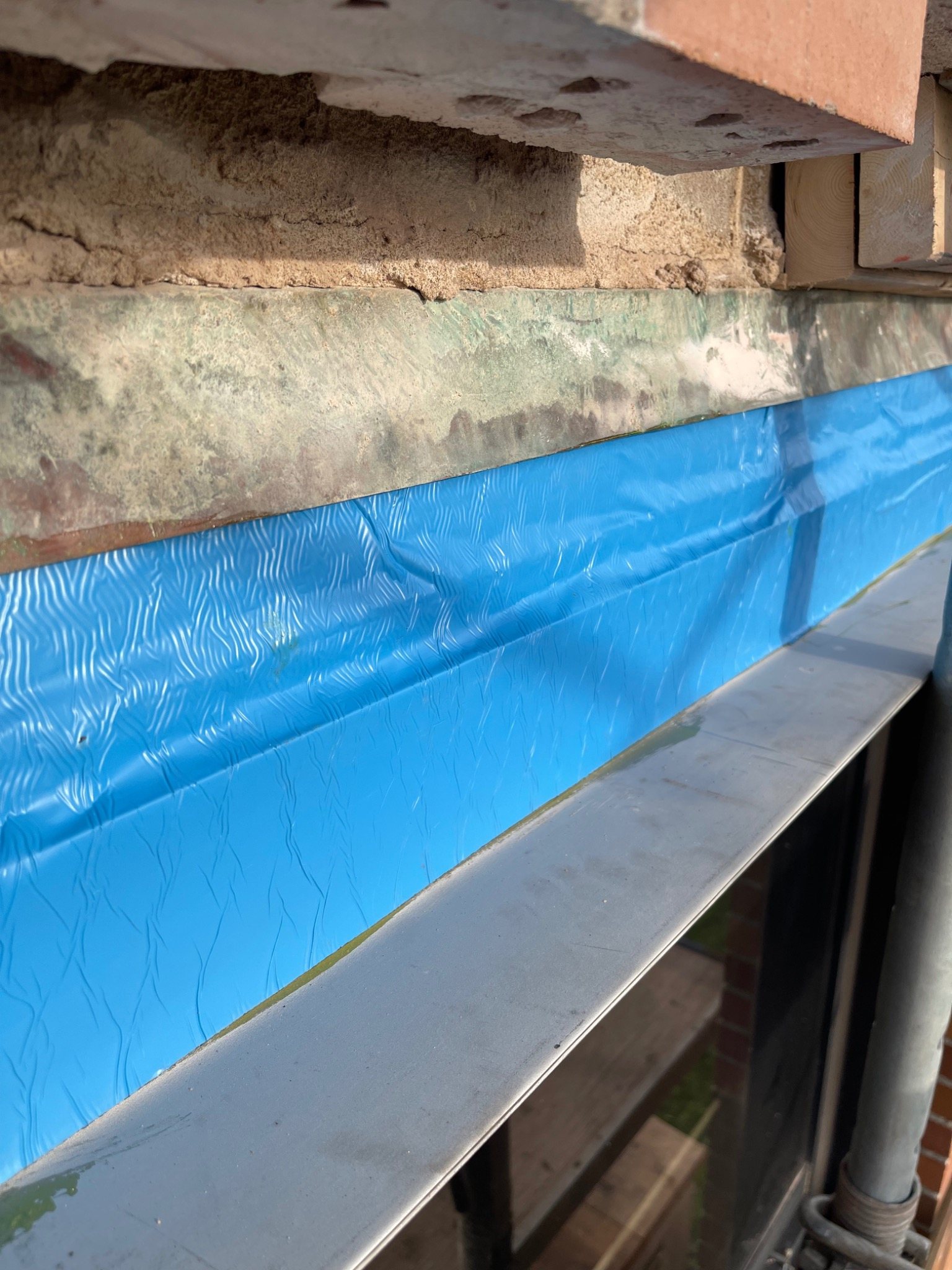
Field example: new stainless lintel, primed membrane flashing and retained through-wall copper flashing at a repaired brick opening.