Poured concrete foundation
Cast concrete can develop cracks from drying shrinkage, thermal movement, restraint, settlement, loading and other causes. Cracks may pass directly through the concrete rather than following a joint pattern.
Foundation cracks are common enough that the presence of a crack alone does not tell you whether a foundation is failing. The more useful clues are the crack pattern, whether one side has moved relative to the other, whether the wall is bowing or leaning, where the crack is located and whether the condition is changing.
Poured concrete and concrete block walls also crack differently. A vertical crack through a concrete wall is not interpreted the same way as a stair-step crack following mortar joints in block masonry, and a horizontal crack through a below-grade block wall deserves different attention again.
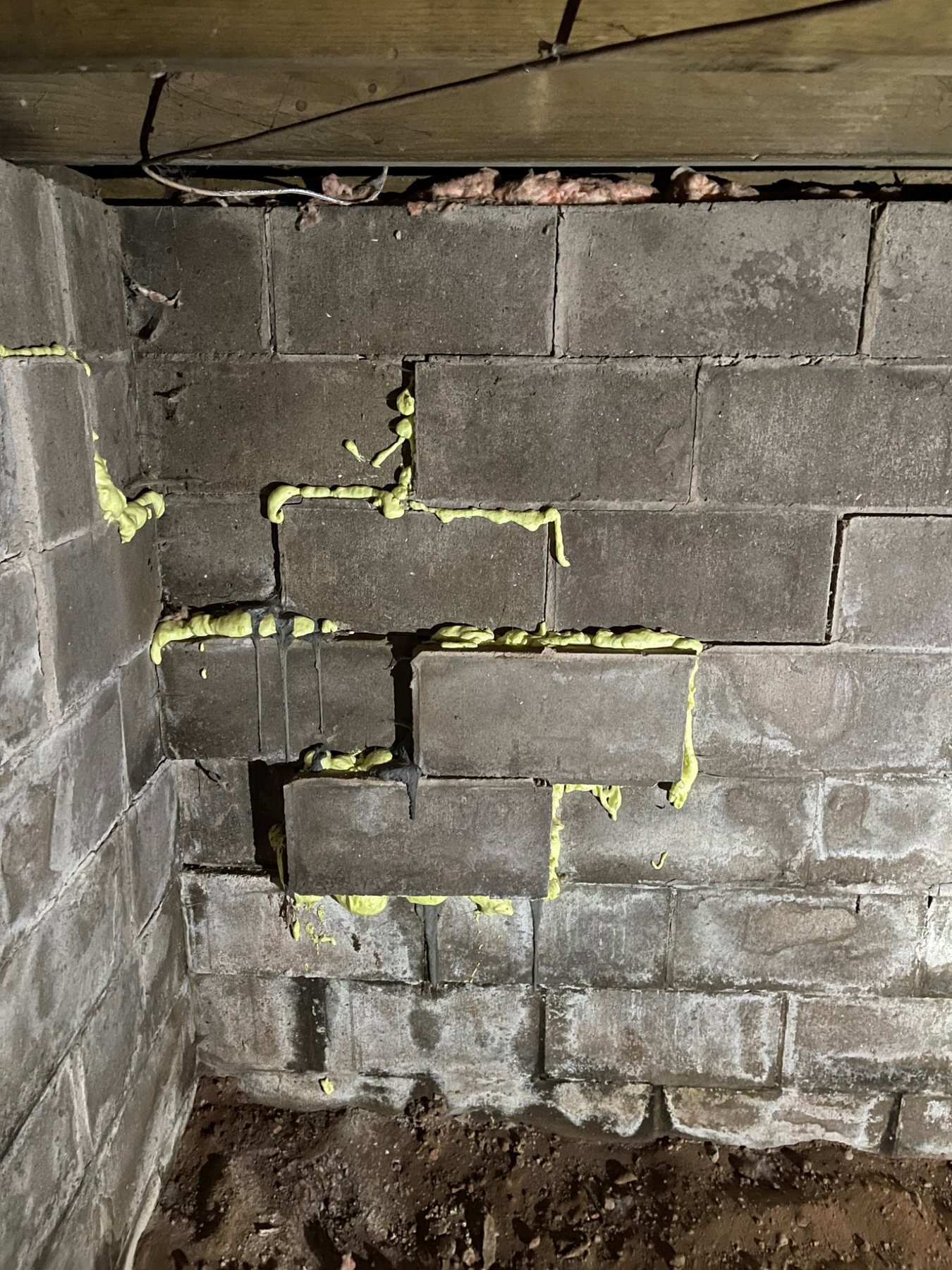
Movement matters more than a universal crack-width number. A fine crack with no displacement can be very different from a wall where courses are shifting, bowing inward or moving out of plane.
The material changes how cracks tend to form and how movement becomes visible.
Cast concrete can develop cracks from drying shrinkage, thermal movement, restraint, settlement, loading and other causes. Cracks may pass directly through the concrete rather than following a joint pattern.
Concrete masonry has regular bed and head joints, so movement often becomes visible along the mortar joints. Stair-step, horizontal and vertical joint cracking can each point toward different movement patterns.
Older homes may contain additions, repaired sections, block built against concrete, reinforced patches or new openings. Cracks near those transitions can reflect the way different materials and support conditions move relative to one another.
Pattern recognition helps narrow the investigation, but displacement and building context still matter.
Vertical or near-vertical cracks are commonly associated with concrete shrinkage or restrained movement, especially when they are relatively straight and show little displacement. Settlement or loading can also create vertical or diagonal cracks, so orientation alone is not enough to diagnose the cause.
A horizontal crack in a below-grade concrete block wall can indicate that the wall is bending inward under lateral pressure. The concern increases if the wall is also bowed, displaced or losing alignment.
Stair-step cracks follow the mortar joints and can occur where part of the wall or footing moves differently from the rest. The Concrete Masonry & Hardscapes Association specifically identifies differential settlement as a typical cause of stair-step cracking in concrete masonry.
Diagonal cracking can form where stresses concentrate, including near corners, openings or areas of differential movement. It should be interpreted with the surrounding wall, footing and framing conditions.
If one side of a crack projects inward, outward or vertically relative to the other, the wall has moved in more than just a cosmetic way. Displacement is often more important than the crack width itself.
Horizontal cracking, stair-step cracking, bowing and movement around openings occurring together can indicate a broader foundation or support problem rather than one isolated mortar or shrinkage crack.
Concrete loses moisture as it cures and dries, and shrinkage is one reason cracks can develop in cast walls. The American Concrete Institute notes that cracking is possible in concrete foundation walls and that visible cracks can be influenced by shrinkage and other time-dependent effects.
A relatively straight vertical crack with little or no displacement can therefore be very different from a vertical or diagonal crack accompanied by settlement, rotation, movement at the sill, doors that change position or a footing problem.
This is why one fixed crack-width rule is not a reliable homeowner diagnostic tool. The same visible width can occur in two walls with very different causes, reinforcement, loading and movement histories.
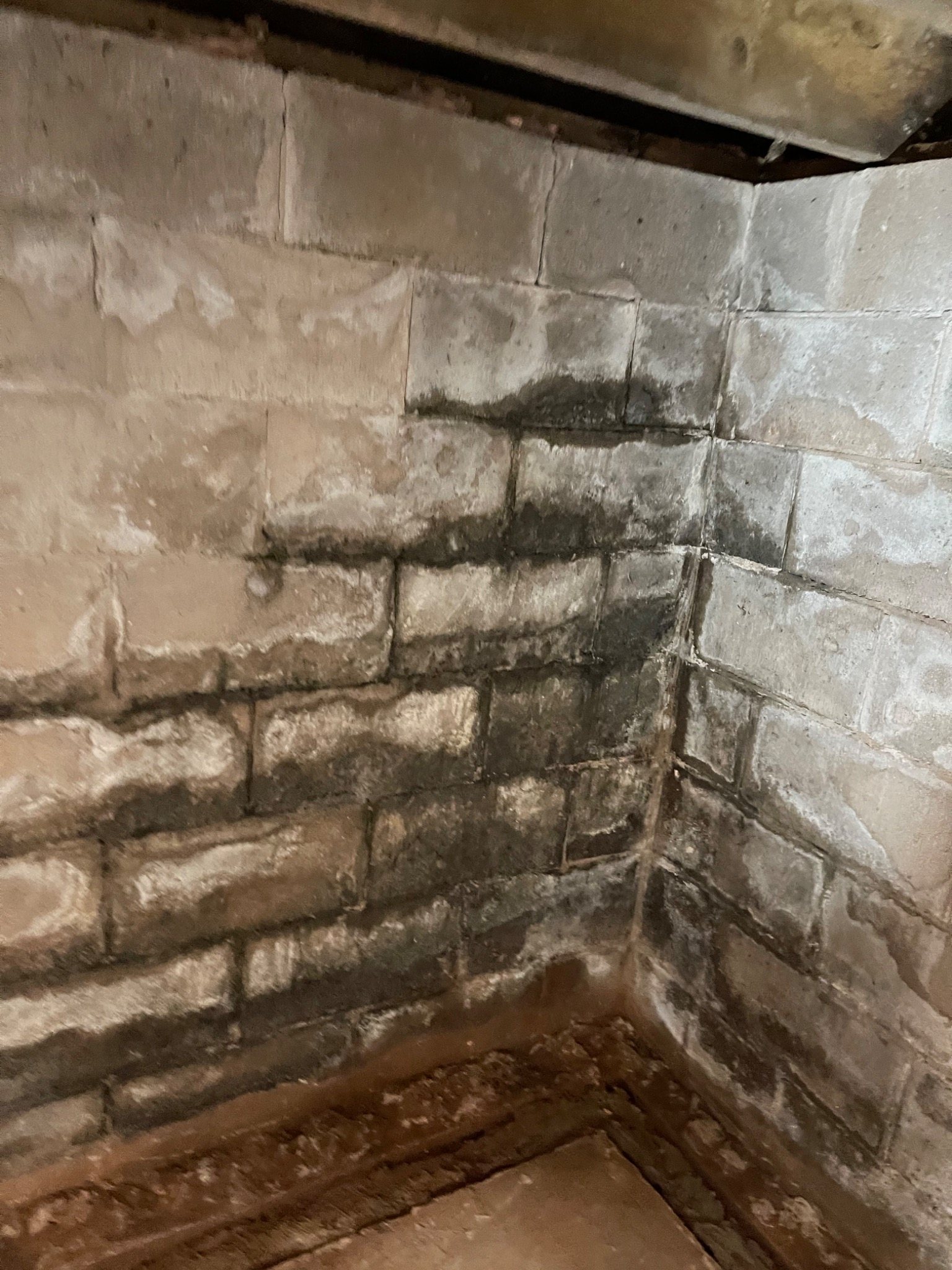
Water and structure are separate questions. A wall can leak without being structurally unstable, and a structurally significant crack can exist without obvious water entry.
Below grade, the soil outside the foundation pushes laterally against the wall. The National Research Council's Illustrated User's Guide explains that foundation walls resist earth pressure and that top support, wall height, backfill and surcharge loads all influence the forces on the wall.
If a block foundation begins bending inward, a horizontal crack can develop along a bed joint near the area of greatest movement. The wall may also bow, with the centre moving farther inward than the top or bottom.
Repointing that joint does not restore the wall's structural capacity or remove the pressure causing the movement. Where a horizontal crack is accompanied by bowing, displacement or progressive movement, structural assessment should come before cosmetic repair.
If one portion of the footing or supporting soil moves more than another, the block wall may crack diagonally through the weaker mortar joints. CMHA identifies differential settlement as a typical cause of stair-step cracking in concrete masonry.
Windows, doors and beam pockets interrupt the wall and can concentrate stress. Cracking that starts from an opening should be considered together with support, lintels, framing and footing conditions.
Additions, disturbed soil, drainage changes, frost effects or different footing conditions can create movement where one part of a building responds differently from another.
A wall that is visibly out of plane has moved as an assembly. That deserves more attention than a fine isolated crack with no displacement.
A crack or wall that is clearly changing over time suggests active movement and is more important than an old stable crack whose position has remained unchanged.
Voids beneath a footing, undermining, major soil movement or deteriorated bearing conditions can affect the foundation's ability to support the building.
Foundation cracking accompanied by floor movement, framing changes, sticking doors, shifted openings or exterior wall movement may point toward a broader structural issue.
Broken units, opened bed joints and blocks that have shifted substantially from alignment are signs that more than surface mortar repair is required.
If a wall appears unstable, heavily displaced or at risk of collapse, keep people away from the area and arrange prompt professional assessment rather than attempting a cosmetic repair.
Water follows openings. A relatively limited crack can leak during heavy rain or spring melt if exterior drainage, grading or groundwater conditions are directing water toward the foundation.
Conversely, sealing the interior face of a leaking crack does not necessarily correct the exterior water load. Downspouts, surface grade, drains, window wells, exterior waterproofing and the condition of the foundation surface should be considered.
The structural significance of the crack and the moisture problem should therefore be evaluated separately. Sometimes both need repair. Sometimes drainage is the dominant issue.
Is a wet basement a foundation problem or a drainage problem? →
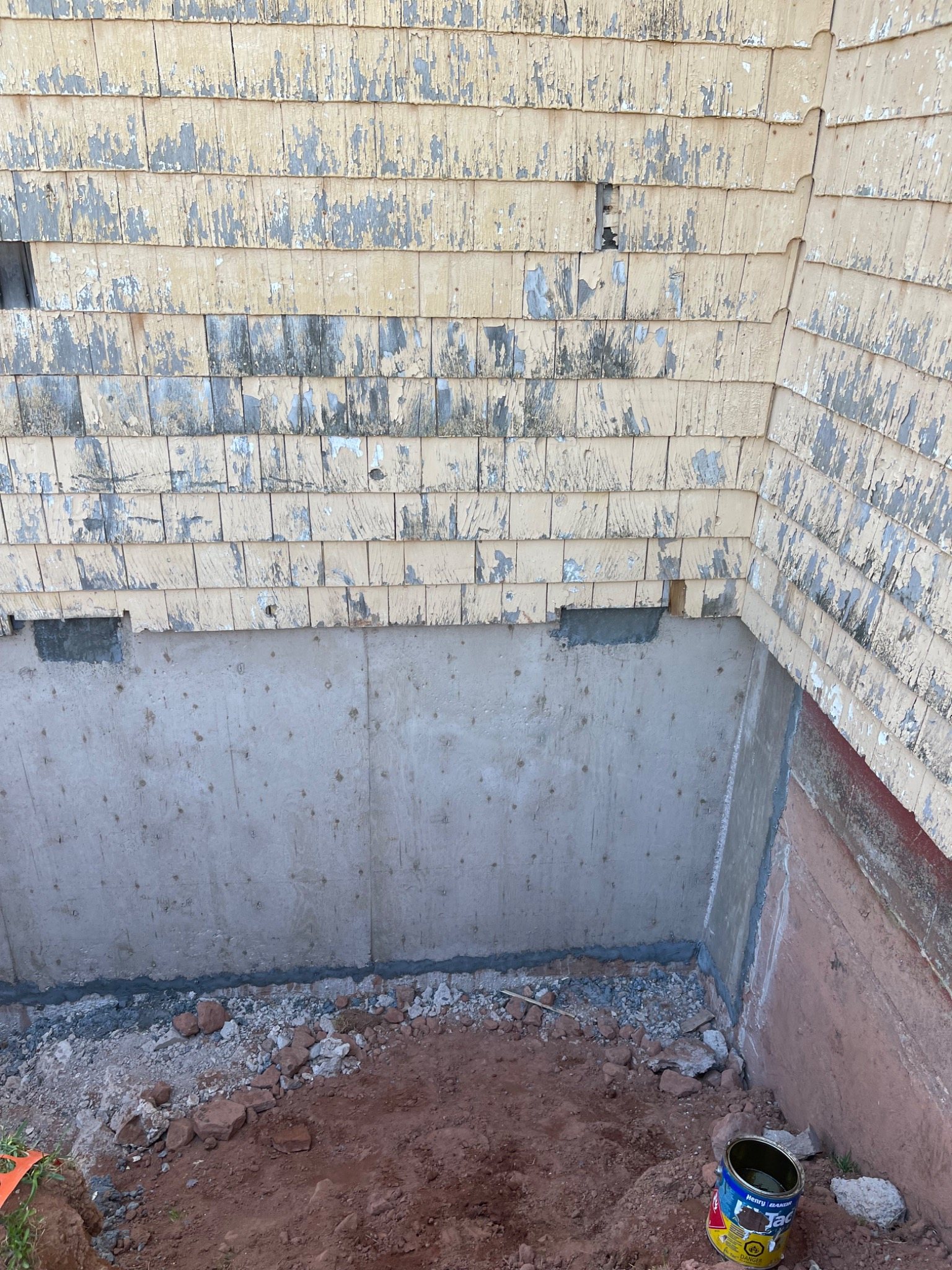
Some foundation problems require reconstruction, not crack filling. When support or wall stability has been lost, the repair may involve reinforced concrete, masonry rebuilding, temporary support and engineering rather than a surface patch.
A stable non-structural concrete crack may be repaired primarily to control water entry or protect the wall. A deteriorated mortar joint in otherwise stable concrete block may require masonry repair or repointing. Those are very different conditions from a bowed wall or a foundation undergoing settlement.
Structural repairs can include reinforcement, wall rebuilding, new support, underpinning, engineered stabilization or changes to drainage and soil loading. The correct scope depends on why the wall moved.
The American Concrete Institute notes that cracks are relevant to durability because they provide routes for water and aggressive agents, while cracks in load-carrying repairs can also affect structural performance. In other words, even a repair strategy has to reflect what the wall is expected to do.
Atlantic Canadian foundations can see prolonged wet soil, spring snowmelt, freeze-thaw cycling, frost movement and concentrated roof runoff. These conditions do not explain every crack, but they can influence soil movement, moisture loading and deterioration of concrete block and mortar.
Where soil beside a foundation becomes saturated, water pressure and poor drainage can add to the demands on below-grade walls. Good grading and roof-water management therefore matter even when the visible symptom is a crack rather than a puddle.
Settlement, soil pressure, footing support, drainage, construction details and building loads can overlap. The crack pattern helps direct the investigation, not replace it.
Shrinkage is one common possibility, but settlement, restraint and loading can also create vertical or diagonal cracking. Displacement, location and whether the crack changes over time matter.
In a below-grade wall, it can be associated with inward bending under soil or water pressure, particularly when the wall is also bowed or displaced.
Stair-step cracking follows block mortar joints and can occur when part of the wall or footing moves differently from another part, including differential settlement.
No. Many foundation cracks are not evidence of imminent failure. Bowing, leaning, offset, rapid change or loss of support are more concerning than a crack by itself.
Yes. Water can use a crack as a pathway even when structural movement is limited, so exterior drainage and waterproofing conditions still matter.
A mason can assess masonry condition and repair feasibility. Significant movement, bowing, displacement, support concerns or uncertainty about structural behaviour are reasons to involve a structural engineer.
CMU-TEC-009, Crack Control Strategies for Concrete Masonry Construction, discusses shrinkage, structural overload and differential settlement, including the characteristic stair-step cracking that can accompany settlement.
CMHA crack-control guidance →ACI's technical guidance notes that cracking can occur in reinforced concrete foundation walls and that crack width and pattern are influenced by shrinkage and other time-dependent effects.
ACI foundation cracking FAQ →The Illustrated User's Guide to the National Building Code explains how foundation walls resist lateral earth pressure and how wall support, backfill and surcharge loads affect their behaviour.
NRC foundation-wall guidance →Include the full interior wall, close-ups of the crack, a side angle showing any bowing or offset, the floor and sill above, exterior grade and drainage, and any matching cracks on the outside.
Prepared by Dean MacArthur, DinoMac Masonry Ltd., a third-generation mason with more than 20 years of hands-on masonry experience.
This guide is intended to help homeowners describe what they are seeing. Crack patterns can suggest possible mechanisms, but significant movement or structural uncertainty should be assessed on the actual building.
Reviewed August 26, 2026.
Use the mason-versus-engineer guide when the problem involves bowing, support, movement or structural design.
Mason or Structural Engineer?