Creates a Uniform Surface
Parging can cover rough concrete, block joints or irregular stonework and create a more continuous finished appearance above grade.
Parging usually cracks or falls off because of poor adhesion, moisture, freeze-thaw damage, improper application, incompatible materials or movement in the foundation underneath it. If the same area keeps cracking after being repaired, the problem is often not the parging itself, but water or movement in the masonry behind it.
What is parging? Parging is a relatively thin coat of mortar or another cementitious material applied over concrete or masonry. On homes, it is most commonly seen on exposed foundation walls, where it creates a more uniform finish and can help protect the surface from direct weathering. It is a finish and protective layer, not structural reinforcement, and ordinary parging is not a complete waterproofing system.
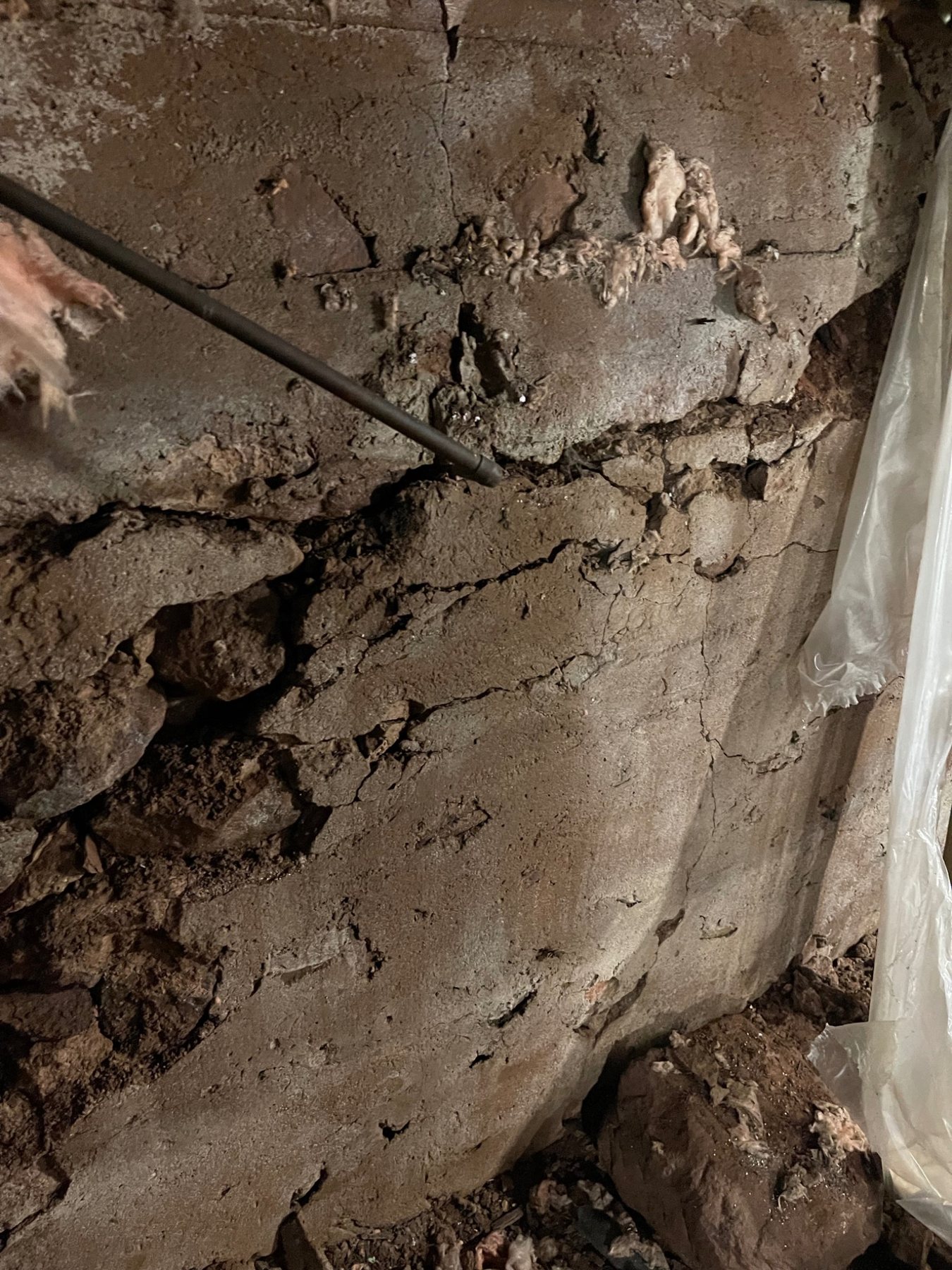
Parging is a surface layer. Its condition can tell you about adhesion, moisture and movement, but the visible coat is not the foundation itself.
Masonry parging means applying a relatively thin mortar-like coating over a masonry or concrete surface. The coat is worked across the face of the wall to create a more continuous finish while still relying on the foundation or wall behind it for structure.
Modern parging materials are usually cementitious and may be site-mixed or supplied as proprietary products. The correct material depends on the substrate. A mix suited to modern concrete block is not automatically the best choice for an older stone wall built with softer lime-rich mortar.
Parging is most often seen on exposed foundation walls, but it can also be used as a compatible finish on selected masonry surfaces where the wall, exposure and moisture conditions make that treatment appropriate.
The names vary by region, so it is more useful to understand the wall system and purpose of the coating than to rely on the label alone.
Usually refers to a relatively thin mortar or cementitious coat applied directly over concrete or masonry, especially exposed foundation walls. Its main roles are finishing the surface, protecting exposed masonry and providing a sacrificial weathering layer where appropriate.
More often describes an exterior wall finish system over larger wall areas. Depending on the system, it may involve multiple coats, reinforcement, lath or other components. In some regions the words render, stucco and parging overlap, so the actual construction matters more than the name.
The role of a parge coat depends on the foundation underneath and the material used.
Parging can cover rough concrete, block joints or irregular stonework and create a more continuous finished appearance above grade.
On some masonry, a compatible parge coat can act as a sacrificial outer layer that protects mortar joints and small surface irregularities from direct weather.
A sound exterior coat can reduce direct wetting of the substrate, but it should not be confused with a complete waterproofing or drainage system.
Because parging is continuous, new cracks sometimes make movement in the wall behind it easier to see and track.
After loose masonry and failed joints are properly repaired, a compatible parge coat can provide a durable finished surface where that treatment suits the wall.
On older walls, the outer finish may weather before the masonry behind it. That can be useful when the material remains compatible and allows the wall to dry.
Parging can hide a defect for a while without actually repairing it.
A parge coat cannot stop a wall from settling, bowing, bulging or shifting. If the substrate moves, the parging will usually crack with it.
Coating over unstable masonry does not restore support, fill deep internal voids or rebuild deteriorated wall cores.
Parging does not redirect roof runoff, correct negative grade or relieve groundwater and hydrostatic pressure around a foundation.
Ordinary parging is not a substitute for membranes, foundation drainage, flashing or other water-management details where those are required.
Thin cementitious finishes shrink as they cure. Poor surface preparation, overly rapid drying, excessive thickness or weak bond to dust, paint or deteriorated masonry can create cracks and debonding in the parging itself.
But a recurring crack that follows the same line through successive repairs can indicate movement in the substrate. Settlement, block-wall cracking, stone displacement or a transition between materials can all telegraph through a new surface coat.
Moisture adds another layer. Water entering behind the parging can weaken the bond, carry salts and create freeze-thaw stresses when the wall becomes saturated.
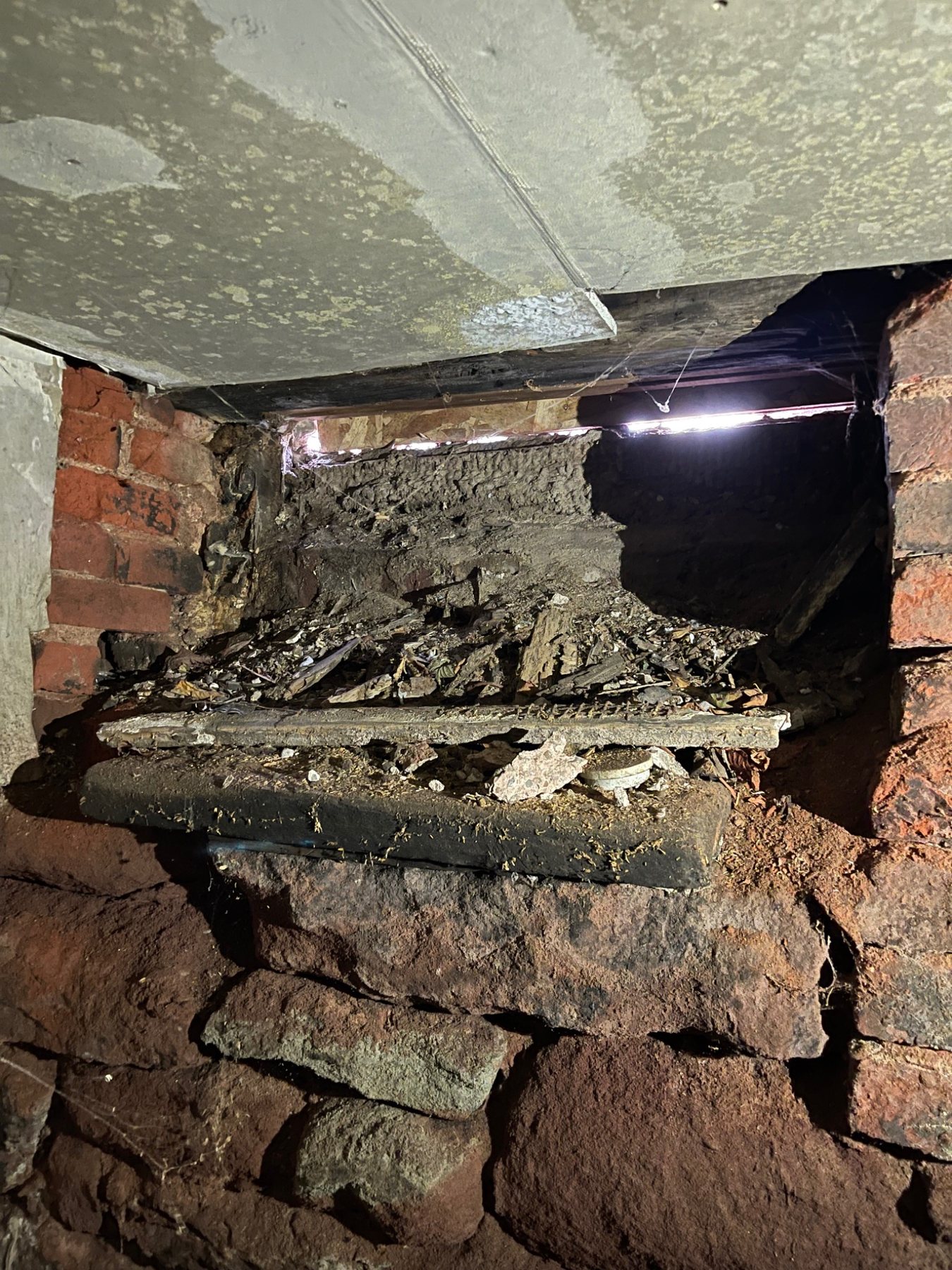
The surface can be deceptive. An old stone foundation may have deep mortar loss or internal voids even when a parge coat makes the outside look relatively uniform.
Older rubble and fieldstone foundations often contain irregular stones, lime-rich mortar and a wall core that can be much more porous than modern concrete or concrete block.
A dense, hard parge coat can sometimes be incompatible with that construction, particularly when the wall is already damp. It may fail at the bond line, redirect moisture into weaker areas or hide deterioration that should be repaired first.
The correct approach starts by assessing loose stone, deep joint loss, wall movement and moisture. Parging should be chosen as a compatible finish after those conditions are understood, not used to avoid looking at them.
Read the old stone foundation anatomy guide →Concrete and concrete block provide a more uniform substrate than irregular stone, but the same basic questions still apply.
A crack through a block wall may reflect settlement, shrinkage or lateral movement. A vertical crack in poured concrete may move differently from a shallow shrinkage crack in the surface coat. Parging will reproduce many of those movements rather than stop them.
Where the parging is simply weathered but the foundation remains sound and dry, localized surface repair can be straightforward. Where cracking follows a structural pattern, the foundation should be evaluated first.
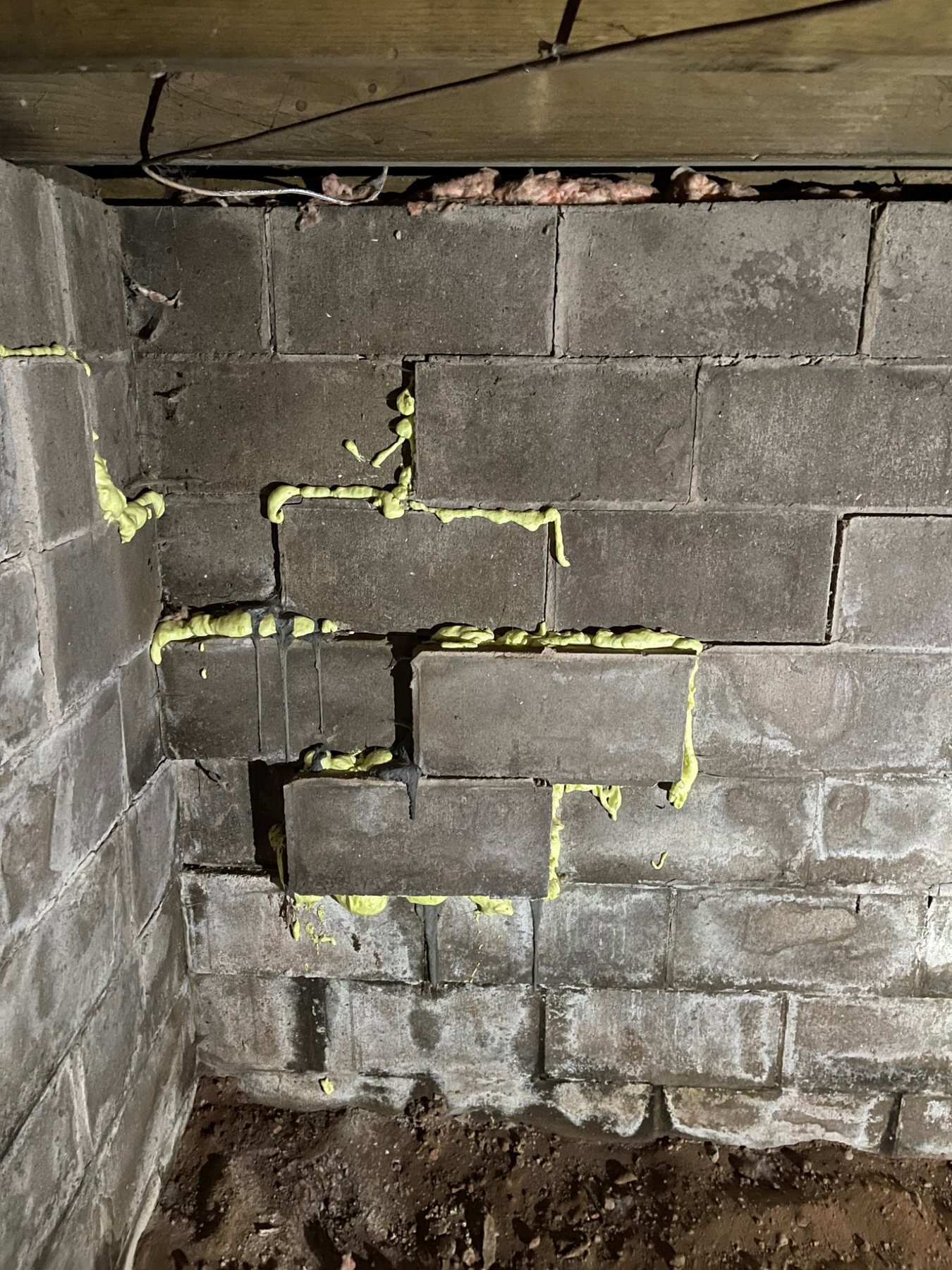
Do not confuse the finish with the wall. If block courses are moving or cracking, replacing the parge coat is not the primary repair.
NRC Canada guidance on basement performance emphasizes grading and foundation drainage as primary tools for reducing water problems around below-grade walls. Surface water should be directed away from the building rather than allowed to collect beside the foundation.
That means checking roof runoff, downspouts, soil slope, hardscape and subsurface drainage before expecting a thin masonry coating to solve a damp basement.
If groundwater or hydrostatic pressure is acting on the wall, the repair may require drainage or waterproofing work that is separate from parging.
Read the masonry water-damage guide →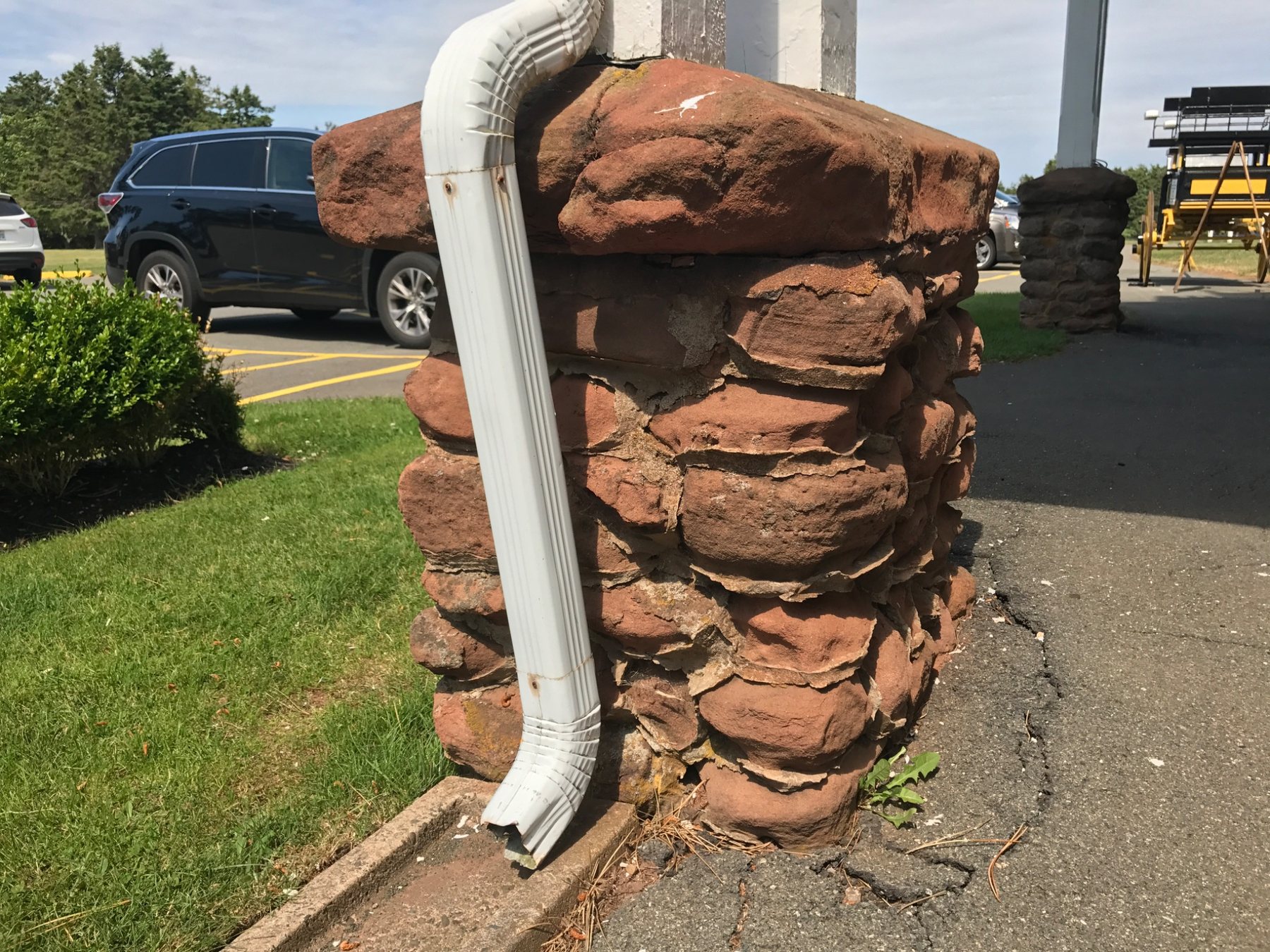
Fix easy water sources first. A downspout emptying at the foundation can keep saturating the wall no matter how many times the surface is re-parged.
Bond matters. New parging needs a sound, appropriately prepared substrate. Loose old coating, dust, paint and deteriorated mortar can all create a weak layer underneath the new finish.
Parging that sounds hollow, forms blisters or comes away in sheets may have lost its bond to the substrate.
Common contributors include applying over loose previous material, paint or contamination, applying to a very dry or poorly prepared surface, incompatible materials, trapped moisture and freeze-thaw exposure behind the coating.
When large areas are hollow or debonded, patching each fallen piece can become an endless repair. Broader removal may be useful so the substrate can be inspected and a new finish can bond to sound material.
Parging the interior of an old stone basement can be appropriate as a compatible finish in some situations. It becomes problematic when a dense cementitious coating is treated as the waterproofing solution for a wall that is actively taking on moisture from outside or from the ground.
National Park Service moisture guidance warns against sealing moisture into damp historic masonry with waterproof coatings, including dense cement parging, because moisture can be forced to migrate elsewhere and damage weaker materials.
The first question should be why the wall is wet: roof runoff, grade, groundwater, failed exterior drainage, condensation, cracks or another source.
Can you parge over old parging? Sometimes. Existing material can remain where it is firmly bonded and the foundation behind it is sound. Loose, hollow, debonded or repeatedly failing parging should not simply be buried under another coat because the weak layer will still be underneath.
May be reasonable when failure is small, surrounding parging is firmly bonded, the substrate is sound and the cause of damage has been corrected.
Considered when large areas sound hollow, coating comes off in sheets, repeated patches fail or the substrate needs inspection.
Needed when loose stone, deep joint loss, block movement, bulging or significant cracking is visible behind or through the parging.
The exact mix and application method depend on whether the substrate is concrete, block, brick or traditional stone masonry. There is no single parging recipe that is best for every foundation.
Why did the old parging fail?
Is the foundation behind it sound?
How is water being managed?
Is the new material compatible with the wall?
Parging at the base of a building is exposed to roof splashback, snow storage, wet soil, spring melt and repeated freeze-thaw cycles. Across Prince Edward Island, Nova Scotia and New Brunswick, those conditions can keep the lower wall wet for long periods before temperatures drop.
Older stone foundations add another challenge because they may contain softer mortar, irregular voids and generations of previous repairs. A finish that works well on modern concrete is not automatically the right finish for a nineteenth-century rubble wall.
Parks Canada's Province House conservation work in Charlottetown is a regional example of how long-term saturation and freeze-thaw cycling can deteriorate stone and mortar within foundation masonry, even when the most important damage is not obvious at the finished surface.
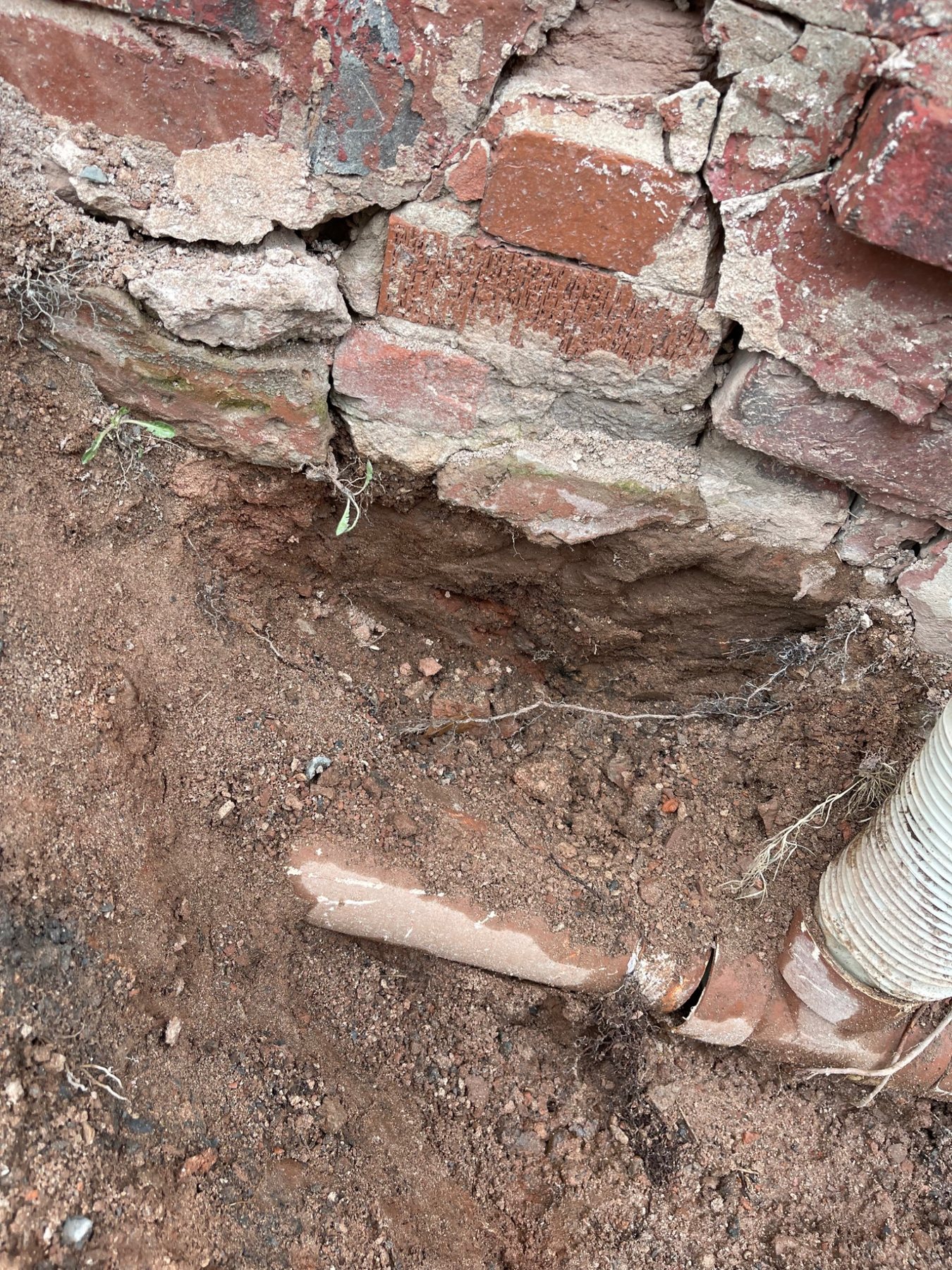
The base of the wall sees the worst of several exposures. Splashback, grade moisture, snow and freezing can all act on the same narrow band of foundation masonry.
Include grade, downspouts, steps, decks and the full length of the affected area.
Show cracks, hollow edges, exposed substrate, salts and the thickness of the old coat where visible.
Where material has already fallen away, photograph the stone, block, concrete and mortar underneath.
Include gutters, downspouts, soil slope and locations where snow or water collects.
If accessible, show dampness, salts, loose mortar or cracks on the basement side of the same wall.
Include any bulging, displaced block, loose stone or cracks continuing beyond the parge coat.
NRC Canada guidance on basement performance emphasizes proper grading and foundation drainage as key measures for reducing water around below-grade walls. Older NRC drainage guidance similarly focuses on directing surface and subsurface water away from foundations.
National Park Service Preservation Brief 39 cautions against trapping moisture inside damp historic masonry with waterproof interior coatings, including dense cement parging. Preservation Brief 2 emphasizes the importance of compatible mortar in older masonry rather than automatically using a harder modern mix.
Parks Canada's Province House conservation work provides a regional example of the damage that long-term saturation and freeze-thaw cycling can cause inside old stone foundation walls.
NRC Canada: Site Grading and Drainage for High-Performance Basements →
NRC Canada: Drainage Around Buildings →
NPS Preservation Brief 39: Controlling Unwanted Moisture →
Dean is a third-generation mason with more than 20 years of hands-on experience working with brick, natural stone, chimneys, foundations, repointing and masonry restoration in Prince Edward Island.
The DinoMac Masonry Knowledge Centre uses PEI field experience to explain masonry conditions that are also common across Atlantic Canada and other cold, wet climates.
Last reviewed: August 30, 2026
It is a relatively thin mortar or cementitious coating used to finish and protect masonry or concrete surfaces.
Shrinkage, poor bond, wall movement, repeated moisture, freeze-thaw, incompatible materials and improper curing can all contribute.
Ordinary parging should not be treated as a complete waterproofing or drainage system.
No. It can cover a repaired wall, but it cannot stop settlement, bowing, bulging or loose masonry.
Not automatically. Material choice should reflect the existing mortar, stone, moisture conditions and how the wall needs to dry.
Localized failure can sometimes be patched. Widespread hollow or debonded areas may need broader removal so the substrate can be assessed.
Modern parging is usually a cementitious mortar or proprietary masonry coating. The correct mix depends on whether the substrate is concrete, block, brick or older stone masonry.
Not always. Parging usually means a relatively thin coat over masonry or concrete, especially foundations. Stucco or render more often describes a broader exterior finish system, although the terminology varies by region.
Yes, but only where the existing coat is firmly bonded and the substrate is sound. Hollow, loose or debonded material should be removed first.
There is no fixed lifespan. Durability depends on surface preparation, moisture, freeze-thaw exposure, material compatibility, curing and whether the foundation is moving. Repeated early failure usually points to an underlying problem.
Include a wide view of the foundation, close-ups of cracks or debonded areas, exposed stone, block or concrete, nearby grade and downspouts, interior moisture if present and the PEI property location. DinoMac can assess whether the repair is mainly a surface finish or whether the foundation behind it needs masonry work first.