Strength & Stiffness
The mortar should be appropriate for the strength and movement characteristics of the existing masonry units.
Historic repointing is not just a colour-matching exercise. The replacement mortar has to work physically and visually with the existing brick or stone, manage moisture appropriately and preserve as much sound original masonry as practical.
DinoMac's field context comes from Prince Edward Island, but the same mortar compatibility principles apply to older brick and stone buildings throughout Atlantic Canada and other regions where traditional masonry remains in service.
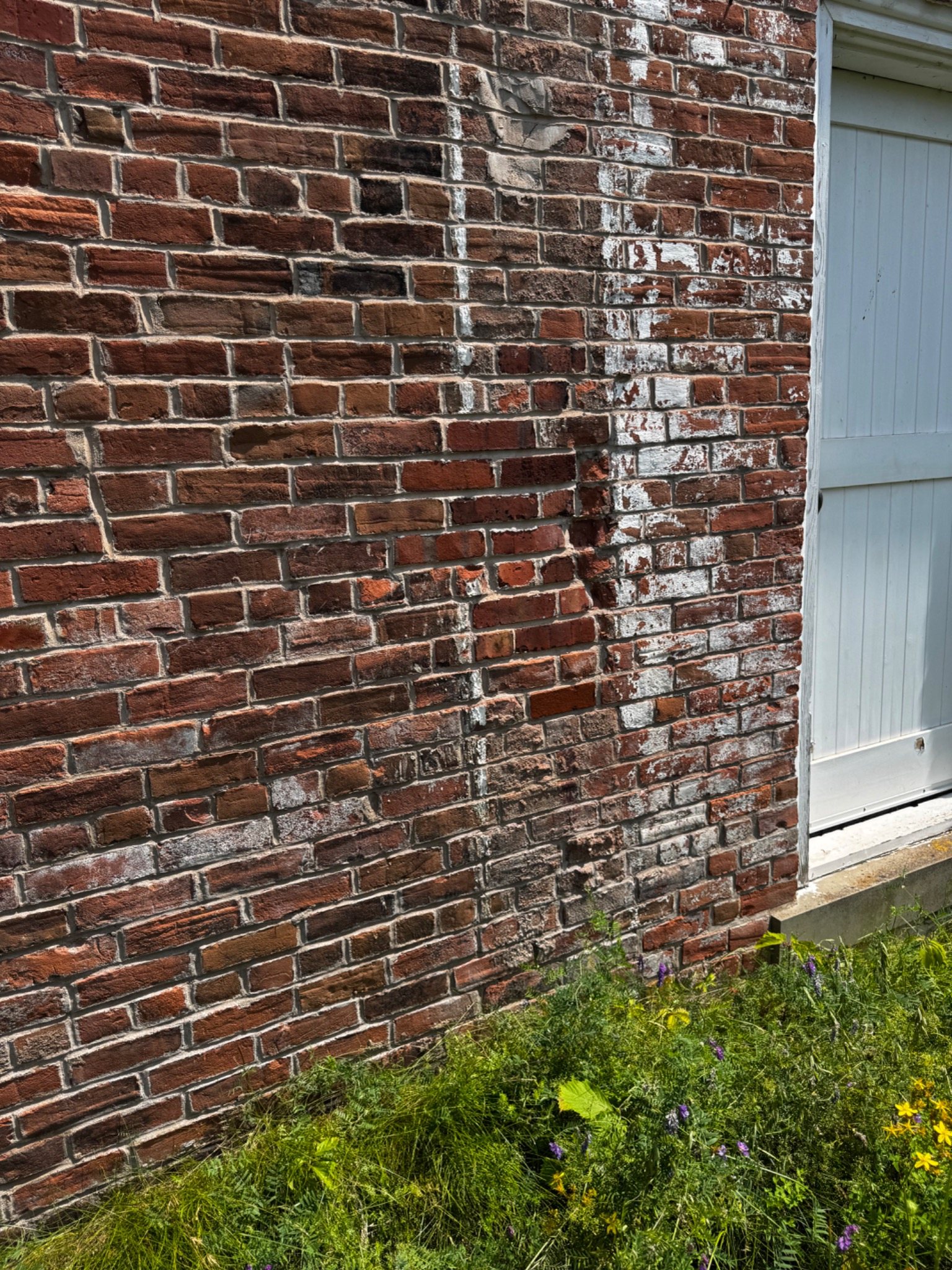
Different repair generations leave clues. Changes in joint colour, texture and finish should be separated from sound original mortar before a new repair mortar is selected.
Mortar bonds masonry units, fills irregularities, helps distribute loads and forms the visible joint between brick or stone. On many older buildings it also acts as the more sacrificial component of the wall.
In practical terms, it is usually preferable for weathering and small amounts of movement to be accommodated by a repairable mortar joint rather than by cracking or face loss in historic brick or stone.
That is why matching colour alone is not enough. Strength, stiffness, vapour permeability, aggregate, joint depth and finished profile can all affect how the repair performs.
If the replacement joint is considerably harder or less permeable than the units around it, movement and moisture may be forced into the brick or stone instead of being accommodated at the joint.
The U.S. National Park Service's widely used Preservation Brief 2 on historic masonry repointing recommends that replacement mortar be softer and more vapour permeable than the masonry units, and no harder or less permeable than the historic mortar. It also emphasizes matching the historic mortar's colour, texture, tooling and sand characteristics.
In Canada, the Standards and Guidelines for the Conservation of Historic Places in Canada emphasize minimal intervention and repairing rather than unnecessarily replacing character-defining elements. Those principles are particularly relevant when original brick, stone and mortar still retain useful material.
Prince Edward Island identifies the Canadian Standards and Guidelines as a key resource used by the Province, Charlottetown and Summerside when considering work on recognized heritage properties.
U.S. National Park Service: Preservation Brief 2, Repointing Mortar Joints →
Parks Canada: Standards and Guidelines for the Conservation of Historic Places →
Government of PEI: Provincial Heritage Places Recognition Program →
The existing wall provides clues about what the replacement material needs to do.
The mortar should be appropriate for the strength and movement characteristics of the existing masonry units.
Older walls often depend on vapour-permeable materials. A dense repair can change how moisture leaves the wall.
Sand colour, particle size and binder all influence how a mortar looks once cured and weathered.
The tooling and shape of the joint affect both appearance and the way water sheds from the face of the wall.
Failed mortar has to be removed deeply enough to create a sound repair rather than placing a thin cosmetic layer over weak material.
Temperature, wind, sun and moisture can affect curing, particularly with softer or lime-rich mortar systems.
The more original information that can be retained from the wall, the less the repair has to rely on assumptions.
Look for protected or less-weathered mortar under overhangs, inside returns, beneath projecting details or in other locations that may still retain the original colour, aggregate and joint shape.
Older buildings may contain several generations of pointing. A hard, smooth repair from a later period should not automatically become the model for the next repair.
Soft historic brick, hard fired brick, sandstone, granite and other masonry units do not all place the same demands on a replacement mortar.
Sills, parapets, foundations, chimneys, north-facing walls and areas below failed gutters or flashing can weather differently from sheltered masonry.
Flush, weathered, concave, struck, beaded and other historic joint finishes can change both the appearance of the wall and how water is shed from the face.
A small mock-up can reveal whether the mortar colour, aggregate, joint width, tooling and curing appearance actually suit the building before hundreds or thousands of feet of joints are completed.
The wall may contain original mortar, later patches and areas where joints have already opened deeply.
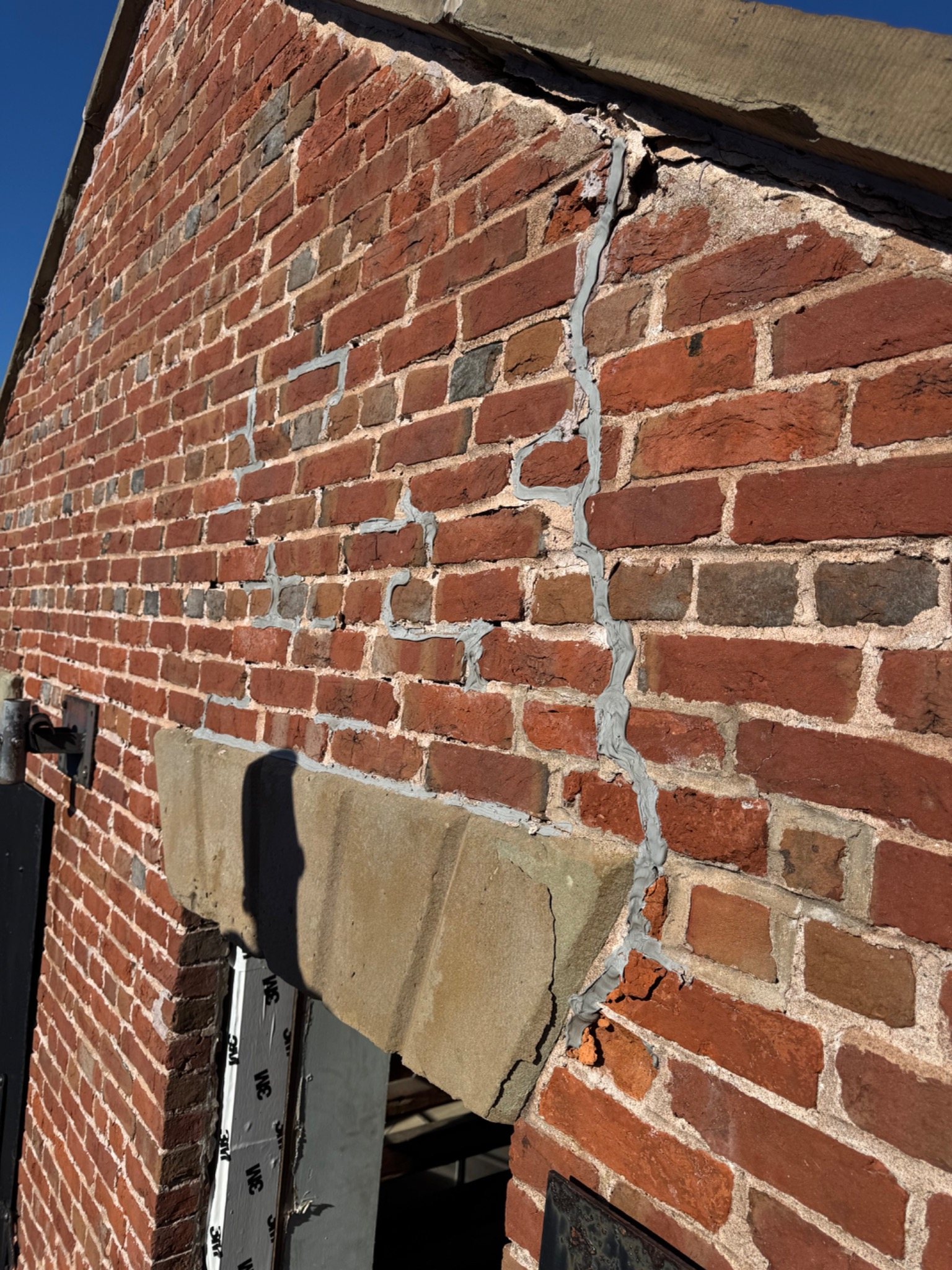
Previous patching: visually different repair material does not prove composition, but it is a reason to identify which joints are original and which belong to later interventions.
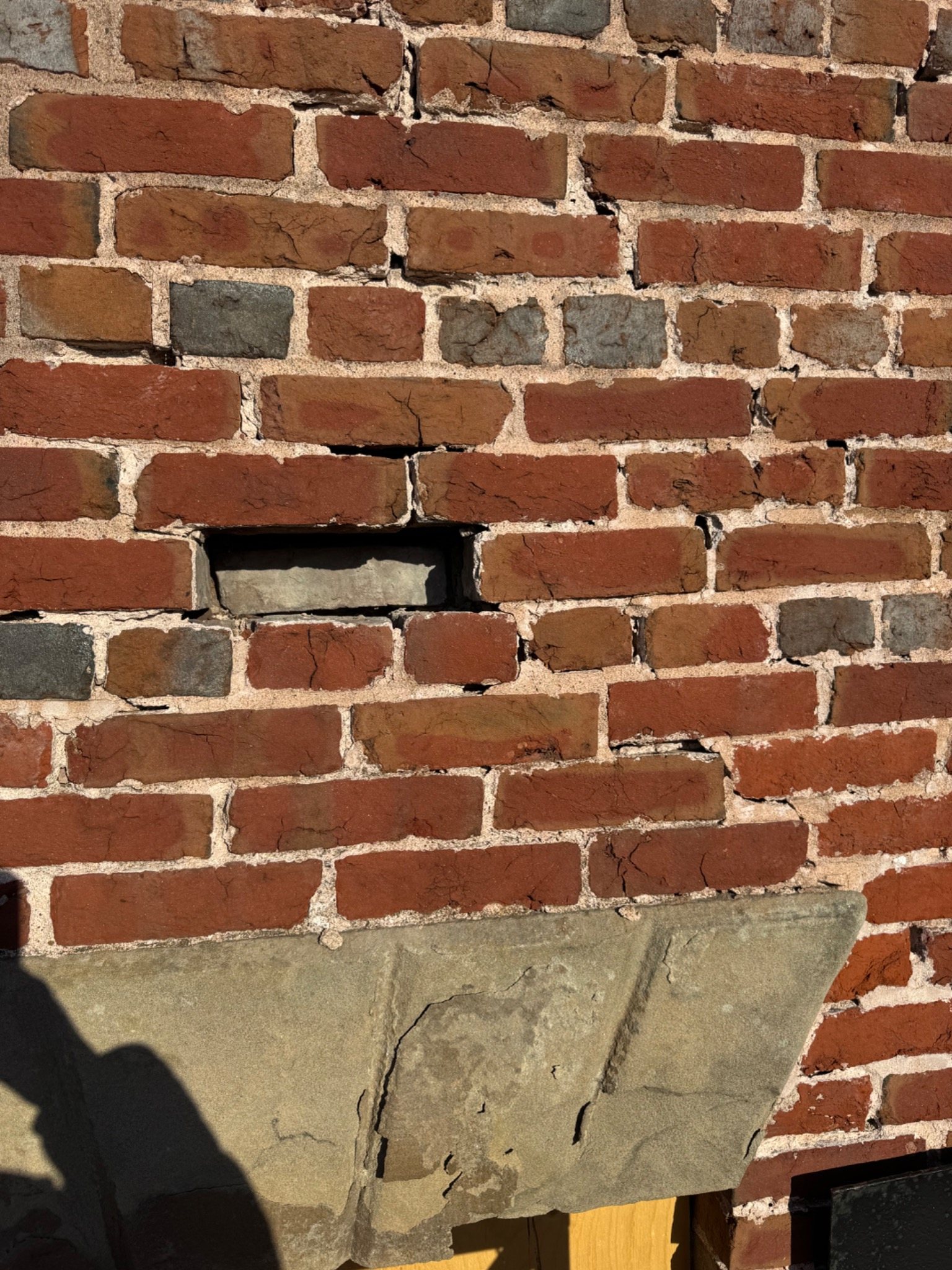
Joint depth matters: deep open joints show why repointing is more than a surface colour match. The repair needs sound material behind it and enough depth to develop bond.
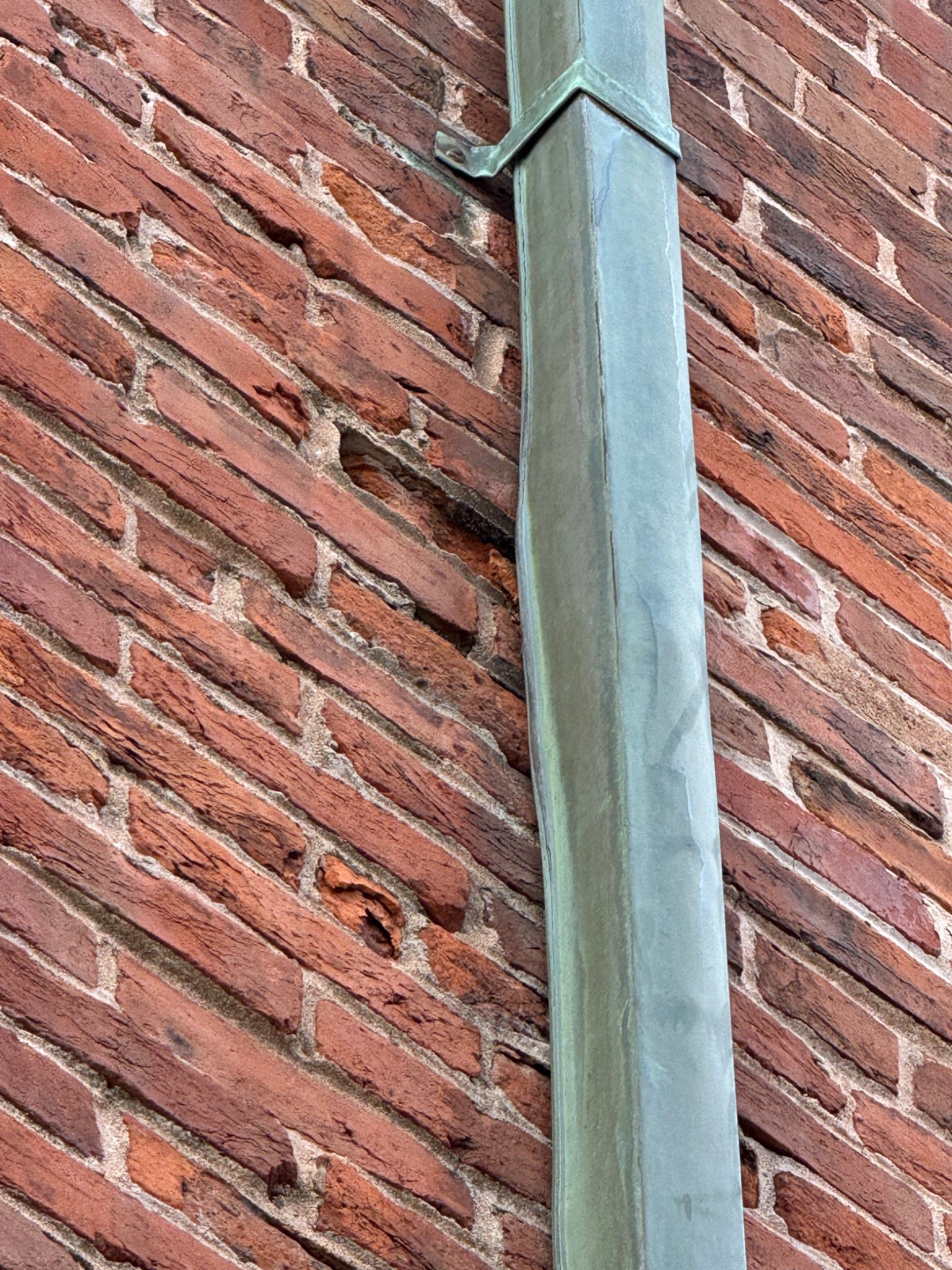
Exposure matters too: deteriorated brick near a drainage path is a reminder that compatible mortar has to be considered together with moisture exposure and water management.
Many historic buildings contain lime-rich mortar, but the appropriate repair still depends on the actual wall, exposure, masonry units and existing materials. The goal is not to apply a single historic recipe to every old building.
Investigation may include looking at original joints, previous repair areas, how the wall has weathered, where moisture is entering and how the masonry responds to the surrounding environment.
The objective is compatibility, not simply recreating a historic recipe by name. Two mortars described casually as "lime mortar" can behave differently depending on binder, aggregate, proportions, water content, curing and workmanship.
Natural Hydraulic Lime products are commonly sold in strength classifications such as NHL 2, NHL 3.5 and NHL 5. The number describes a standardized strength class, but it is not a complete mortar specification by itself.
A lower or higher NHL number does not automatically tell you which mortar is compatible with a particular historic wall. Masonry type, exposure, permeability, aggregate, wall construction, original mortar, curing, weathering conditions and the characteristics of the specific binder all matter.
Even two mortars both labelled NHL 3.5 may not behave identically once aggregate, binder properties, proportions, curing, wall exposure and workmanship are considered.
Historic masonry repair should therefore begin with the existing building and materials, not with a predetermined bagged product or a simple assumption that the strongest available lime is better.
Stronger is not automatically better. A mortar that is too dense or too strong for older brick or stone can shift stress and moisture into the masonry units themselves.
A repair method that works well on one historic structure may be inappropriate on another if the brick, stone, exposure or wall construction is different.
Smearing a thin layer of new mortar over deteriorated joints can create an attractive surface temporarily without establishing useful bond or depth behind it.
Aggressive joint removal can chip arrises, widen joints and permanently alter the appearance of historic masonry. Tool choice and control matter.
A strong, dense joint may weather differently from softer historic brick or stone and can contribute to edge cracking or face deterioration.
Poor cleanup can permanently change the visual texture of an elevation and can be especially difficult to correct on porous historic brick or stone.
Deeply recessed or differently tooled joints can change the shadow lines and apparent scale of a historic wall even when the mortar colour is close.
Hot sun, strong wind, cold temperatures and rapid moisture loss can all affect fresh mortar. Protection and curing should be planned as part of the work, not treated as an afterthought.
Joint preparation is one of the most important parts of the repair. The objective is to remove loose and deteriorated mortar to sound material while preserving the edges of the surrounding brick or stone.
The safest removal method depends on joint width, mortar hardness, masonry condition and access. On fragile historic work, uncontrolled power-tool cutting can do more permanent damage to the masonry than the failed mortar that was being removed.
Once prepared, joints should be cleaned appropriately and brought to the moisture condition required for the selected mortar and weather conditions before repointing begins.
Historic masonry has accumulated colour variation, texture and workmanship over decades. A repair can be technically sound and still look wrong if the mortar is too bright, too smooth, too deeply recessed or finished with a joint profile that does not belong on the building.
On larger projects, a mock-up or sample area can be useful before repeating the repair across an entire elevation.
The Government of Prince Edward Island distinguishes between registered and provincially designated heritage places. For provincially designated places, proposed changes affecting character-defining elements may require a heritage permit.
Charlottetown and Summerside also have municipal heritage programs. If a building has formal recognition, confirm the applicable requirements before large-scale repointing, replacement of historic masonry or changes to visible joint profiles.
This guide combines hands-on masonry experience with recognized technical and conservation guidance. DinoMac's field context comes from Prince Edward Island, while the underlying repair principles are useful across Atlantic Canada and other cold, wet climates.
Dean is a third-generation mason with more than 20 years of hands-on experience working with brick, natural stone, chimneys, foundations, repointing and masonry restoration in Prince Edward Island.
Last reviewed: August 28, 2026
Historic masonry often relies on joints that are softer and more vapour permeable than the surrounding units. A substantially harder or denser replacement joint can shift stress and moisture into the brick or stone instead of the mortar.
No. Colour and texture matter visually, but compatibility also involves strength, stiffness, permeability, aggregate, joint profile, repointing depth and curing conditions.
No. Many historic buildings contain lime-rich mortars, but the repair should be based on the actual masonry units, existing mortar, exposure, wall construction and conservation goals of that building.
A sample allows the owner and mason to review colour, aggregate, joint profile, tooling and curing appearance before repeating the same repair across a large wall.
No. Sound historic mortar can often remain in place. Repointing should focus on joints that have deteriorated enough to require repair rather than removing serviceable original material without a reason.
They can. Provincially designated heritage places may require a heritage permit for changes affecting character-defining elements, and municipal heritage requirements may also apply in Charlottetown or Summerside.
Photographs of both sound and deteriorated areas are useful, along with the approximate age of the building and any known previous repairs.