1. What Is the Masonry?
Hard modern brick, soft historic brick, sandstone, granite, limestone and concrete do not respond the same way to water, acids, abrasives or chemicals.
Cleaning can improve appearance, remove harmful deposits and reveal original masonry. It can also permanently scar brick, roughen stone, erode mortar, change colour or drive chemicals deeper into a wall if the method is too aggressive.
The safest starting point is simple: identify what you are trying to remove, understand the masonry beneath it, test the gentlest effective method and judge the result only after the test area has fully dried.
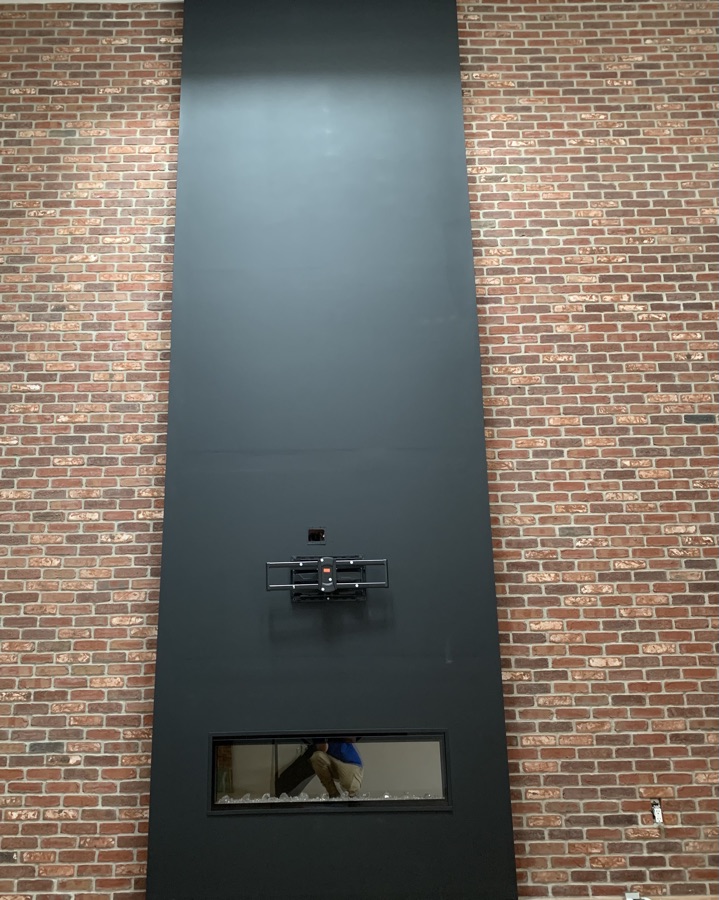
Preservation principle: Weathering is not automatically dirt. Colour variation, soft edges and surface patina can be part of the historic material. Cleaning should remove what needs to come off without removing the brick or stone itself.
Most cleaning damage begins when the method is chosen before the problem is understood.
Hard modern brick, soft historic brick, sandstone, granite, limestone and concrete do not respond the same way to water, acids, abrasives or chemicals.
Dirt, biological growth, soot, paint, efflorescence, rust, mortar smears and atmospheric staining may require completely different treatments.
A white stain caused by recurring moisture should not be treated as an isolated cleaning problem if water is still entering the wall.
Powdering brick, soft mortar, flaking stone or loose faces can be damaged by cleaning that would be harmless on stronger masonry.
A small inconspicuous test should be allowed to dry completely before judging colour, surface texture, staining and whether the cleaner has done too much.
If the surface is stable and the “problem” is simply age or patina, leaving it alone may preserve more original material than cleaning it.
National Park Service Preservation Brief 1 recommends selecting cleaning methods only after identifying the masonry, the soiling and the reason for cleaning. Test panels are used to compare methods before a larger treatment begins.
Preservation Brief 6 goes further on abrasive cleaning: blasting and other aggressive methods can remove the hard fired surface of brick, roughen stone and permanently change the appearance of historic masonry.
“Gentle” does not mean ineffective. It means controlled, material-specific and limited to the amount of cleaning actually required.
A test patch allows the mason or conservator to evaluate whether the proposed method actually removes the staining without damaging the brick, stone, mortar joints, tooling, patina or surface texture.
The safest approach is generally to begin with the gentlest method likely to work and increase the cleaning intensity only when necessary.
Cleaning should also be evaluated after the masonry has dried. A surface can look acceptable while wet but reveal uneven cleaning, staining or surface damage once dry.
Cleaning can also reveal deterioration that dirt, biological growth, paint or other coatings were previously hiding. A cleaner-looking wall is not necessarily a sound wall.
Often the first practical test for ordinary surface dirt on sound masonry. It provides useful information before stronger products are considered.
Mild cleaning products can help with oily or atmospheric soiling where water alone is ineffective. Residue should be thoroughly removed.
A poultice holds a cleaning material against a localized stain and draws contaminants into an absorbent medium. It can be useful for targeted work where whole-wall cleaning would be unnecessary.
Water under pressure can become abrasive. Sound modern brick may tolerate controlled pressurized cleaning that would damage softer historic brick, mortar or weathered stone.
These should be selected for the specific material and stain. Compatibility, dwell time, dilution, pre-wetting and rinsing all matter.
Sandblasting, grinding, wire wheels and similar aggressive methods can permanently remove original masonry surface. Historic work generally calls for a much more conservative approach.
Brick Industry Association guidance for cleaning brickwork allows controlled pressurized water in appropriate situations, but emphasizes testing, nozzle selection, distance and pressure control. Those recommendations are intended for brickwork that is suitable for that method.
Historic masonry may be much less forgiving. Old mortar can be softer, brick faces may already be weakened, and sedimentary stone can contain layers that are vulnerable to concentrated water.
If a pressure washer cuts a clean line through the dirt instantly, it may also be cutting into the masonry surface. A clean wall is not a successful result if the face of the brick has been removed with the stain.
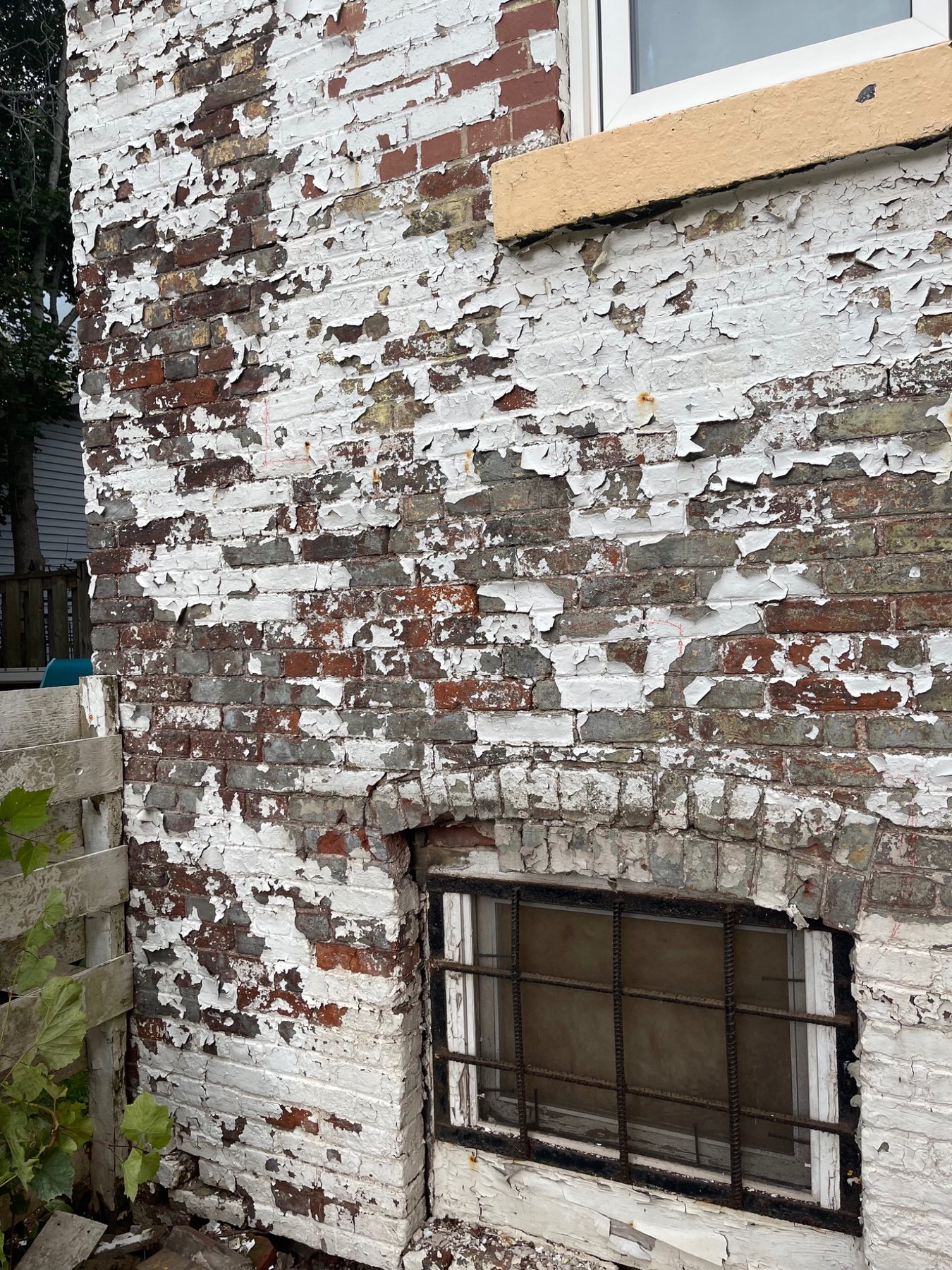
Before cleaning: A peeling coating can tempt an owner to pressure wash the entire wall. First determine whether the brick and mortar beneath are sound enough to tolerate the proposed removal method.
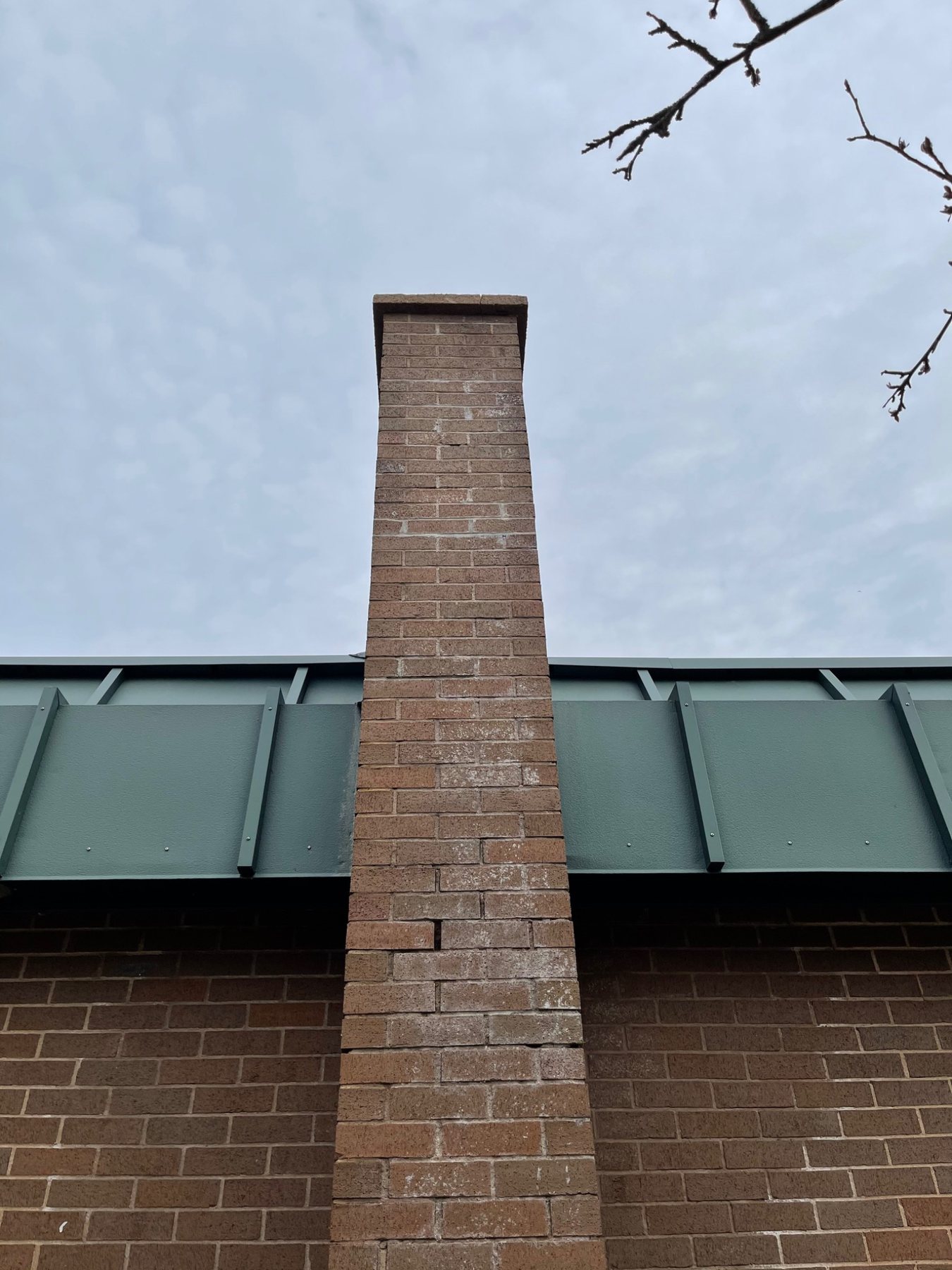
Important distinction: Efflorescence can often be brushed or cleaned from the surface, but recurring deposits mean the moisture path still deserves investigation.
Efflorescence forms when soluble salts are carried by water through porous masonry and left behind as the water evaporates. The visible deposit may be minor, but its location tells you something about moisture movement.
Dry brushing may be appropriate for light deposits after the masonry dries. Repeated washing can sometimes dissolve salts and move them back into the wall, only for them to reappear later.
If the same area repeatedly develops salts, staining or surface damage, the better maintenance question is where the water is entering.
Read the masonry water-damage guide →Acid-based products can remove certain mortar smears and mineral deposits from suitable brick, but they can also attack mortar, alter colour, damage calcareous stone such as limestone and react unpredictably with existing stains.
Strong cleaners can also create a second problem if they are allowed to soak deeply into porous masonry or are not properly neutralized or rinsed where the product requires it.
The product should match the material and stain. Historic masonry is a poor place to experiment with a cleaner simply because it worked on a driveway, patio or newer brick wall.
Some historic masonry was painted early in its life for appearance or protection. In other cases, layers were added much later. Before stripping, determine whether the coating itself has heritage value and what condition the masonry underneath is likely to be in.
Abrasive blasting is especially risky because it can remove both paint and the original face of the masonry. Chemical stripping, steam, poultices or other specialist approaches may be more appropriate depending on the coating and substrate.
Lead-containing paint is also possible on older buildings. Paint removal may therefore involve health, containment and waste-handling requirements beyond the masonry work itself.
Do not assume exposed brick is the end goal. First establish whether the underlying masonry can be safely uncovered and whether the existing coating is trapping moisture or performing another function.
It can remove the harder fired face and expose a more porous interior, permanently changing both appearance and weather resistance.
Rotary wire brushes and grinding tools can score masonry, smear metal, remove texture and enlarge damage far beyond the original stain.
A product suitable for one stain on one brick type may damage mortar, limestone, sandstone or adjacent materials.
Water and chemicals can enter through open joints. Depending on the job, stabilization or joint repair may need to come before broad cleaning.
Wet masonry looks darker and can hide bleaching, etching or colour change. Let the sample dry fully before approving the result.
Historic masonry naturally varies. Chasing a perfectly uniform colour can lead to over-cleaning the soundest original surfaces.
Across Prince Edward Island, Nova Scotia and New Brunswick, older brick and stone buildings experience wet shoulder seasons, freeze-thaw cycles, wind-driven rain and coastal exposure. That can produce staining, efflorescence, biological growth and coating failure that appear to be cleaning problems but begin as moisture problems.
Regional stone also varies. PEI sandstone, imported sandstone, granite, limestone and different generations of brick should not all be treated with the same cleaning method simply because they appear on older buildings.
The guidance here applies well beyond Atlantic Canada, but the region is a particularly good example of why diagnosis should come before aggressive cleaning.
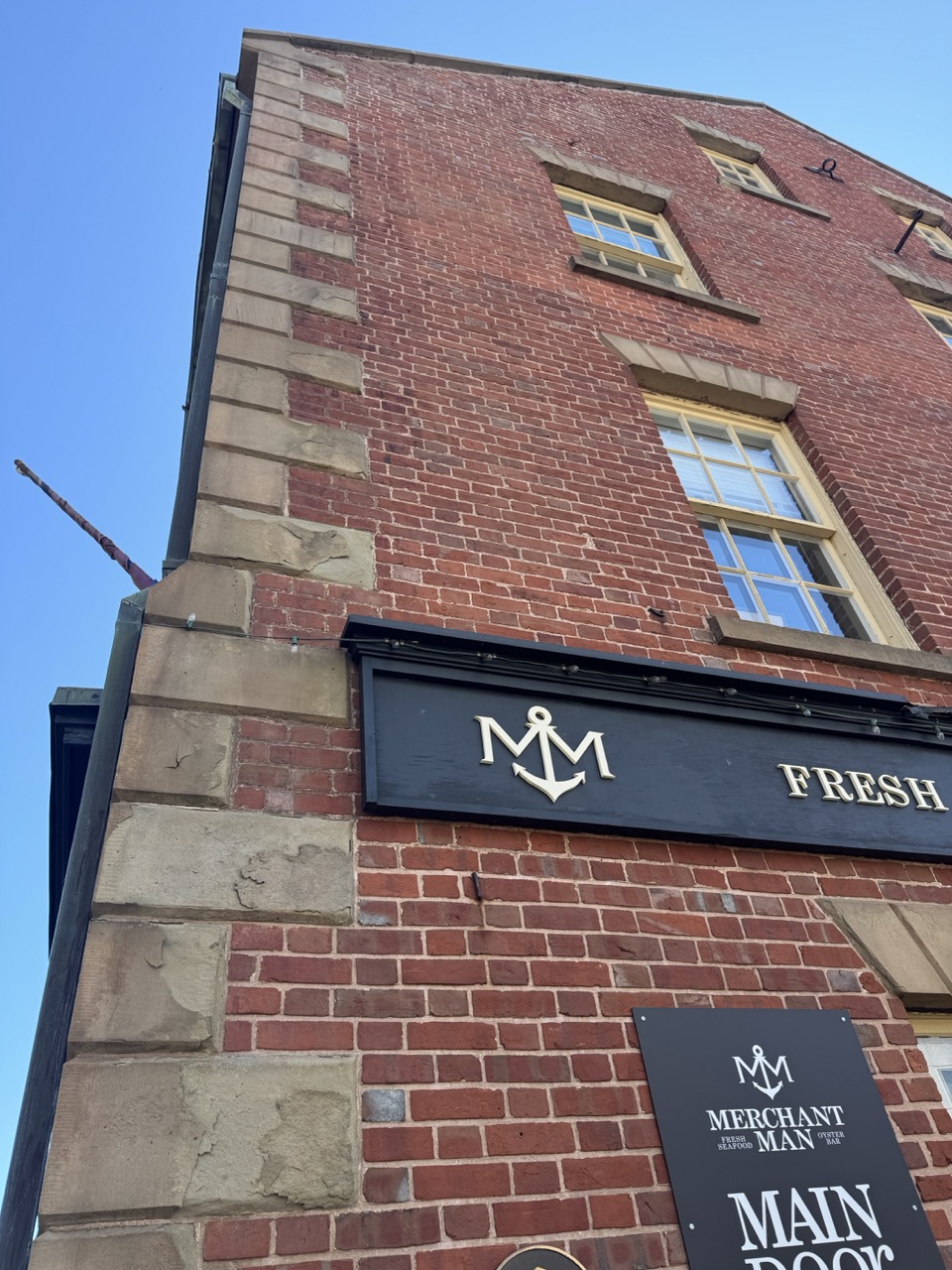
Regional lesson: On an older building, cleaning is part of conservation. The objective is to retain sound original masonry while addressing the specific deposit, coating or moisture condition.
Record colour, texture, joints and the deposit before any treatment.
The test should contain the same masonry and staining as the larger area.
Escalate only if the first method does not produce an acceptable result.
Do not judge colour or surface damage while the masonry is still wet.
Look for roughening, colour loss, softened mortar, streaking or newly exposed pores.
If the project proceeds, the test panel becomes a reference for the expected level of cleaning and surface condition.
National Park Service Preservation Brief 1 explains how to assess cleaning methods and water-repellent treatments for historic masonry and emphasizes selecting the method only after understanding the material and soiling.
Preservation Brief 6 documents the damage abrasive cleaning can cause to historic brick and stone and recommends the gentlest means possible.
The Brick Industry Association's Technical Note 20 provides detailed cleaning guidance for brickwork, including test areas, water cleaning, pressurized cleaning and stain-specific methods.
Parks Canada's Standards and Guidelines for the Conservation of Historic Places in Canada emphasize minimal intervention and retaining sound, repairable character-defining materials.
NPS Preservation Brief 1: Cleaning Historic Masonry →
NPS Preservation Brief 6: Dangers of Abrasive Cleaning →
Dean is a third-generation mason with more than 20 years of hands-on experience working with brick, natural stone, chimneys, foundations, repointing and masonry restoration in Prince Edward Island. The Knowledge Centre uses that field experience to explain masonry problems that are also common across Atlantic Canada and other cold, wet climates.
Last reviewed: August 28, 2026
High pressure can damage softer brick and mortar. If water cleaning is appropriate, it should be tested and kept to the gentlest effective method.
It is not a universal masonry cleaner. Acid can attack mortar, alter colour and damage some stones. Match the cleaner to the material and stain.
No. Age, patina and colour variation can be part of the building's character. The goal is controlled cleaning without unnecessary material loss.
Identify the masonry and stain, correct active water problems, test a small area and allow the test to dry before deciding on the larger treatment.
A wide photo, a close-up of the brick or stone, and a photo of the staining or coating can help determine whether the issue is primarily cleaning, moisture, mortar deterioration or another repair condition. For DinoMac service work, include the PEI property location.