1. Start at the Roofline
Look at chimney crowns, caps, visible flashing, loose units, open joints and staining below the roof intersection.
Spring reveals what winter changed. Summer is the best time to document, clean up water-management problems and plan repairs. Fall is when you reduce the amount of water masonry will carry into freezing weather. Winter is when you watch for active leaks, ice and fresh movement.
This guide is built around the kinds of conditions common across Prince Edward Island, Nova Scotia, New Brunswick and the wider Atlantic region: freeze-thaw deterioration, wet chimney tops, exposed brick, old stone foundations, downspout discharge and repairs that fail because the water source was never corrected.
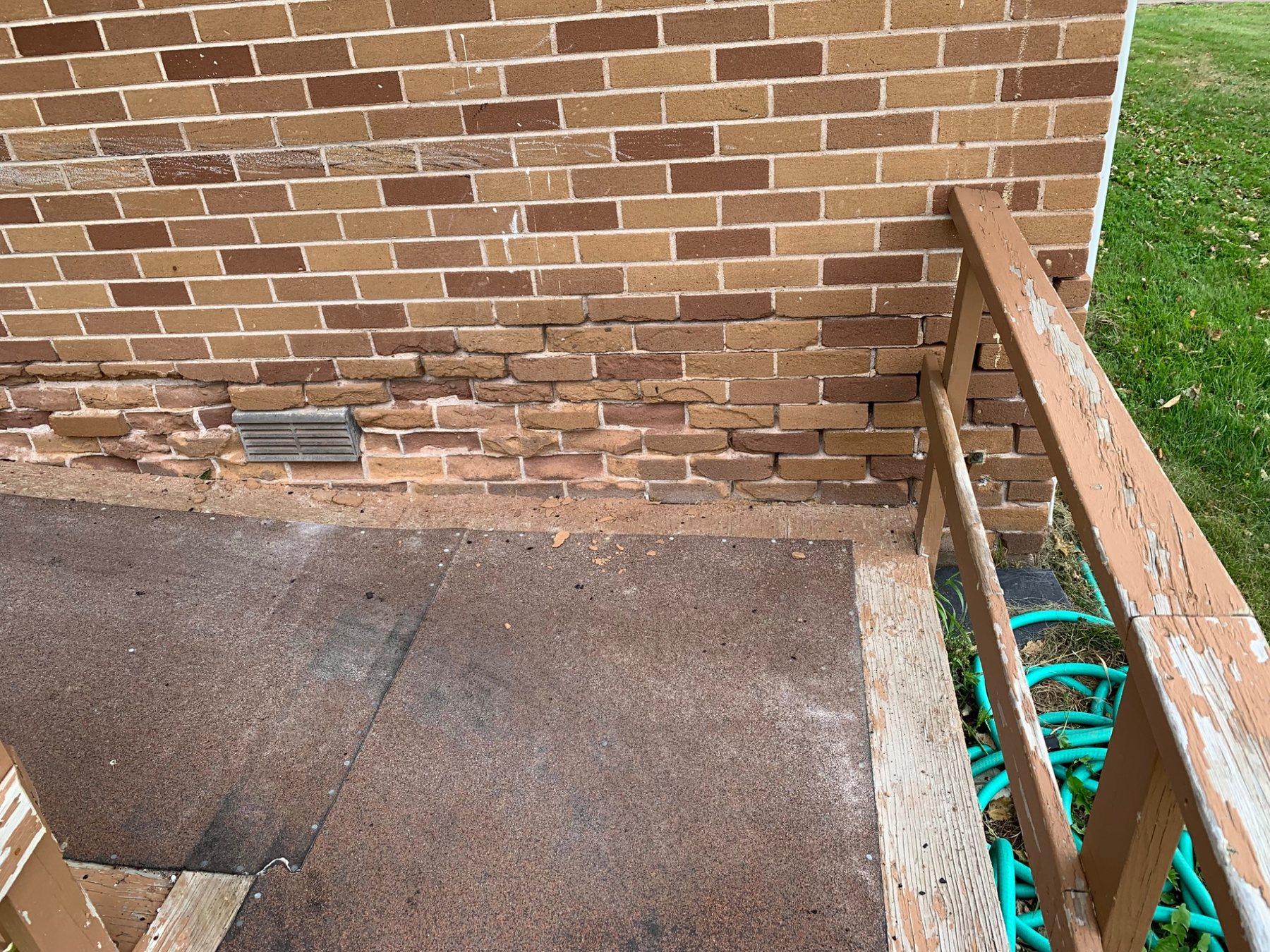
Field principle: The most useful maintenance question is not “does this wall look old?” It is “what changed since last season?” Fresh flakes, new cracks, damp areas and displaced pieces are more useful than age alone.
Prince Edward Island, Nova Scotia and New Brunswick share many of the same masonry stresses: repeated freeze-thaw cycles, wet shoulder seasons, wind-driven rain, snowmelt and a large stock of older homes built with brick, stone and more traditional mortar systems.
Local exposure still matters. A coastal wall, an inland chimney and a sheltered foundation can weather very differently. The broader principle is the same everywhere: control water, track change, understand the material and repair the cause rather than only the visible symptom.
Treat the seasonal checklist as regional guidance. Adjust the timing to your local weather, exposure and building type, and use local code or qualified professional advice where structural, fire-safety or jurisdiction-specific requirements are involved.
Consistency matters more than making the inspection complicated. Start wide, then move closer where something has changed.
Look at chimney crowns, caps, visible flashing, loose units, open joints and staining below the roof intersection.
Check gutters, downspout outlets, splash zones, sills and any place where water repeatedly lands on masonry.
Compare cracks, mortar joints, brick faces, stone movement and coatings with older photographs if you have them.
Check where soil, paving, snow storage or vegetation sits against the foundation and whether surface water drains away.
Basement staining, damp mortar, salts, peeling coatings and fresh floor debris can help locate a problem that is not obvious outside.
Use the same wide and close views each year. A photo record is often the easiest way to determine whether a condition is stable or progressing.
Once snow and ice recede, walk the building before landscaping hides the lower masonry. Look for new flakes of brick or stone on the ground, mortar fragments below walls, fresh cracking and joints that opened during winter.
Pay particular attention to masonry that remains wet longer than surrounding areas. Freeze-thaw damage is strongly influenced by how much moisture a porous material contains when it freezes. That is why a repeatedly saturated brick or stone can deteriorate while nearby masonry survives the same air temperature.
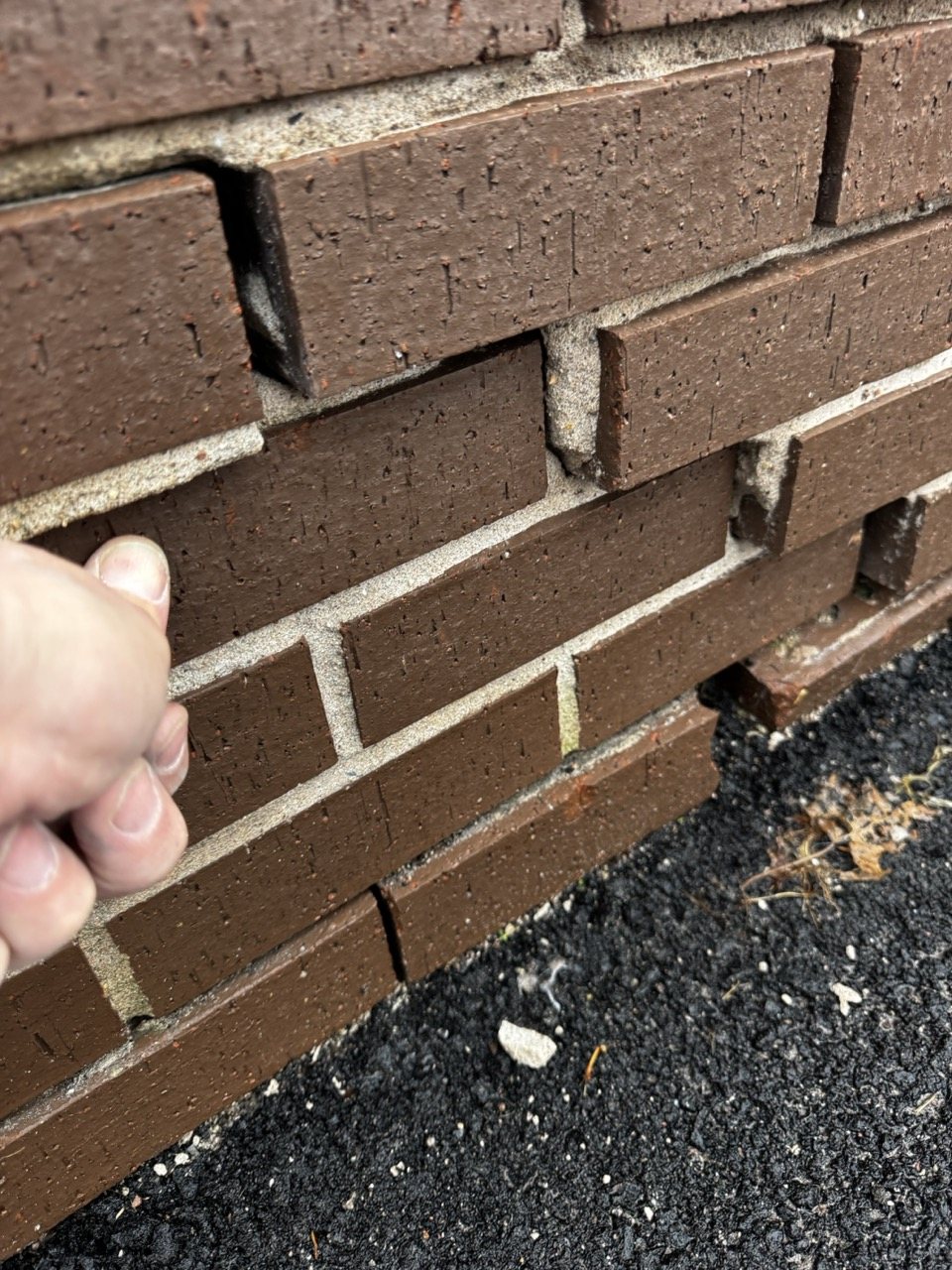
Spring warning sign: A unit that can be moved by hand is no longer just a cosmetic mortar problem. Loose masonry deserves attention, especially above roofs, walkways and entrances.
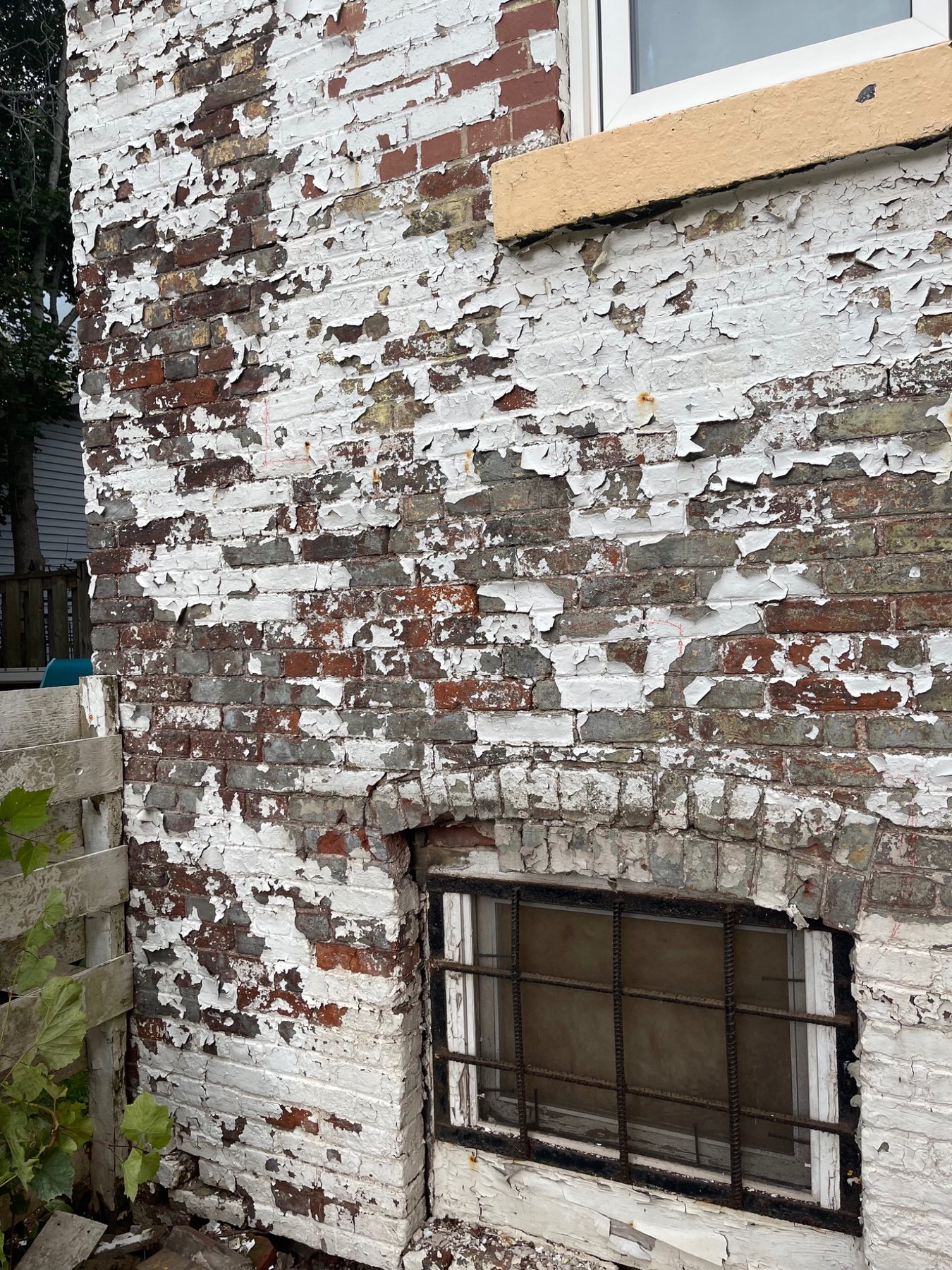
Summer observation: Peeling coatings can reveal recurring moisture movement through a wall. Before repainting or applying another coating, determine why the surface is releasing.
Dry weather makes it easier to distinguish permanent deterioration from temporary winter staining. This is a good time to document crack widths, inspect accessible mortar, assess damaged units and decide whether the work is repointing, localized rebuilding or something that requires deeper investigation.
Summer is also when owners often reach for pressure washers, waterproofing products or sealers. Those should not be automatic maintenance steps. Aggressive cleaning can damage softer masonry and mortar, and a coating that reduces drying can make a moisture problem harder to see.
A masonry wall does not need to be perfectly dry before winter, but reducing repeated saturation is one of the most useful things a building owner can do. Gutters, downspouts, roof intersections, chimney crowns, sills and grade conditions should all be checked before freezing weather returns.
The National Park Service identifies roof runoff, damaged gutters, downspouts and poor surface drainage as common sources of unwanted moisture in older buildings. Those problems matter in any wet climate because water held in masonry becomes much more consequential once temperatures fall below freezing.
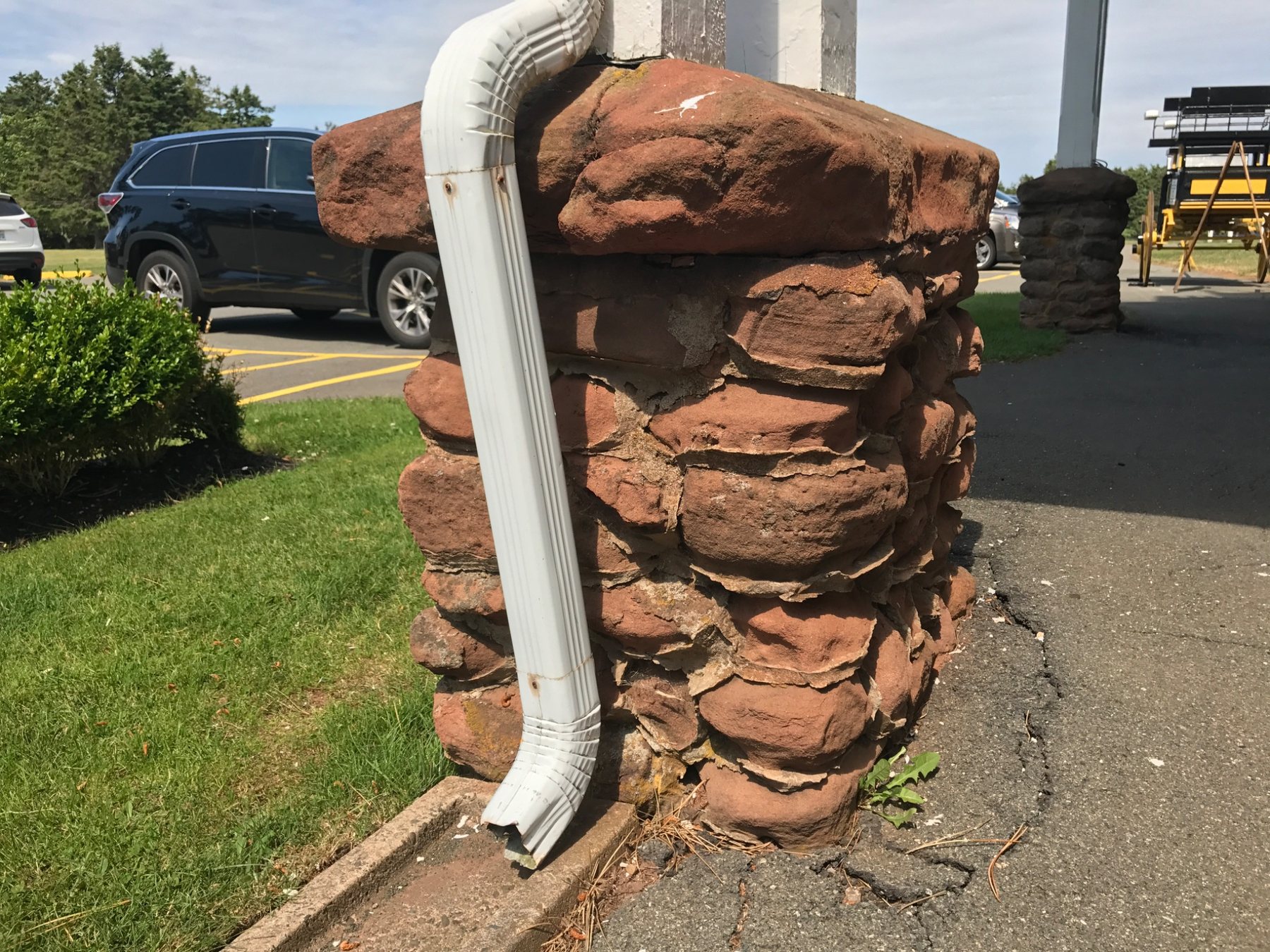
Fall priority: This is the kind of simple condition worth correcting before winter. Delivering roof water directly beside masonry increases the moisture load on both the wall and the supporting soil.
Watch for icicles or ice buildup that repeatedly forms in one location, wet areas that remain dark after surrounding masonry dries, fresh interior staining and new debris below chimneys or walls.
If a chimney or wall is shedding masonry, keep people away from the fall zone and arrange assessment. Do not stand below loose work or climb an icy roof simply to get a better photograph.
Fresh mortar also needs protection from freezing. Cold-weather masonry can be done using appropriate procedures, but unprotected new mortar should not simply be installed and allowed to freeze.
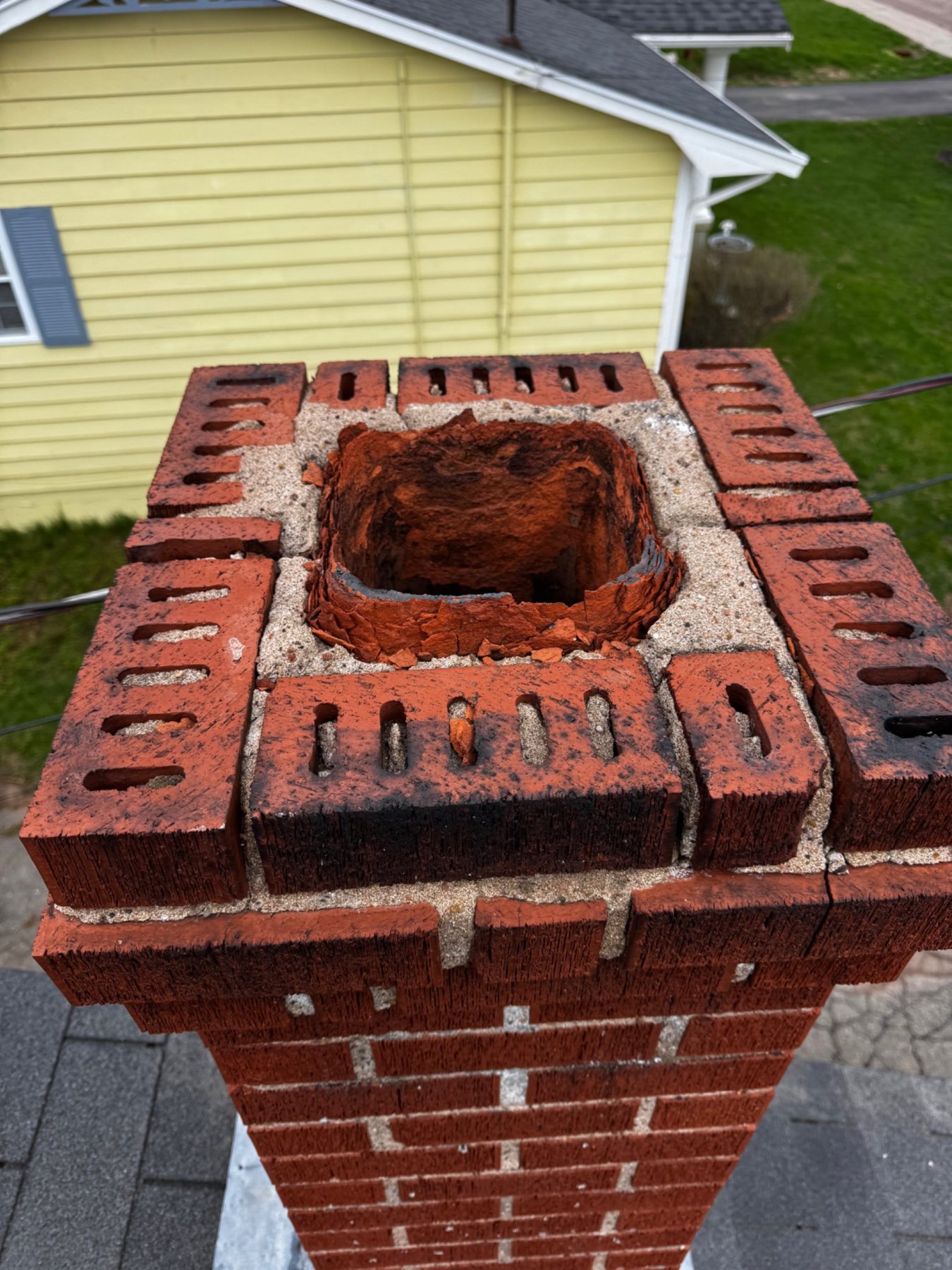
Winter priority: Chimney tops are highly exposed. If loose material is present above a roof or occupied area, the safety issue can be more urgent than the cosmetic condition.
Watch crowns, rain caps, upper courses, shoulders, flashing intersections, mortar loss and staining. Chimneys often show water problems before lower walls do.
Chimney anatomy guide →Look for fresh face loss, open joints, cracks from openings, bulging, staining and changes around sills or downspouts.
Visual damage guide →Track damp areas, loose packing stones, parging cracks, bulging, surface runoff and downspout discharge near the foundation.
Stone foundation anatomy →Check joint erosion, movement at caps and steps, water sitting on horizontal surfaces, failed sealant at interfaces and stones that have shifted.
Natural stone masonry →Avoid assuming every irregular joint or worn surface needs replacement. Track change first, then choose compatible repair materials.
Mortar compatibility guide →Watch blistering, peeling, trapped dampness and repeated failure in the same location. A new coating will not solve a continuing water source.
Masonry water damage →You do not need special instruments to create a useful maintenance record.
| Record | What to Capture | Why It Helps |
|---|---|---|
| Whole elevation | One straight-on image of each wall | Shows new staining, movement or repairs in context |
| Chimney | Wide photo from ground plus safe close views if accessible | Tracks crown, upper courses and flashing-related changes |
| Known cracks | Same angle and distance each year | Makes widening or displacement easier to identify |
| Foundation damp areas | Interior and exterior photos after heavy rain or snowmelt | Helps connect the moisture pattern to weather and drainage |
| Loose debris | Photograph pieces where they fell before cleanup | Can help identify the source wall, joint or chimney area |
A weathered but stable mortar joint may be something to plan. A loose brick above an entrance, a chimney leaning or shedding pieces, a rapidly widening crack, or a wall bulging outward deserves faster attention.
Likewise, a white efflorescence stain may be harmless residue, but repeated saturation in the same area deserves investigation because the water source may be more important than the salt deposit itself.
National Research Council Canada research on masonry freeze-thaw performance identifies moisture content at the time of freezing as an important factor in durability, along with exposure and temperature cycling.
National Park Service guidance on older buildings similarly emphasizes gutters, downspouts, flashing and surface drainage as practical ways to reduce unwanted moisture entering masonry.
These references support a simple maintenance principle: before treating a damaged masonry surface, reduce the conditions that keep wetting it.
Dean is a third-generation mason with more than 20 years of hands-on experience working with brick, natural stone, chimneys, foundations, repointing and masonry restoration in Prince Edward Island. The Knowledge Centre uses that field experience to explain masonry problems that are also common across Atlantic Canada and other cold, wet climates.
Last reviewed: August 28, 2026
Spring and fall are the two most useful detailed checks, but a quick look in every season makes changes easier to identify.
Take one wide image first, then close-ups of cracks, loose joints, damaged units, staining, flashing, crowns, downspouts and grade conditions.
Some work can be performed with proper cold-weather procedures, heating and protection. Fresh mortar should not simply be allowed to freeze.
No. The important questions are whether it is moving, whether units are displaced and whether it affects support, water entry or public safety.
Send the property location, a wide view, a close-up and any older photo of the same area. Include whether the condition appeared after winter, heavy rain or another specific event.