Hairline Firebrick Crack
A fine crack in one unit may remain stable, but it should be monitored for widening, movement, loose pieces or continued heat damage.
The inside of a fireplace lives through repeated heating, cooling, flame, impact from firewood and sometimes moisture. Small defects do not all mean the same thing, but loose, missing or deeply damaged firebox material should never be treated as merely cosmetic.
Before deciding whether a crack needs repair, identify the fireplace type. A traditional site-built masonry firebox and a factory-built fireplace with manufactured refractory panels are different systems with different repair rules.
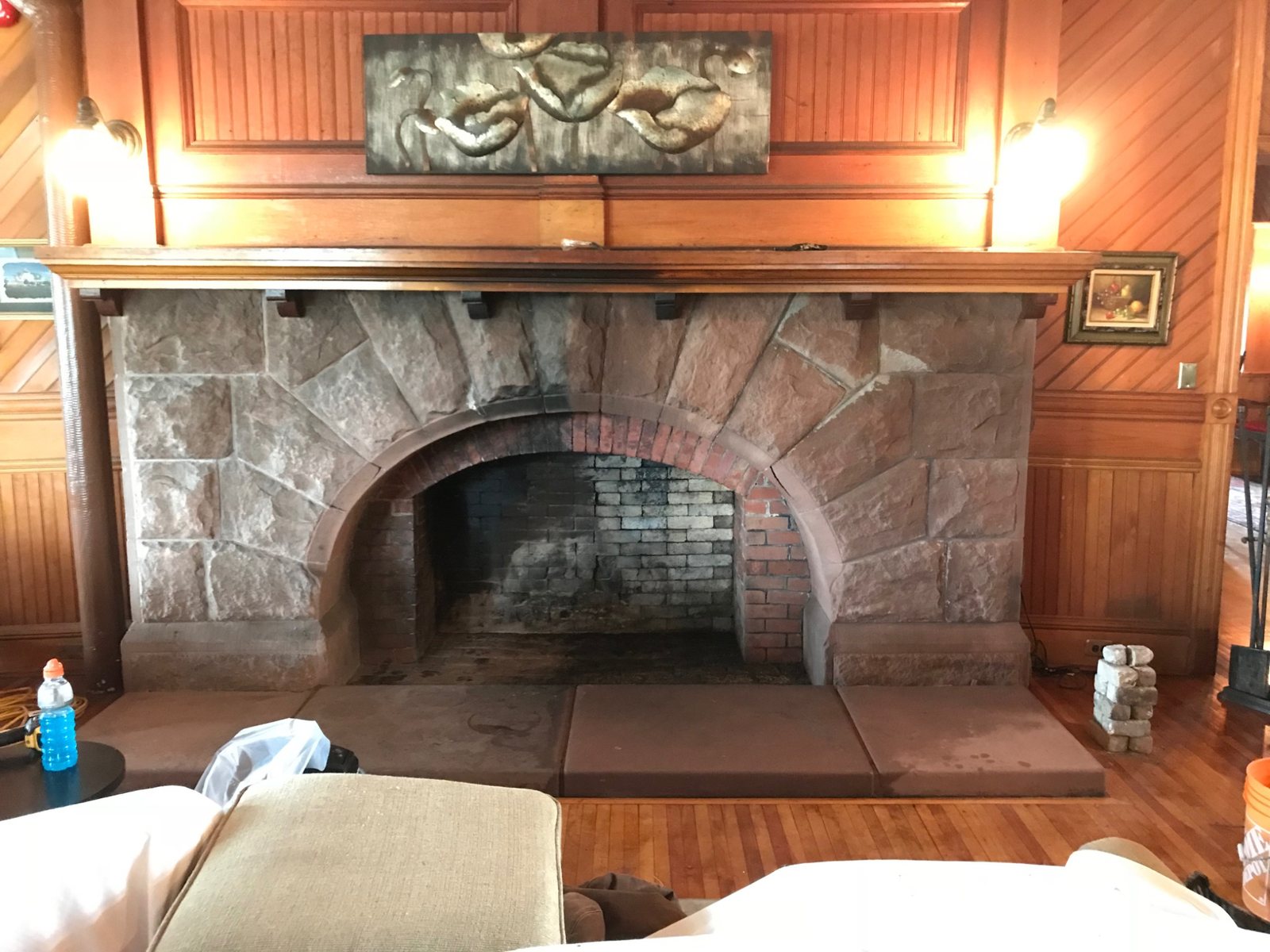
Traditional masonry fireplace: The large open firebox, brick lining and masonry surround show how the fire chamber is only one part of the complete fireplace assembly.
This distinction is the most important starting point on the page.
Built on site from masonry. The fire chamber is commonly lined with firebrick laid in refractory or high-temperature mortar. Repair can involve repointing refractory joints, replacing individual firebrick or selectively rebuilding damaged portions of the firebox.
A listed manufactured fireplace assembled as a system. The firebox may use molded refractory panels around a metal shell. Panel condition, replacement parts and repair procedures should follow the exact manufacturer and model instructions.
Canadian building-code guidance treats the fireplace liner as a high-temperature component intended to withstand repeated heating, cooling and thermal shock.
In traditional masonry construction, firebrick is used because it is made for heat exposure that ordinary face brick is not expected to withstand. The joints are also made with a refractory or high-temperature mortar suited to the fire chamber.
The lining should remain reasonably continuous. Open gaps or missing material can expose backing masonry, metal or other parts of the fireplace to conditions they were not intended to see directly.
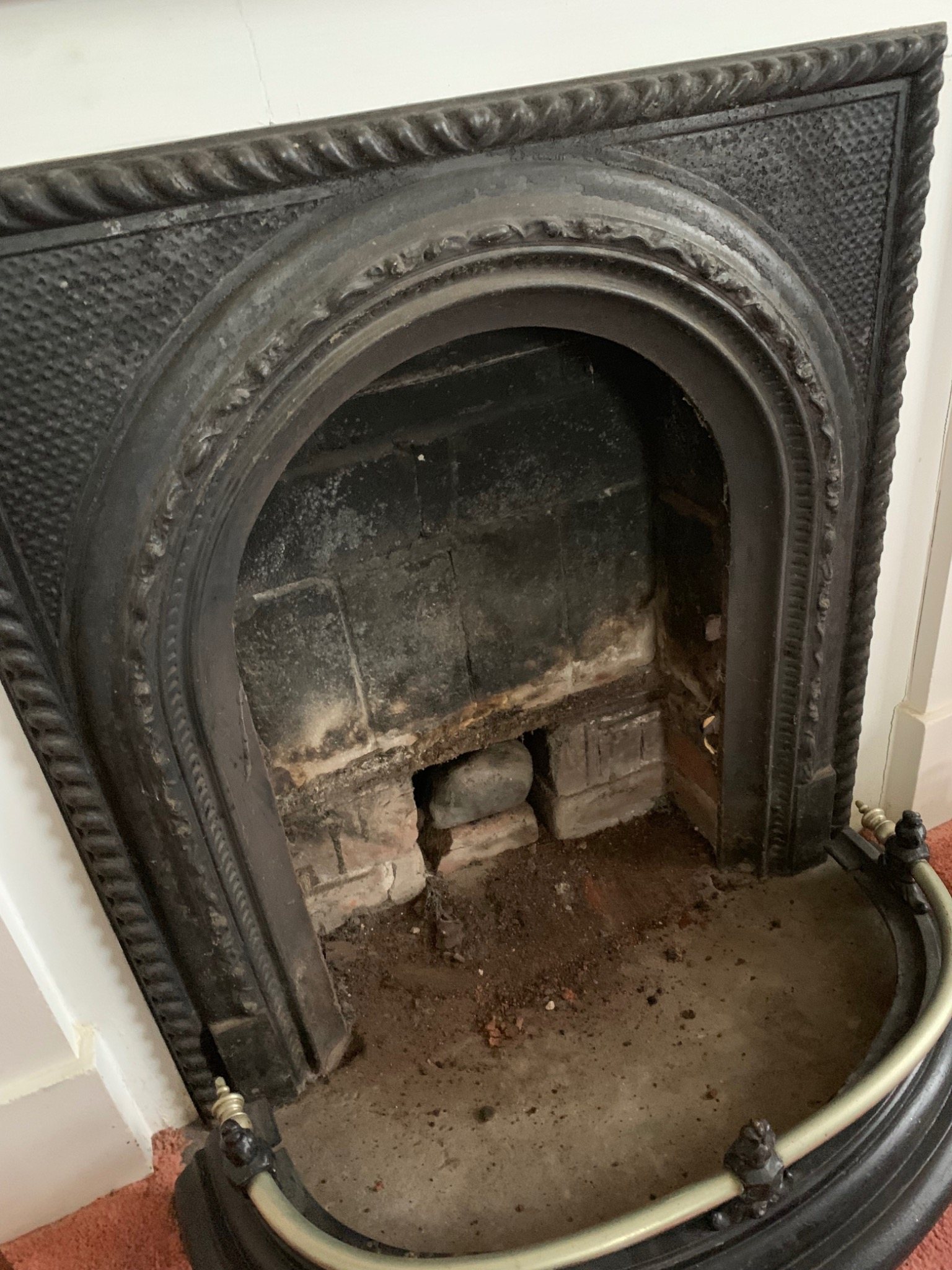
Older firebox example: Existing fireplaces can combine masonry, cast iron and previous repairs, so the firebox material and construction should be identified before choosing a repair.
A fine crack in one unit may remain stable, but it should be monitored for widening, movement, loose pieces or continued heat damage.
Mortar loss between firebrick can create a direct gap through the lining and may need proper refractory repointing.
Surface loss can result from heat, impact, moisture or age. Deep spalling that substantially reduces the brick should not simply be skim-coated indefinitely.
Movement changes the geometry of the lining and can open gaps behind or beside the unit. Loose pieces should be repaired before continued firing.
Broken-out material that exposes the substrate means the protective lining is no longer continuous in that area.
Refractory cement that repeatedly cracks out may point to movement, loose brick, incompatible patching or damage greater than a surface fill can solve.
In these conditions, do not treat the next fire as the test. Have the fireplace and, where applicable, the solid-fuel system assessed first.
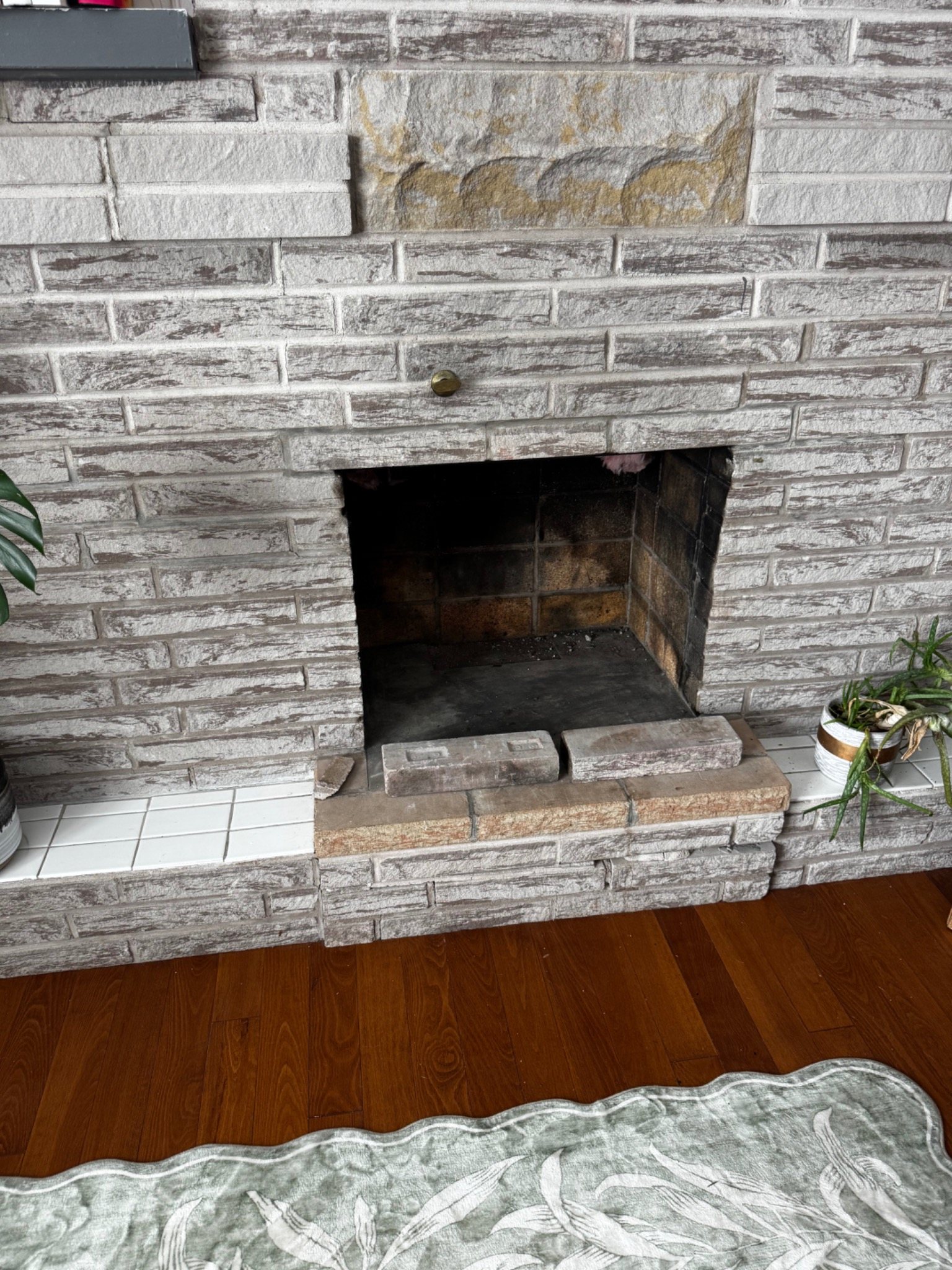
Loose masonry changes the repair scope. When bricks are displaced or removed around the opening, the condition should be assessed as more than a simple hairline refractory crack.
Appropriate where firebrick remains sound and stable but refractory mortar joints have eroded or opened locally.
Appropriate where one or several units are deeply cracked, loose, spalled or broken but the surrounding firebox remains sound.
May be needed where a larger section has loose units, failed joints, displacement or extensive damage that cannot be restored one brick at a time.
Appropriate where firebox damage is accompanied by smoke-chamber, damper, lintel, hearth, chimney or structural concerns.
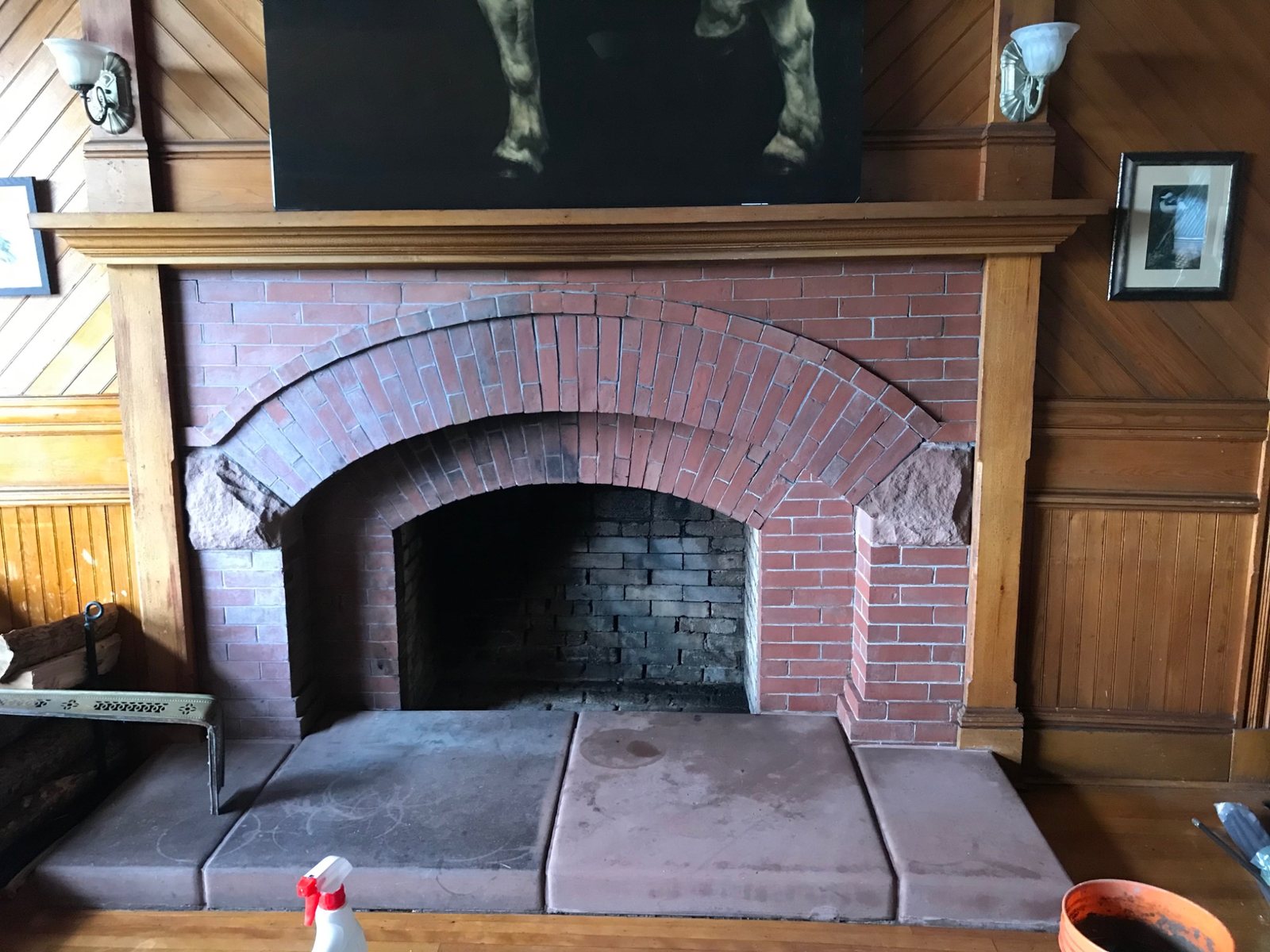
Large masonry fireplace: The visible firebox is only the lowest part of the smoke path. The throat, smoke chamber and flue continue above what can be seen from the room.
A fireplace carries combustion products from the fire chamber through the throat and smoke chamber into the chimney flue. Damage above the visible firebrick can affect draft and the safe containment of smoke and heat.
Heavy creosote, missing mortar, damaged flue liners, a deteriorated smoke chamber or a damaged damper are not repaired by replacing firebrick at floor level.
If the fireplace has been unused for years, has experienced a chimney fire, has visible masonry deterioration or is being put back into service after major work, a broader inspection is sensible.
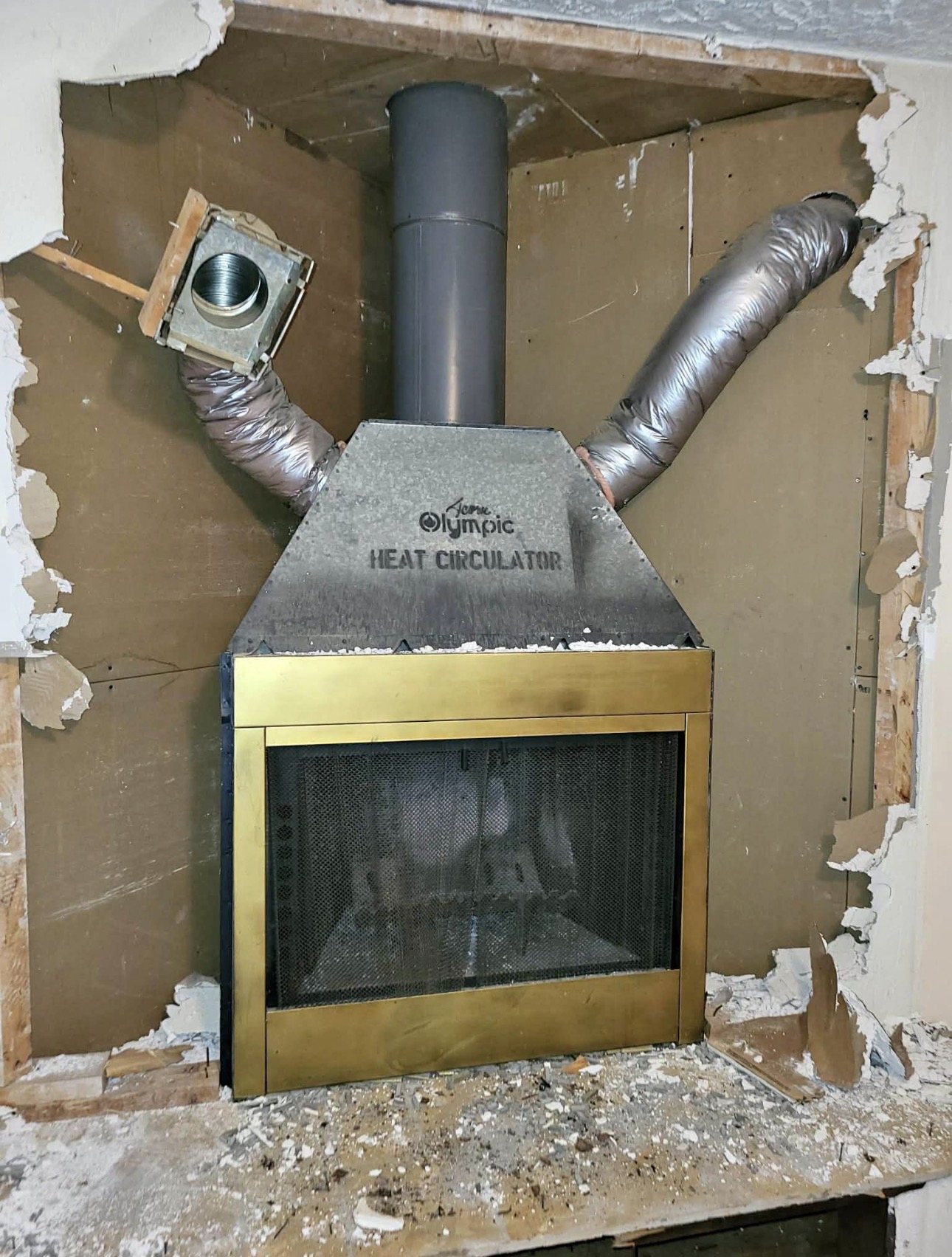
Read the masonry chimney anatomy guide →Factory-built fireplaces often use molded refractory panels that look like firebrick but are removable components of a listed fireplace system.
The field example shown below exposes the metal fireplace body and heat-circulation ductwork during renovation. That construction is a useful visual reminder that the surrounding finish can make a factory-built unit look much more like a conventional masonry fireplace than it actually is.
Some manufacturer manuals explicitly state that minor cracking from repeated heating and cooling is normal and does not affect performance. The same manuals may require replacement when cracks become large enough to expose metal behind the refractory or when large pieces fall out.
That does not create a universal crack rule for every fireplace. The correct threshold is the one in the manual for the exact make and model. Replacement panels should also be parts approved for that fireplace.
Canadian building-code provisions treat factory-built fireplaces separately from site-built masonry fireplaces and require them to conform to the applicable factory-built fireplace standard and installation instructions.
Filling a panel crack with a random mortar, replacing a panel with ordinary firebrick or modifying the metal shell can change a tested assembly in ways the manufacturer did not approve.
If the refractory panel is damaged beyond the manufacturer's service criteria, replacement with the correct component is usually the right path.
Factory-built example: With the finish removed, the metal fireplace body, venting and heat-circulation components make it clear that this is a manufactured system rather than a site-built masonry firebox.
Firebrick lining in a traditional fireplace is part of the high-temperature fire chamber. Canadian fireplace guidance has long required firebrick to be laid with high-temperature or refractory mortar appropriate to that service.
Ordinary Type N or Type S masonry mortar has important uses elsewhere in a building, but it should not automatically be substituted inside a firebox simply because it is readily available.
The repair material should suit the firebrick, joint thickness, fireplace construction and temperature exposure. Some refractory mortars are air-setting, while other systems have different curing requirements.
Firebox: high-temperature refractory service.
Exterior fireplace facing: ordinary masonry exposure and appearance.
Chimney exterior: weather, freeze-thaw and rain exposure.
Factory-built fireplace: manufacturer-approved components and repair methods.
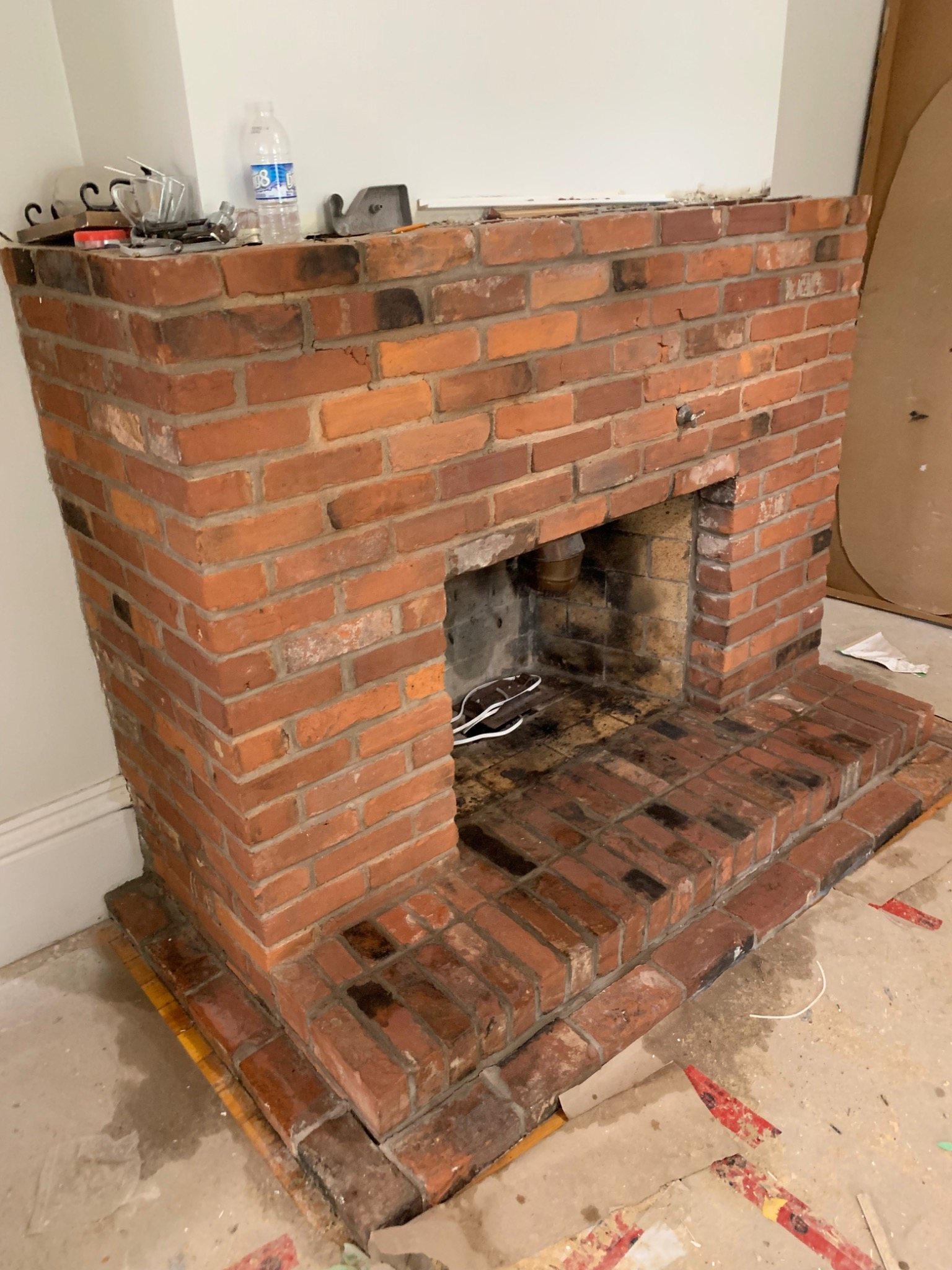
Renovation can expose the repair history. Older fireplaces often reveal changes to the opening, hearth, venting or firebox that need to be understood before new work is designed.
Older masonry fireplaces are often found with patched firebrick, modified dampers, altered hearths, blocked ash dumps, later inserts or repairs made with materials that do not match the original construction.
If an insert has been removed, an opening enlarged or the fireplace is being returned to open-fire use, the visible firebrick is only one part of what should be checked.
The smoke chamber, flue, hearth, clearances and overall solid-fuel system may need inspection before the fireplace is put back into service.
Take dated photographs so you can see whether a crack is stable, widening or beginning to shed material.
Note joints that continue to open, crumble or lose pieces after cleaning and use.
A crack becomes more important when the material on either side can move or pieces can be removed by hand.
Gaps exposing metal, backing masonry or deeper voids mean the lining is no longer performing as a continuous surface.
Chimney leaks can wet a firebox and contribute to joint deterioration, rust staining and refractory damage.
New smoke spillage, unusual draft behaviour or visible smoke escaping around components warrants broader investigation than the firebrick alone.
A mason can repair firebrick, refractory mortar, hearths, masonry surrounds and other masonry components where that work is appropriate.
For a formal assessment of a wood-burning fireplace and venting system in Canada, an appropriately WETT-certified individual can perform a SITE inspection. WETT explains that its inspections evaluate the solid-fuel-burning appliance and venting system at different levels of accessibility.
WETT also makes an important distinction: WETT certifies individuals. It does not “certify” a fireplace, appliance, installation or company.
A masonry repair may therefore be one recommendation that comes from a broader fireplace inspection rather than a substitute for that inspection.
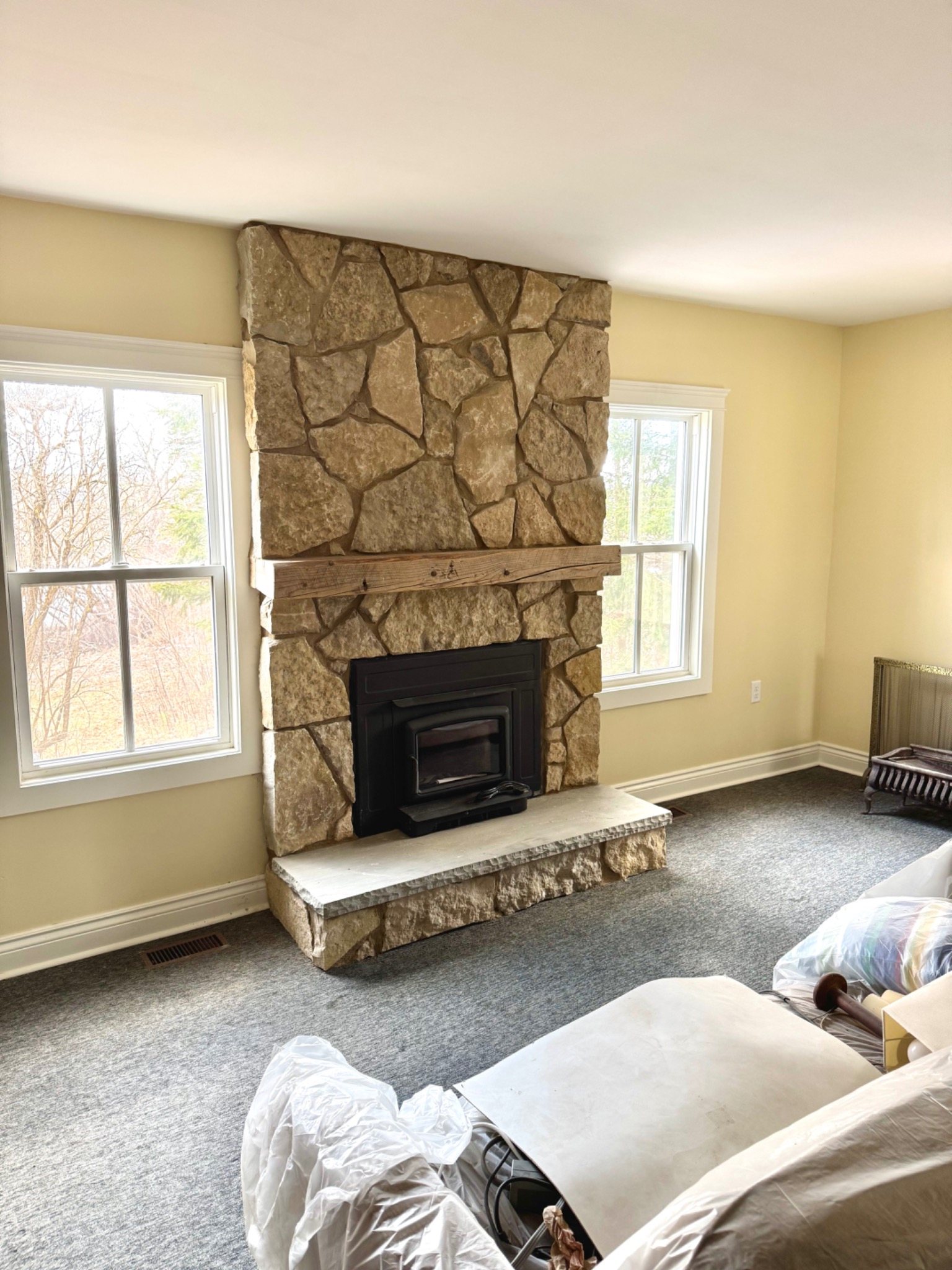
Insert installations add another system. A solid-fuel insert, masonry surround and chimney connection each have their own condition and inspection requirements.
Chimney leaks, missing caps, failed crowns or flashing can introduce water into a fireplace system. Repeated wetting can weaken joints, corrode metal components and increase deterioration during freezing weather.
If damaged firebrick is accompanied by dampness, staining or efflorescence, inspect the chimney's water-shedding details as part of the repair.
Read the chimney leak guide →Across Prince Edward Island, Nova Scotia and New Brunswick, chimneys and fireplaces can experience wind-driven rain, snow, freeze-thaw cycling and long damp shoulder seasons.
A fireplace that is used only occasionally may spend far more time cold and damp than hot and dry. Water entry from the chimney can therefore be just as relevant to refractory deterioration as repeated firing.
The practical regional approach is to repair the firebox material, stop water from entering the chimney system and confirm the solid-fuel system is suitable for use when broader safety questions are present.
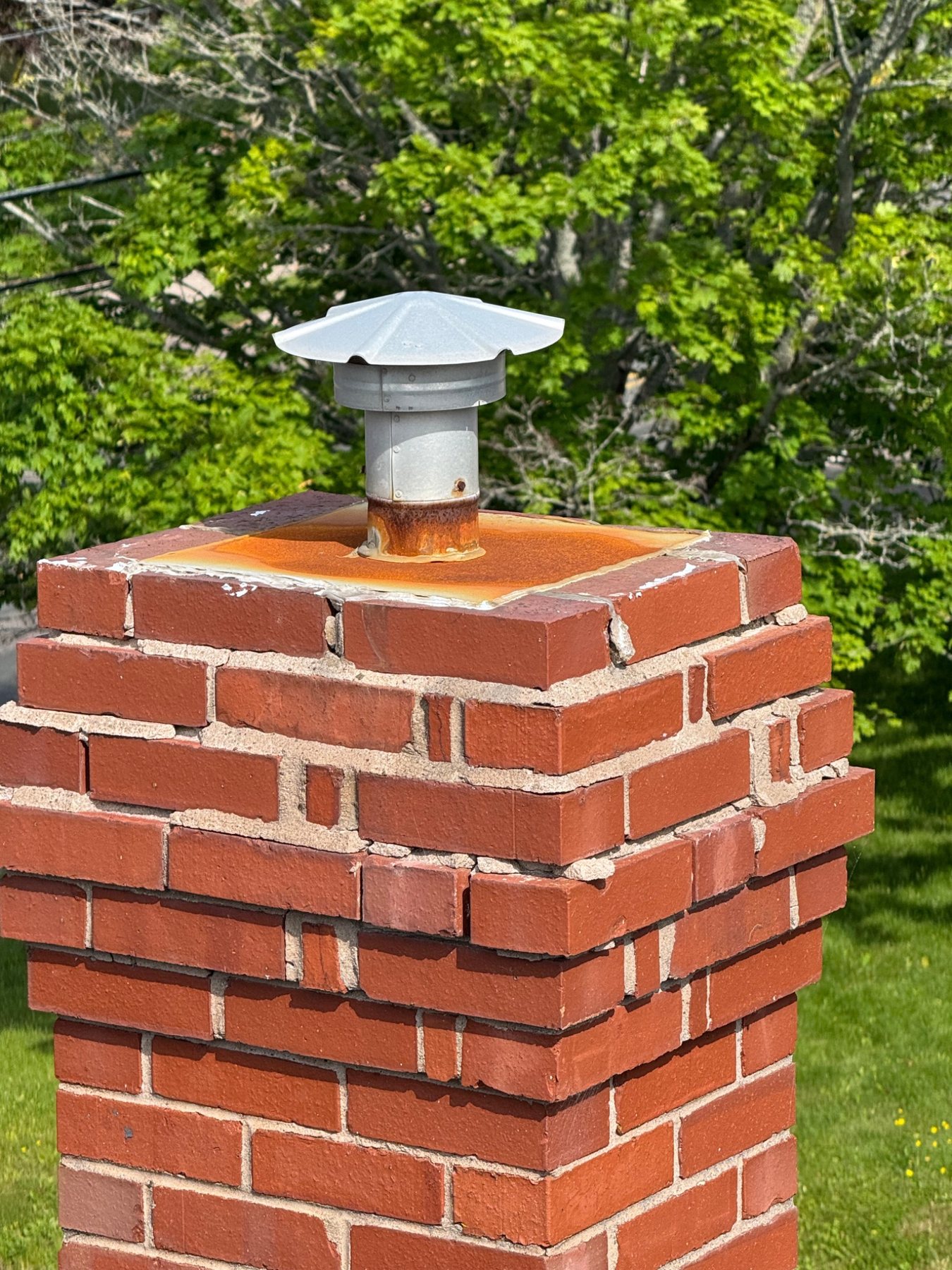
Look upward when the firebox is damp. Crown, cap and flashing defects can deliver moisture to components far below the visible chimney top.
Photograph the back, both sides, floor, lintel area and damper from a safe position.
Show whether the crack is only in mortar, passes through a firebrick or has missing material.
Photograph broken edges, loose units, missing pieces and exposed backing.
For factory-built units, photograph the manufacturer, model and certification label where accessible.
Include the opening, hearth and surrounding masonry so movement or previous alterations are visible.
If moisture or venting is part of the concern, include exterior chimney, cap, crown and flashing photos.
The National Building Code of Canada 2020 includes a dedicated fireplace section covering fireplace liners, walls, fire chambers, hearths, dampers, smoke chambers and factory-built fireplaces. Canadian code intent guidance describes fireplace liners as materials intended to withstand heating and thermal shock while helping prevent through-leakage paths through the fire chamber construction.
Manufacturer instructions for factory-built fireplaces can be more specific. Hearth & Home Technologies, for example, states in one Canadian/U.S. fireplace manual that minor refractory cracking from expansion and contraction can be normal, while panels should be replaced if cracks expose metal behind the refractory or large pieces fall out. Those criteria apply to that listed product, not automatically to every fireplace.
WETT's SITE inspection program provides Visual, Technical and Invasive inspection levels for solid-fuel-burning appliances and venting systems. WETT certification applies to the inspecting individual rather than to the fireplace itself.
NRC Canada: National Building Code of Canada 2020 →
NRC Canada: Fireplace Liner Intent Guidance →
Hearth & Home Technologies: Example Factory-Built Fireplace Manual →
Dean is a third-generation mason with more than 20 years of hands-on experience working with brick, natural stone, chimneys, foundations, repointing and masonry restoration in Prince Edward Island.
The DinoMac Masonry Knowledge Centre uses PEI field experience to explain masonry conditions that are also common across Atlantic Canada and other cold, wet climates.
Last reviewed: August 28, 2026
Not automatically. Depth, movement, loose material and whether the protective lining remains continuous are more important than the existence of one fine crack.
Some joint and limited defects can be repaired. Deeply cracked, loose or substantially spalled units are often better replaced.
The firebox requires material intended for high-temperature refractory service. Ordinary exterior masonry mortar should not be substituted automatically.
Some manufacturers allow minor cracking, but the exact model manual determines when a panel must be repaired or replaced.
Stop and arrange assessment when material is loose or missing, backing is exposed, the firebox is moving or distorted, or smoke is escaping improperly.
They are separate services. A WETT-certified individual can provide a formal solid-fuel system inspection when that broader assessment is needed.
Fireplace Masonry Repair & Restoration →
Planning a Masonry Fireplace Renovation →
Renovating an Old Brick Fireplace →
Anatomy of a Masonry Chimney →
Chimney: Repoint or Rebuild? →
Mortar Compatibility for Historic Masonry →
Masonry Inspection Checklist →
Chimney flue liners explained: clay tile vs stainless steel →
Include the back, sides and floor of the firebox, cracks or missing material, the hearth and opening, and the manufacturer/model label if it is a factory-built fireplace. DinoMac can assess the masonry repair portion and help identify when a broader solid-fuel system inspection should also be considered.