Wall veneer
Consider system type, support, drainage cavity, flashing, bond or anchors, corners and how the base terminates.
Choosing exterior stone is not just a colour decision. A stone that works well on a sheltered wall may behave very differently as a coping, step, sill or patio where it stays wetter, sees de-icing salt or freezes while saturated.
The useful question is what exposure will this stone actually live in, and is the material and wall system suited to it?
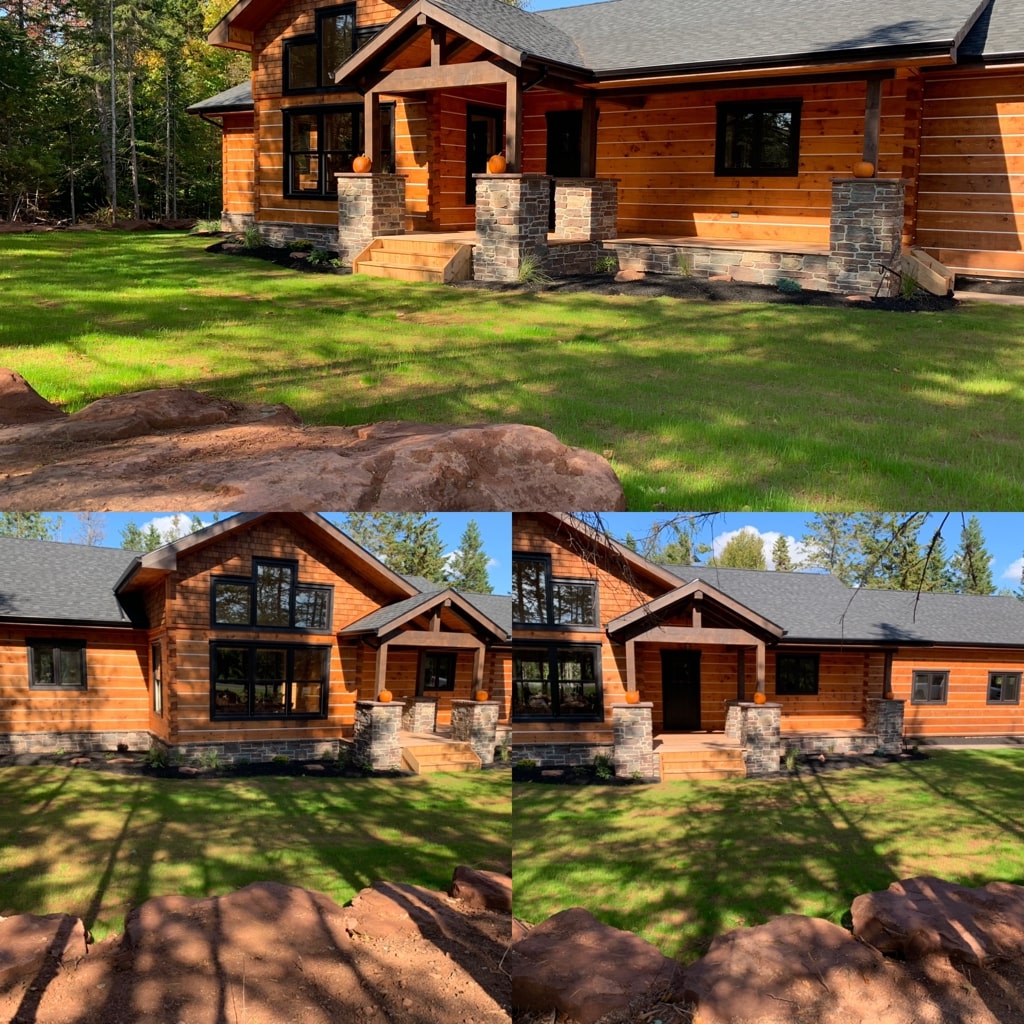
Choose for the job, not just the sample board. Exterior stone has to suit the exposure, wall system and detail as well as the desired appearance.
Exterior performance depends on the stone, the installation system and the water details working together.
Think about freeze-thaw, wall drainage, anchorage or bonding, corners, sills and whether the stone is full-bed or veneer.
Steps, copings, caps and patios take more direct wetting and often demand better drainage, suitable thickness and a finish that remains safe when wet.
Coastal sites and areas treated with de-icing salts can be more demanding. Salt crystallization and repeated saturation can accelerate deterioration in unsuitable stone.
Colour, veining, grain, bedding, texture and mineral markings can vary from piece to piece and from one quarry layer to another. That variation is part of natural stone, but it needs to be understood before ordering.
For larger projects, look at a representative range rather than one hand sample. Where colour and jointing are important, a small mock-up can show how the stone, mortar and joint profile work together in real light.
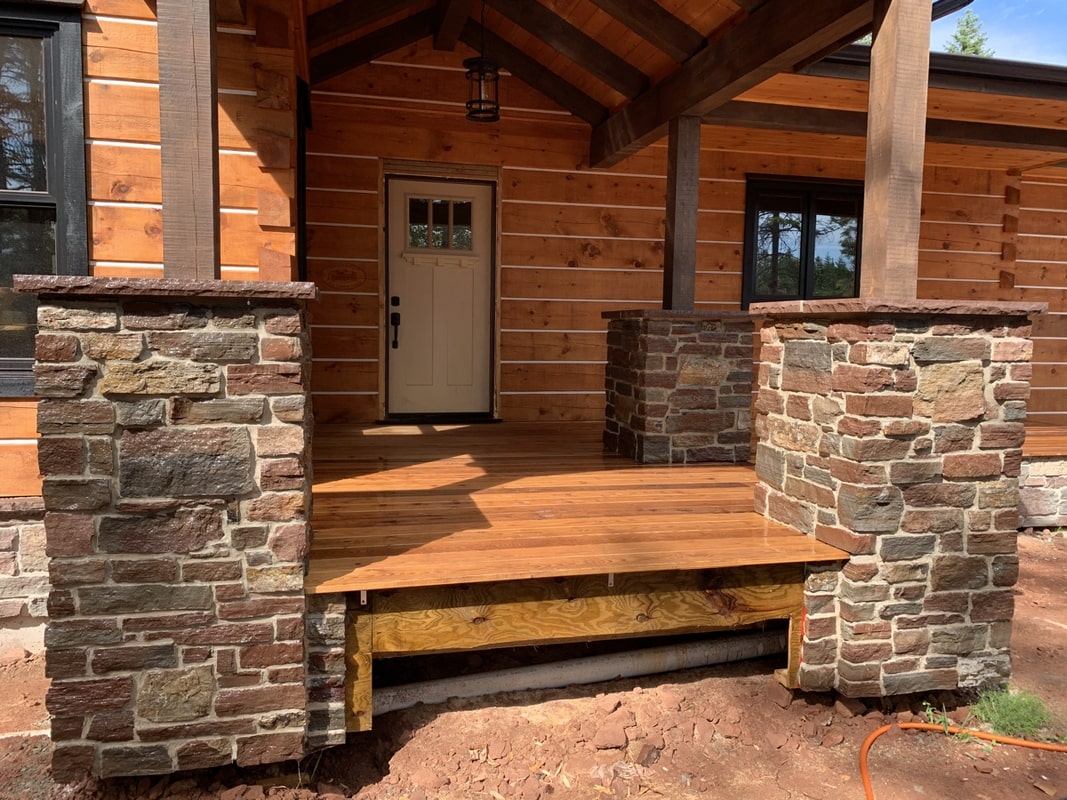
Variation is normal. The goal is usually a balanced blend, not making every stone identical.
In Atlantic Canada, exterior stone regularly sees wind-driven rain, snowmelt, wet shoulder seasons and repeated freeze-thaw cycles. Stone selection therefore has to consider absorption and pore structure as well as strength.
The Natural Stone Institute lists absorption, density, strength, freeze-thaw exposure and salt crystallization among the material tests that may be relevant when performance needs to be verified.
For most residential projects, that does not mean every stone needs laboratory testing. It means the supplier and designer should know the intended exposure and provide stone with a suitable performance history or test data where the application is demanding.
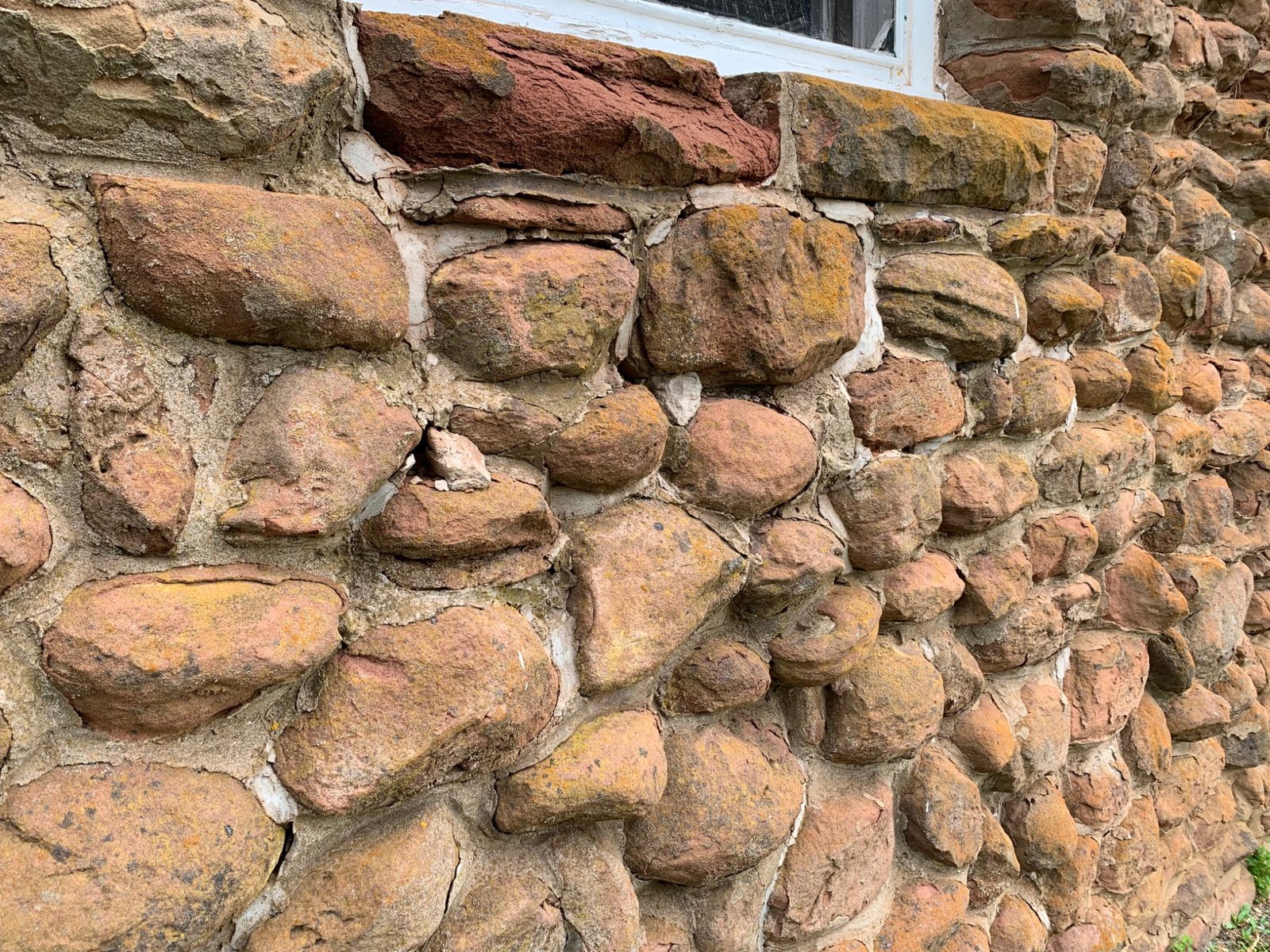
Exposure matters. Stone durability is shaped by material properties, water paths, detailing and maintenance over time.
Consider system type, support, drainage cavity, flashing, bond or anchors, corners and how the base terminates.
Consider footing or ledge support, wall thickness, tie-in, mortar, drainage and how loads are carried.
These are highly exposed horizontal elements. Slope, overhang, drip edges and joint layout matter because the stone is part of the water-shedding system.
Think about thickness, edge durability, traction, de-icing salts, landing drainage and how units are supported.
Base preparation, grading, drainage and freeze-thaw movement often matter as much as the stone itself.
Good geometry should move water out and away from the wall rather than hold it against masonry below.
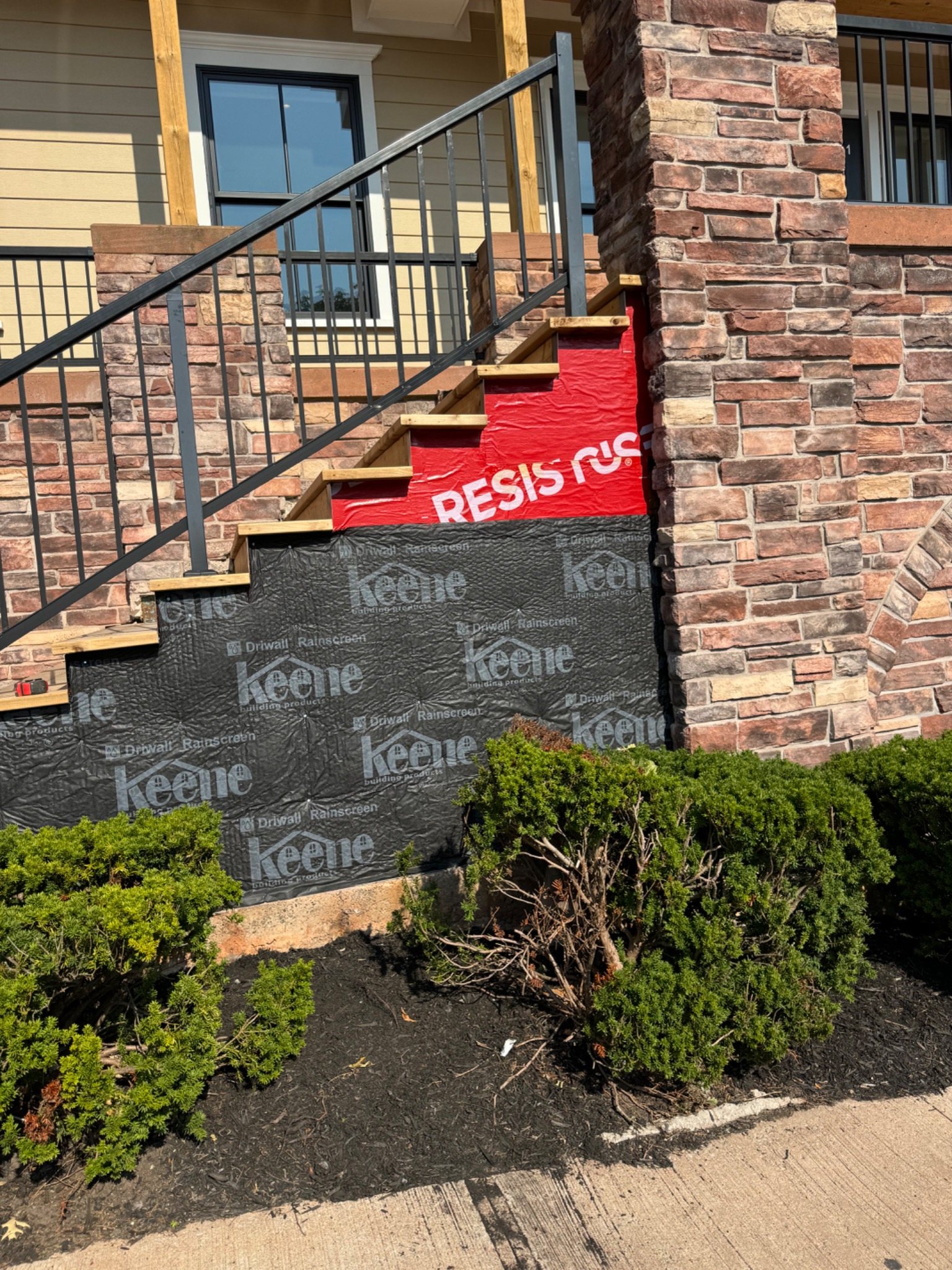
The stone is only the face. Drainage, flashing, backing and installation method determine how the whole assembly performs.
Exterior stone should not be selected independently of the wall assembly. Full-bed stone, thin adhered veneer and manufactured veneer use different support and drainage approaches.
At openings, bases, roofs, caps and transitions, the water-management details need to be planned before the stone goes on. A beautiful stone cannot compensate for missing flashing or a blocked drainage path.
Some sedimentary stones have visible bedding planes. How those beds are oriented can matter, particularly on caps, sills and projecting units where water can enter along natural layers.
Surface finish also changes slip resistance, appearance and how dirt or water behaves. A smooth finish that is appropriate on a wall may be a poor choice for an exposed exterior tread.
This is one reason stone selection should involve actual samples and the intended detail, not only a catalogue photograph.
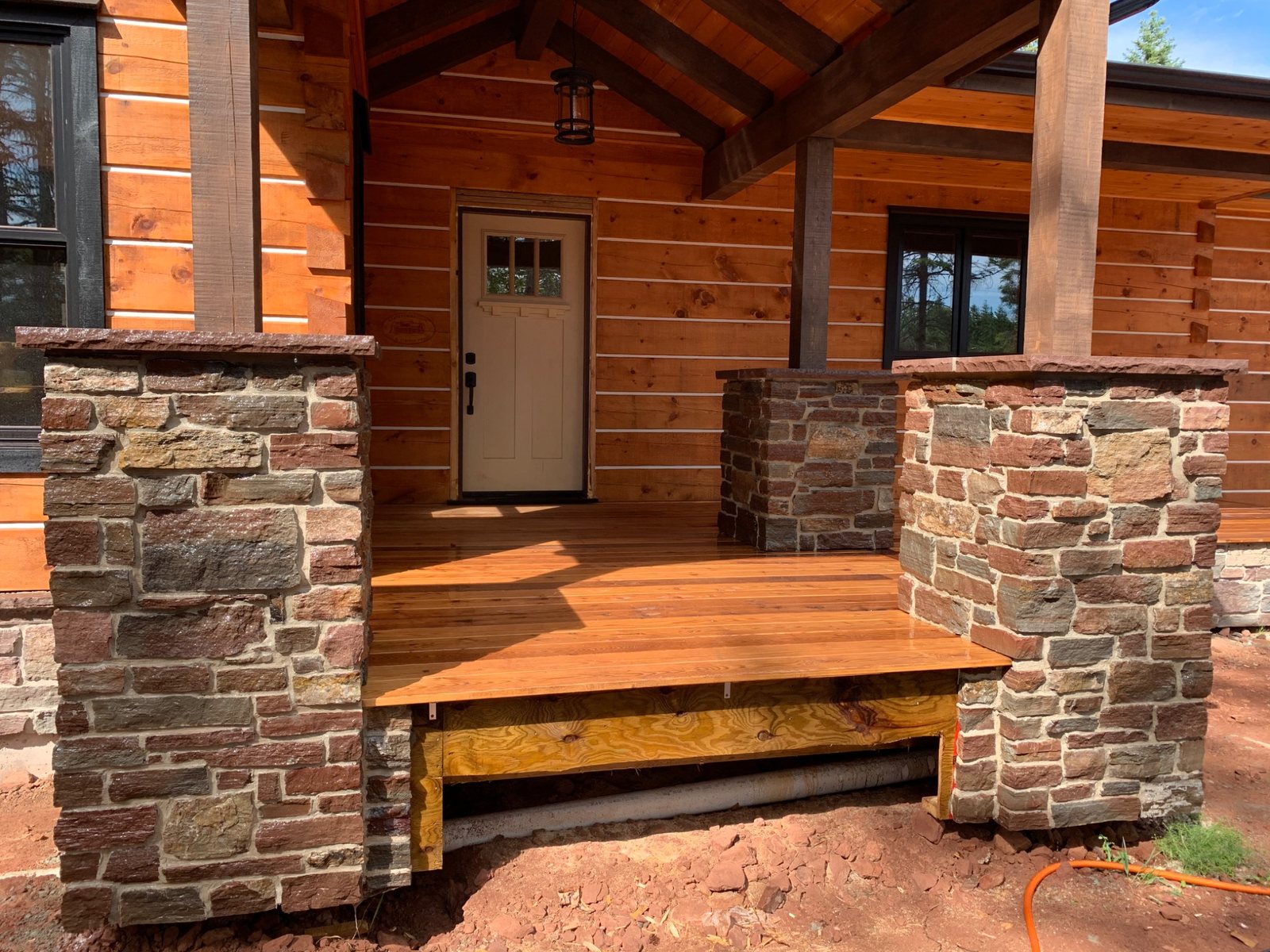
Material judgment matters. Selection includes how each unit will sit, shed water and relate to the rest of the work.
Wall, sill, cap, step, patio, fireplace or retaining wall? The exposure and support requirements differ.
Exterior Atlantic Canadian work should assume repeated wetting and freeze-thaw unless the location is unusually sheltered.
Ask about coastal exposure, splash from roads or de-icing salt around steps and walks.
Check slope, flashing, drip edges, cavities, drainage and grade before focusing on the face stone.
See representative samples and agree on blending expectations, especially for large wall areas.
For phased projects, ask about quarry or product availability and keep records of the stone source and blend.
The Natural Stone Institute identifies standard tests for absorption, density, compressive and flexural properties, freeze-thaw exposure and salt crystallization resistance. Those tests are most useful when tied to the actual application rather than treated as a scorecard detached from design.
Natural Stone Institute: Stone Testing Services →
Natural Stone Institute: Environmental Exposure Considerations →
Dean is a third-generation mason with more than 20 years of hands-on experience working with natural stone, brick, fireplaces, foundations and restoration in Prince Edward Island.
Last reviewed: August 28, 2026
There is no single best stone for every exterior use. The right choice depends on exposure, freeze-thaw durability, absorption, salt exposure, traffic, structural role, thickness, finish and how the stone will be detailed and installed.
No. Strength is only one property. Exterior performance also depends on pore structure, absorption, bedding, freeze-thaw resistance, salt exposure, surface finish and whether water can leave the assembly.
Colour matters, but it should come after suitability. A stone that looks right but performs poorly in the intended exposure can become an expensive maintenance problem.
Sometimes, but not automatically. A wall veneer, horizontal coping, step tread and patio are exposed differently and may need different thicknesses, finishes and performance characteristics.
Yes. Natural stone varies. View multiple samples or a representative range, and use a mock-up where appearance, mortar colour, joint profile or blending is important.
Yes. Repeated wetting, freeze-thaw cycling, coastal salts and de-icing salts can make absorption, drainage and detailing especially important for exterior stone in the Maritimes.
Photos of the building, grade, rooflines, openings and adjacent materials help determine whether the project needs full-bed stone, veneer, special sill or coping details, or more attention to drainage.