Surface scaling
A thin outer layer lifts or sheds from the stone. Scaling may remain shallow at first but can progress if the surface repeatedly becomes saturated and freezes.
Stone usually does not begin to crumble because it suddenly became "old." Surface scaling, flakes, powdering, granular loss and broken edges are signs that the stone is being weathered faster than it can tolerate, often because moisture, freezing, salts, incompatible repairs or poor water-shedding details are concentrating stress in the material.
The most useful question is therefore not simply how to harden or cover the damaged face. It is why this stone is staying wet, breaking down or losing material in this particular location. Once that mechanism is understood, the repair can focus on preserving sound stone and replacing only what is too deteriorated to remain in service.
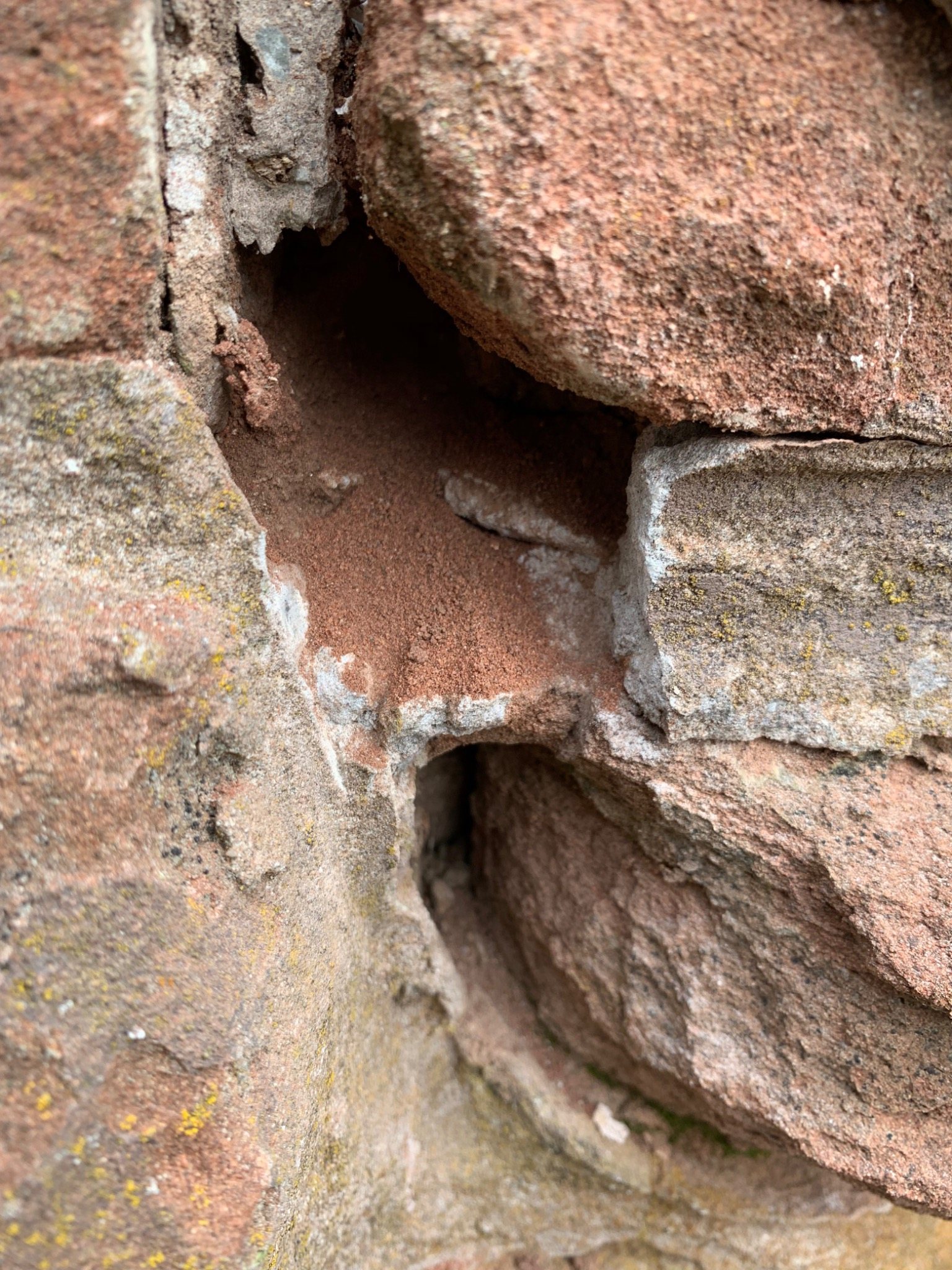
Surface loss is evidence, not the whole diagnosis. This Dalvay sandstone had to be assessed alongside moisture exposure, previous hard mortar and surrounding water-management details.
The shape and depth of the loss can help narrow the likely mechanism and how much sound material remains.
A thin outer layer lifts or sheds from the stone. Scaling may remain shallow at first but can progress if the surface repeatedly becomes saturated and freezes.
Small sheets or layers separate from the face. Layered sedimentary stones can be particularly sensitive where water enters along bedding planes or weakened layers.
Larger fragments break away, often leaving a deeper cavity or exposing fresh stone behind the original face. Spalling can follow freeze-thaw, salt action, impact or stress around hard repairs.
The surface loses cohesion grain by grain. Sandstone may begin to shed sand or feel friable even before large flakes detach.
Fine material comes away when the surface is touched or brushed. This can indicate loss of the stone's binder, salt activity, weathering or previous aggressive treatment.
Stone beside mortar joints, sills, caps and exposed corners can deteriorate first because water and stress concentrate at those edges.
Natural stone contains pores, joints, bedding planes and small variations in density. Water can enter through the stone itself, open mortar joints, wall tops, sills, copings, flashing defects, roof runoff, grade or adjacent construction. The important question is how much water enters and how long the stone remains wet before it can dry.
In Atlantic Canada, wind-driven rain, wet shoulder seasons, snow accumulation and repeated freezing can keep exposed masonry wet for long periods. A south-facing stone may dry quickly while a shaded wall top, sill or north-facing elevation remains saturated much longer.
That difference explains why deterioration is often highly localized. One stone can lose its face while surrounding units remain serviceable because the damaged unit is softer, catches more water, dries more slowly or sits directly below a failed water-shedding detail.
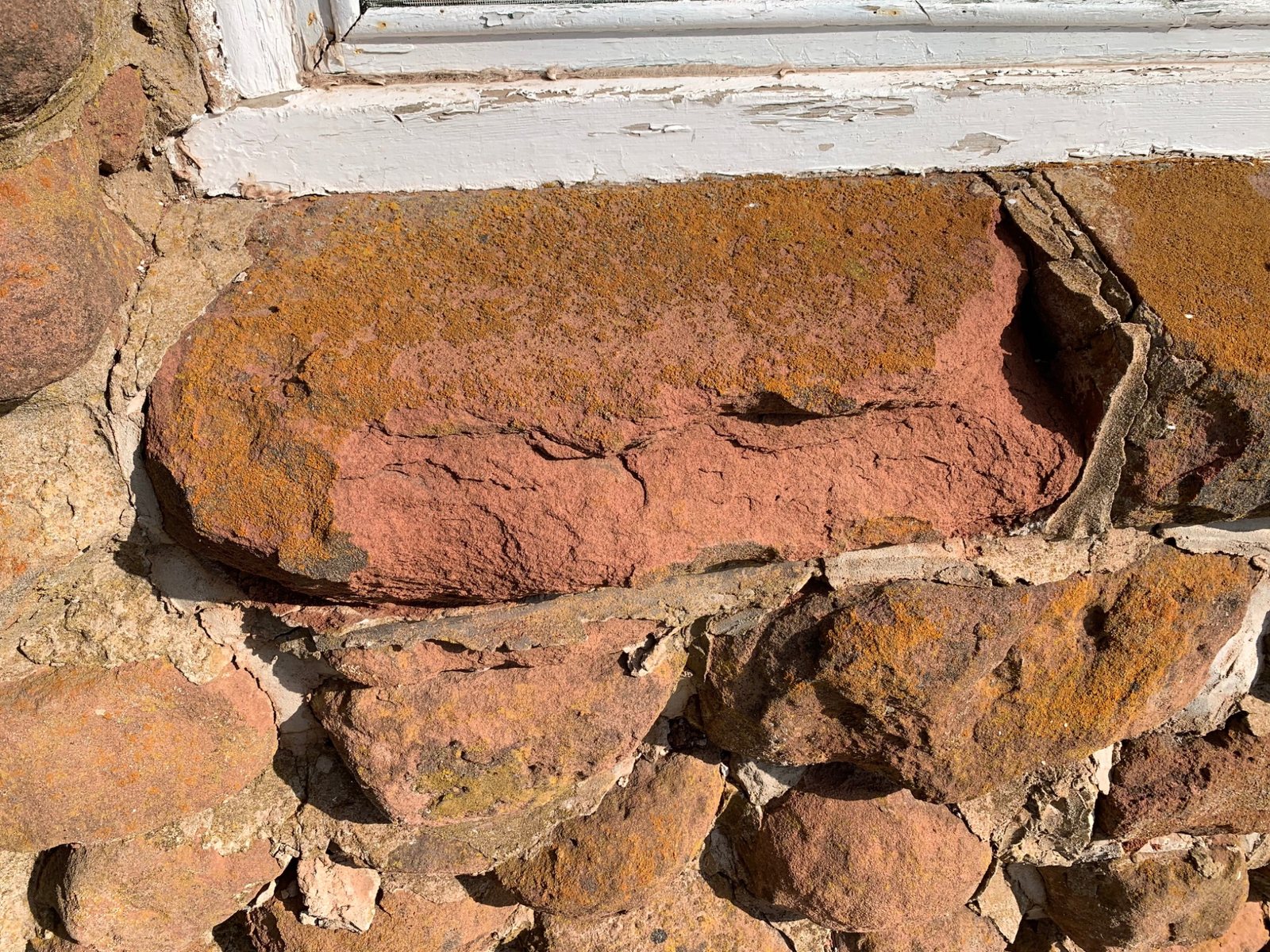
Location matters. Deterioration below openings and horizontal details should be read together with sill geometry, runoff and how water is being directed across the stone.
Cold weather alone does not explain stone failure. Moisture content and repeated cycling are the critical part of the exposure.
Rain, snowmelt, splash, runoff or capillary moisture raises the amount of water held within the stone.
When moisture freezes within a sufficiently saturated porous material, internal stresses can build around pores, weak layers and existing cracks.
Small flakes, opened bedding planes and granular loss can progress as the same area is wetted and frozen repeatedly.
National Research Council Canada research has long emphasized that freeze-thaw performance depends on both the properties of the masonry material and the moisture conditions it experiences in service. That is why controlling repeated saturation is often as important as repairing the damaged face.
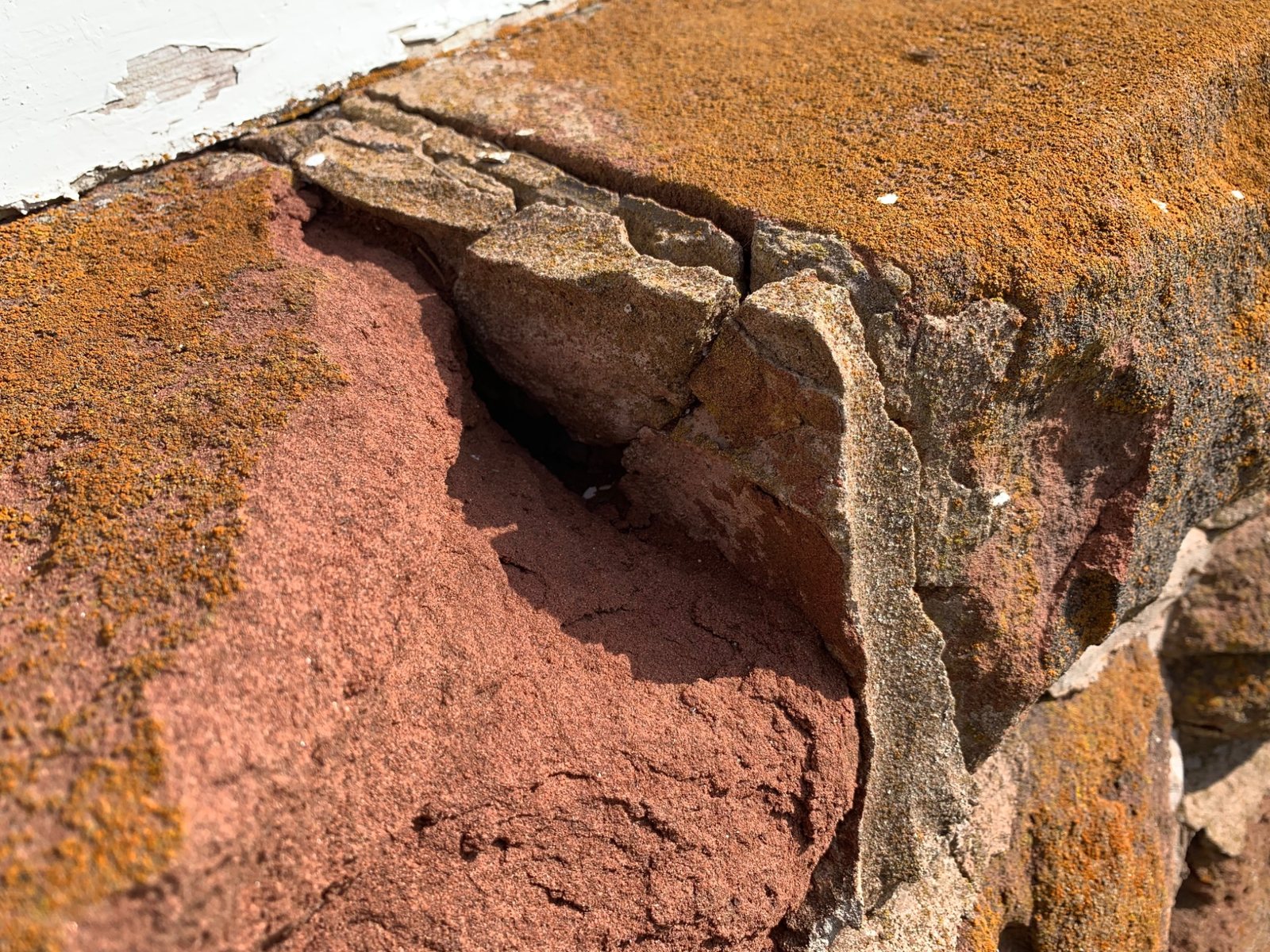
Soft stone needs a compatible repair approach. Aggressive removal or very hard mortar can sacrifice more original stone than the repair saves.
Mortar and stone do not weather independently. On many older walls, the mortar joint is intended to be more sacrificial and more vapour-permeable than the masonry unit around it. When a soft sandstone or similar stone is surrounded by a dense, cement-rich repair mortar, moisture and movement can be redirected into the stone edges.
That does not mean every cement-containing mortar damages stone. It means the replacement mortar has to be selected for the actual stone, wall construction and exposure rather than by choosing the highest compressive strength.
Edge loss concentrated immediately beside a hard previous joint is a useful clue. The repair may require careful removal of incompatible mortar, preservation of sound stone and repointing with a more appropriate mix rather than coating or replacing the whole wall.
Wind and spray can contribute salts on exposed coastal buildings, while the amount deposited varies greatly with distance, orientation and shelter.
Stone near steps, walks, retaining walls and grade can receive salts from winter maintenance, soil moisture or splash-back.
Water can dissolve soluble material from masonry, mortar or previous treatments and carry it toward an evaporation surface.
Efflorescence at the surface is often mostly a sign that moisture is moving. More damaging crystallization can occur below the surface, where repeated wetting and drying places pressure within porous stone. The repair therefore has to consider both the salt source and the water that is transporting it.
Horizontal masonry works hard. Sills, copings, caps and wall tops receive direct precipitation and have to move that water away from the face below. Poor slope, failed joints, cracked units, short projections and blocked drainage can keep the same stones wet during every storm.
The same principle applies where roof runoff, downspouts or flashing repeatedly discharge onto stone. Repairing the damaged units without changing the water path may simply restart the deterioration cycle on the new work.
On older buildings, changes made decades after construction can also alter the original water path. Added paving, raised grade, replacement windows, sealants or new roofing details can all change where water is delivered.
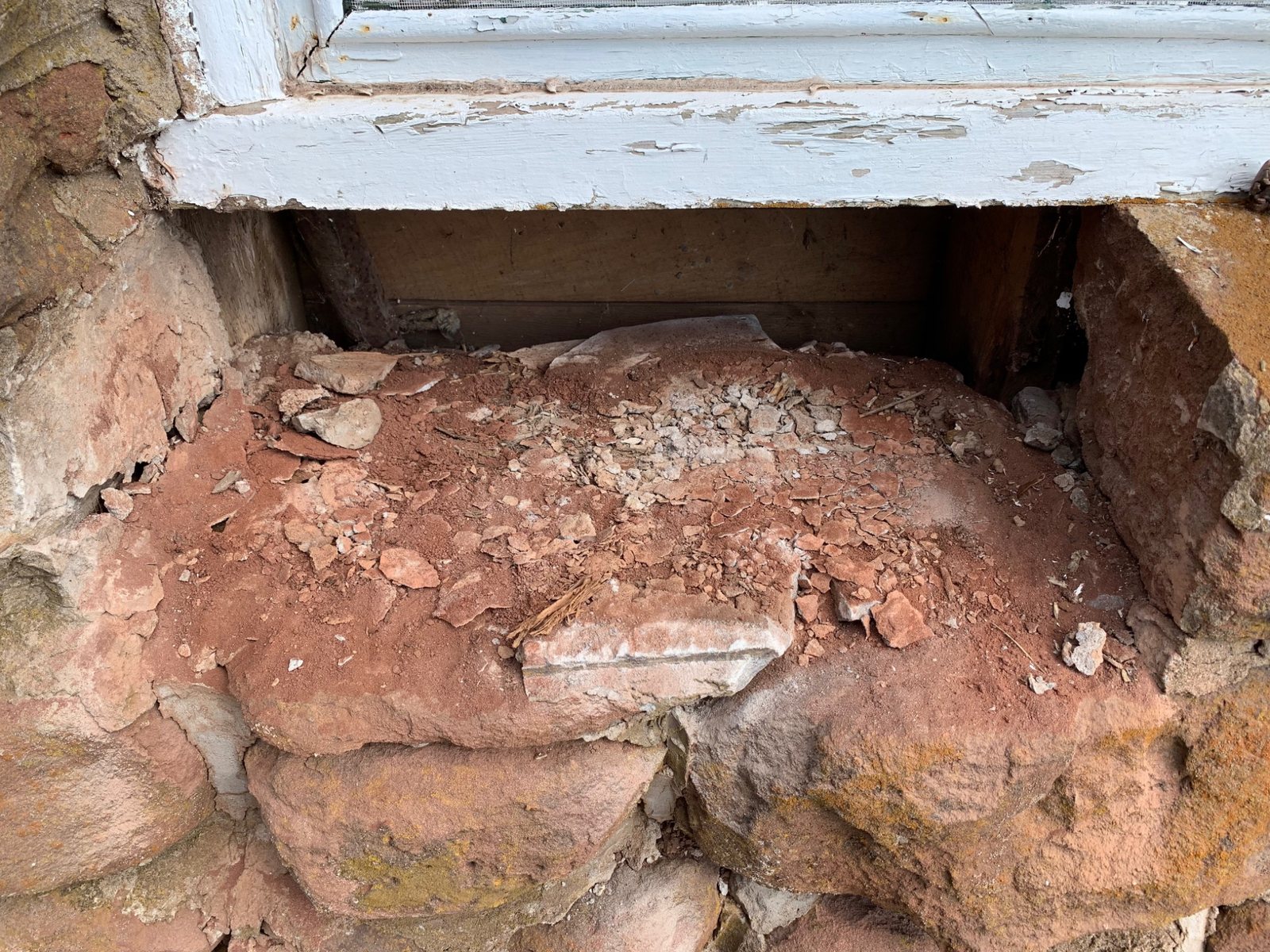
Horizontal details deserve special attention. A deteriorated sill is not only a stone-repair problem; its slope, projection, joints and drainage affect the masonry beneath it.
Coatings change how liquid water and water vapour move through masonry. On a wall where water is entering from above, behind or through open joints, a dense coating can hold moisture in the stone or move the evaporation zone deeper into the material.
That is why "seal the stone" should not be the automatic response to flaking or powdering. First correct the crown, sill, flashing, joint, drainage or other defect that is feeding the moisture. Any later water-repellent treatment should be selected for the specific stone and only after the wall is sound enough to receive it.
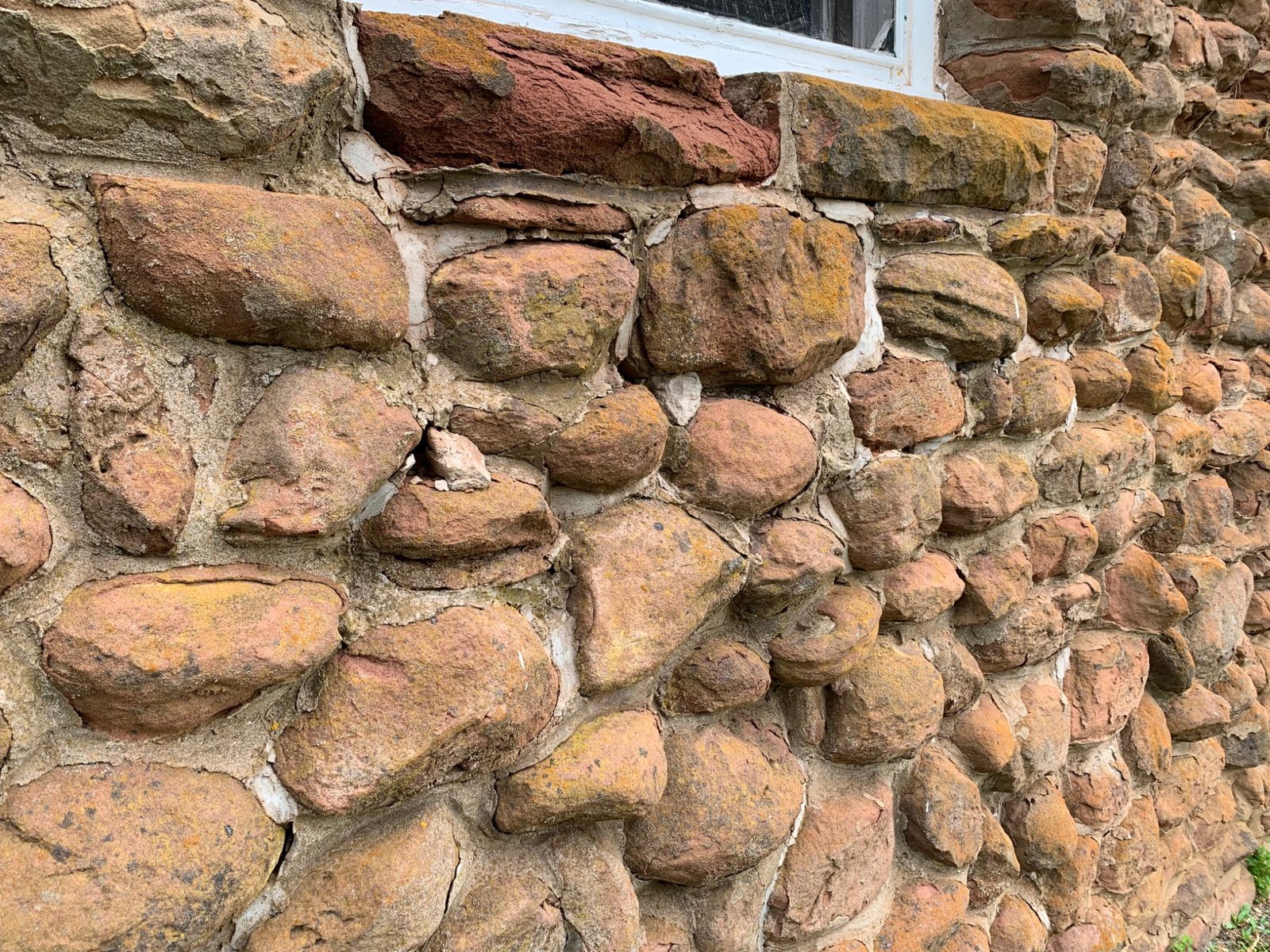
Weathered does not automatically mean failed. Historic stone can remain serviceable even when the face is irregular, stained or visibly aged.
Natural stone is not manufactured to remain perfectly uniform. Some stones develop a weathered surface, rounded arrises, colour changes or shallow granular loss while retaining substantial sound material behind the face.
Concern increases when deterioration is getting deeper, flakes are detaching repeatedly, the stone has lost bearing, large sections sound hollow or separated, cracks extend through the unit, or the damage is exposing adjacent masonry and allowing more water into the wall.
Comparing dated photographs is useful. A stone that looks rough but has changed very little in ten years is a different repair problem from a unit that loses new material every winter.
The repair should be proportional to the actual depth and role of the damaged stone.
Shallow weathering, stable granular loss, limited edge deterioration and localized mortar-related damage may be managed by correcting water sources, repointing, careful cleaning and preserving the remaining stone.
Deep delamination, major section loss, fractured bearing areas, loose pieces, failed sills or coping stones and units that can no longer shed water may justify selective replacement or rebuilding.
Important heritage fabric, unusual or irreplaceable stone, repeated unexplained decay, large public buildings or a need to source a compatible replacement stone can justify conservation or laboratory input.
Most residential stone repairs can be assessed through field observation, construction history, moisture patterns and careful examination of the masonry. Laboratory work is not automatically required because a stone has a weathered face.
On important heritage projects, however, analysis can help characterize mineral composition, bedding, pore structure, salts, previous treatments or the relationship between original stone and proposed replacement material. That can be valuable where the original stone is failing unusually, where several replacement sources are being considered, or where a conservation treatment could alter the historic fabric.
The point of testing is to answer a specific repair question, not to generate a report for its own sake.
DinoMac's work at Dalvay by the Sea involved substantial exterior sandstone restoration on a nationally recognized historic building. Existing conditions included weathered soft sandstone, areas of hard previous mortar, deteriorated stone sills and water-management details that affected how the masonry was becoming wet.
Hard mortar was carefully hand-chiselled back where required so the softer sandstone was not unnecessarily cut away. The repair mortar was selected for physical and visual compatibility rather than maximum strength, with mock-ups and local aggregate used to establish the appearance before broader repointing.
The project also included drainage corrections and sill work because a durable stone repair could not be separated from the way water was being delivered to the masonry.
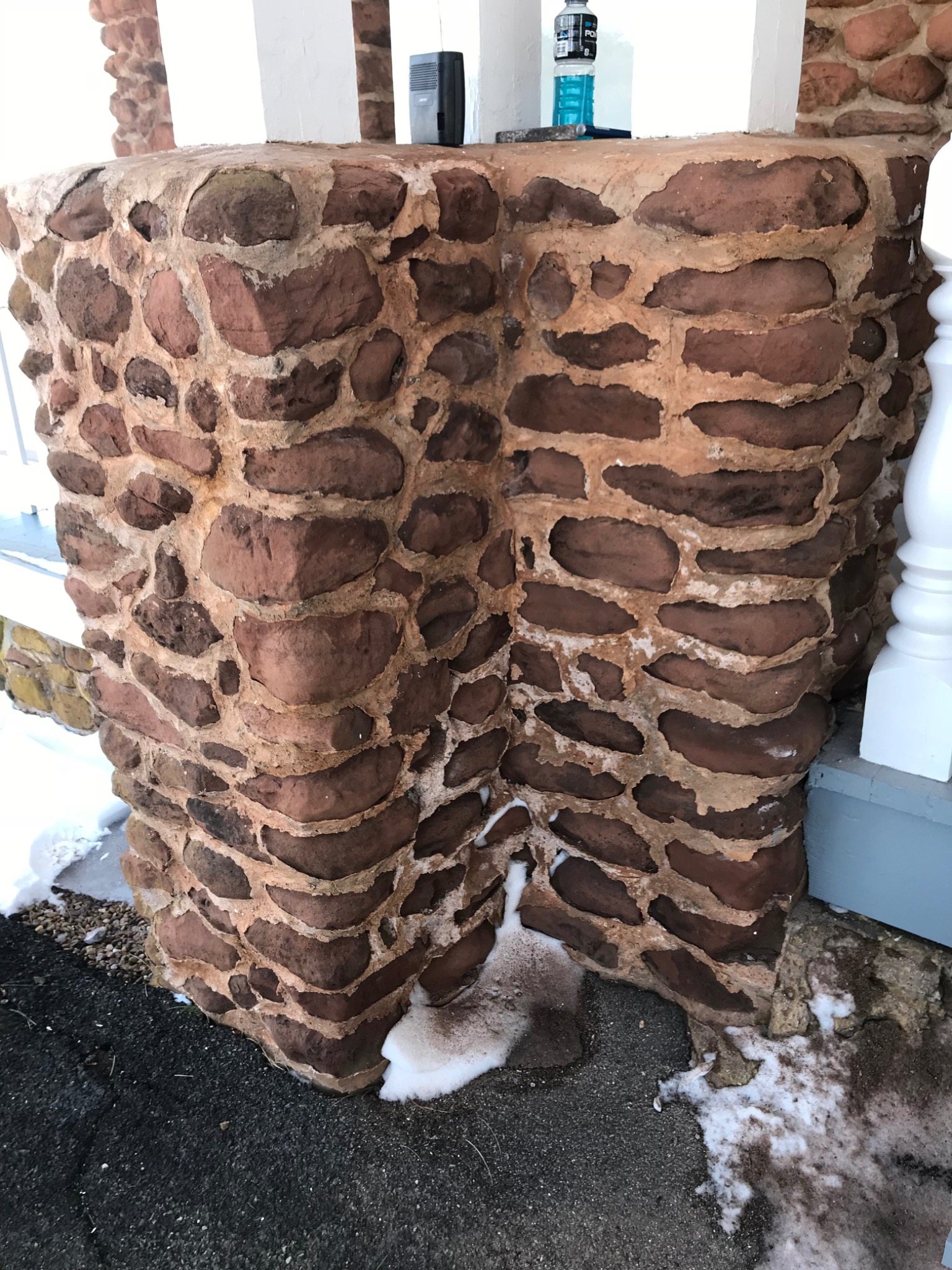
Preserve what is sound. The restoration approach focused on removing failed or incompatible material while keeping serviceable historic sandstone in place.
Show the entire elevation, pillar, chimney, wall, step or opening so the damaged area can be located in context.
Show flakes, granular loss, cracks, exposed bedding layers and the depth of material loss. Side lighting can make surface relief easier to see.
Include joint condition, hard patches, previous pointing and whether deterioration is concentrated beside the mortar.
Photograph the horizontal surfaces directly above the damage, including slope, cracks, open joints and runoff paths.
Include flashings, gutters, downspouts, splash areas and grade where they could be feeding water into the stone.
Show coatings, patches, replacement stone and older mortar so the current damage can be compared with earlier interventions.
Prince Edward Island, Nova Scotia and New Brunswick combine wind-driven rain, coastal exposure, wet shoulder seasons, snowmelt and frequent freeze-thaw cycling. Historic buildings also contain a wide range of local and imported stone, different mortar generations and previous repairs that may change how the wall manages moisture.
Sandstone is especially familiar in parts of the region, but "sandstone" alone does not predict durability. Density, bedding, pore structure, exposure and maintenance history can vary considerably from one stone or quarry source to another.
The regional lesson is to avoid treating surface loss as an isolated cosmetic defect. Look for the water path, the mortar relationship, the stone's remaining depth and whether the condition is actively progressing.
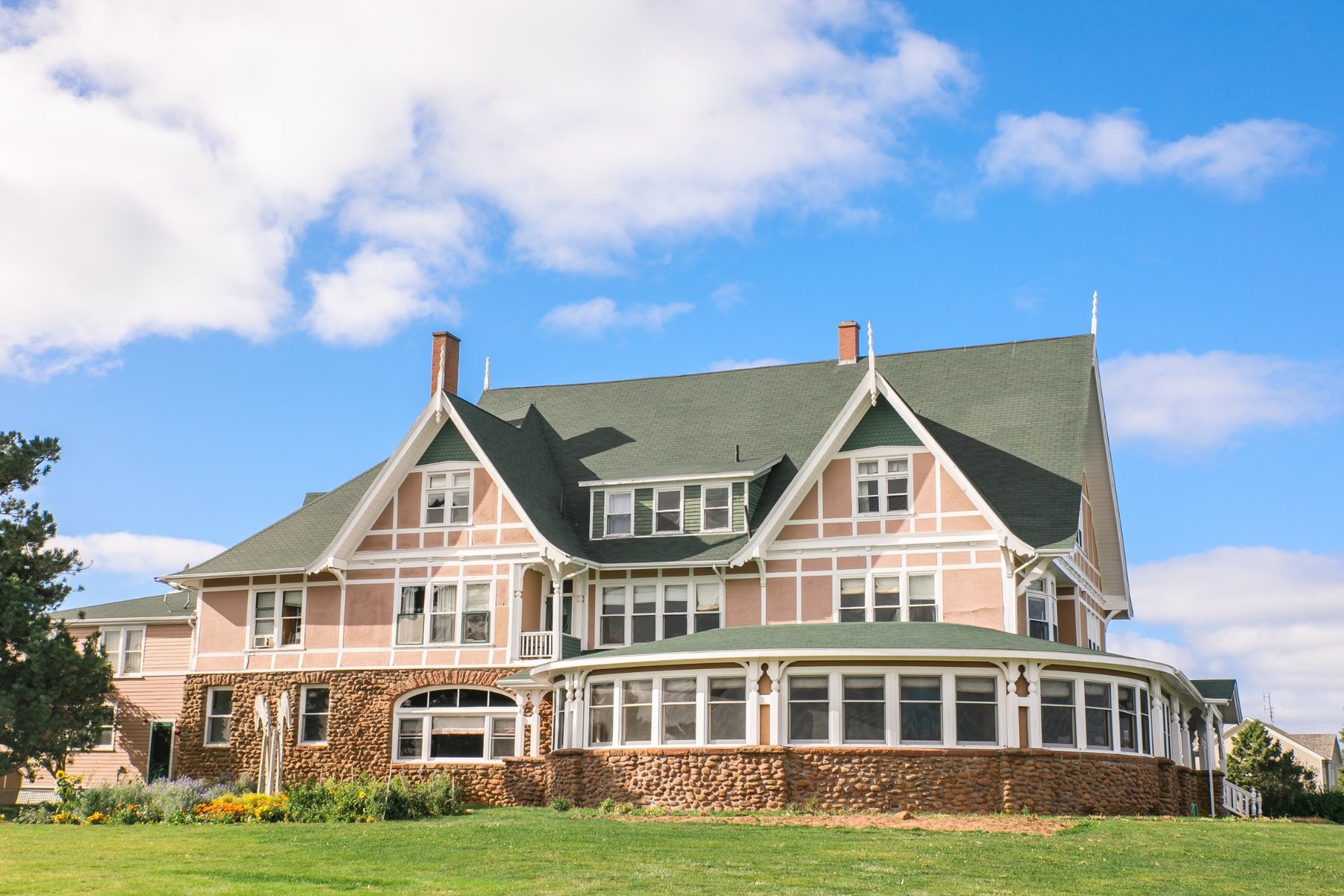
Regional field context: Atlantic Canadian stone buildings combine material variation with demanding moisture and freeze-thaw exposure.
National Research Council Canada research on freeze-thaw exposure emphasizes the role of material properties and moisture content. National Park Service conservation guidance similarly recommends correcting moisture sources, using compatible repair materials and avoiding unnecessary treatments that can interfere with masonry drying.
Parks Canada's conservation standards support repairing character-defining material where practical rather than replacing sound historic fabric without a clear reason.
NRC Canada: Freeze-thaw action on brick and masonry materials →
National Park Service: Preservation Brief 2, Repointing Mortar Joints →
National Park Service: Cleaning and Water-Repellent Treatments for Historic Masonry →
Parks Canada: Standards and Guidelines for the Conservation of Historic Places →
Dean is a third-generation mason with more than 20 years of hands-on experience working with natural stone, brick, chimneys, foundations, repointing, mortar compatibility and heritage restoration in Prince Edward Island.
DinoMac's Knowledge Centre uses PEI field experience to explain masonry conditions that are also common across Atlantic Canada and other cold, wet climates.
Last reviewed: August 28, 2026
Common causes include saturation, freeze-thaw cycling, salts, incompatible hard mortar, poor water-shedding details, coatings, mechanical damage and deterioration within the stone itself.
Often, yes. Shallow or stable deterioration does not automatically require replacement. Correcting water and mortar problems may allow substantial original stone to remain.
It can contribute where the mortar is much harder or less permeable than the stone, particularly when deterioration is concentrated along the stone edges beside previous repairs.
Not before identifying the moisture source. A coating or repellent cannot substitute for repairing drainage, flashing, joints or saturated wall tops and may reduce drying if poorly selected.
Replacement becomes more likely when a unit is deeply fractured, severely delaminated, loose, has lost important bearing or water-shedding geometry, or no longer has enough sound material to remain reliable.
It is most useful on significant heritage projects, unusual stone, recurring unexplained failure or when matching replacement stone and conservation treatments requires better material information.
Include the whole wall or feature, close-ups of the stone and mortar, any sill or coping above it, nearby drainage and the PEI property location. DinoMac can help determine whether the condition looks like surface weathering, moisture-driven deterioration, an incompatible previous repair or a stone that needs selective replacement.