Heaved stones
One or more stones sit higher after winter, often because wet base material froze and expanded unevenly.
Flagstone can make a durable patio or walkway, but the stone on top is only half the project. Base preparation, drainage, slope, edge restraint, stone thickness and the joint system determine whether the surface stays comfortable to walk on after repeated winters.
When flagstone rocks, sinks or heaves, the useful question is usually what moved below the stone and where the water is going, not simply how to fill the joint again.
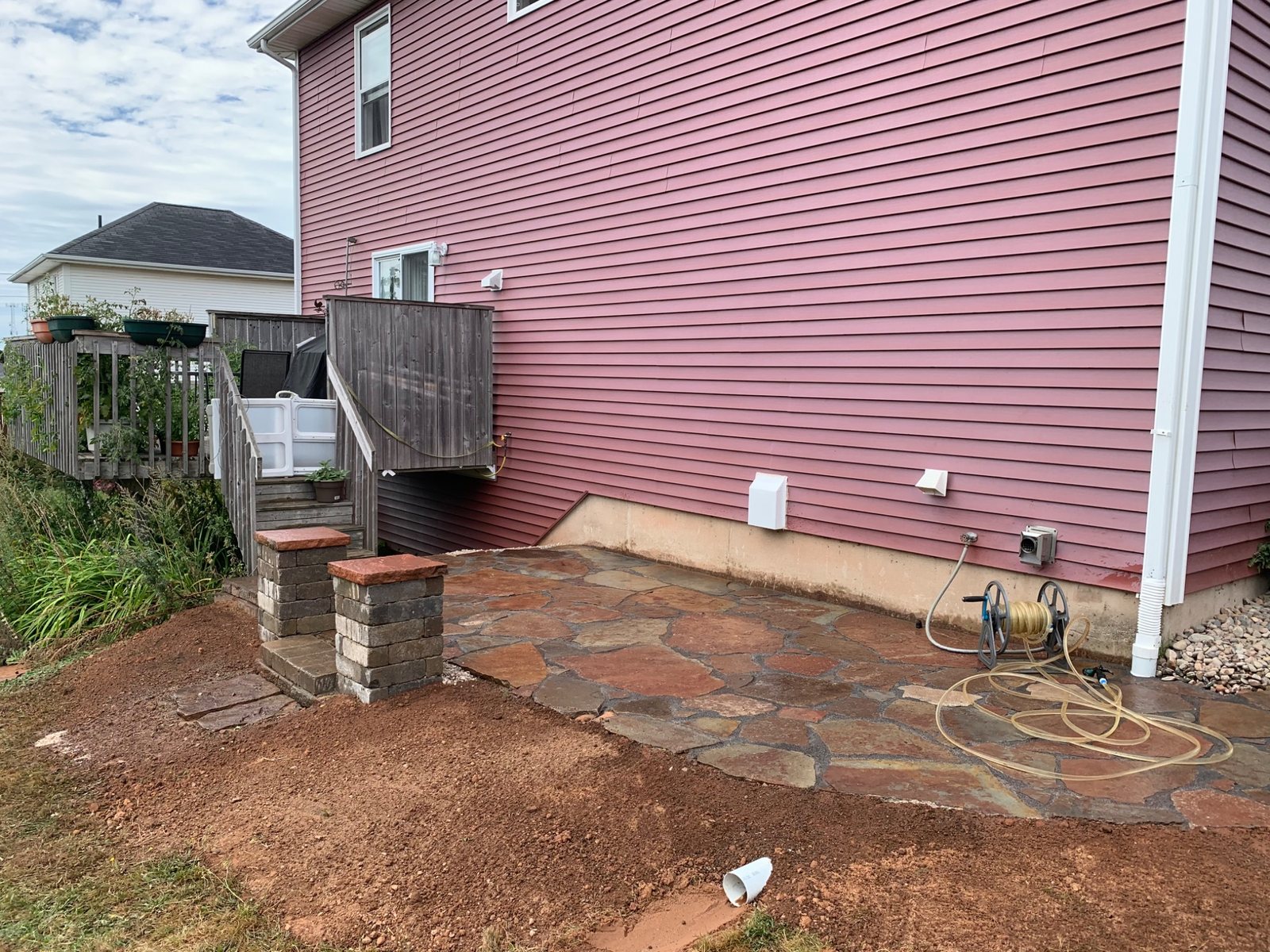
Surface movement starts below the surface. Drainage and base conditions are the first place to look when stones begin to settle or lift.
Stone is bedded over compacted granular material and a setting layer. The assembly can tolerate limited movement and individual stones can often be lifted and reset. Drainage and edge restraint are critical.
Stone is bonded to a concrete slab or similar rigid base. The slab, mortar bed, joints and stone act more as one assembly. Movement joints, drainage and freeze-thaw detailing become especially important because cracks in the base can telegraph through the finish.
Exterior walking surfaces need a stable base that distributes loads and limits water retention. Soft topsoil, poorly compacted fill and pockets of fine material can settle unevenly after rain and spring thaw.
Granular layers should be placed and compacted appropriately for the project rather than dumped thick and assumed to settle later. Edge conditions matter too. If the perimeter can spread outward, stones near the edge often become the first to move.
The required depth and construction vary with soil, intended use, stone size and whether the system is flexible or rigid. A garden path and a vehicle-bearing surface are not the same design problem.
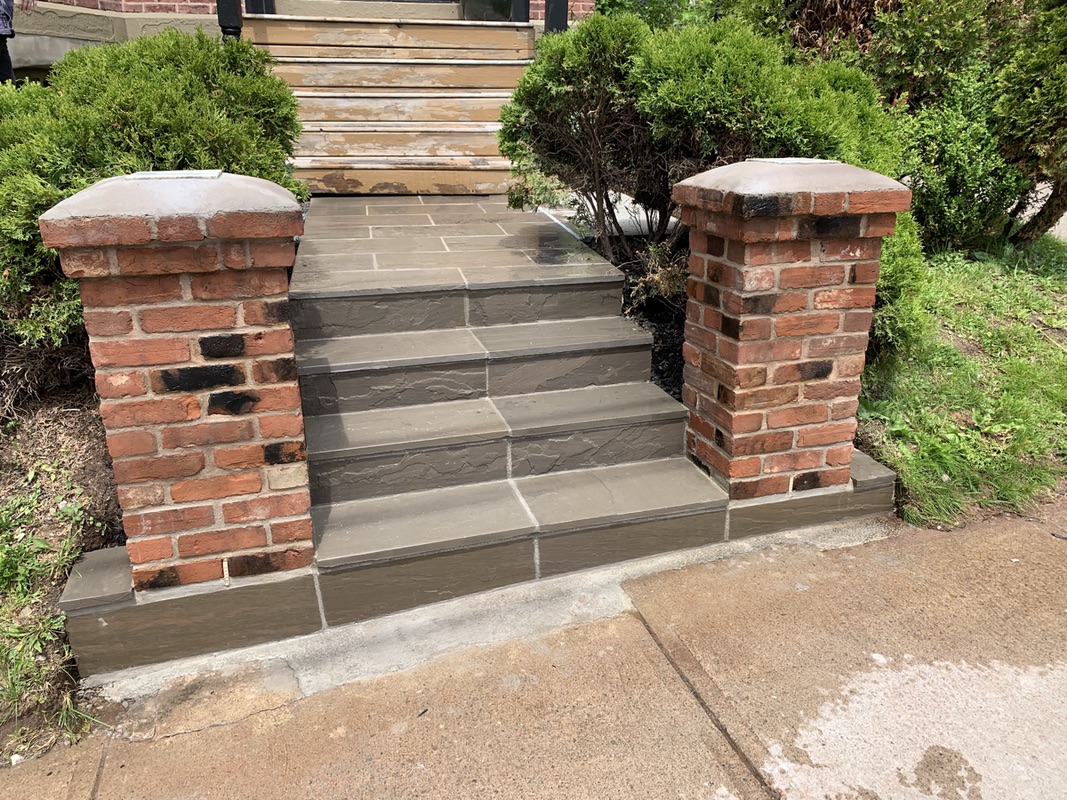
The finished surface hides the important work. Base and drainage preparation determine whether the stone stays where it was placed.
A patio or walkway needs positive surface drainage so water does not pond between stones or against the house. The base also needs a way to drain rather than becoming a saturated sponge before freezing weather.
Problems often appear where hardscape meets foundation walls, steps, retaining walls or low lawn areas. If the surrounding grade directs water toward the stone, the patio may be receiving far more moisture than its original base was designed to handle.
Read the site around the patio. Low grade and trapped runoff can make the same section move every winter.
One or more stones sit higher after winter, often because wet base material froze and expanded unevenly.
Settlement can follow poor compaction, washed-out bedding, decayed roots or base material migrating into softer soil.
Incomplete bedding, broken setting material or a stone bridging high points can make the unit move underfoot.
Rigid joints crack when the stones move independently or when a concrete-supported assembly has movement that the joints cannot accommodate.
Unsuitable stone, saturation and freeze-thaw cycling can cause surface loss or layers to separate.
Ponding points to slope, settlement or drainage problems and increases winter exposure at the same low spots.
Loose screenings, polymeric products, planted joints and mortar all create different maintenance and drainage behaviour. The wrong combination can create recurring cracks or washout.
Rigid mortar joints generally make more sense over a rigid supported system than over independently moving stones on a flexible base. On a flexible installation, joint materials need to tolerate small movement and be maintained when they erode.
Wide irregular natural-stone joints also need realistic expectations. Trying to force every joint into a thin uniform appearance can result in tiny unstable wedges and excessive filler.
Natural stone varies in strength, absorption, bedding and how it responds to repeated wetting and freezing. Thin laminated stone can delaminate. Very irregular pieces can be difficult to bed securely. Soft stone may wear or scale in exposed traffic areas.
Ask whether the stone has a successful exterior history in a similar climate and use sufficiently substantial pieces for the intended installation. The finish should also provide reasonable slip resistance when wet.
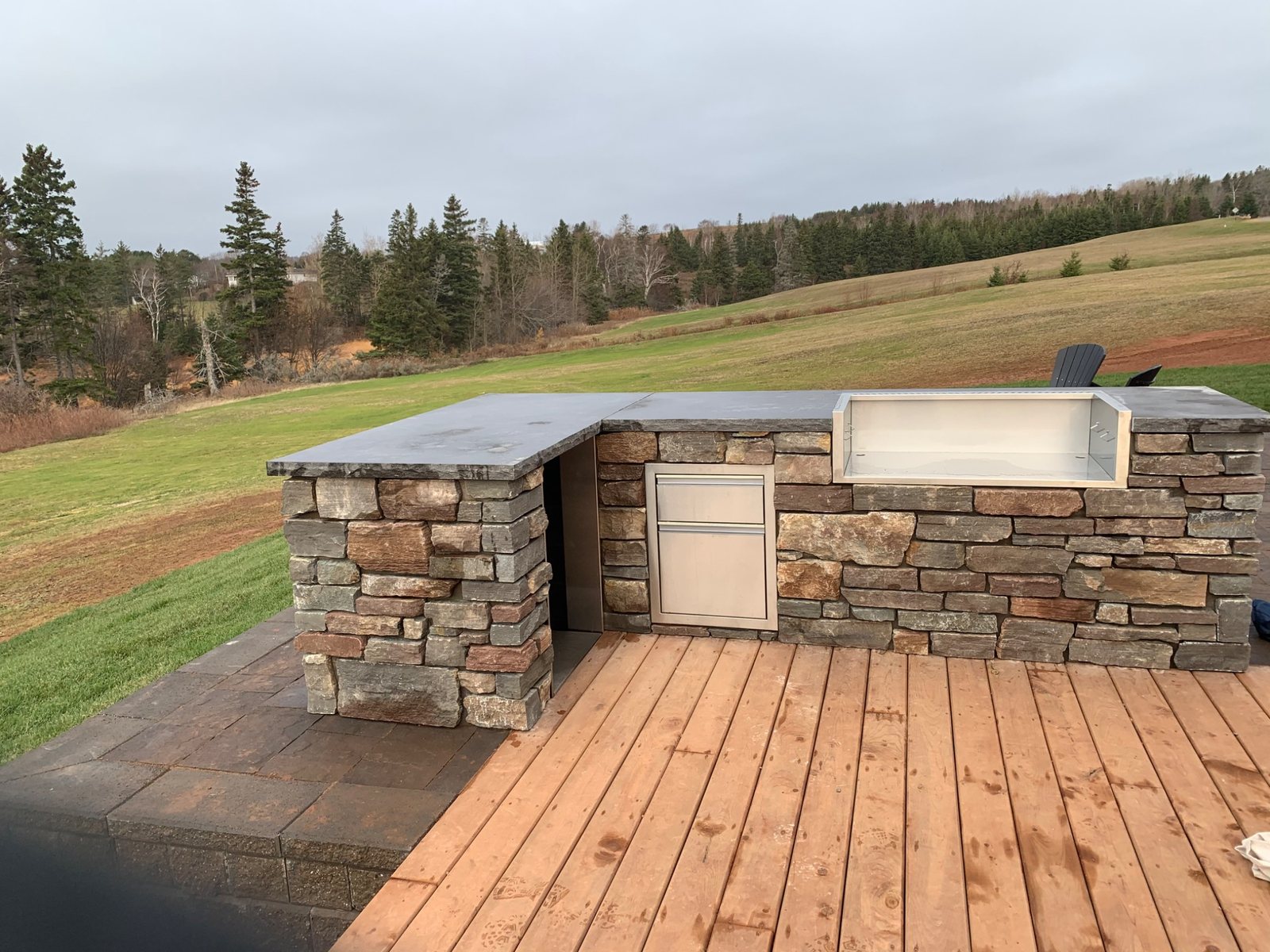
Use stone suited to exposure. Appearance matters, but outdoor stone also has to survive water, traffic and winter.
A few loose or sunken stones can often be lifted, the bedding corrected and the units reset. This is one advantage of many flexible flagstone systems.
If the entire patio is undulating, repeatedly holds water or shifts every winter, resetting individual stones may become endless maintenance. At that point, improving the base, drainage and grade over a larger area may be more economical than chasing one stone at a time.
Rigid installations have a different decision. If the supporting slab is cracked or moving, repairing only the stone finish may not last.
Across PEI, Nova Scotia and New Brunswick, outdoor stone surfaces can move through wet autumns, frozen winters and saturated spring thaws. Repeated freeze-thaw is most damaging when the base and stone remain wet.
The regional strategy is therefore not simply to make the stone resistant to cold. It is to choose durable stone, build a stable base and reduce how much water remains trapped in the assembly before freezing.
PEI field context: drainage and grading are often the difference between a patio that needs occasional resetting and one that moves every spring.
National Research Council Canada research on freeze-thaw action emphasizes the relationship between moisture content and material performance. The Natural Stone Institute also provides technical guidance for exterior natural-stone selection and installation.
Dean is a third-generation mason with more than 20 years of hands-on masonry experience, including natural stone, exterior masonry, repair and restoration work in Prince Edward Island.
Last reviewed: August 28, 2026
Usually because water in the base or soil froze and expanded, or because the base was not sufficiently stable and uniform.
Often yes when the problem is localized. Repeated movement across the whole patio points to a broader base or drainage issue.
Only when the underlying system is appropriate for rigid joints. Mortar over a flexible moving base commonly cracks.
Yes, when exterior-suitable stone, proper drainage and a stable base are combined.
Include wide photos of the patio or walkway, close-ups of loose stones and joints, the edge conditions, any low areas after rain, nearby downspouts and the PEI property location. DinoMac can help determine whether the issue looks localized or whether the base and drainage need broader correction.