1. Wetting
Wind-driven rain, roof runoff, splashback, snowmelt or ground moisture introduces water into the masonry.
Salt, wind-driven rain, repeated wetting, poor drying and freeze-thaw cycles can combine to make exposed brick, stone, mortar and chimneys deteriorate faster than similar masonry in a more sheltered location.
The useful question is not simply whether a building is close to the ocean. It is how often the masonry gets wet, where that water enters, how quickly the wall can dry, what salts are present and whether the material reaches a high moisture level before it freezes.
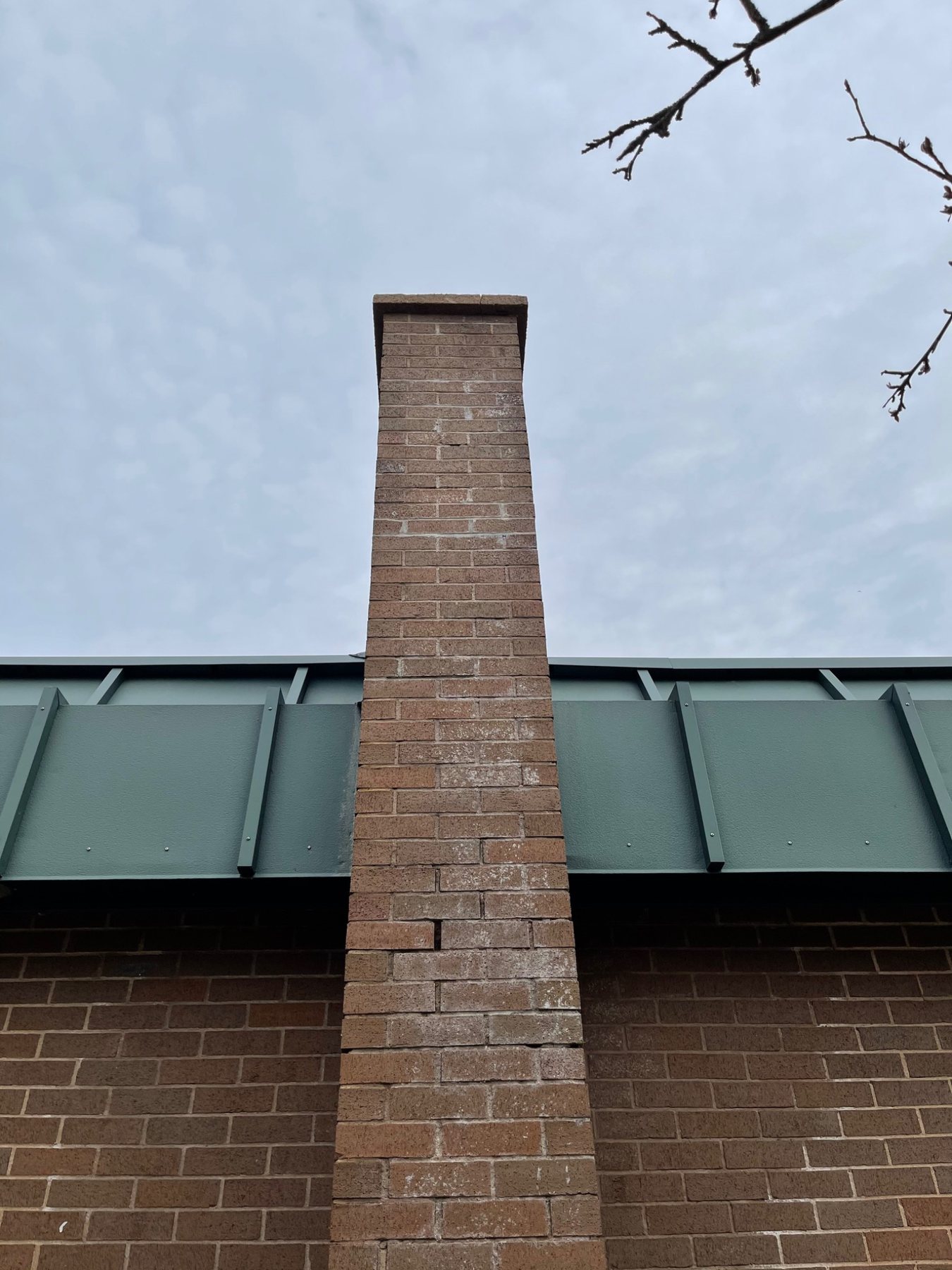
Field clue: White deposits tell you that water and soluble salts are moving through the masonry. The deposit is evidence. The repair still depends on finding the moisture path and determining whether the masonry itself is deteriorating.
Brick, stone and mortar contain pores. Water and dissolved salts can move through those pores, then behave differently as the wall dries or freezes.
Wind-driven rain, roof runoff, splashback, snowmelt or ground moisture introduces water into the masonry.
Water can dissolve salts already present in masonry or carry salts from soil, de-icing products, marine exposure or other sources.
As water evaporates, salts can be left on the surface as efflorescence or crystallize below the surface where they may contribute to material loss.
If porous masonry is sufficiently wet when temperatures fall, repeated freezing and thawing can contribute to cracking, face loss and spalling.
The process repeats if the moisture source remains. A repair that only replaces the visible surface may therefore deteriorate again.
One wall can deteriorate while another survives because orientation, shelter, roof overhangs, drainage and drying conditions are different.
National Research Council Canada describes efflorescence as soluble salts carried by moisture to the masonry surface and deposited as the water evaporates. The salts can originate in the masonry itself or from other sources.
Salt crystallization below the surface can be more damaging than a harmless powder sitting on top. Repeated crystallization can exert pressure within porous materials and contribute to loss of the surface.
That is why simply brushing off the white deposit does not explain the problem. Ask where the water came from, whether the area stays wet and whether the brick, stone or mortar is also softening, flaking or breaking apart.
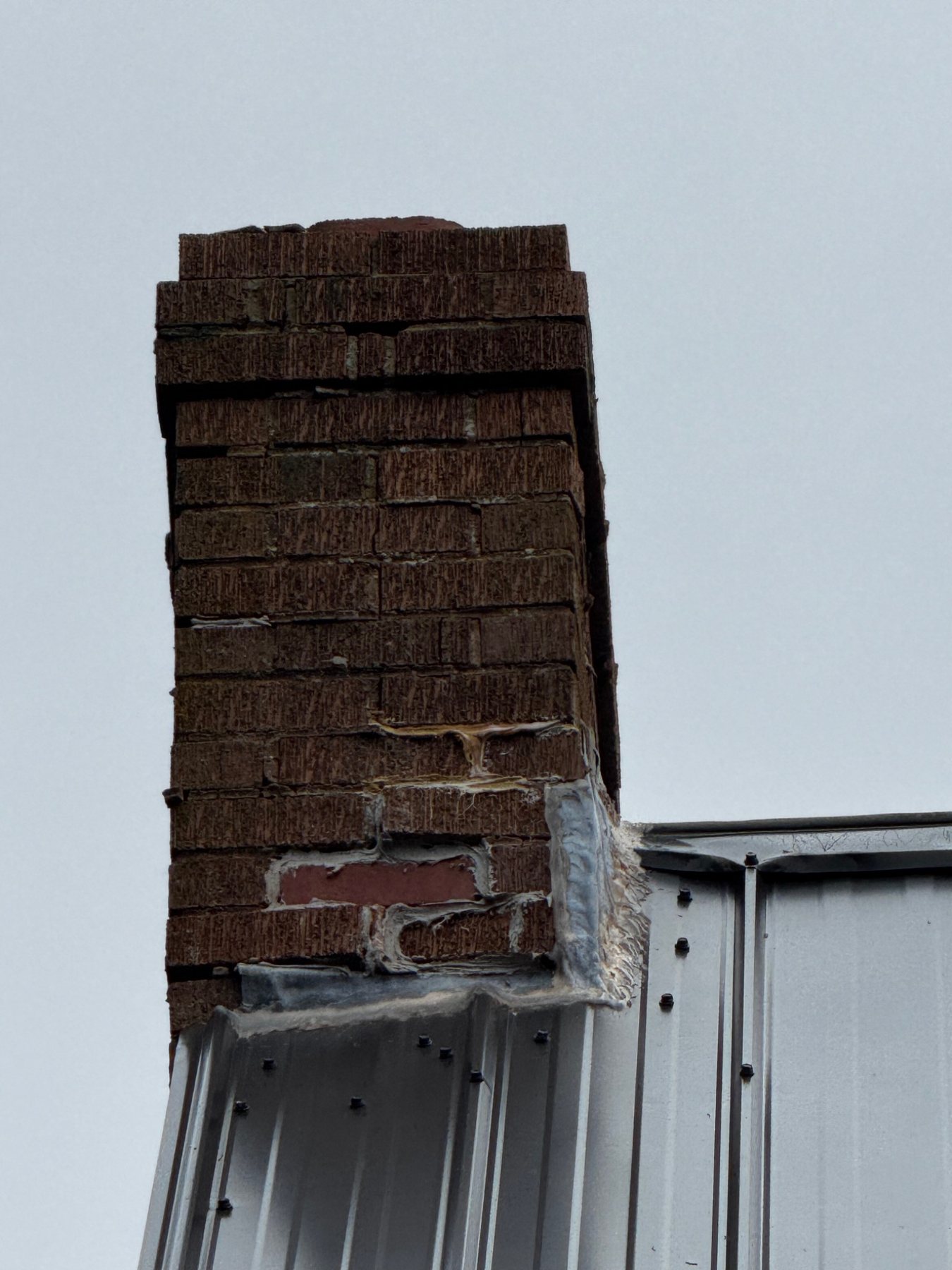
High-exposure detail: A chimney roof intersection has very little shelter. Wind-driven rain can exploit open joints, failed flashing, crown defects and small gaps that may remain dry on a protected wall.
Coastal buildings and other exposed sites can receive rain under pressure from wind rather than simply from above. Chimneys, parapets, wall tops, corners, window openings and roof intersections are therefore especially important.
Small defects that seem minor in calm weather can become repeated water entry points during storms. Open mortar joints, failed counterflashing, cracked crowns and poorly drained horizontal surfaces deserve more attention on an exposed building than on a sheltered one.
This does not mean every windward wall needs a coating. It means the wall's water-management details need to work.
Freeze-thaw deterioration is not simply a thermometer problem. Material porosity, saturation, drainage and exposure all affect whether freezing conditions become damaging.
A brick face that is repeatedly wetted by wind-driven rain, a chimney top that absorbs water from above or a stone wall receiving roof runoff can reach a very different moisture condition from nearby sheltered masonry.
For Atlantic Canadian buildings, this combination is especially relevant during wet shoulder seasons when masonry can become saturated and then experience repeated temperature swings around freezing.
Read the freeze-thaw masonry guide →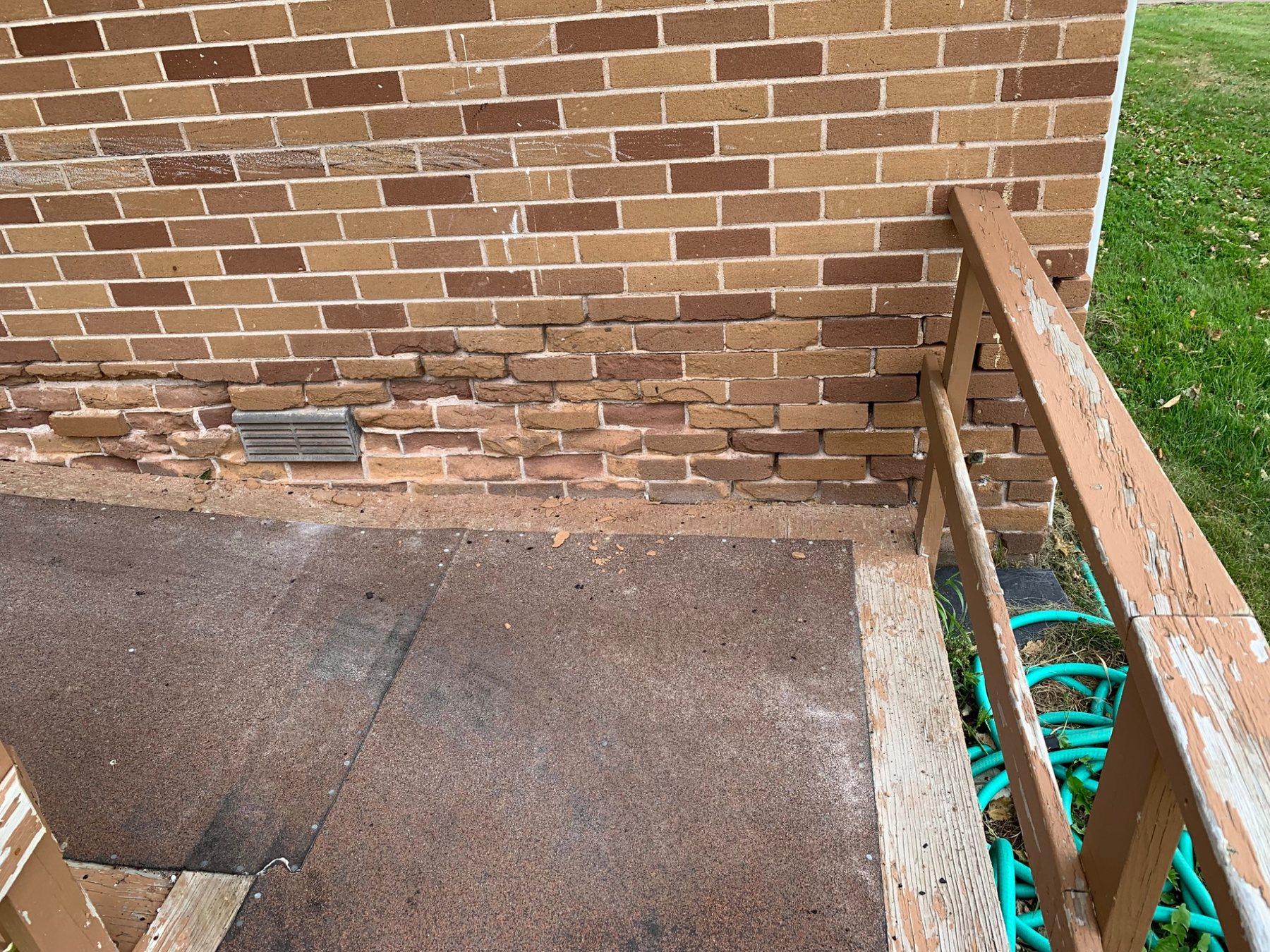
What to notice: Spalling is the visible result. The repair decision still depends on why this particular zone became wetter or more vulnerable than the surrounding masonry.
Watch for face loss, soft or recessed mortar, efflorescence, cracking, saturated areas below sills and damage where roof or downspout water concentrates.
Stone type matters. Some dense stones tolerate exposure well while more porous or layered stones may show scaling, granular loss or deterioration where water sits on horizontal surfaces.
Mortar joints are part of the wall's moisture system. Repointing should use a compatible mortar rather than automatically choosing the hardest mix available.
Look for cracking, exposed reinforcement, salt deposits, surface scaling and chronic dampness at grade or around drainage paths.
Older brick and stone may rely on lime-rich mortar and greater drying capacity. Dense coatings or hard repair mortars can change how that wall behaves.
Shelf angles, lintels, anchors, fasteners, flashing and other metals can corrode in wet and salty environments. Expansion from corrosion can then crack or displace surrounding masonry.
Focus on the places that receive the most water or have the least ability to dry.
Crown or wash, cap, upper mortar joints, shoulders, flue interfaces and the first courses below the top.
Compare them with more sheltered elevations. Look for staining, open joints, different weathering rates and recurring wet zones.
Horizontal or nearly horizontal masonry catches water. Check slope, overhang, drip details and joints at the ends.
Soil moisture, splashback, snow storage and de-icing salts can make the bottom of a wall a much harsher environment than the wall above.
Repeated freshwater wetting can be as important as marine exposure if roof water is delivered to the same masonry every storm.
Check lintels, rail anchors, flashing, fasteners and other locations where rust staining, displacement or cracking may indicate corrosion.
National Park Service guidance on historic masonry emphasizes that moisture problems are often caused by leaking roofs, gutters, downspouts, missing mortar, cracks or open joints rather than simply by porous masonry.
A coating or water repellent applied before those problems are corrected can hide the moisture path or alter how the wall dries. Historic and softer masonry deserve particular caution.
There are situations where a professionally selected treatment may be appropriate, but it should follow diagnosis, compatible repair and testing, not replace them.
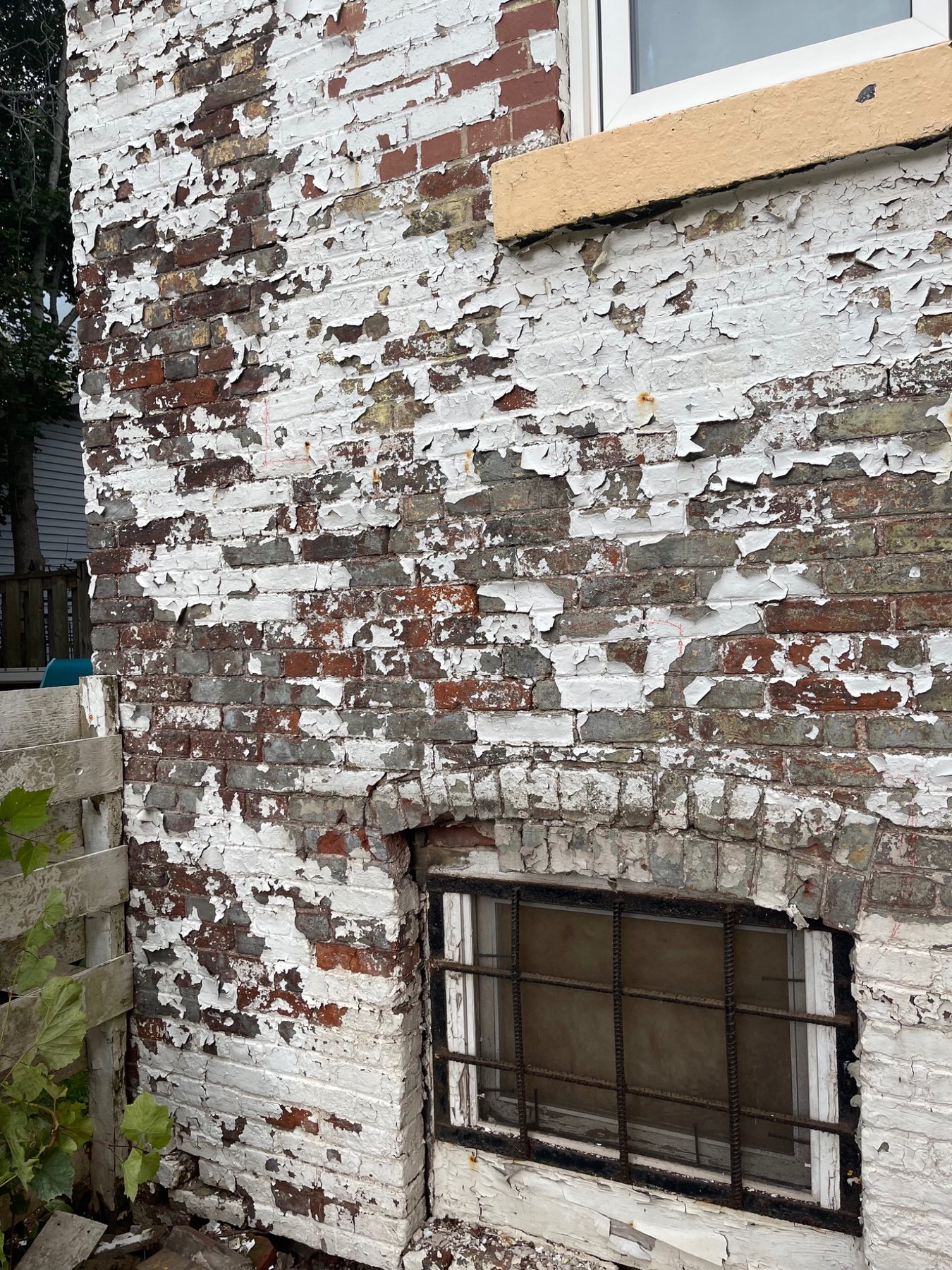
Field example: When a coating repeatedly releases in the same location, adding another layer without understanding the moisture source can turn maintenance into a repeating cycle.
Loose masonry, active bulging, displaced stone, corroding lintels, falling pieces, rapidly progressing spalling or recurring interior water entry should be assessed as repair problems rather than treated as routine maintenance.
Atlantic Canada combines a large inventory of older masonry buildings with wet weather, freeze-thaw cycling and extensive coastal exposure. Prince Edward Island, Nova Scotia and New Brunswick all contain buildings where brick, natural stone, old foundations and chimneys have been weathering in those conditions for generations.
The article is not limited to this region. Salt crystallization, wind-driven rain and wet freeze-thaw damage occur elsewhere too. The Maritime context is useful because several of those mechanisms commonly overlap here.
DinoMac's field examples come from PEI, while the diagnostic approach is useful to homeowners throughout Atlantic Canada and other cold, wet coastal climates.
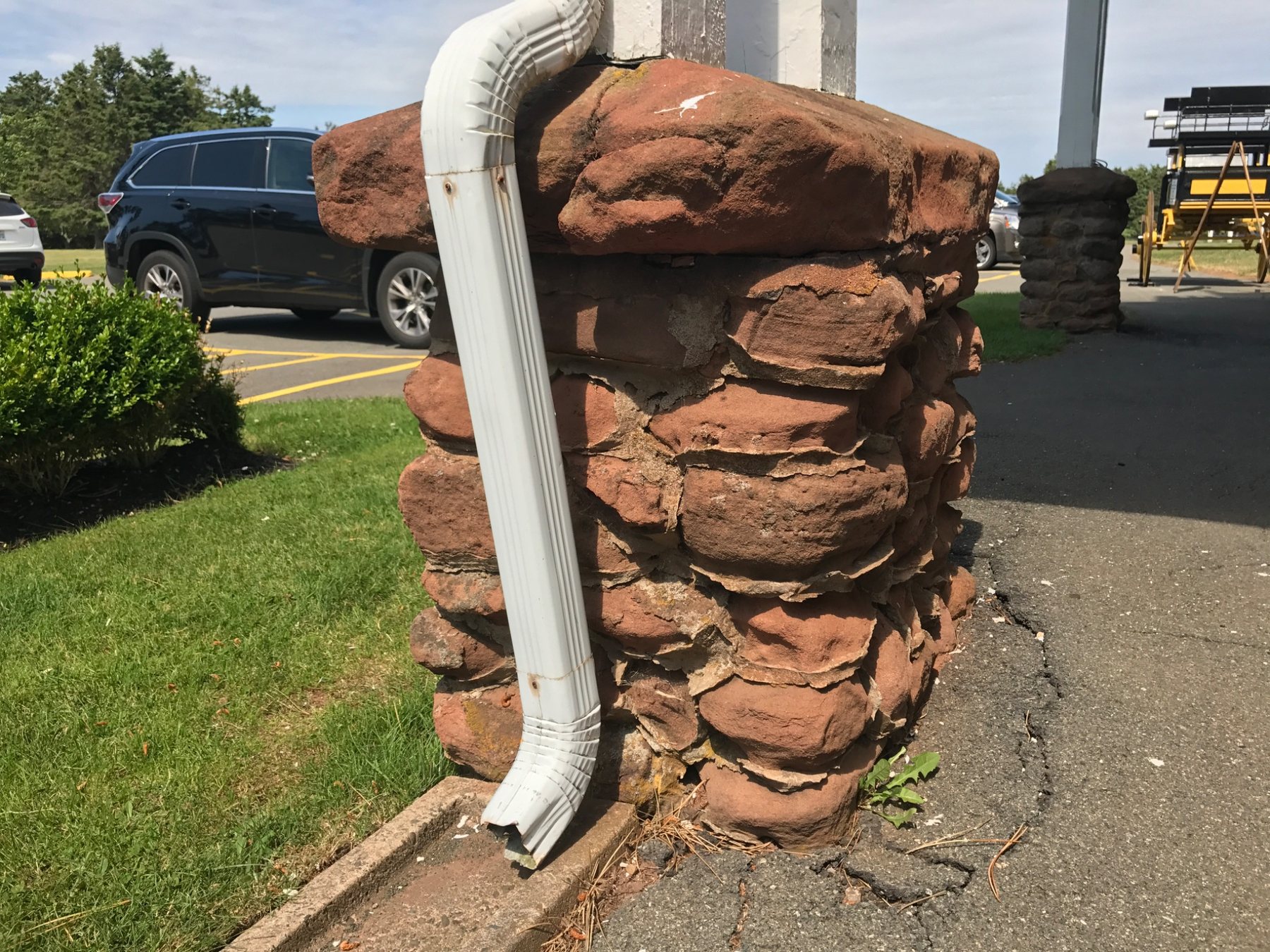
Regional lesson, universal cause: A coastal building can still have a very ordinary water problem. Roof runoff landing at the wall may matter more than the ocean a kilometre away.
National Research Council Canada describes efflorescence as requiring both soluble salts and moisture, and notes that weather and drying conditions strongly influence where deposits appear.
The Canadian Conservation Institute explains that dissolved salts can move through porous brick and stone with water and crystallize near the surface, where repeated crystallization can weaken or remove material.
National Park Service Preservation Brief 1 recommends correcting roofs, gutters, downspouts, mortar loss, cracks and other water-entry defects before considering water-repellent treatments on historic masonry.
NRC Canada: Efflorescence on Masonry →
Canadian Conservation Institute: Outdoor Objects, Water & Salt Weathering →
National Park Service: Cleaning & Water-Repellent Treatments for Historic Masonry →
Dean is a third-generation mason with more than 20 years of hands-on experience working with brick, natural stone, chimneys, foundations, repointing and masonry restoration in Prince Edward Island. The Knowledge Centre uses that field experience to explain masonry problems that are also common across Atlantic Canada and other cold, wet climates.
Last reviewed: August 28, 2026
Salt can contribute when it enters porous masonry with moisture and later crystallizes. Moisture exposure, drying, material type and freezing conditions all affect how serious the damage becomes.
No. Efflorescence can contain salts from the masonry, soil, de-icing products, marine exposure or other sources. It primarily tells you that moisture and soluble salts are moving through the material.
Not automatically. Repair water-entry defects and drainage problems first. Historic or moisture-sensitive masonry can be harmed by an inappropriate coating.
Chimney tops, exposed wall faces, parapets, sills, masonry near grade, roof intersections, horizontal stone surfaces and metal-to-masonry details.
Send a wide photograph of the elevation, a close-up of the damaged masonry and a photo showing the roof, grade, downspout or other nearby water source. For DinoMac service work, include the PEI property location.
At a Charlottetown armoury only a short distance from the harbour, steel lintels that had already been replaced once were again heavily corroded. The second repair used 1/4-inch stainless-steel lintels and corrected surrounding drainage and movement details.
See the coastal Armoury restoration →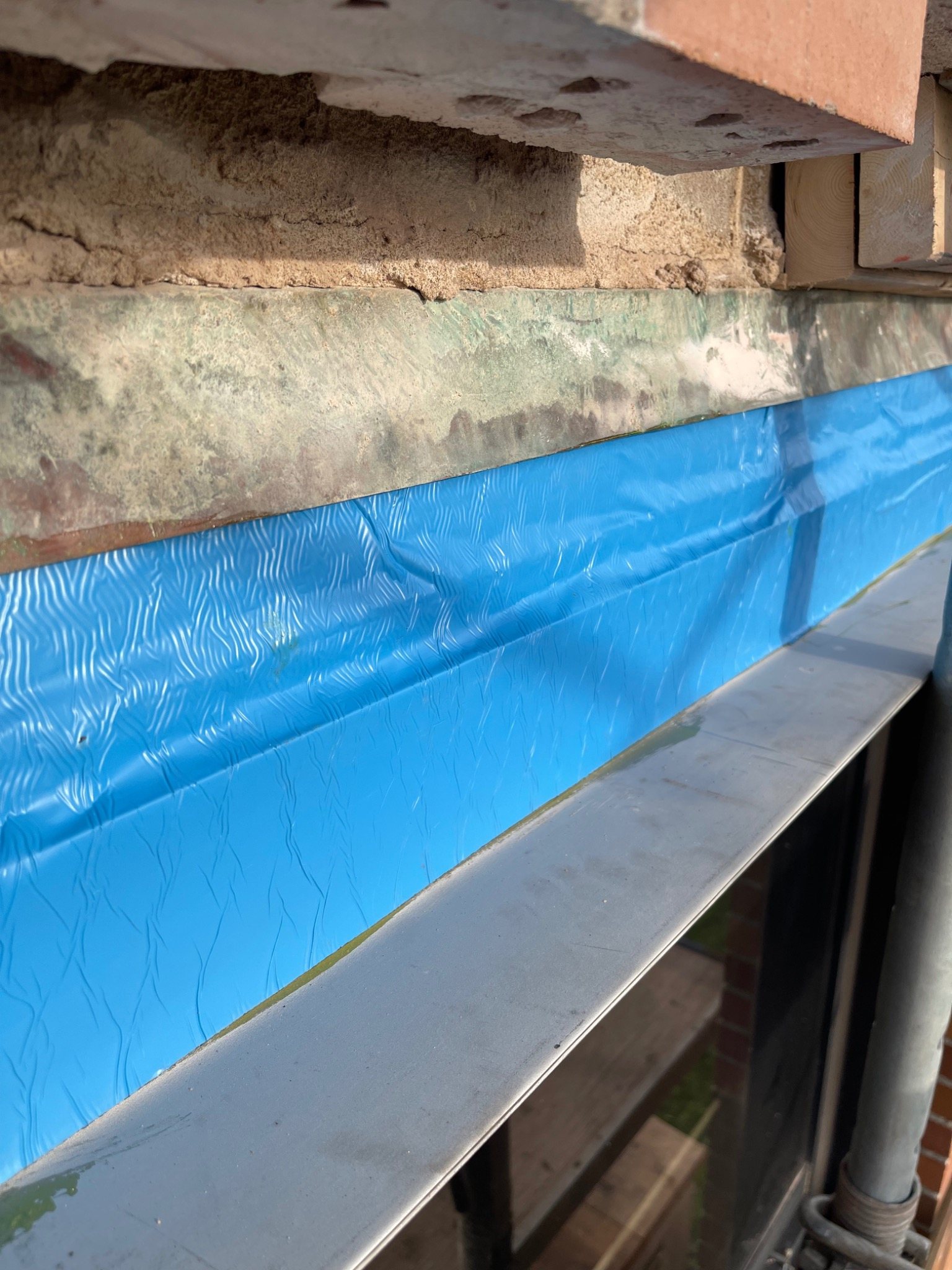
Field example: new stainless lintel, primed membrane flashing and retained through-wall copper flashing at a repaired brick opening.