Shallow Surface Scaling
A thin fired face or small flake may have released while the remaining brick is still firm. In some locations this can be photographed and monitored while the moisture source is investigated.
When the hard outer face of a brick begins to flake, scale or break away, homeowners often assume the brick is simply “old.” In reality, spalling is a symptom. The important question is what is repeatedly putting enough moisture or stress into the brick to make the face fail.
Freeze-thaw exposure is one common cause in cold climates, but it is not the only one. Concentrated water, salts, incompatible mortar, coatings, previous repairs and the brick's own durability can all influence where spalling appears and how quickly it progresses.
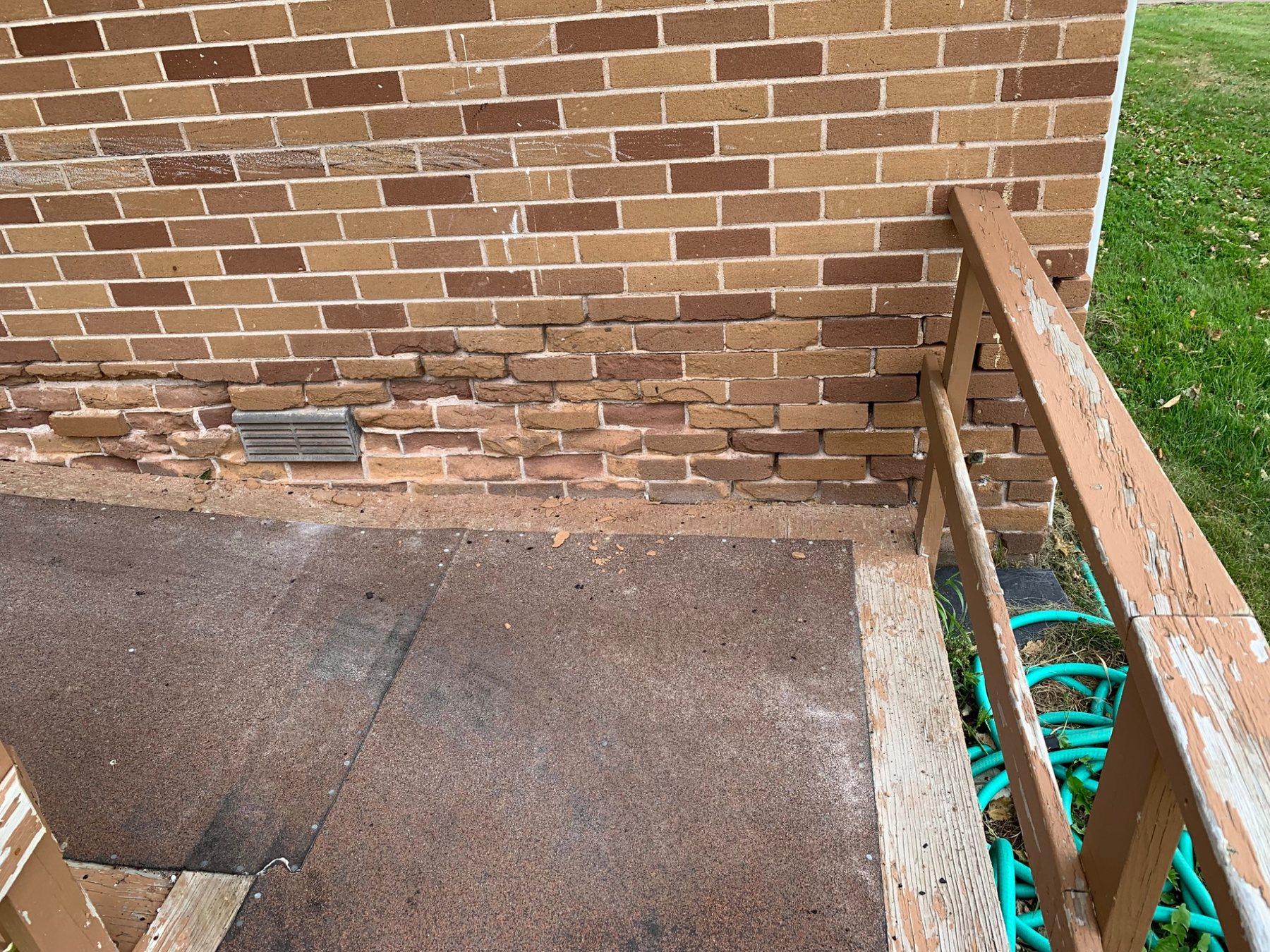
Spalling is material loss from the brick itself. The face may scale, pop off or break away, exposing a rougher and often more absorbent interior surface.
Fired clay brick normally has a durable outer surface created during manufacturing. Spalling occurs when part of that brick breaks, flakes or delaminates away.
The damage can range from shallow scaling to the loss of most of the outer face. Some bricks develop one isolated chip. Others lose several layers over repeated winters until the unit becomes deeply recessed compared with the wall.
Spalling should be distinguished from mortar erosion. A wall can have sound bricks with failing mortar, failing bricks with relatively intact joints, or both conditions at once.
“Spalling” covers a wide range of conditions. A shallow surface scale and a deeply fractured brick are not the same repair problem, even though both may be described with the same word.
A thin fired face or small flake may have released while the remaining brick is still firm. In some locations this can be photographed and monitored while the moisture source is investigated.
If successive winters leave the unit increasingly recessed, the exposed material can become more vulnerable to wetting and further deterioration. Selective replacement becomes more likely as sound section is lost.
A brick that is cracked through, unstable or shedding larger pieces is different from cosmetic scaling. Location also matters because falling masonry above an entrance, walkway or roof creates an additional safety concern.
Several neighbouring failures, displacement, bulging, widening cracks or repeated deterioration after previous repairs can indicate a broader moisture or movement problem. Replacing one damaged unit will not correct that underlying condition.
Trace possible moisture sources →
Understand masonry crack patterns →
The pattern around the damaged bricks often tells more than the damaged face itself.
Brick containing enough moisture can be damaged when that moisture freezes. Repeated wetting and freezing can progressively break down susceptible units.
Leaking gutters, poor sills, roof runoff, failed flashing, splashback and chronic wetting can keep one section of wall much wetter than the rest.
Salts carried into masonry can crystallize below the surface as moisture evaporates, creating pressure that can contribute to flaking and delamination.
In older masonry, mortar that is substantially harder or less permeable than the brick can redirect moisture and stress into the units themselves.
Some paints and waterproof coatings can slow drying. If moisture enters behind them, trapped water may accelerate freeze-thaw or salt-related damage.
Brick properties, firing, absorption, orientation and exposure affect how a unit performs. Two walls on the same house can weather differently.
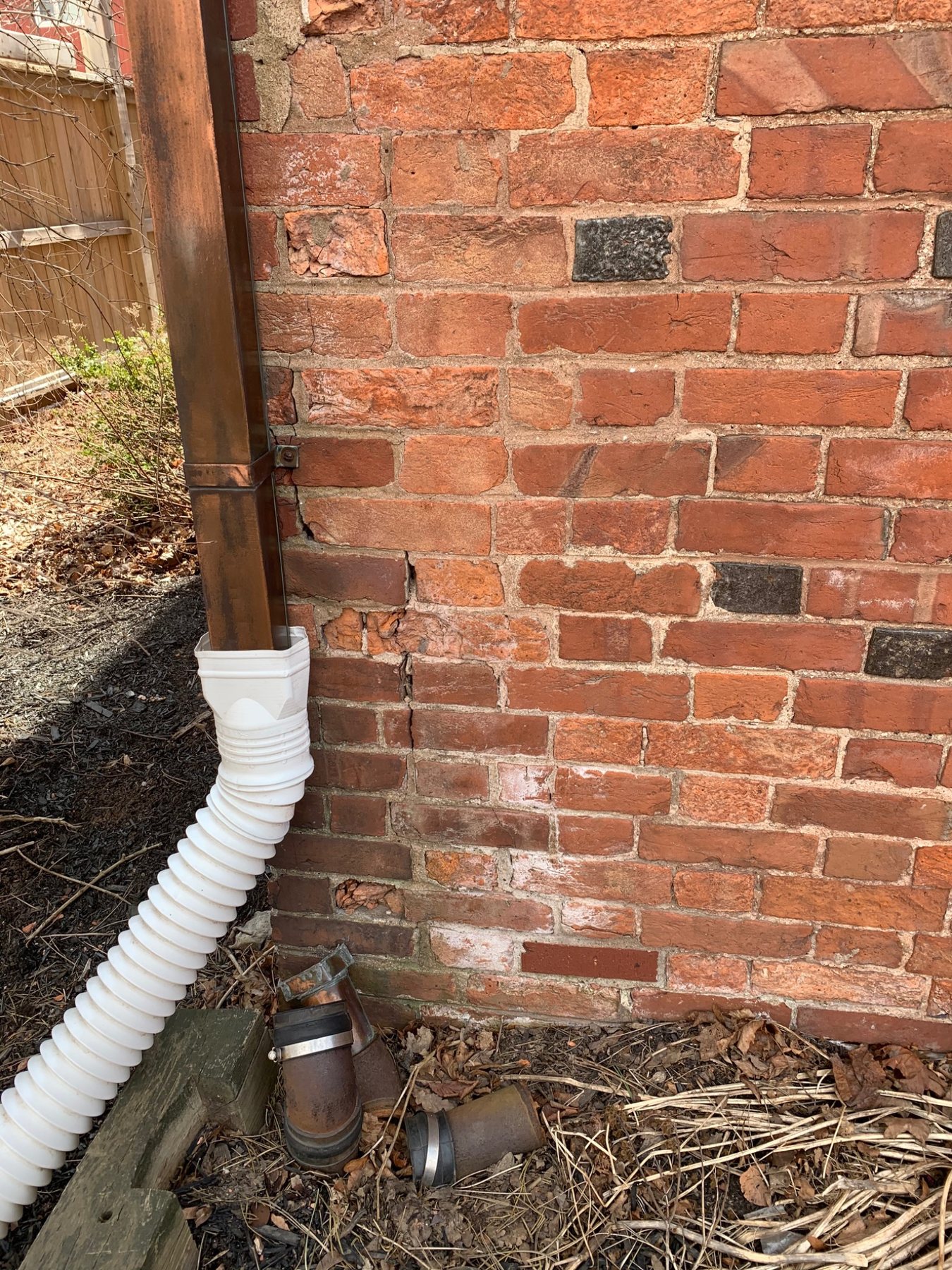
Look beyond the damaged brick. If spalling is concentrated below a gutter, sill, flashing detail or downspout, the water-delivery problem belongs in the repair plan.
Localized spalling often means that one area is experiencing different conditions from the surrounding wall.
The damaged section may be below a leaking eavestrough, at a poorly draining sill, close to grade, beside a downspout or exposed to concentrated roof runoff. On chimneys, saturation can begin at the crown or flashing and work down into the brick below.
Replacing damaged bricks without correcting that water source can simply start the same deterioration cycle again.
Read the masonry water-damage guide →NRC Canada research on brick freeze-thaw durability emphasizes two variables: the properties of the brick and the service conditions around it, especially moisture content and the temperature cycles experienced by the wall.
That is why winter alone does not explain every spalled brick. A dry wall may tolerate cold well, while a repeatedly saturated area can deteriorate much faster.
Orientation matters too. Wind-driven rain, shade, sun exposure and drying conditions can cause different elevations of the same building to experience different wetting and freezing histories.
Read the freeze-thaw masonry guide →
Winter can reveal an existing moisture problem. Fresh surface loss appearing in spring is useful evidence that the wall experienced damaging wetting and freezing conditions.
Traditional masonry often relied on mortar joints to accommodate small movements and provide a relatively sacrificial path for weathering and drying.
National Park Service guidance warns that mortar substantially stronger than softer historic masonry can shift stresses into the masonry units and contribute to cracking or spalling. Dense mortar can also change how moisture migrates through the wall.
That does not mean every hard-looking joint caused the spalling. It means mortar compatibility should be considered when deterioration is concentrated beside previous repointing or when soft older brick is surrounded by dense, cement-rich joints.
Read the historic mortar compatibility guide →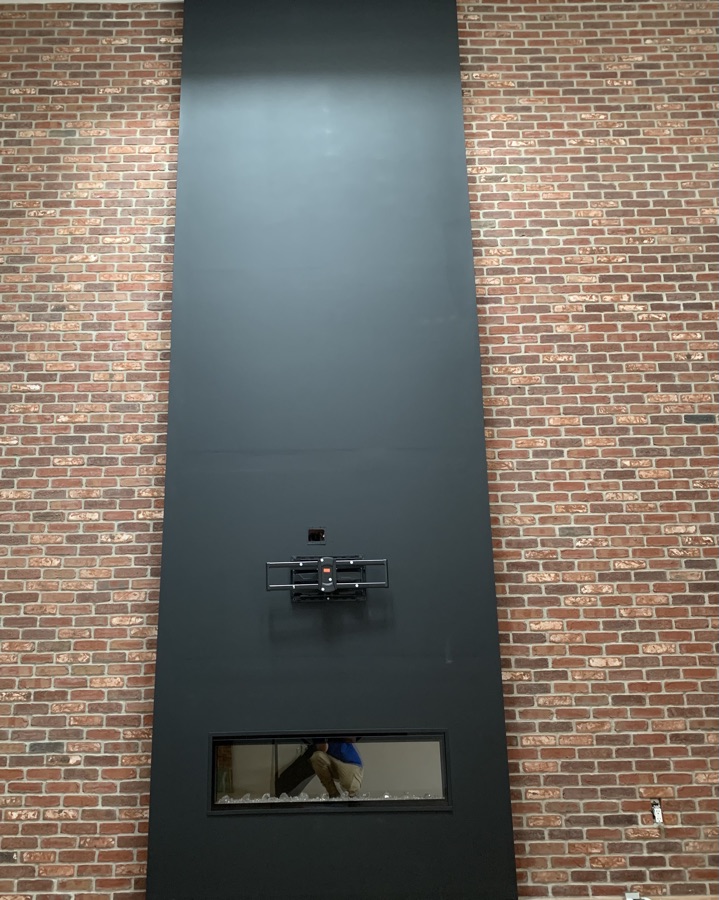
The brick and mortar should be evaluated together. Repointing is not just filling gaps; the replacement mortar needs to suit the masonry it is intended to protect.
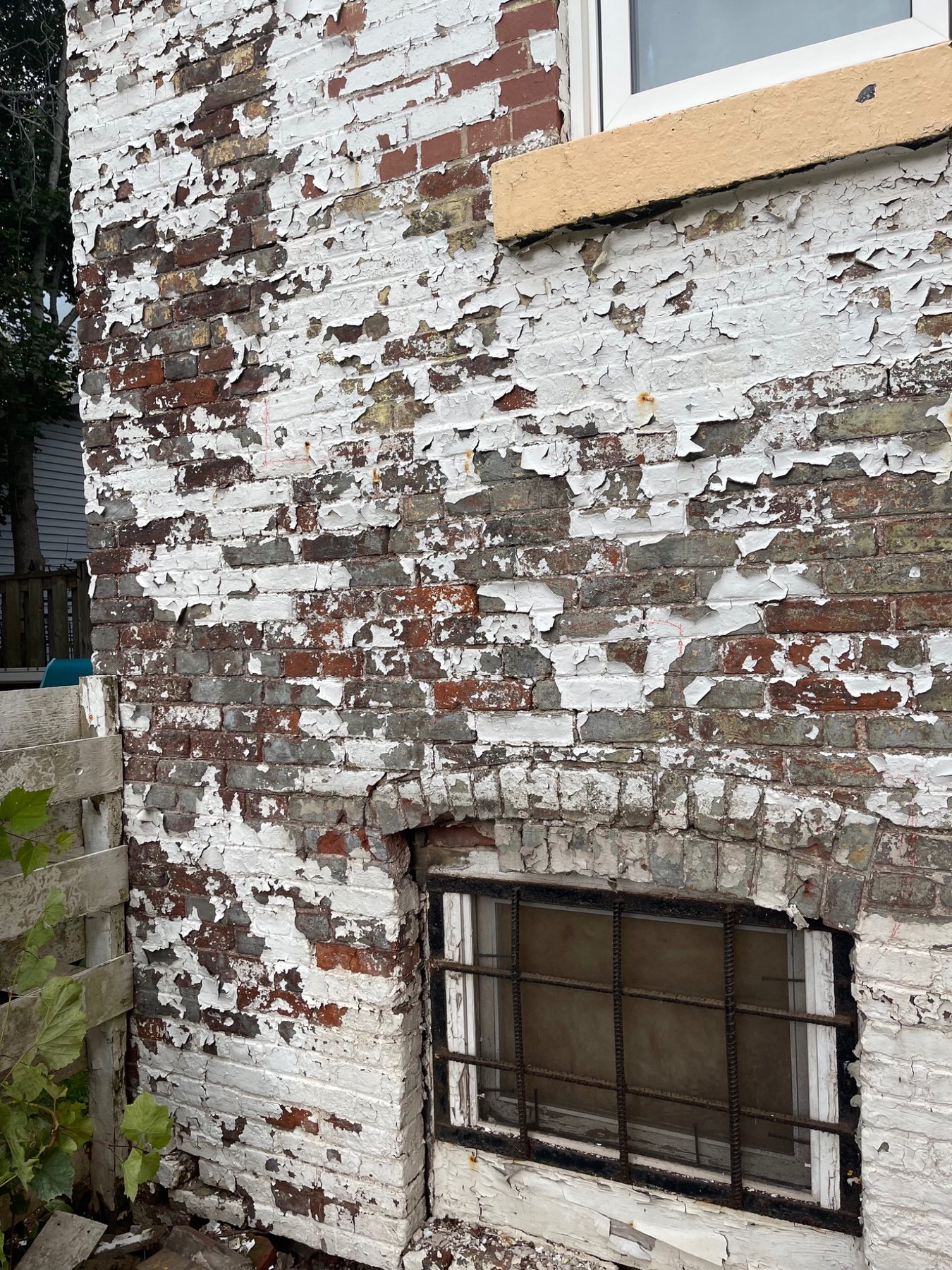
Peeling paint is not the same as spalling brick. But a failed low-permeability coating can be part of a moisture problem if it slows drying of already-wet masonry.
A wall can be damaged by water entering from above, behind or beside the masonry. If an impermeable coating is applied without controlling those sources, moisture can remain trapped within the wall.
National Park Service preservation guidance specifically cautions against treatments that trap moisture in historic masonry because freeze-thaw and salt crystallization can continue below the surface.
Breathable water-repellent treatments can have a role in selected situations, but they should be considered after the wall is dry, defects are repaired and the primary water source has been addressed.
Not every chipped brick requires removal, but deeply damaged units should not be treated as a cosmetic problem forever.
May be reasonable when:
Often considered when:
Needed when:
Repair mortars and patching materials can be useful for selected localized defects, especially where preserving original material is important and the remaining unit is sound.
But once a substantial part of the brick has delaminated or the remaining core is weak, a thin cosmetic patch may have limited durability. The substrate, exposure and moisture source still control how the repair performs.
For ordinary residential brickwork, selective replacement is often the more straightforward long-term repair when a unit has suffered deep section loss. Historic work may justify a more conservation-focused approach.
Efflorescence is a surface deposit of soluble salts. It can indicate moisture movement but does not necessarily mean the brick face has failed.
Mortar erosion is loss from the joints rather than the brick units. Repointing may be appropriate when the bricks remain sound.
Paint or coating failure may peel or blister without the brick itself losing material, although trapped moisture can contribute to deeper deterioration over time.
Cracking through brick raises a different question because it can involve movement or stress rather than surface weathering alone.
Compare common masonry damage visually →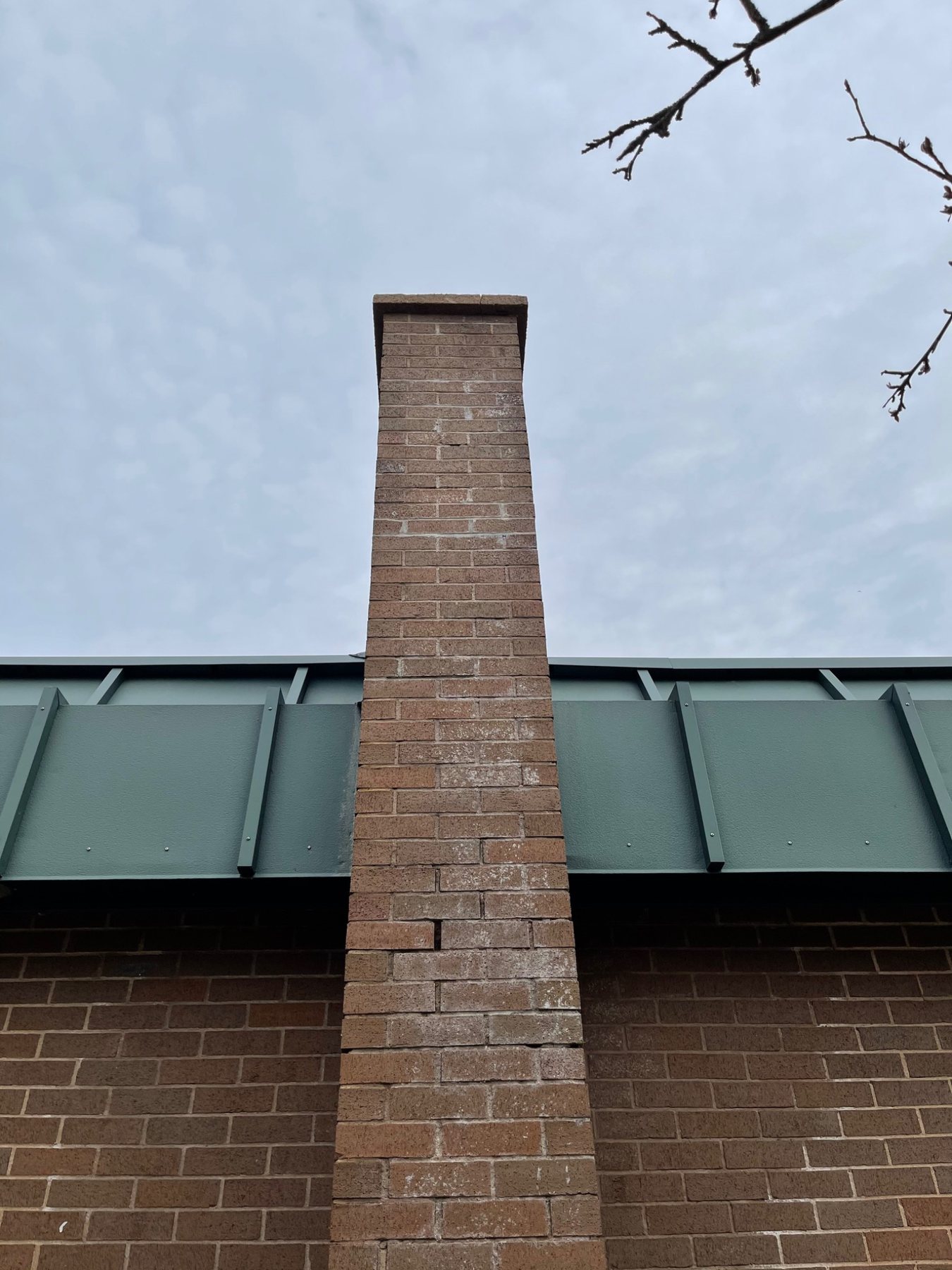
White salts are not missing brick. Efflorescence can be an important moisture clue, but the repair decision is different from a brick that has physically lost its face.
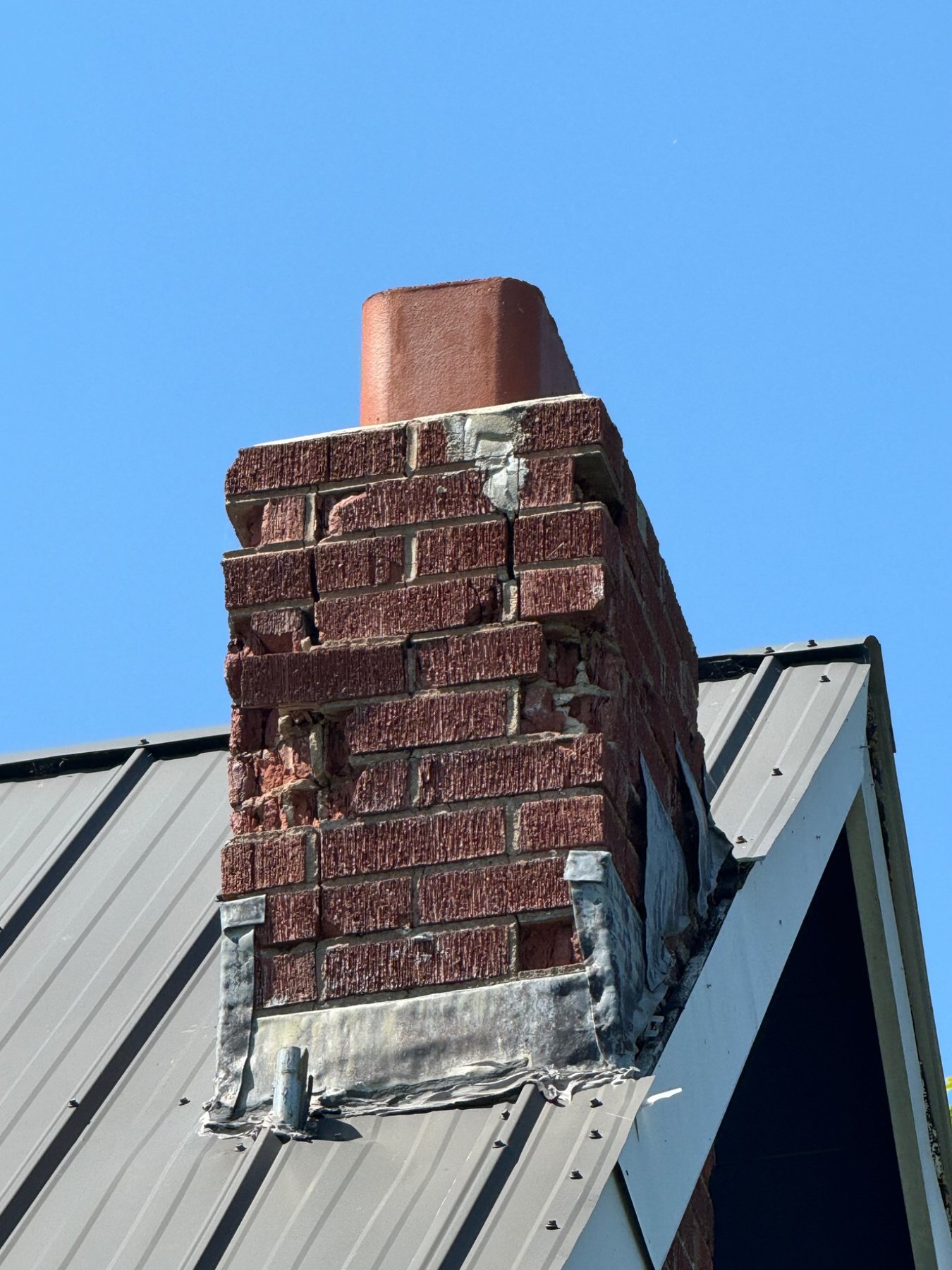
Location changes urgency. Loose brick fragments high on a chimney or over a walkway present a falling-material concern that the same defect close to grade may not.
Surface spalling by itself is not automatically structural. The pattern, depth, location and associated movement determine whether the issue is a localized material repair or part of a larger wall problem.
Prince Edward Island, Nova Scotia and New Brunswick combine repeated freeze-thaw cycles with wind-driven rain, wet snow, coastal exposure and long periods where masonry can become wet before temperatures fall below freezing.
NRC Canada's research on freeze-thaw action in brick specifically notes that both brick properties and service conditions matter, including moisture content, wall orientation and geographical exposure.
That makes water management especially important in this region. Fixing gutters, sills, flashing, crowns, grade and failed joints can be as important as replacing the bricks that have already spalled.
Regional lesson: Cold is only part of the equation. The brick must also be wet enough for freezing to become damaging, so drainage and drying conditions belong in the diagnosis.
Show where the damage sits relative to grade, roof lines, windows, corners and downspouts.
Include the surrounding several feet of wall so patterns and nearby repairs can be compared.
Photograph the depth of face loss, cracks, loose edges and the condition of adjacent mortar joints.
Include gutters, sills, flashing, caps, grade or any area repeatedly directing moisture toward the failed brick.
Show dense mortar patches, coatings, replacement bricks or repaired joints near the deterioration.
Repeat the same photographs after winter if you are monitoring whether the face loss is progressing.
NRC Canada research on freeze-thaw action in brick explains that durability depends on both the brick itself and its service conditions, particularly moisture content and the temperature cycles experienced by the wall.
National Park Service preservation guidance explains that very hard mortar can transfer stresses into softer brick, while reduced drying and salt crystallization can contribute to cracking and spalling of masonry units.
Brick Industry Association technical guidance covers brick durability, water-penetration resistance and mortar selection, reinforcing the need to look at brick, mortar, water control and workmanship as a system rather than treating the damaged face in isolation.
NRC Canada: Freeze-Thaw Action on Brick →
NPS Preservation Brief 2: Repointing Historic Masonry →
Dean is a third-generation mason with more than 20 years of hands-on experience working with brick, natural stone, chimneys, foundations, repointing and masonry restoration in Prince Edward Island.
The DinoMac Masonry Knowledge Centre uses PEI field experience to explain masonry conditions that are also common across Atlantic Canada and other cold, wet climates.
Last reviewed: August 28, 2026
Moisture and freeze-thaw are common causes, but salts, concentrated water, hard mortar, coatings and brick durability can also contribute.
No. Depth, progression, stability and location matter. Deeply deteriorated or loose units are stronger candidates for replacement than light stable scaling.
It can contribute, especially where dense, hard mortar surrounds softer older brick and changes how stress and moisture move through the wall.
Sometimes for selected localized damage, but deep section loss often makes brick replacement a more durable repair.
Fix the water source and damaged masonry first. Some treatments can help in selected conditions, while unsuitable coatings may trap moisture.
Not automatically. Widespread loss, bulging, displacement, deep cracks or lintel movement are reasons for a broader assessment.
Include a wide exterior view, close-ups showing the depth of face loss, nearby gutters, sills, flashing or grade, approximate repair dimensions and the PEI property location. DinoMac can assess whether the visible problem is likely a localized brick repair or part of a broader moisture, mortar or wall condition.