Repair and expose the brick
Clean soot and staining carefully, repoint failed joints, replace damaged units where needed and retain the original masonry as the finished surface.
An old fireplace can often be updated without demolishing everything that is there. The safest sequence is to understand the existing firebox, hearth, chimney, liner and masonry first, then decide what can be repaired, what can be covered and what should remain visible.
A fireplace renovation goes wrong when appearance comes first and the working parts are treated as an afterthought. Cosmetic work should follow condition assessment, not hide it.
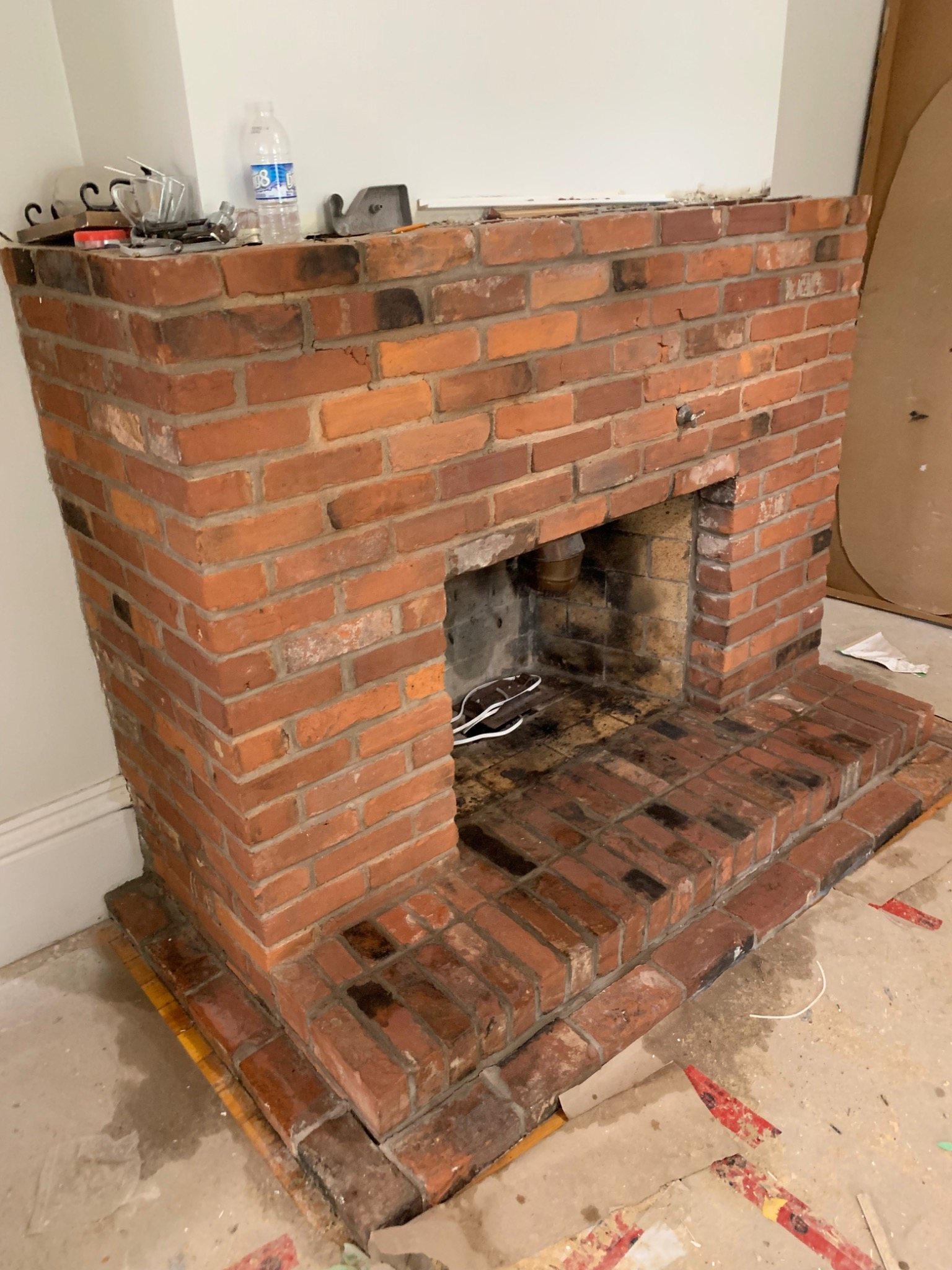
Plan the whole assembly. The face, hearth, firebox and chimney all influence what a sensible renovation can include.
Look for loose firebrick, wide cracks, missing mortar, spalling, damaged throat areas and evidence of repeated patching.
Confirm the chimney condition, liner type, water entry and whether the venting system suits the appliance or intended use.
Check the hearth, lintel or arch, opening dimensions, bearing and surrounding combustible construction before changing projections or finishes.
Old brick is often uneven, smoke-stained or patched, but that does not automatically make it unsuitable. Cleaning, selective brick replacement and repointing can sometimes restore the existing face without covering it.
If the homeowner wants stone, tile or another finish, the masonry below still needs to be stable and properly prepared. New finishes do not make cracked, loose or wet masonry disappear. They only make it harder to inspect later.
Historic or distinctive fireplaces deserve an extra moment before irreversible changes. Original arches, cast-iron components, hearths and brickwork may contribute more character than a new surface applied over them.
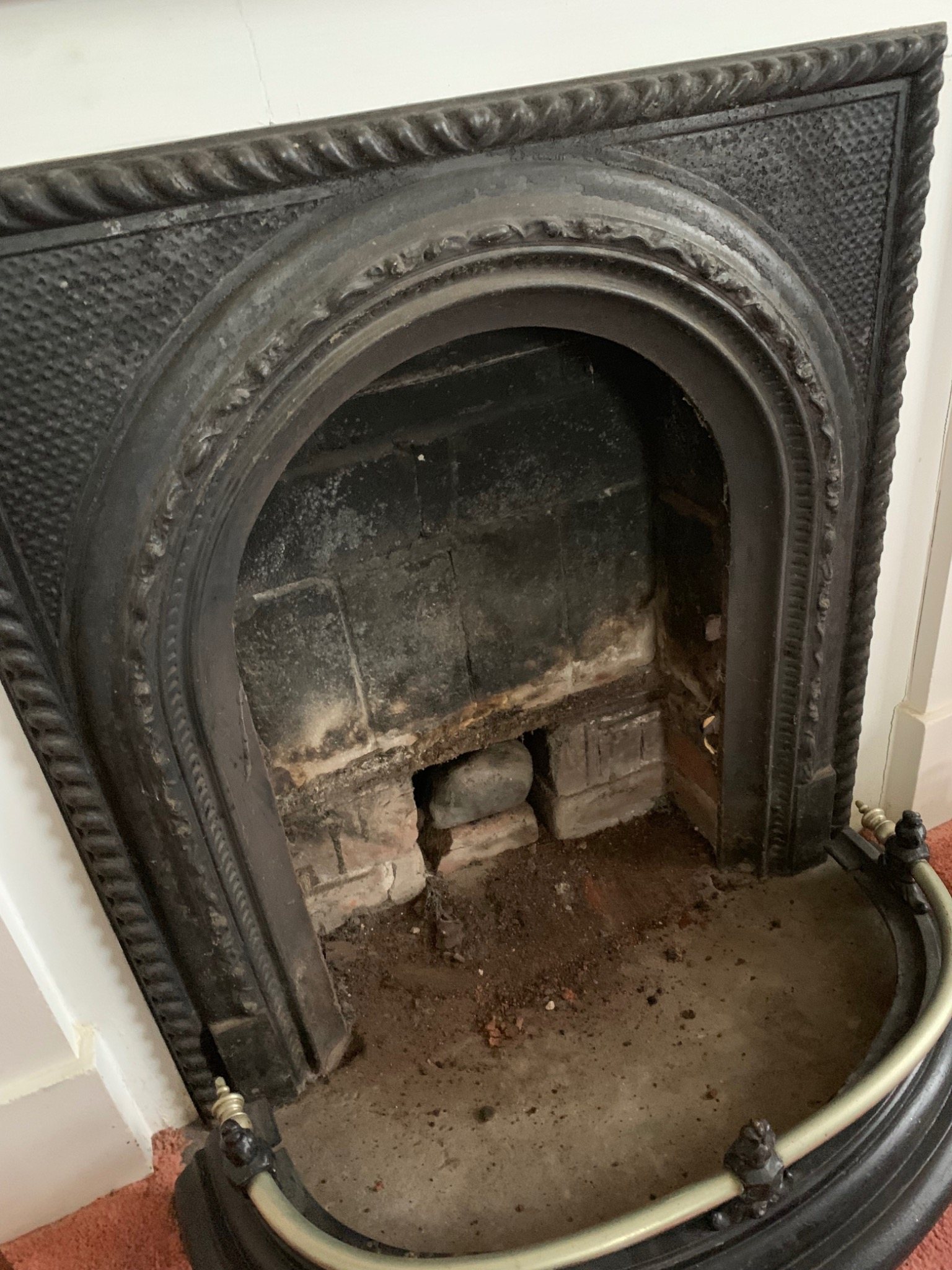
Not everything old needs to be modernized. Some fireplaces are better renovated by repairing the masonry and retaining the original focal point.
Clean soot and staining carefully, repoint failed joints, replace damaged units where needed and retain the original masonry as the finished surface.
A stone surround can transform the appearance, but substrate preparation, support, corners, hearth transitions and the added thickness around the opening need planning.
Where the existing face has severe alterations, failed units or an awkward opening, selective dismantling and rebuilding may create a better result than covering poor work.
Appliance selection affects clearances, venting, liner requirements and how the masonry opening is finished. Coordinate the insert with the masonry work before closing anything in.
New stone or masonry hearths can alter proportion and floor transitions. Non-combustible protection and appliance requirements still govern the practical dimensions.
Possible, but difficult to reverse. Diagnose moisture and salts first, and understand that future removal can be harder than the original painting.
Sound existing brick can sometimes remain beneath a new fireplace finish, but the decision should be based on the condition of the masonry and the requirements of the selected veneer system. Loose brick, flaky mortar, weak parging, scaling surfaces, contamination or unstable previous repairs should not simply be hidden behind new stone.
Paint, glossy sealers and other coatings also change the bonding surface. Depending on the selected system, preparation may involve removing the coating back to a sound mineral surface, repairing the underlying masonry, or providing a separate compliant backing system rather than assuming mortar will bond reliably to whatever is already there.
Added veneer thickness can change the returns at the fireplace opening, mantel relationship, insert trim, fireplace doors, hearth edges and transitions to hardwood, tile or carpet.
Confirm finished dimensions before ordering stone or fabricating trim. A vertical facing product should also not automatically be assumed suitable for a horizontal hearth surface, which can see different heat exposure, impacts and foot traffic.
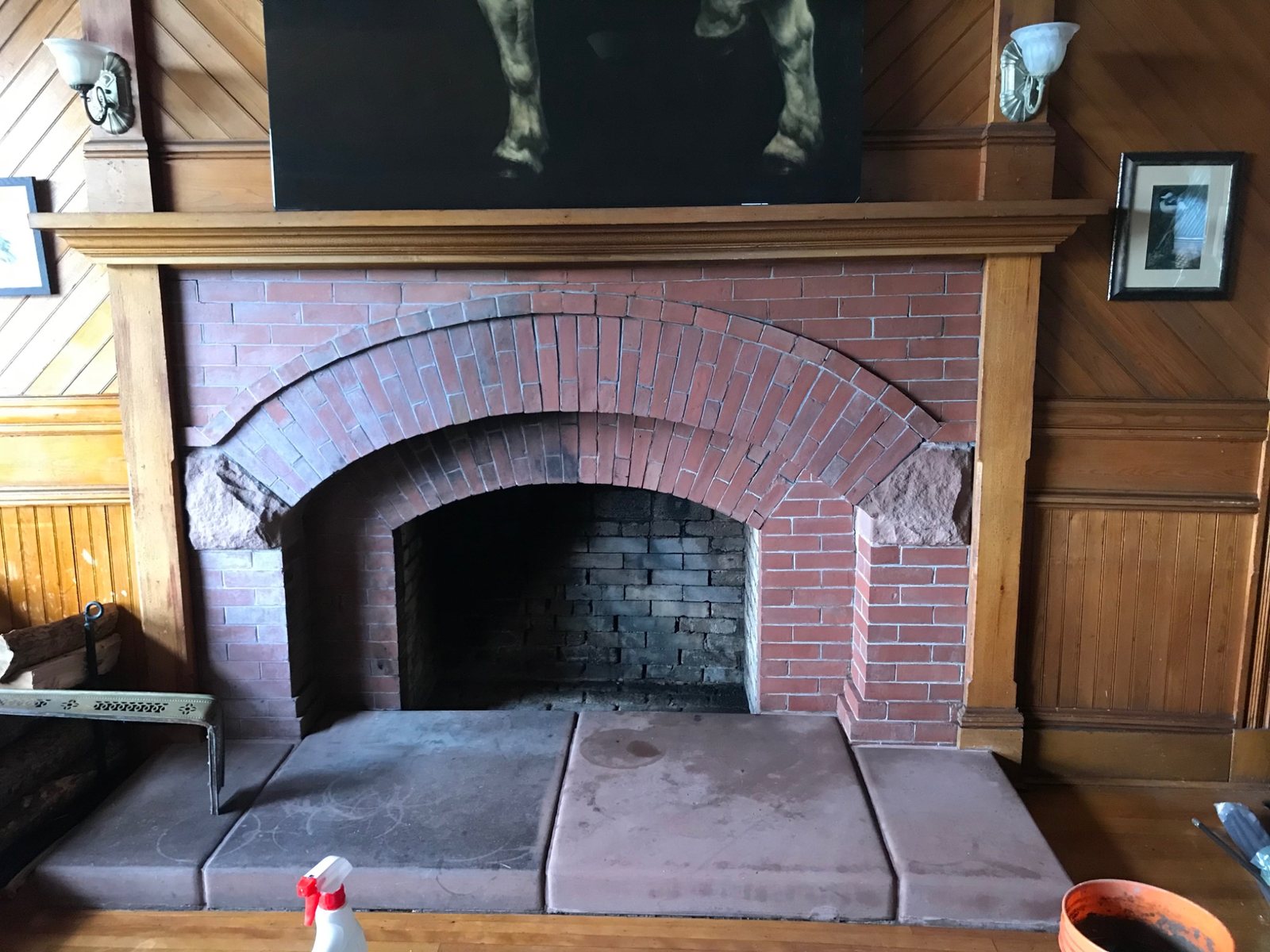
Openings are structural geometry. Arches, lintels and smoke-chamber transitions should not be casually cut back because a new insert or finish is smaller.
Brick arches carry load through their shape. Straight openings may rely on steel lintels or concealed support. Behind the face, the smoke chamber and throat also affect how a traditional fireplace drafts.
Any plan to remove an arch, cut back jambs, lower the opening or install a heavy new facing should identify what is carrying the masonry above it first.
Where the renovation changes the firebox or venting geometry, appliance and chimney specialists may need to be involved alongside the mason.
Water entering through the crown, flashing, cap or chimney masonry can show up as staining, salts, rust, damaged mortar or dampness around the fireplace. Renovating the interior face without stopping the water can trap the problem behind a new finish.
Fireplace faces can accumulate soot, smoke film, wax, paint and previous cleaning residues. Start with the gentlest method likely to work and test a small area. Aggressive pressure washing has no place inside a finished house and can erode mortar or soft masonry.
Where the fireplace is historically significant or the stone is soft, conservation-style cleaning may be more appropriate than trying to make every surface look new.
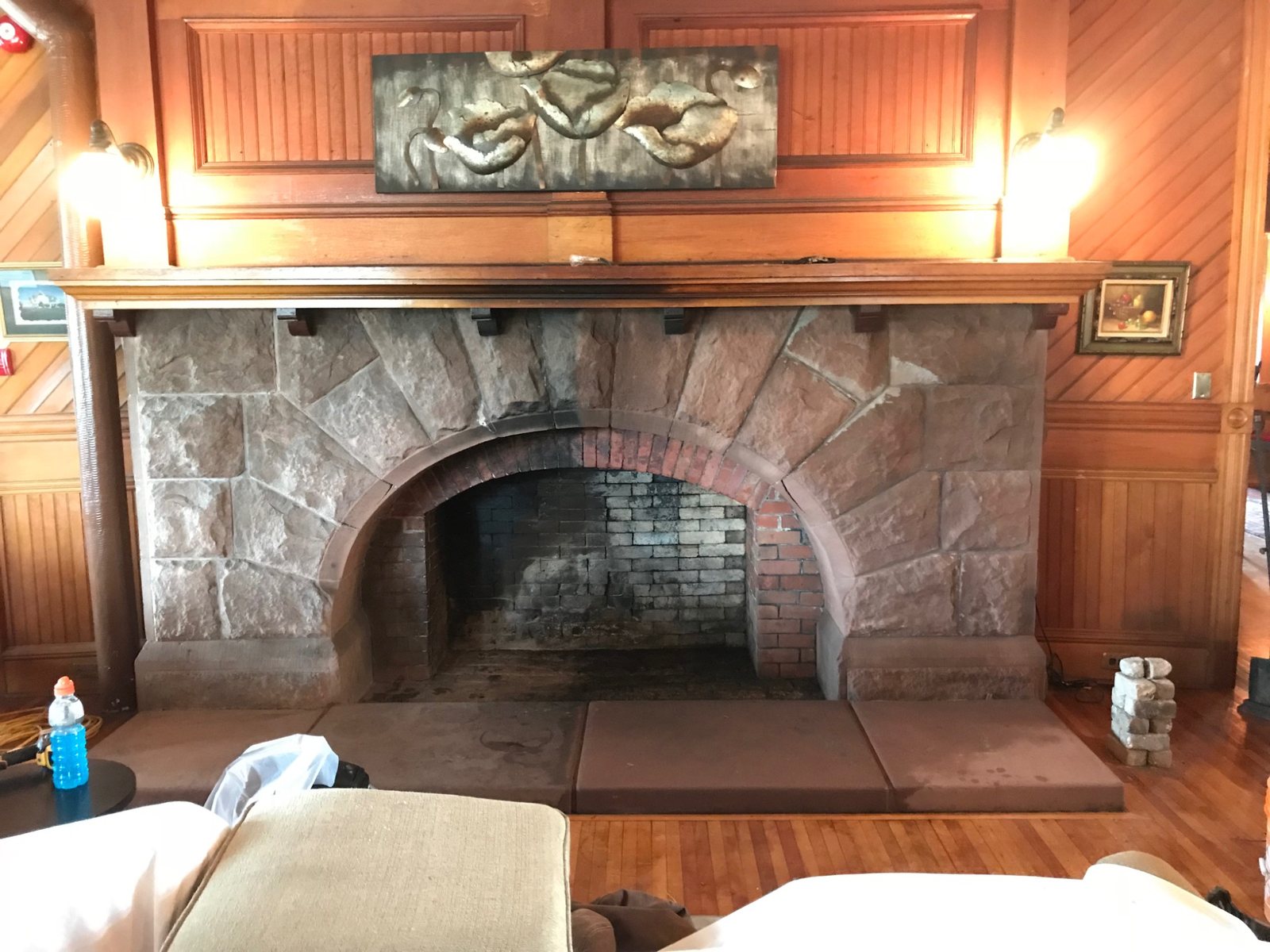
Test first. Cleaning should remove unwanted deposits without stripping the masonry surface or erasing historic character.
A mason can repair brick, firebrick, hearths, arches and chimney masonry. A WETT-certified professional is the appropriate person to inspect a solid-fuel appliance and venting system within the scope of a requested inspection.
If a renovation involves a wood-burning insert, liner changes, venting modifications or uncertainty about the existing system, coordinate the work before finishing the masonry face.
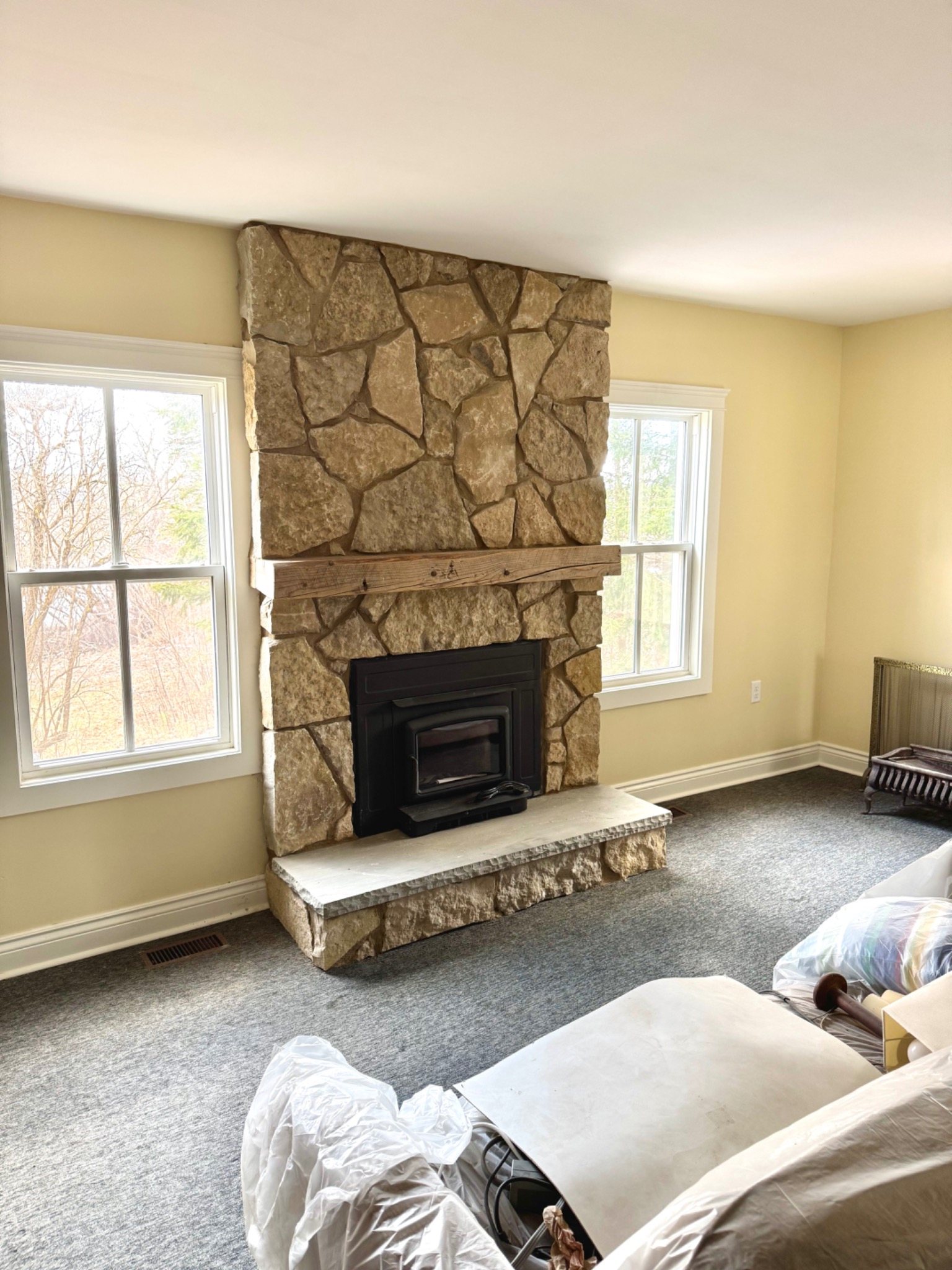
Coordinate the opening and appliance. The nicest masonry finish in the world is still inconvenient if the insert does not fit it.
Across the Maritimes, a fireplace renovation frequently becomes a chimney-condition question as well. Moisture, freeze-thaw damage and old liners can affect the system above the room even when the visible fireplace face looks mostly cosmetic.
For older homes, the best renovation plan treats the fireplace as part of the building, not as a decorative island in the living room.
Prepared by Dean MacArthur, DinoMac Masonry Ltd., a third-generation mason with more than 20 years of hands-on experience working with brick, natural stone, fireplaces, chimneys and restoration in Prince Edward Island.
Last reviewed: August 28, 2026
Photograph the full fireplace, opening, hearth, firebox and any chimney staining before choosing finishes.
Often yes. Sound brick can be cleaned, repointed and selectively repaired rather than covered.
Often, provided the existing face is stable and the added thickness, weight, hearth and opening details are planned correctly.
Sometimes, but arches, lintels, smoke chambers and support need to be understood before demolition.
Yes, especially if the fireplace will remain operational or there are signs of water entry, liner damage or past chimney problems.
Send wide photos of the fireplace, close-ups of the firebox and joints, the hearth, opening, any insert or appliance and visible chimney staining. DinoMac can help separate masonry repair needs from cosmetic renovation choices.