Access & Height
Scaffolding, roof access, lifts, confined areas and difficult material handling add time and equipment.
Two walls of the same size can require completely different amounts of labour. Height, access, scaffolding, deterioration, demolition, unit replacement, material matching, protection, drainage details and hidden conditions can matter as much as the measured area.
This is intentionally a PEI-focused cost guide. Labour, travel, access, material availability, permits and project logistics vary by region, so the useful comparison is the scope of work rather than a generic national price.
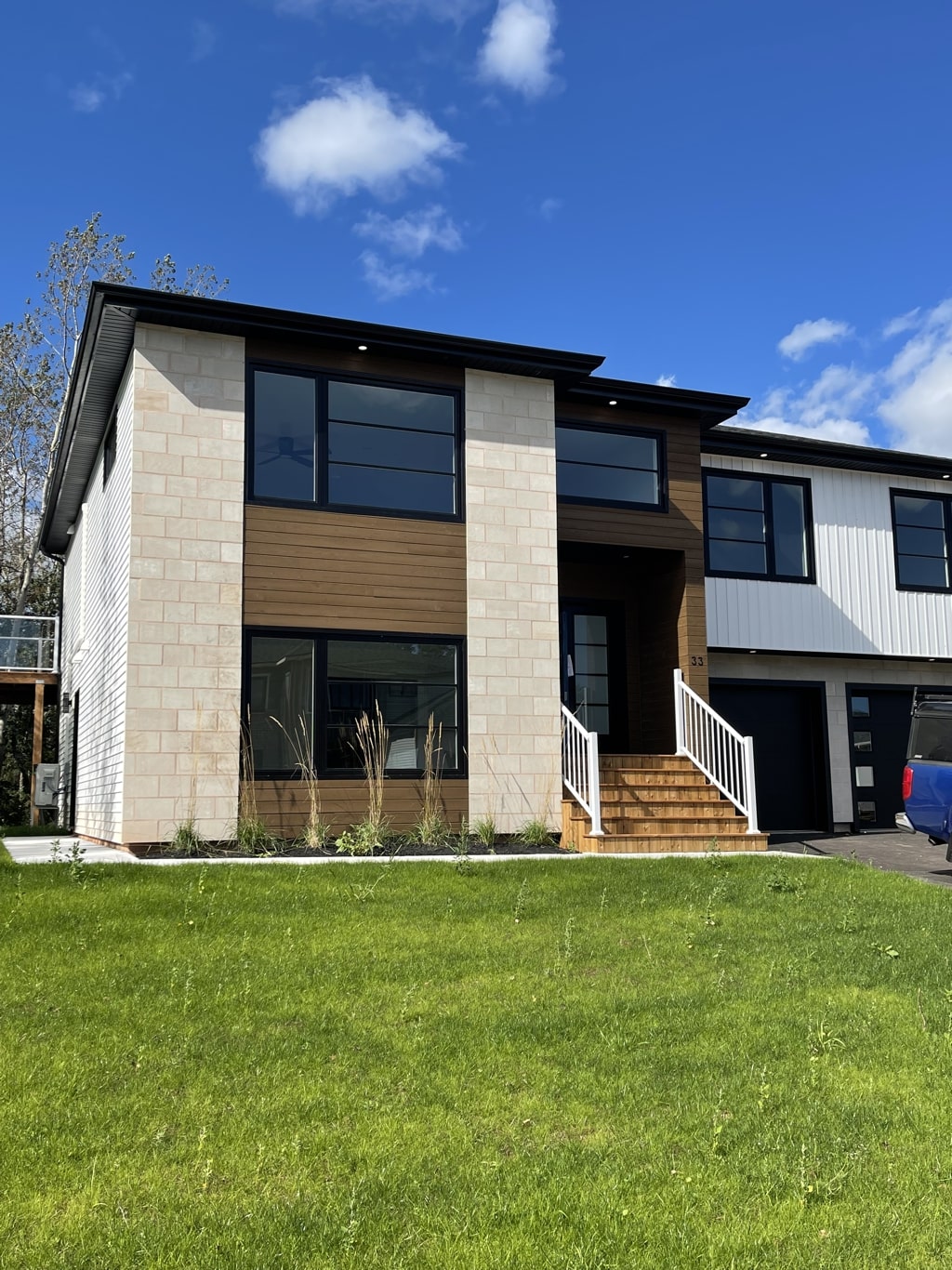
A square-foot rate can be useful for repetitive new masonry where access, materials and details are already defined. Repair work is different. One elevation may need straightforward repointing while another of the same size needs brick replacement, careful demolition, scaffold access, flashing correction and protection of finished areas below.
Historic and natural-stone work can be even harder to reduce to one number because unit sizes, joint widths, matching requirements and the amount of original material being retained all affect labour.
Construction prices also change over time. Statistics Canada's Building Construction Price Index tracks the prices contractors charge for a range of residential and non-residential construction work on a quarterly basis. That is one reason an online price guide can become outdated quickly.
A useful estimate should identify what is being repaired, what is being retained, what access is required and what conditions are assumed.
Scaffolding, roof access, lifts, confined areas and difficult material handling add time and equipment.
Loose or unstable masonry takes longer to dismantle safely and may reveal more failed material once work begins.
Historic brick, natural stone, special mortar colours and unusual units can take additional time to source or reproduce.
Removing old masonry is labour-intensive, particularly where surrounding work has to remain undamaged.
Crowns, flashing, sills, corners, arches, openings and custom stonework take more time than repetitive straight wall areas.
Occupied buildings, public areas, finished landscaping and heritage interiors may require additional protection and sequencing.
The customer sees the finished joint, brick or stone. The estimate also has to account for everything required to reach that finished result safely and without damaging the surrounding building.
Protecting roofing, windows, finished surfaces, landscaping, public areas and occupied spaces can take considerable time before demolition begins.
Removing deteriorated joints or masonry carefully is often slower than installing new material, especially when adjacent historic work must remain.
Brick, stone, mortar, water, tools and debris all have to move to and from the work area. Height and distance can make handling a major part of the labour.
Scaffold erection, roof access, lifts, confined areas and repeated repositioning can add significant time even when the repair itself is small.
Demolished masonry is heavy. Safe removal, site cleanup and disposal remain part of the project even though they disappear from view when the job is finished.
Some repairs must be completed in stages or protected from weather while mortar cures. The calendar time and hands-on labour are not always the same thing.
A complete demolition can sometimes be easier to describe than a careful restoration, but it is not always the best value. Selective repair can preserve sound original masonry and reduce unnecessary replacement.
At the same time, working around material that must remain often requires more care, slower demolition and better matching. The lowest quantity of new material does not automatically mean the lowest labour cost.
Photographs, dimensions and a site visit help separate visible repair work from assumptions about what may be hidden behind or inside the masonry.
Canada's Office of Consumer Affairs recommends comparing contractor quotes using the same specifications and checking that estimates identify labour, extra charges, applicable taxes and the project scope.
That advice matters particularly with masonry because two contractors can look at the same wall and price very different repairs. One may allow for deep joint removal, selective brick replacement, scaffolding, disposal and water-management details while another may price only a surface repair.
A lower number is not necessarily a worse quote, and a higher number is not automatically a better one. The useful comparison is whether both prices describe the same finished work and the same assumptions.
Government of Canada: Planning renovations and comparing contractor quotes →
A chimney can contain deteriorated backup masonry below a sound-looking outer face. A stone wall may have lost internal core material. Previous repairs can conceal cracks, voids or inappropriate materials.
A good proposal should make clear what is known, what is assumed and how additional deterioration would be handled if it is discovered.
This is particularly important where the outer masonry is only one layer of a larger assembly. Chimneys, multi-wythe brick walls, rubble-stone foundations and previously covered repairs can all conceal conditions that are impossible to quantify accurately until selective dismantling begins.
Remote photographs are excellent for initial screening and estimating the likely scope. Complex restoration, structural movement and hidden water problems may still require an on-site review.
Whether approvals are required depends on the location and scope of the project. Confirm these requirements before comparing final project costs.
PEI notes that permit requirements vary by project and municipality. Charlottetown, Stratford and Summerside issue their own development and building permits, while other areas may use the provincial process.
Significant structural movement, altered openings, unusual supports or changes to load paths may require engineering. Professional design or review is a separate cost from the masonry installation itself.
Provincially designated heritage places can require approval before changes to character-defining elements. PEI also offers a heritage incentive program for some designated properties outside Charlottetown and Summerside.
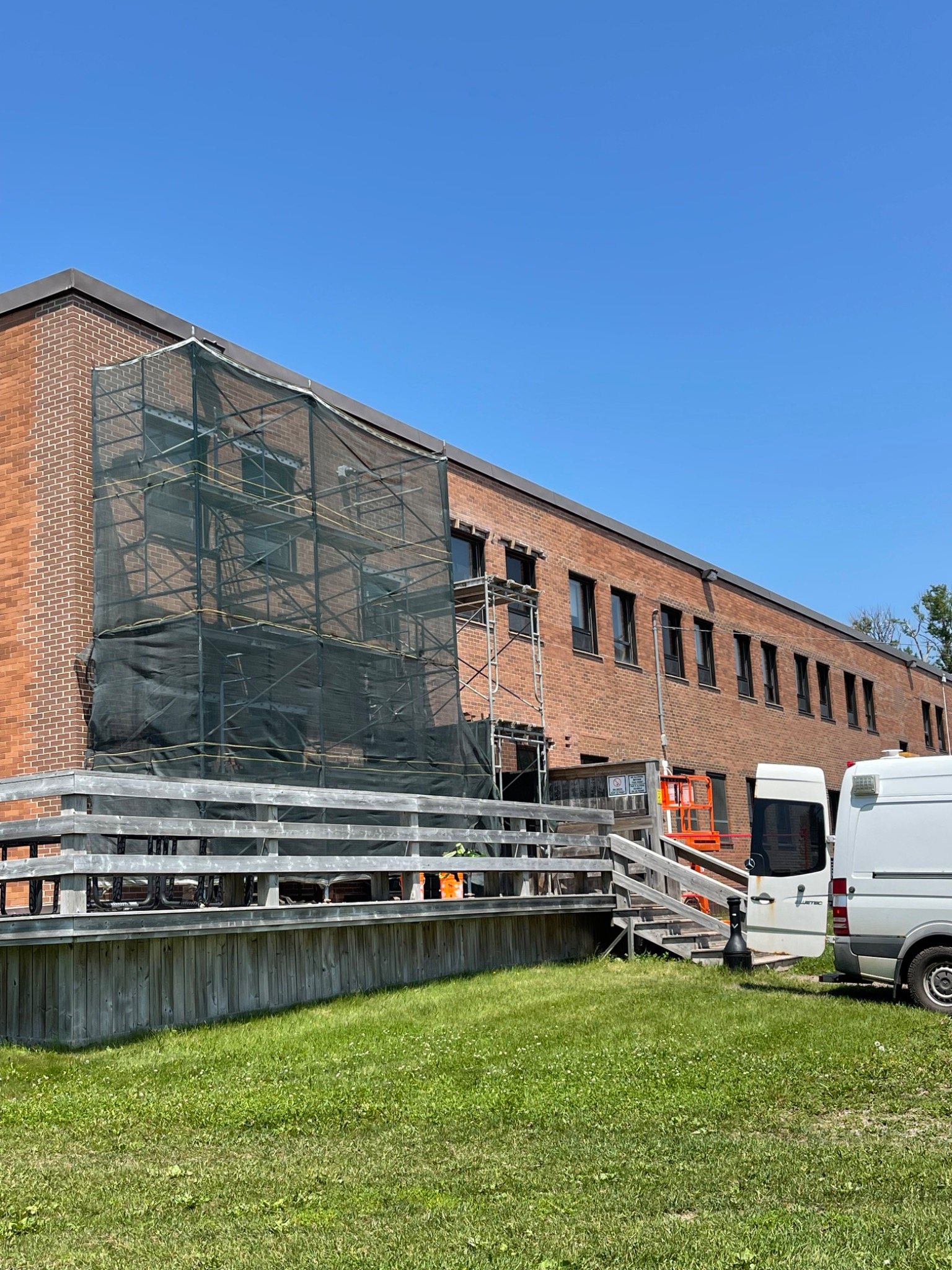
Access has a real cost: scaffolding, protection, setup time and moving materials at height can become a major part of a masonry estimate even when the visible repair area is relatively small.
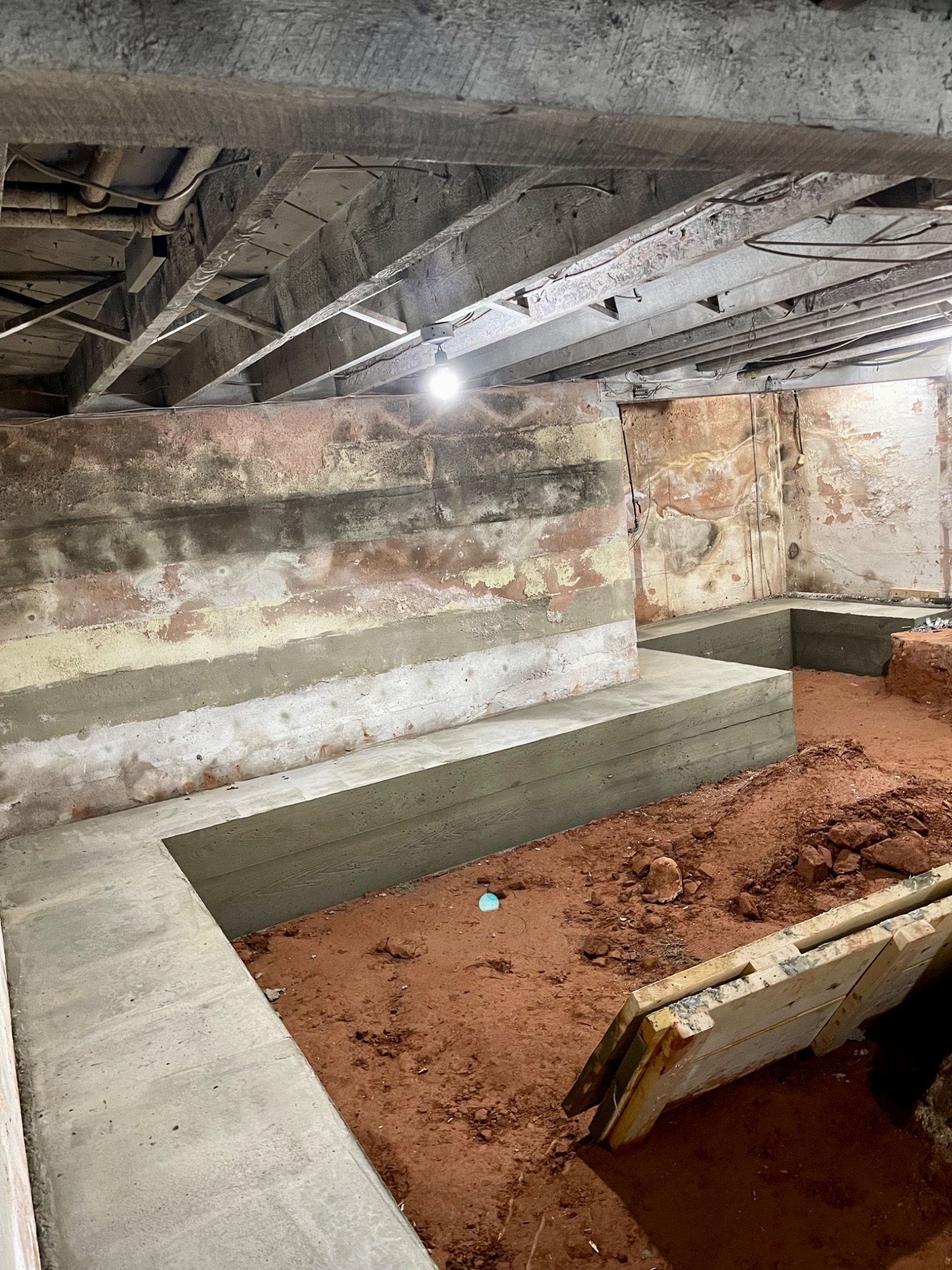
Scope can change quickly: lowering a basement floor may require reinforced bench footings or other support work so the existing foundation is not undermined. That is fundamentally different from pricing surface repair alone.
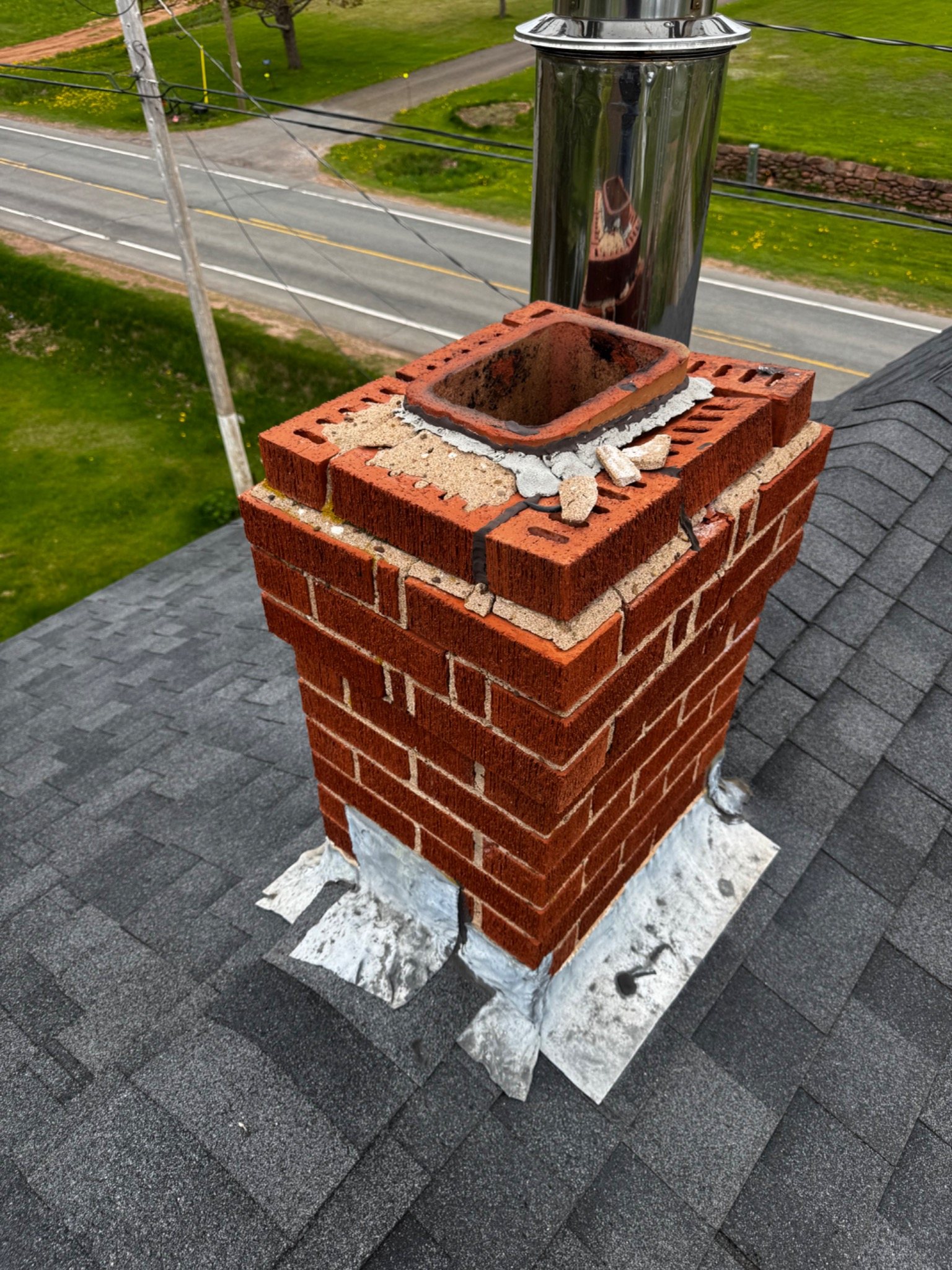
Location changes labour: the same brick and mortar repair can cost very differently at grade level versus a roof, where staging, fall protection and careful material handling are required.
A natural-stone wall at ground level, a chimney above a steep roof, a historic church elevation and an occupied commercial entrance may all use masonry, but the access, protection, sequencing and risk are very different.
This is why DinoMac's service pages describe the repair context rather than treating "masonry" as one interchangeable unit of work.
Chimney repair vs rebuilding →
Historic mortar compatibility →
This guide combines hands-on masonry experience with recognized technical and conservation guidance. DinoMac's field context comes from Prince Edward Island, while the underlying repair principles are useful across Atlantic Canada and other cold, wet climates.
Dean is a third-generation mason with more than 20 years of hands-on experience working with brick, natural stone, chimneys, foundations, repointing and masonry restoration in Prince Edward Island.
Last reviewed: August 26, 2026
Square footage does not capture access, height, scaffolding, demolition, unit replacement, material matching, protection, structural movement, hidden conditions or the amount of original masonry that can be retained.
The scopes may not actually be the same. One quote may include deeper removal, replacement units, access equipment, disposal and water-related repairs that another quote excludes.
They can because historic work may require careful demolition, material matching, compatible mortar, samples, specialized access and approvals. Selective conservation can also avoid unnecessary replacement of sound original material.
The estimate or contract should clearly state whether applicable taxes are included or added. This makes competing quotations easier to compare on the same basis.
Good photos can be enough for some straightforward projects or for an initial budget range. Complex restoration, movement, hidden conditions, roof access and active water problems may require an on-site review.
The proposal should explain how unforeseen conditions will be handled. Where possible, additional work should be documented and agreed upon before the scope is expanded.
Send the location, photographs, approximate dimensions and a short description of what you would like repaired or built. DinoMac can then determine whether photos are enough or a site visit is needed.