1. Soluble salts are available
Salts may come from mortar ingredients, brick or block, backing materials, adjacent soil, de-icing salts, cleaning residues or other materials in contact with the wall.
A white powder, haze or crystalline deposit on brick, stone or mortar is often called efflorescence. It is not a diagnosis by itself. It is evidence that water has dissolved soluble salts somewhere in or beside the masonry and carried them toward a surface where the water could evaporate.
Sometimes the deposit is temporary, especially while new masonry is drying. In other situations it keeps returning because a wall, chimney or foundation is repeatedly getting wet. The useful question is therefore not simply “How do I clean the white powder?” but “Where is the moisture coming from?”
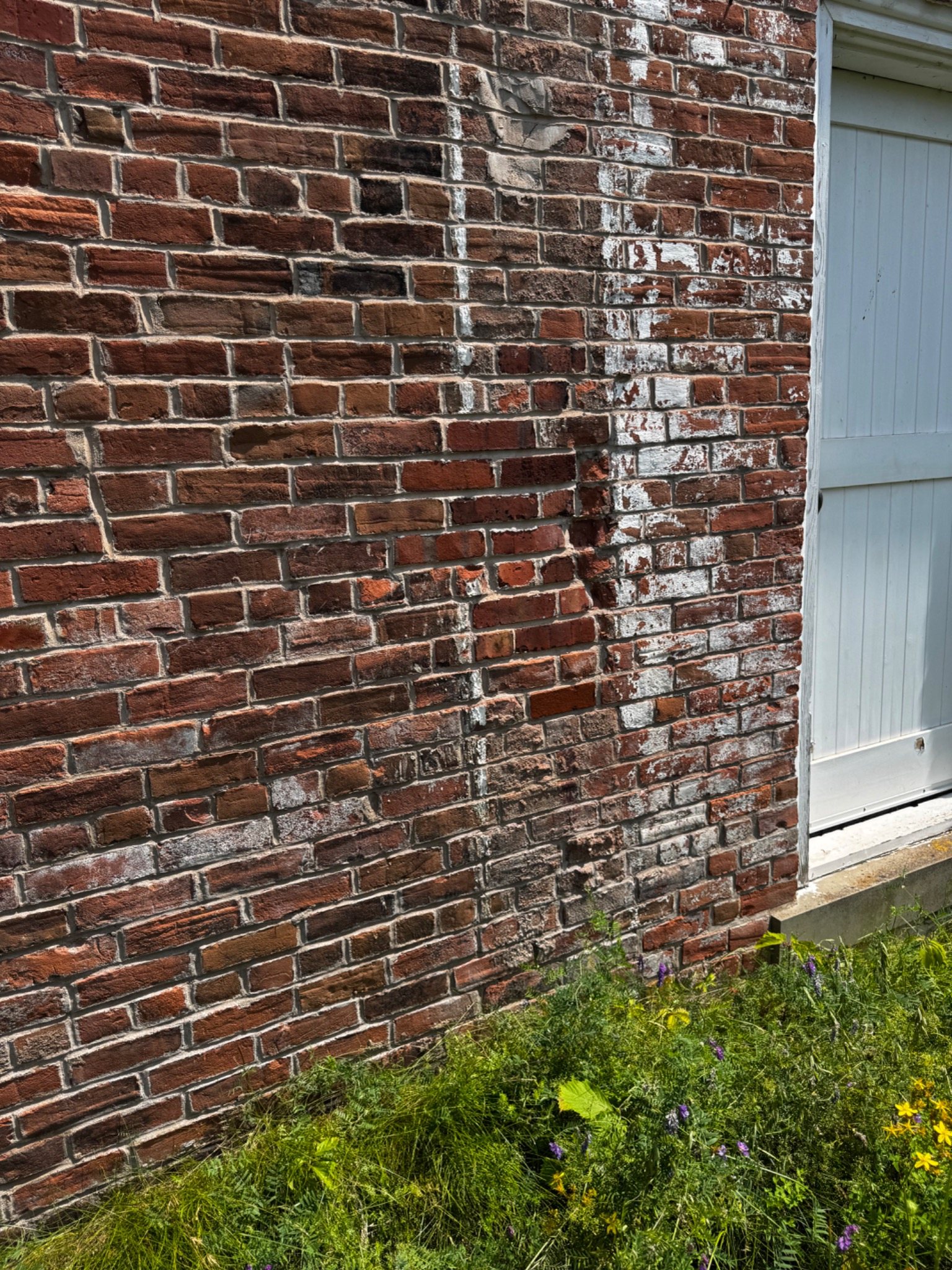
White deposits are a clue, not the whole diagnosis. Their location, texture, recurrence and relationship to water exposure matter more than colour alone.
The white material is left behind after moisture carrying dissolved salts reaches a surface and evaporates.
Salts may come from mortar ingredients, brick or block, backing materials, adjacent soil, de-icing salts, cleaning residues or other materials in contact with the wall.
Rain, roof runoff, groundwater, condensation, construction moisture or another source wets the masonry long enough to dissolve some of those salts.
The salt solution moves through pores or joints toward an evaporation surface. Water leaves as vapour and the dissolved salts remain behind as a visible deposit.
The Brick Industry Association describes these same three requirements: soluble salts, water and a pore structure that allows the salt solution to migrate. Remove or reduce the continuing moisture source and the process often slows dramatically.
Efflorescence is commonly white, but it may look like a light haze, loose powder, fine crystals or irregular pale patches. It can appear in mortar joints, on brick faces, on concrete block, on natural stone or along specific moisture paths.
The pattern is often as useful as the colour. A band near grade may suggest moisture moving upward or inward from wet soil. Deposits below a sill, chimney crown, flashing line or downspout may point toward a concentrated exterior water source.
A broad, fairly even bloom after new masonry work can be different again. Construction moisture may carry salts outward during early drying and then diminish.
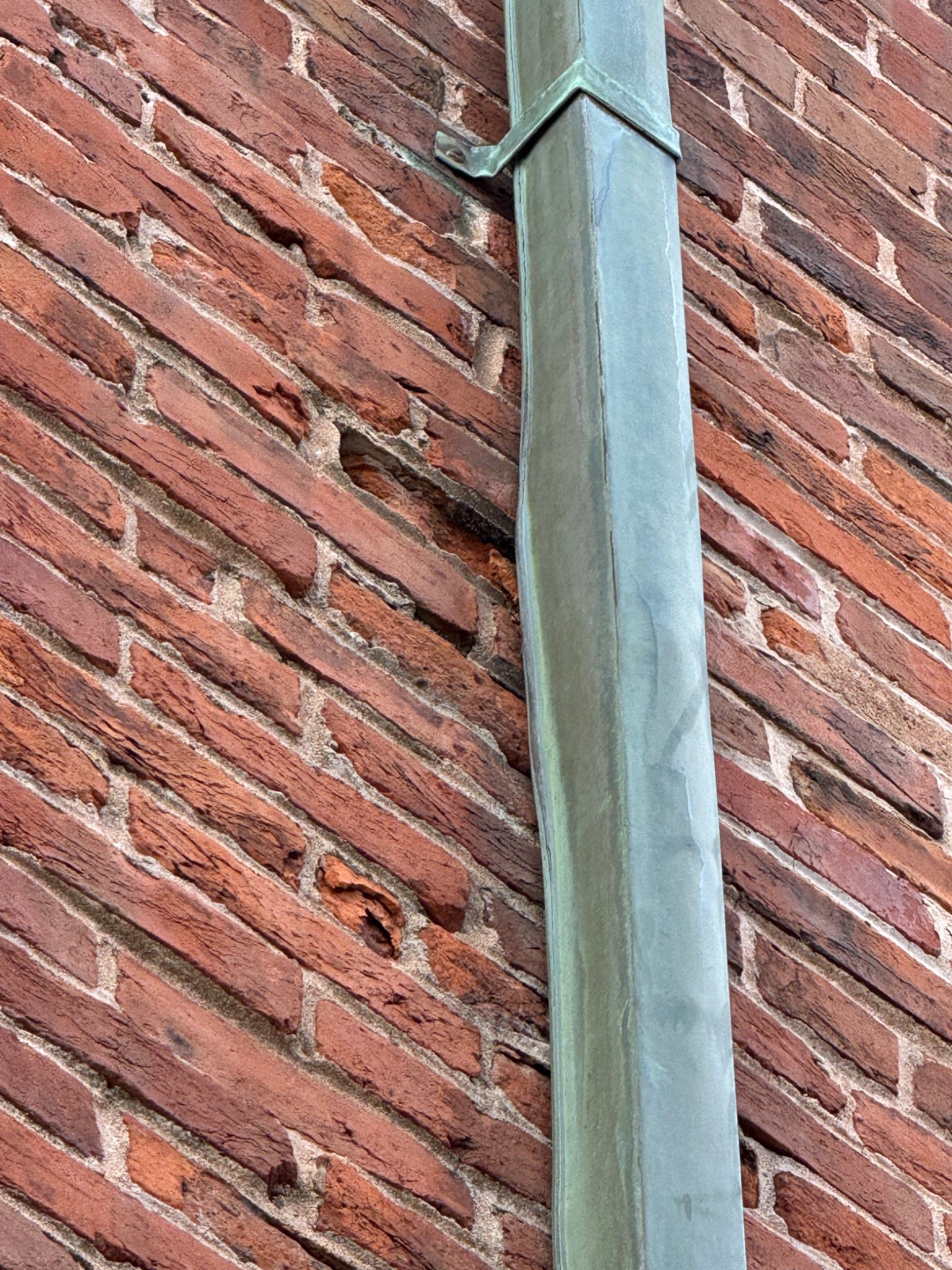
Look beyond the deposit. Nearby drainage details, damaged brick, mortar loss and repeated wetting can be more important than the white material itself.
Soluble compounds can be present in mortar ingredients, masonry units, concrete, block or adjacent materials. Water can mobilize small amounts and carry them toward the surface.
Foundation masonry can be exposed to water and dissolved salts from soil. Capillary moisture can carry those salts toward an interior basement surface where evaporation occurs.
Salt used on roads, walks or steps can increase the salt load near masonry. Coastal buildings may also receive salt through wind-driven spray and airborne exposure, particularly on highly exposed faces.
Improper chemical cleaning or inadequate rinsing can leave residues behind. That is one reason older masonry should not be treated with a strong cleaner simply because a deposit looks white.
A leak or concentrated runoff does not have to contain much salt itself. The water can dissolve material already within the wall and carry it toward another surface.
Fresh masonry contains significant moisture from construction. Early drying can sometimes produce a temporary bloom that lessens once the wall has dried.
On relatively new masonry, a temporary white bloom can sometimes appear as construction moisture moves outward through the wall and carries soluble salts to the surface. This may lessen as the assembly dries.
Recurring efflorescence on an older wall deserves more investigation. If the deposits repeatedly return in the same area after cleaning, moisture is usually continuing to move through the masonry from somewhere.
The important question is not only how to remove the white deposit, but why water is reaching that location in the first place.
Repeated cleaning without correcting the moisture source usually treats the symptom rather than the cause.
The familiar white deposit forms when a salt solution reaches the surface, the water evaporates, and salts are left behind. In many cases the visible deposit is mainly an appearance issue and a useful clue that moisture is moving through the wall.
Evaporation can also occur within the pore structure before the solution reaches the face. Salts can then crystallize below the surface. This is sometimes called subflorescence. Depending on the salt, pore structure, moisture conditions and strength of the masonry, internal crystallization can contribute to scaling, powdering or spalling.
That is one reason recurring salt activity deserves a moisture diagnosis rather than repeated aggressive cleaning or an automatic surface coating. The deposit that is easy to see may be only part of the moisture-and-salt process occurring in the wall.
National Research Council Canada research describes visible efflorescence as salts deposited at an evaporation surface, while noting that decay can occur when salts crystallize within masonry materials.
Atlantic Canadian masonry is frequently exposed to wind-driven rain, repeated wetting and drying, freeze-thaw cycles and seasonal changes in temperature and humidity. Those conditions do not create efflorescence without salts, but they can supply and move the moisture that makes salts visible.
Winter maintenance can add another salt source around lower walls, steps and foundations. Coastal exposure can also matter where salt-laden moisture reaches the building repeatedly.
Spring is therefore a useful time to inspect masonry. A new white deposit may be harmless surface residue, but it may also mark the same wet area where brick faces are beginning to spall, mortar is softening or a basement wall remains damp.
Identification matters because the safest cleaning method depends on what the deposit actually is and on the condition of the masonry underneath.
Often powdery or crystalline and associated with moisture movement. Some dry deposits can be removed with gentle brushing once the wall surface is dry.
Lime run, carbonate deposits or other mineral crusts may be harder and more strongly bonded than ordinary powdery efflorescence. Treating them as the same material can damage the masonry.
Chemical residue, mortar smear or altered masonry surfaces can also look pale. Historic masonry is particularly vulnerable to damage from overly aggressive attempts to “remove the white.”
Reappearance after rain or seasonal wetting suggests the moisture pathway is still active even if the surface has been cleaned several times.
White deposits together with scaling or face loss can point toward a wall that is spending too much time wet or carrying a significant salt load.
Open joints can admit more water, while deeply deteriorated mortar may be another sign of prolonged moisture exposure.
Basement staining, damp finishes or recurring interior moisture make the deposit part of a larger water-management question.
Bulging, leaning, displacement or widening cracks are not explained by efflorescence. Those conditions deserve assessment on their own merits.
Loose brick, stone or mortar creates a safety issue regardless of whether white deposits are also present. Keep people away from unstable masonry and arrange prompt assessment.
The first step is usually to determine whether the deposit is actually efflorescence and whether the wall is still being wetted. Cleaning a dry surface may improve appearance, but it does not stop new salts from arriving.
Loose dry deposits can sometimes be removed with a soft, dry brush. Depending on the masonry and deposit, controlled water cleaning may also be appropriate. The method should suit the brick, stone and mortar, and a small test area is particularly important on old or weathered surfaces.
High pressure, strong acids and improvised chemical mixtures are poor default choices. They can erode mortar, alter the masonry face, drive additional water into the wall or create new residues that are harder to remove than the original deposit.
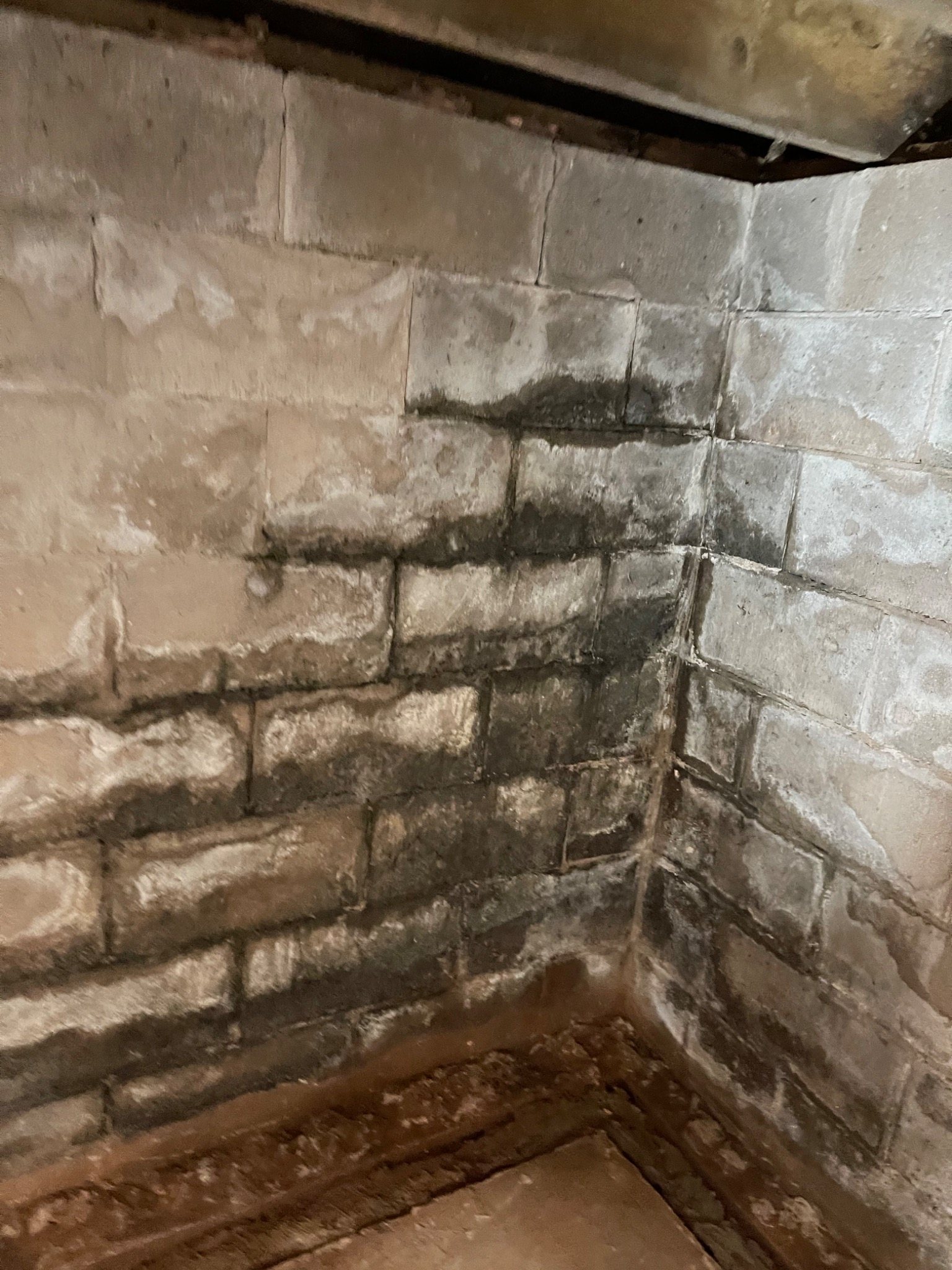
Interior symptoms still need exterior context. Moisture staining, salt deposits and damp masonry can all be downstream effects of drainage, grade, groundwater or exterior water entry.
A common reaction is to apply a sealer so water cannot reach the surface. That can miss the actual problem. If water is entering through a roof detail, failed flashing, an open joint, poor grade or the back side of a wall, a surface coating does not necessarily stop that water.
Some breathable penetrating water repellents have legitimate uses on suitable masonry after defects are repaired and the wall is appropriately dry. Film-forming coatings or unsuitable sealers can instead reduce outward drying and concentrate moisture elsewhere.
The Brick Industry Association specifically cautions against relying on coatings as the sole treatment for efflorescence. The moisture source still matters.
A dry white or pale crystalline deposit may be efflorescence. Water dissolves soluble salts, carries them through the masonry and leaves them at the surface when the water evaporates.
Not by itself. It is often a moisture clue rather than a structural diagnosis. Repeated deposits together with spalling, soft mortar, damp interiors or movement deserve a closer look.
Cleaning removes the visible residue, not the water path. If moisture keeps moving through the masonry and salts are still available, another deposit can form.
Aggressive pressure washing is not a good default, especially on old or deteriorated masonry. Cleaning should match the deposit and the condition of the brick, stone and mortar.
Not as the first response. Find and correct the moisture source first. An unsuitable coating can interfere with drying and may make deterioration worse.
Yes. Construction moisture can sometimes create a temporary early bloom. Deposits that repeatedly return because of ongoing water entry should be treated as a different problem.
The principles in this guide are consistent with masonry-industry and preservation guidance describing efflorescence as soluble salts transported by moisture and left behind at an evaporation surface.
Technical Note 23A, Efflorescence – Causes and Prevention.
BIA Technical Notes →A Glossary of Historic Masonry Deterioration Problems and Preservation Treatments.
NPS masonry deterioration glossary →Preservation Brief 1, Assessing Cleaning and Water-Repellent Treatments for Historic Masonry Buildings.
NPS Preservation Brief 1 →Efflorescence on masonry, including the distinction between surface salt deposits and crystallization within masonry materials.
NRC Canada publication →Include a wide view of the wall, close-ups of the white material, nearby downspouts, flashing, sills, grade or roof details, and any spalling or open mortar joints. The surrounding conditions are often more useful than the deposit alone.
Prepared by Dean MacArthur, DinoMac Masonry Ltd., a third-generation mason with more than 20 years of hands-on masonry experience.
DinoMac works with brick, stone, chimneys, foundations and older masonry in Prince Edward Island, with the broader weather and moisture principles in this guide relevant throughout Atlantic Canada.
Reviewed August 28, 2026.
Start with the visual damage guide, then compare the moisture, mortar and repair articles that best match the condition.
Open the Visual Damage Guide