Low-pressure water rinsing
Useful for wetting, loosening or rinsing suitable masonry. The water is doing less cutting and more carrying, especially when paired with brushing or a compatible cleaner.
Sometimes controlled pressurized water is appropriate for sound masonry, but a household pressure washer is not automatically a safe way to clean brick or stone. High impact can erode mortar, strip a brick face, roughen soft stone and drive far more water into the wall than the masonry would receive in normal rain.
The safest starting question is not “What pressure should I use?” It is “What is on the wall, what masonry is underneath it, and how little intervention will remove the deposit without damaging the surface?”
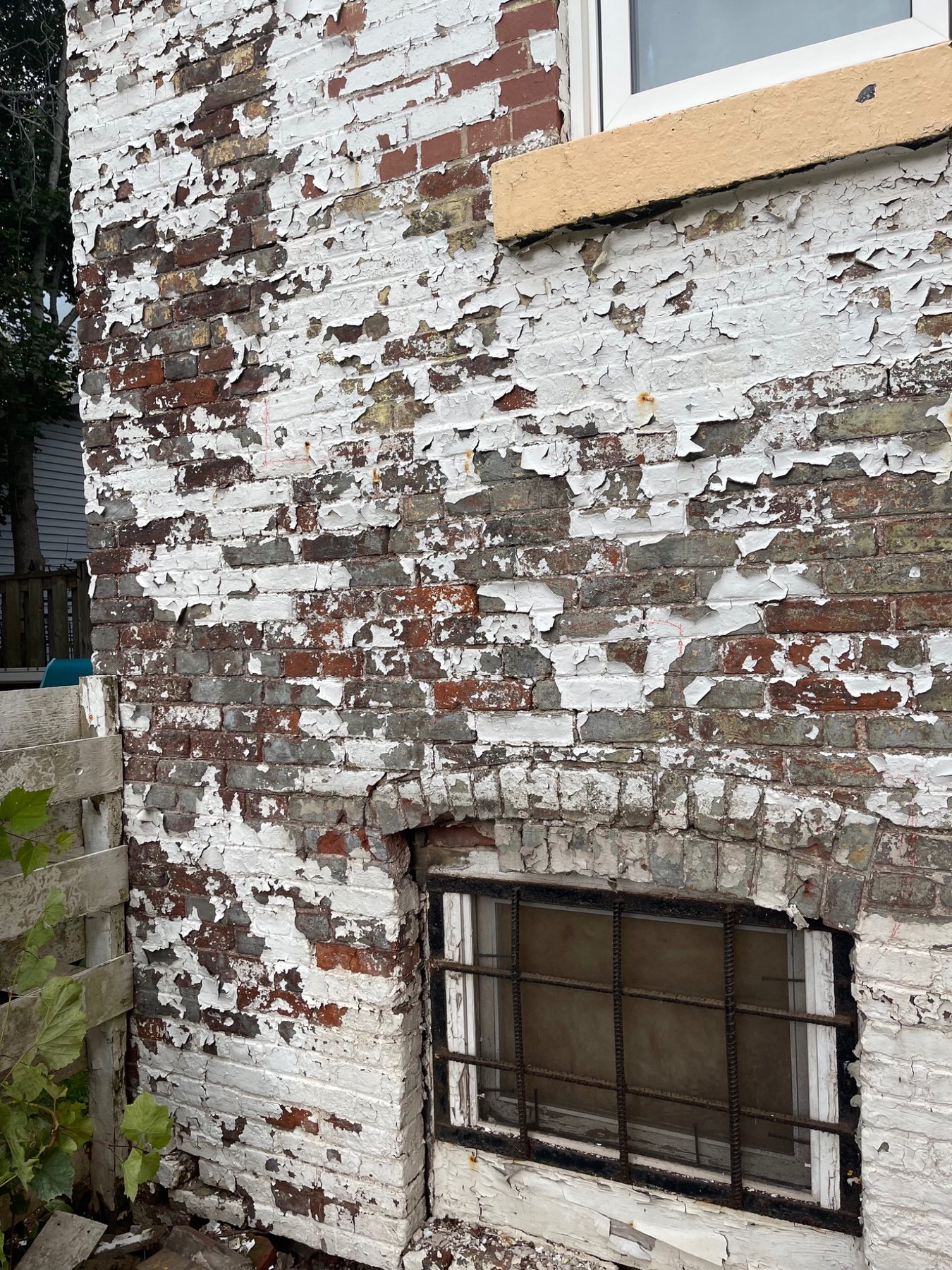
A tempting pressure-washing target: peeling paint or coating can make aggressive washing look like the obvious solution, but the brick and mortar underneath may already be weakened.
A pressure number by itself cannot tell you whether a masonry surface is safe to wash.
Some fired-clay brick can be cleaned with controlled pressurized water, but the method should be tested and should rely on appropriate nozzle distance, water volume and cleaning chemistry rather than brute force.
Weathered faces and softer mortar can be permanently roughened or eroded. Once the fired face of a brick is removed, pressure washing has become masonry damage, not cleaning.
Stone varies enormously. Soft sandstone, weathered limestone, layered stone and deteriorated surfaces can lose grains, flakes or detail under concentrated water.
The correct method depends on the material, its condition, the mortar, the type of staining and the amount of moisture the wall can safely tolerate. Older brick, soft stone, weathered mortar and historic surfaces can be damaged by aggressive pressure even when the damage is not immediately obvious.
A small test area should be cleaned first and allowed to dry before deciding whether a method is suitable for the full wall.
The objective is not to make old masonry look brand new. The objective is to remove unwanted material without removing the masonry surface along with it.
A narrow jet can remove dirt quickly because it is physically cutting and dislodging material. The trouble is that weak mortar, softened brick faces and granular stone can be removed by exactly the same action.
The nozzle can also force water through open joints, cracks, cavities and interfaces that ordinary rainfall may not reach as aggressively. That matters on older walls, around windows, at chimneys and anywhere the drainage path behind the masonry is uncertain.
A visibly “cleaner” strip is not proof the method is working. If the surface texture has changed, grains are collecting at the base of the wall, mortar edges are disappearing or the masonry looks lighter because its face has been stripped, stop.
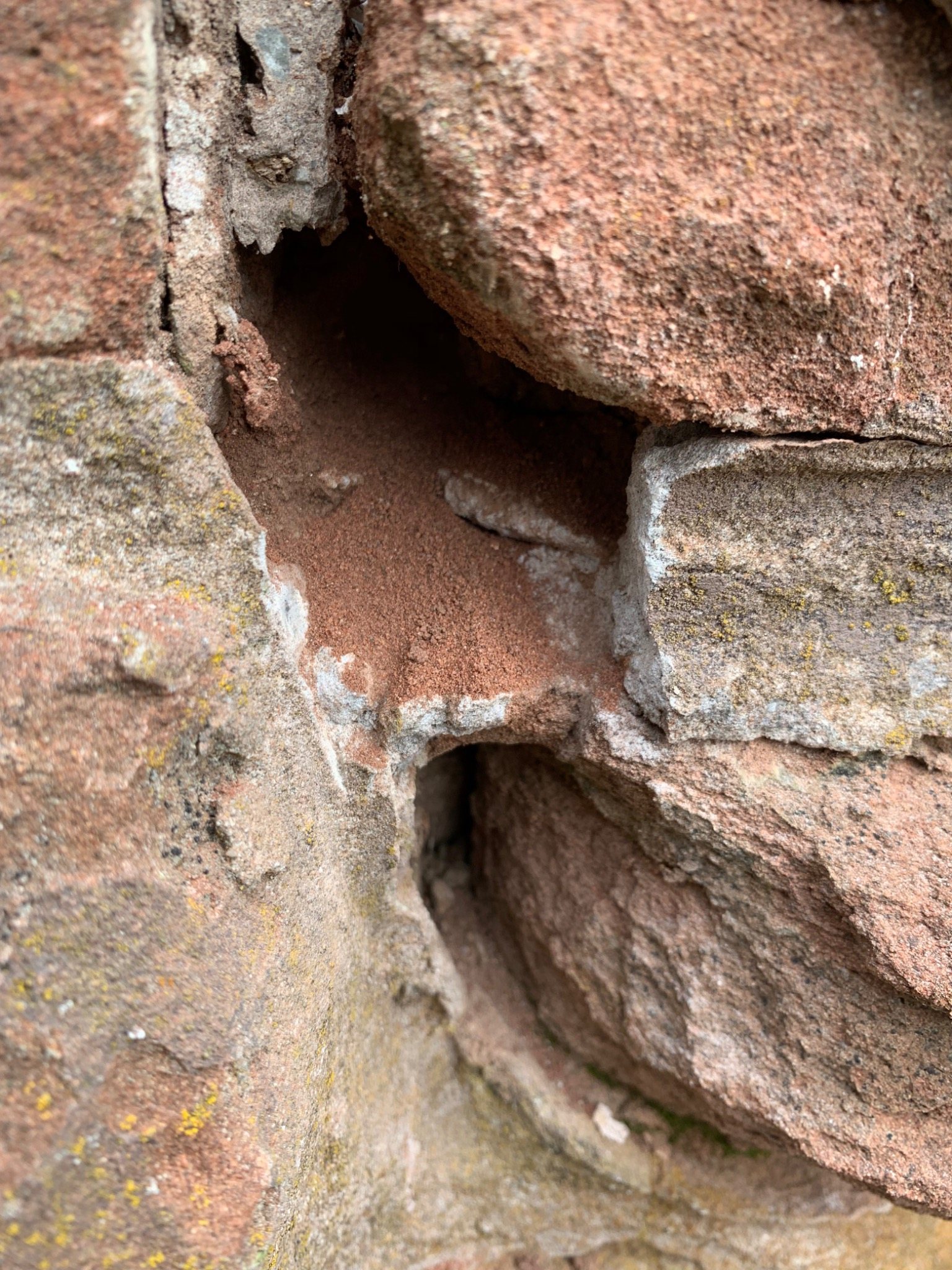
Soft stone changes the risk completely. A sandstone surface that is already losing grains should not be treated as though it were a new concrete walkway.
Historic brick may have a softer body, a weathered fired face and lime-rich mortar joints that can be damaged long before a modern hard brick would show obvious distress.
Natural stone adds another variable. Sandstone can lose grains or layers, limestone can be acid-sensitive, and any stone that is already flaking, scaling or delaminating should be treated as fragile until proven otherwise.
On important heritage masonry, cleaning is a conservation decision. The objective is to remove harmful or objectionable deposits while retaining the original surface, tooling, patina and historic material.
Weathered mortar is usually softer than the brick or stone around it. A pressure washer aimed into the joint can deepen erosion, open small defects and leave the wall with less weather resistance than it had before cleaning.
Even apparently sound joints should be checked for cracking, hollow patches and failed previous pointing. Water driven into those defects can travel behind the face and emerge somewhere else later.
If repointing is already needed, clean and repair planning should be coordinated. It makes little sense to blast deteriorated joints and then discover that the cleaning itself increased the amount of masonry repair required.
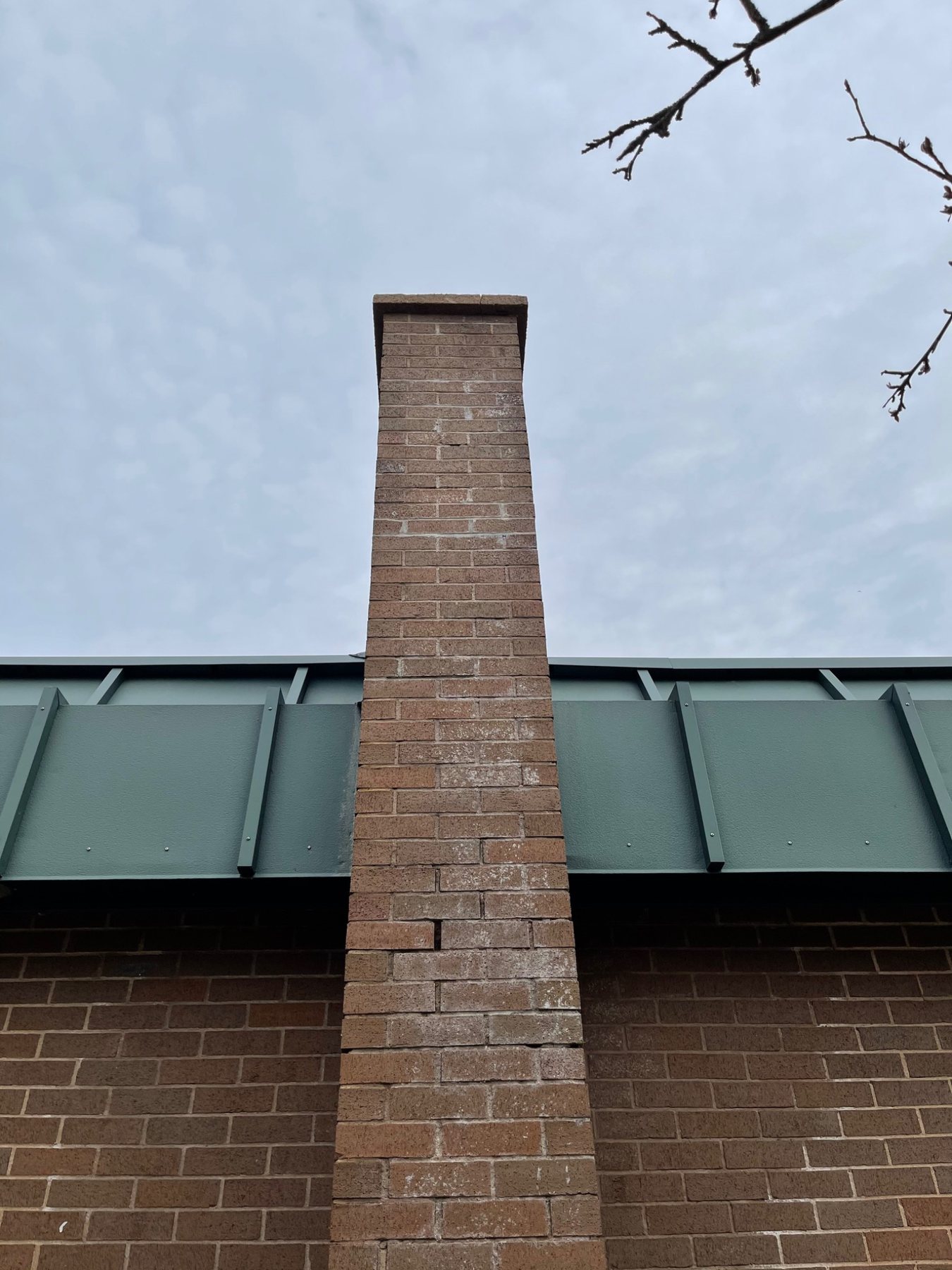
Open joints plus lots of water: an exposed chimney already showing mortar loss and salt movement is a poor candidate for casual high-pressure washing.
The deposit and the substrate determine the method.
Useful for wetting, loosening or rinsing suitable masonry. The water is doing less cutting and more carrying, especially when paired with brushing or a compatible cleaner.
Appropriate products can help loosen oily or general soiling so less mechanical force is needed. The cleaner still needs to suit the masonry and be thoroughly rinsed.
Conservation cleaning may use repeated fine water application to soften certain deposits gradually. It is slow by design and is very different from blasting the surface clean.
Low-pressure hot-water systems can soften some heavy soiling or biological material with less liquid water than prolonged cold-water washing. This is a specialist method, not simply a hot pressure washer setting.
Proprietary cleaners can target specific stains, mortar residues, biological growth or coatings, but material compatibility, dilution, dwell time, protection and rinsing all matter.
Some stains are better treated in a small area than by cleaning the entire wall. Local treatment can reduce the amount of masonry exposed to stronger cleaning methods.
Often a candidate for water, mild detergent and controlled rinsing after a test patch.
Algae, moss and lichen may need a compatible biocidal or detergent treatment and time to work rather than more pressure.
Fireplace and exterior soot can penetrate pores. The cleaning approach should avoid smearing carbon deeper into porous masonry.
White deposits are often telling you moisture is moving through the wall. Diagnose the water source before treating the deposit as a cosmetic problem.
Stripping can expose weak masonry beneath. Chemical, steam or specialist removal may be safer than trying to peel everything off with pressure.
Fresh-construction residues and hardened old smears are different problems. Strong acids or aggressive scrubbing can create permanent colour and surface changes.
Unbuffered muriatic acid is not a sensible universal cleaner. Acid can attack mortar, change colour, create secondary staining and damage acid-sensitive stones. Some proprietary masonry cleaners contain acids too, but they are formulated for particular substrates and deposits and should still be tested.
Brick Industry Association guidance for fired-clay brick emphasizes choosing the cleaning method for the stain and using proprietary cleaners as directed rather than relying on strong unbuffered acid. Those recommendations are for fired-clay brick and should not simply be transferred to limestone, sandstone, concrete masonry or historic mixed masonry.
The useful rule is to let the chemistry do the cleaning where appropriate, rather than compensating for a poor cleaner by scrubbing harder or turning up the pressure.
Do not clean the symptom blindly. Coating failure can be related to moisture moving through the wall, so stripping without diagnosis may only reveal the next repair problem.
A useful test patch uses the same masonry and deposit as the main area, starts with the gentlest reasonable method, and is allowed to dry completely before the result is judged.
Inspect more than cleanliness. Look for changed texture, softened joints, colour loss, streaking, residue, newly exposed pores and whether the wall remains uniformly wet long after the test.
On a larger project, an approved test area becomes the standard for the rest of the work. That keeps the target realistic and helps prevent the pressure or chemical strength from creeping upward as the job progresses.
Heavy washing can saturate brick, stone and mortar, especially where joints are open or the masonry is very absorbent. As the wall dries, dissolved salts may move toward the surface and appear as new efflorescence.
In Atlantic Canada, timing matters too. Water-based cleaning should allow enough drying time before freezing conditions. Saturated masonry that freezes can be more vulnerable to scaling, spalling and cracking.
That is one reason fall “cleanup” with a pressure washer can be a poor trade if a cold stretch is close behind it.
After lots of water: efflorescence can appear as soluble salts are carried toward the surface during drying.
Weathering and patina are not dirt. Trying to make old masonry uniformly new-looking often means removing sound original surface.
A narrow high-energy stream concentrates impact exactly where fragile masonry is least able to tolerate it.
If brick faces, stone grains or mortar are already detaching, the wall needs diagnosis before cleaning.
Recurring salts are usually a moisture clue. Removing the deposit without finding the water path leaves the cause untouched.
Wrong chemistry can alter colour, attack mortar and damage stone even when the stain disappears.
Water-based cleaning can leave masonry wetter than it appears. Give the wall a realistic drying window.
Professional assessment is more useful when the masonry is historic, soft, heavily stained, painted, coated, carved, already deteriorated, or located on a building where a cleaning mistake would be expensive or impossible to reverse.
It is also sensible when the deposit is not obvious. Rust, salts, biological growth, soot, paint and mortar residues all call for different chemistry and different rinse strategies.
The goal is not to use the fanciest equipment. It is to identify the least aggressive system that can achieve an acceptable result and then control it consistently.
Prince Edward Island and the Maritimes combine wind-driven rain, coastal salt exposure, long damp periods and frequent freeze-thaw cycling. Masonry may already be carrying more moisture than its surface suggests.
A cleaning method that adds a large volume of water late in the season can leave the wall saturated just as temperatures begin to fall. On soft stone and older brick, that can turn a cosmetic maintenance job into accelerated winter deterioration.
The practical regional approach is conservative: identify the deposit, test the gentlest method, keep water out of open defects and give the wall time to dry.
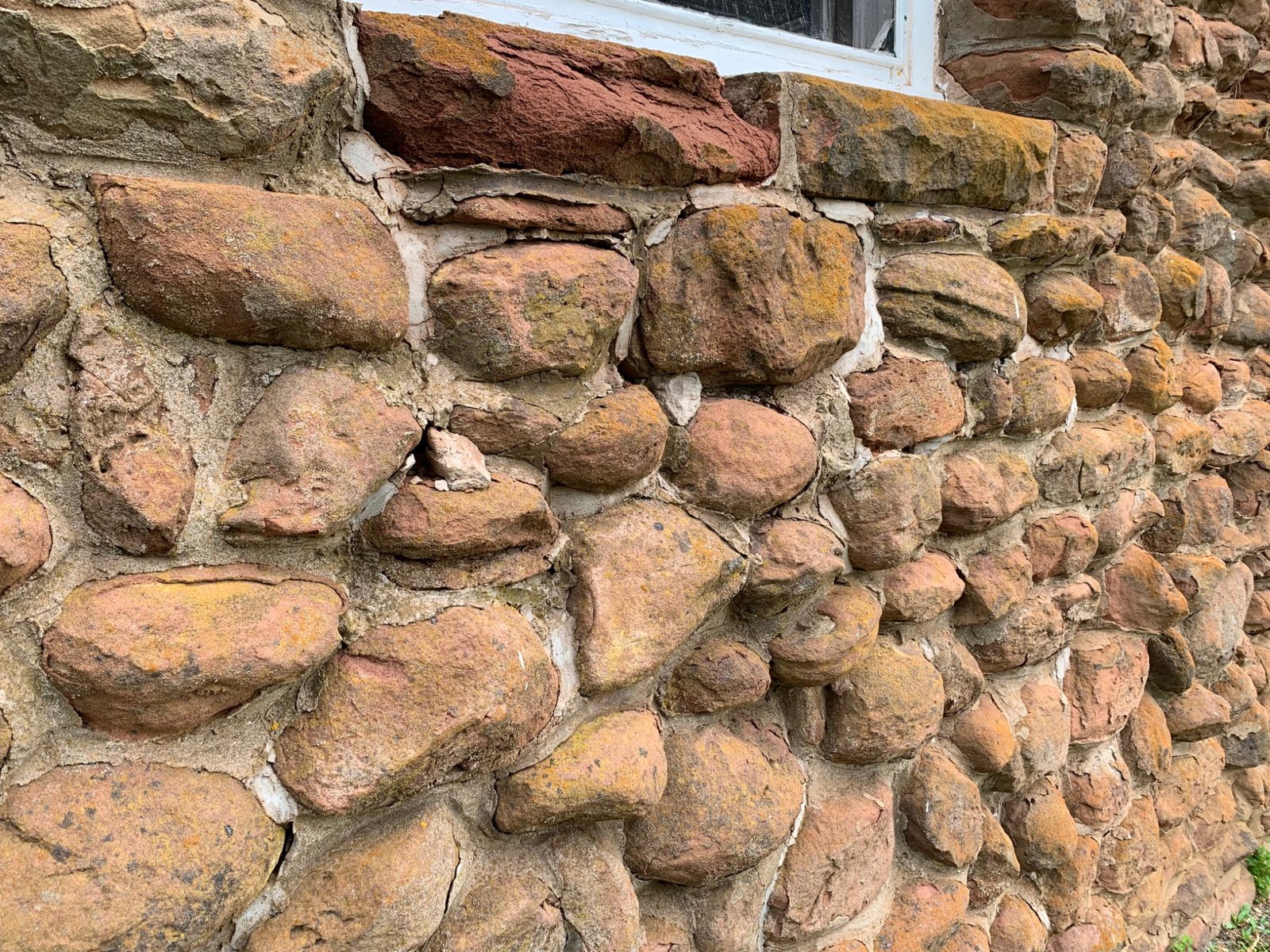
Old masonry does not need to look new. The cleaning target should preserve sound surface and historic character rather than erase every sign of age.
The Brick Industry Association's Technical Note 20 covers cleaning fired-clay brickwork and recommends trial cleaning, protection of adjacent materials, appropriate cleaners and controlled water rinsing. Its brick-specific recommendations should not be treated as universal guidance for every stone or historic masonry material.
National Park Service Preservation Brief 1 discusses water washing, soaking or misting, detergents, low-pressure hot-water or steam cleaning, chemical methods and test areas for historic masonry. Preservation Brief 6 explains how abrasive cleaning, including overly aggressive water pressure, can permanently damage historic surfaces.
Parks Canada's conservation standards reinforce the broader principle of minimal intervention and retention of repairable character-defining material on historic places.
Brick Industry Association: Technical Note 20, Cleaning Brickwork →
National Park Service: Preservation Brief 1 →
Dean is a third-generation mason with more than 20 years of hands-on experience working with brick, natural stone, chimneys, foundations, repointing, moisture problems and heritage restoration in Prince Edward Island.
The DinoMac Masonry Knowledge Centre uses that field experience to explain masonry conditions and repair decisions that are also relevant across Atlantic Canada.
Last reviewed: August 28, 2026
Possibly, if the brick and mortar are sound and a controlled test proves the method is not changing the surface. Do not assume a safe setting from another building will be safe on yours.
Be much more cautious. Soft, layered, weathered or deteriorating stone can lose grains and detail under concentrated water.
Yes. Weak joints can erode quickly and open pathways for more water to enter the wall.
Heavy saturation can move soluble salts toward the surface as the wall dries, producing efflorescence.
Low-pressure hot-water or steam systems can be gentler for some deposits and stones, but they are specialist methods selected after testing, not a universal replacement for pressure washing.
Coordinate the two. If joints are failing, aggressive washing may enlarge the repair scope. The cleaning and mortar plan should be considered together.
Include the whole wall or feature, the brick or stone surface, mortar joints, the stain or coating you want removed and the PEI property location. DinoMac can help identify whether the visible condition looks like routine soiling, moisture staining, coating failure or masonry deterioration that should be repaired before cleaning.