Serving Prince Edward Island 902-940-6963  •  contact@dinomac.ca
Brick Wall Movement Guide

Why Is My Brick Wall Bulging? Wall Ties, Corrosion and Masonry Movement

A brick wall that bows, bulges or moves outward should not be treated as a mortar-joint problem until the reason for the movement is understood. Failed or deteriorated wall ties can be one cause, but they are far from the only one.

Brick veneer, cavity walls and older solid masonry walls are built differently. Corroding embedded metal, loss of connection between wall layers, movement at foundations or openings, roof thrust, moisture damage and previous alterations can all produce outward displacement that looks similar from the street.

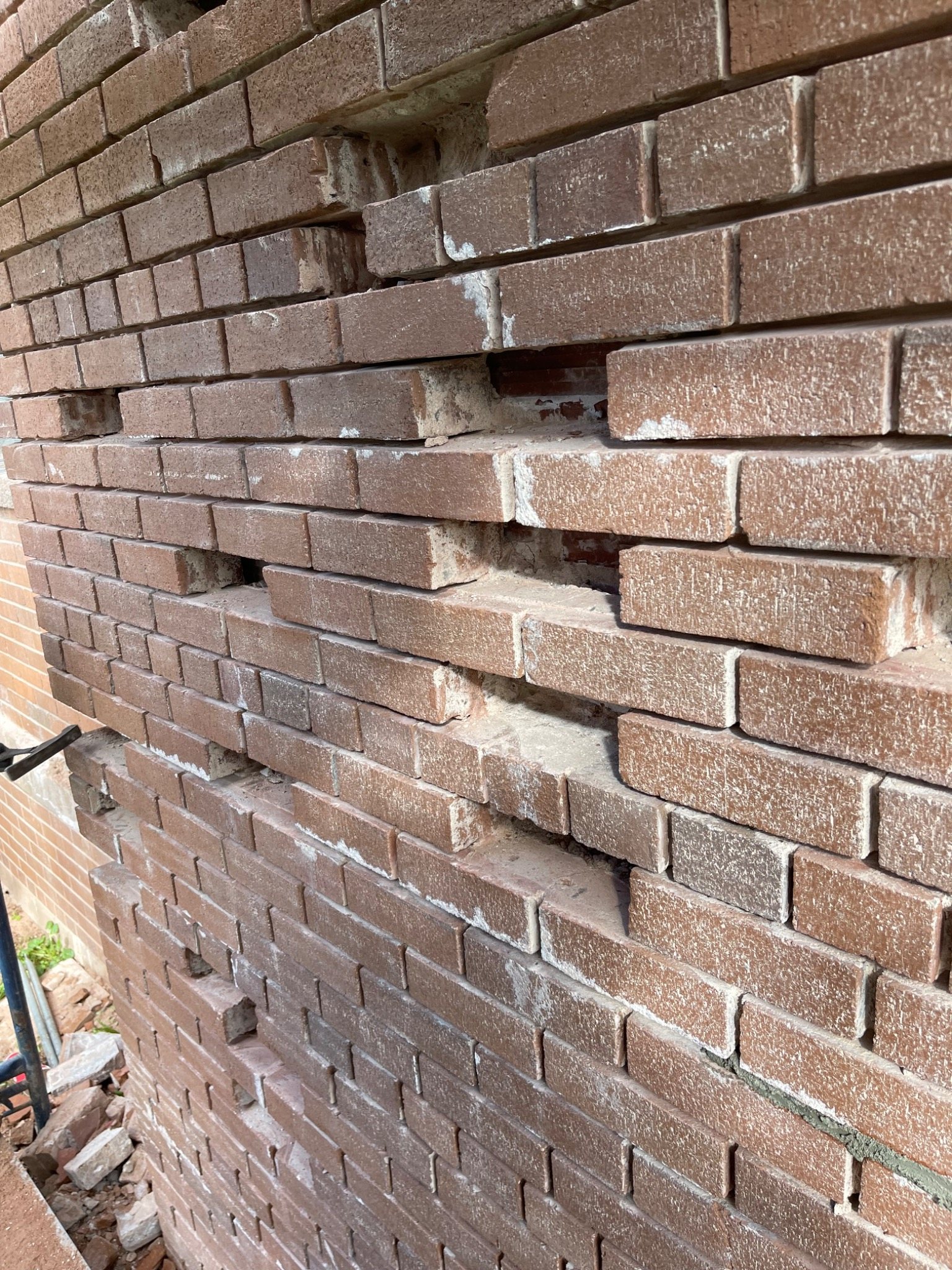
Brick masonry wall with severe outward displacement and opened joints

Displacement matters more than a single crack measurement. Once courses have visibly shifted out of plane, the question becomes why the wall moved and how it is being supported, not simply how to fill the open joints.

A bulge is a symptom of movement. Wall ties are one possible cause, not an automatic diagnosis. When Is It Urgent?
First Question

Is the wall brick veneer, a cavity wall or solid masonry?

The same outward shape can have very different causes depending on how the wall was built.

Brick veneer

A veneer is a non-loadbearing outer masonry layer connected back to a structural backing system with anchors. If the veneer loses adequate restraint or the backing moves, the brick can move outward even while many individual bricks still look sound.

Cavity masonry wall

Two masonry wythes may be connected with metal ties across a cavity. Deteriorated ties, corrosion, moisture and differential movement between the wythes can all affect how the wall behaves.

Solid multi-wythe masonry

Older walls may contain several bonded or tied wythes of brick. Separation between wythes, decayed headers or ties, roof or floor movement, foundation movement and moisture damage can create bulging without the wall being modern veneer at all.

This distinction is why a wall-tie repair should not be specified from a photograph alone. The Brick Industry Association describes wall ties and veneer anchors as components that connect masonry wythes or anchor a masonry veneer to its backing. Their configuration and corrosion resistance matter to the wall system, but the existing construction still has to be identified before a repair is designed.

How does a brick veneer wall work? →

How does a solid masonry wall work? →

Possible Causes

What can make a brick wall bulge or bow outward?

More than one mechanism may be present on the same building.

Wall ties or veneer anchors

In tied or anchored construction, deteriorated, missing, poorly engaged or inadequate connections can reduce restraint between the brick and the backing or between masonry wythes.

Corroding embedded metal

Steel lintels, reinforcement, ties or other embedded metal can corrode when moisture reaches them. Corrosion can contribute to cracking, displacement and loss of effective connection.

Separation between wall layers

Older multi-wythe walls can separate internally when connections deteriorate or when repeated moisture and movement weaken the relationship between wall layers.

Foundation or support movement

Settlement, rotation, inadequate support or a changing bearing condition can shift the masonry above it. The bulge may be only one visible part of a larger movement pattern.

Roof or floor thrust

Structural framing can push outward on masonry when ties, supports or framing connections are missing, altered or failing. In those cases the repair starts with the structural cause.

Moisture and freeze-thaw deterioration

Water can weaken mortar, accelerate corrosion and damage masonry units. Moisture may not be the only cause of movement, but it often accelerates the conditions that allow movement to progress.

Movement around openings

Deflecting or corroding lintels, failed arches or altered openings can produce localized cracking and outward displacement above doors and windows.

Thermal and moisture movement

Brick expands and contracts with changes in temperature and moisture. If movement is restrained or joints and details cannot accommodate it, stresses can contribute to cracking and displacement.

Previous alterations

Removed walls, changed openings, added loads, new framing or incompatible repairs can change how forces move through an older masonry building.

Wall Ties & Anchors

What do wall ties actually do?

Wall ties connect masonry wythes to one another. Veneer anchors connect an exterior masonry veneer to a backing system. They are not visible on a finished wall, but they are part of what allows the different layers to act safely together while still accommodating appropriate movement.

The Brick Industry Association's Technical Note 44B covers wall-tie configuration, structural performance and corrosion resistance. The important homeowner takeaway is that tie condition is a hidden-wall question. A bulge may justify investigation of ties, but the bulge itself does not prove that tie corrosion is the cause.

Depending on the building, investigation may include reviewing wall construction, examining accessible cavities or backing, selective openings, borescope inspection, metal detection or other methods chosen by the mason or engineer. The amount and type of investigation should match the seriousness of the movement.

Do Not Skip This Step

Confirm the wall system before choosing a tie repair.

Identify veneer, cavity or solid masonry construction
Look for movement at openings, floors, rooflines and foundations
Check whether the bulge is localized or extends across the elevation
Consider moisture and corrosion paths
Determine whether structural design input is needed
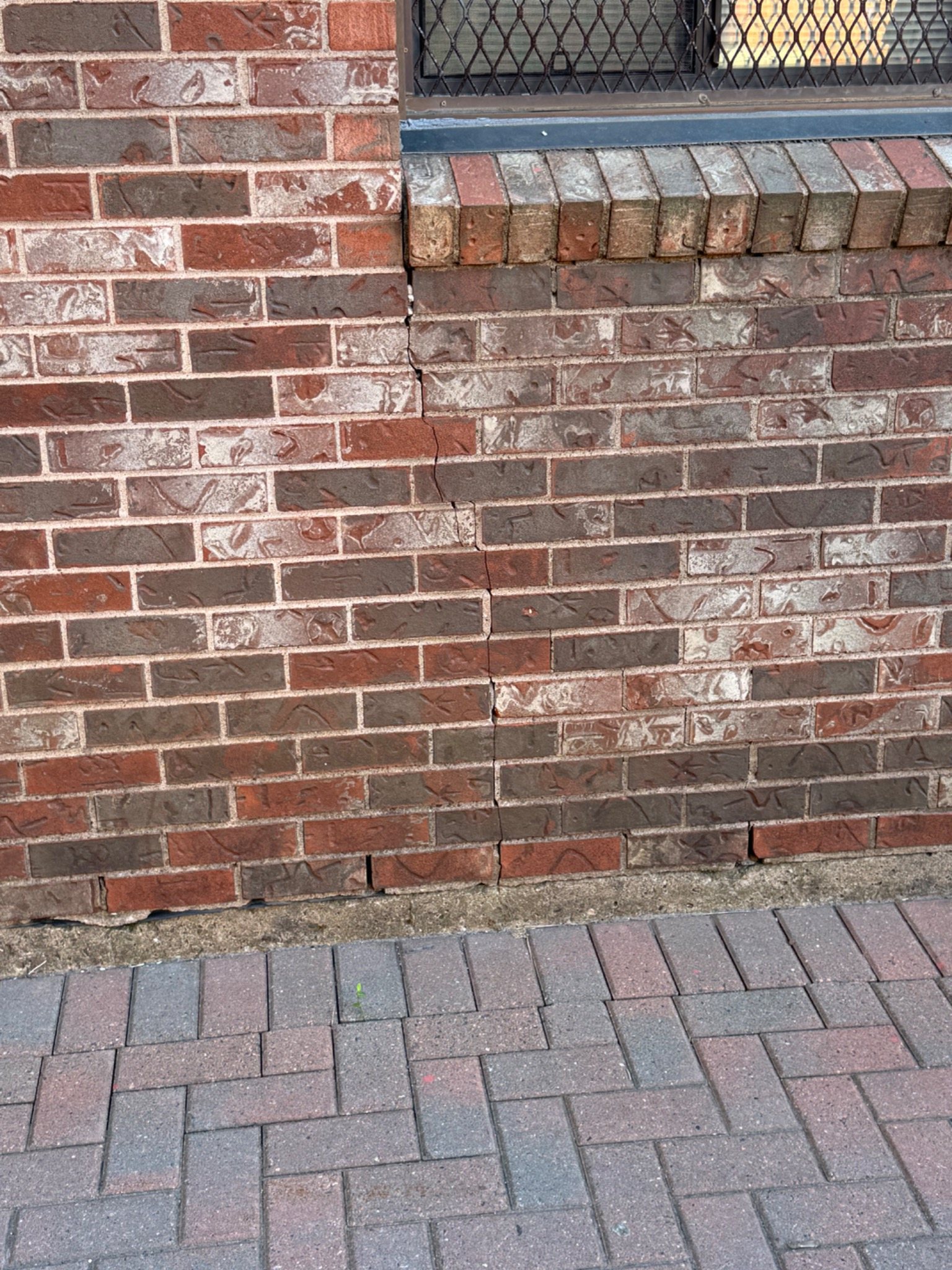
Brick wall with a vertical crack beside an opening

Crack location is part of the story. Cracking beside or above an opening can involve lintels, support, differential movement or other conditions. It should not automatically be attributed to wall ties.

Cracks Around the Bulge

The crack pattern helps describe movement, but it still does not identify the cause by itself.

Bulging walls may develop horizontal cracks, stair-step cracks, vertical cracks, opened bed joints, cracked units or separation where the wall meets another material. The pattern can help establish where movement is occurring and which building components deserve closer inspection.

The National Park Service recommends observing masonry for bowing, sweeping, leaning, cracking, spalling and mortar deterioration and distinguishing solid masonry from cavity or veneer construction before trying to interpret the problem.

There is no single crack width that tells a homeowner whether a wall is safe. Visible displacement, progression, loose masonry, location, building construction and the cause of movement matter more than applying one universal number.

What do different masonry crack patterns mean? →
Corrosion

Why does hidden steel matter in a masonry wall?

Moisture reaches the metal

Water can enter around sills, flashing, failed joints, copings, roofs, openings or other defects and reach steel that was intended to remain protected within the wall.

The metal deteriorates

Corrosion reduces the condition of the metal component and can also create stresses within the surrounding masonry. The visible symptom may be cracking, staining, displacement or loosened units.

The water source remains important

Replacing or supplementing metal connections without addressing persistent water entry can leave the wall exposed to the same deterioration mechanism.

The National Park Service includes corrosion of iron and steel reinforcement among the conditions that can cause cracking in masonry. On a bulging wall, corrosion is therefore one possibility to investigate, particularly where rust staining, cracks at metal locations or chronic water exposure are also present.

What Will Not Fix the Cause

Why is simply filling the cracks or repointing the wall often not enough?

Mortar can repair joints. It cannot pull a displaced wall back into a safe relationship with the building.

Repointing the visible joints

If the masonry has moved, new mortar may make the cracks look better without correcting the movement, restraint or support problem behind them.

Caulking the crack

Sealant may have a role in a designed movement joint, but filling a structural or displacement crack does not explain why the wall changed position.

Coating the wall

Paint or waterproof coatings do not restore missing restraint or correct structural movement and may interfere with drying if moisture is already trapped within the masonry.

Safety

When should a bulging brick wall be treated as urgent?

Prompt assessment is appropriate when masonry is visibly leaning or bulging, displacement appears to be increasing, bricks or mortar are loose or falling, the wall has separated from the building, or movement is occurring over an entrance, sidewalk or other occupied area.

Keep people and vehicles away from an area where masonry may fall. Do not rely on temporary pointing, surface sealants or cosmetic patching to make visibly unstable masonry safe.

How the Repair Is Chosen

The repair depends on the cause and on how much sound masonry can remain.

A localized veneer problem may be approached very differently from a multi-wythe historic wall, a corroded lintel, a wall being pushed by roof framing or a foundation movement problem. The repair may involve masonry dismantling and rebuilding, new or supplemental anchors, steel repair or replacement, structural stabilization, drainage corrections, repointing or a combination of work.

It is also possible for the most appropriate repair to preserve much of the existing brick. A bulge does not automatically mean the entire elevation has to be demolished, but neither should the wall be assumed repairable by mortar alone.

Where significant movement, support or loading is involved, a structural engineer may need to establish the stabilization or repair design before the mason completes the masonry work.

When do you need a mason, a structural engineer or both? →

Useful Inspection Information

Photograph more than the bulge.

Whole elevation from far enough away to see the wall plane
Side-angle photographs that show the amount of projection
Cracks, loose units and open joints
Windows, doors, lintels and roofline above the area
Foundation and grade below the area
Water sources such as downspouts, flashings and leaking sills

What photos should you send for a masonry estimate? →

Atlantic Canada Context

Why moisture exposure can make existing movement problems worse.

Wind-driven rain, freeze-thaw cycling, coastal exposure and long wet periods can increase the amount of moisture entering masonry in Atlantic Canada. That moisture can accelerate mortar and unit deterioration and contribute to corrosion of concealed metal components.

The climate does not tell you why a particular wall is bulging. It does explain why water-management defects deserve attention as part of the investigation, especially on exposed elevations, around openings and where roof runoff repeatedly wets the same masonry.

How does water damage masonry? →

How does freeze-thaw damage masonry? →

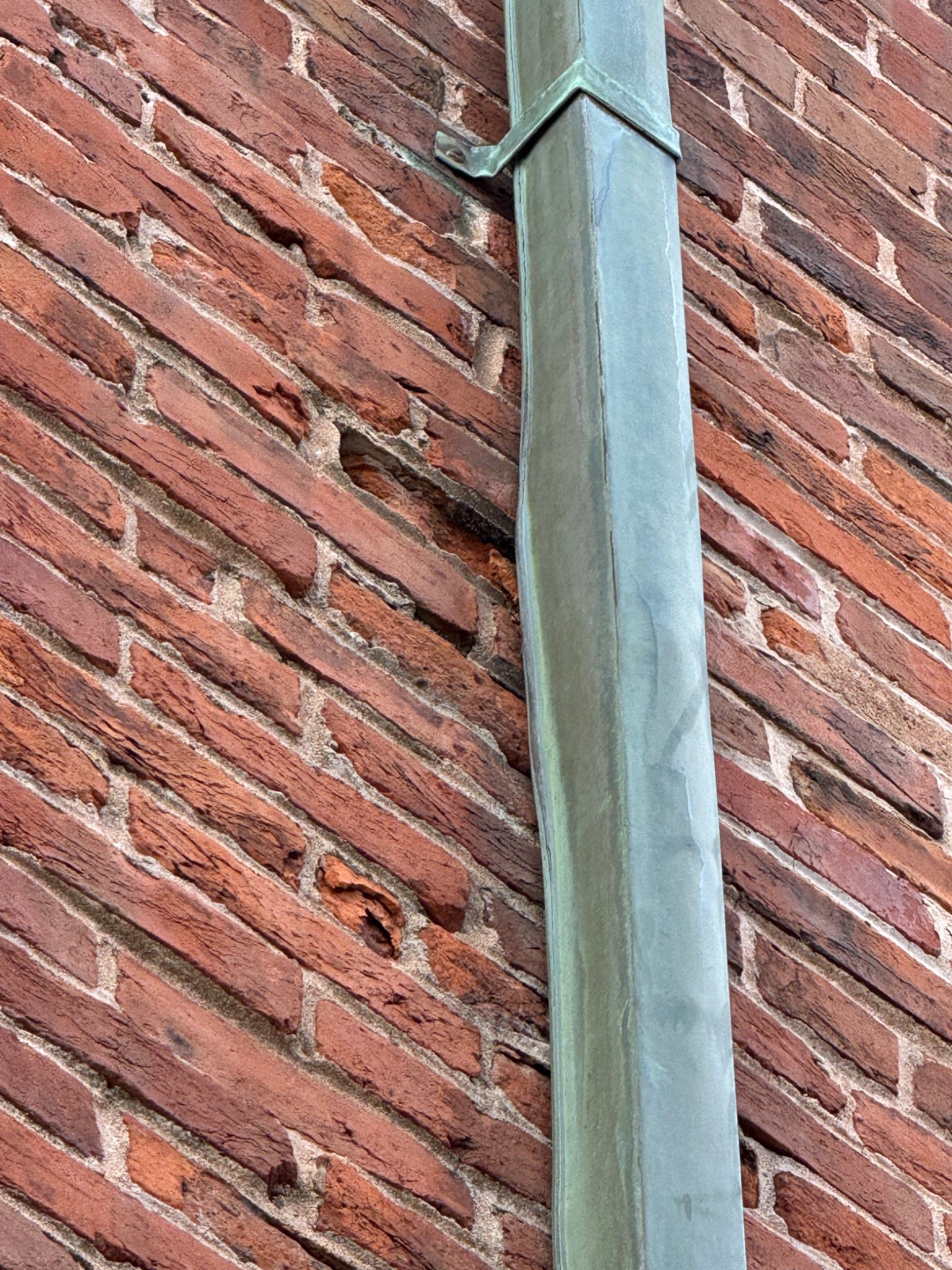
Weathered brick masonry near a downspout showing prolonged water exposure

Water may be an accelerator rather than the only cause. Drainage, flashing and repeated wetting should be checked alongside the wall's structural and masonry condition.

Frequently Asked Questions

Common homeowner questions about bulging brick walls

Why is my brick wall bulging?

Possible causes include loss of wall restraint, tie or anchor deterioration, corrosion, movement between wall layers, support or foundation movement, roof thrust, lintel problems, moisture deterioration or previous alterations.

Does a bulge always mean failed wall ties?

No. Wall ties are only one possible explanation. The wall's construction should be identified before deciding whether ties are even part of the system being investigated.

Can repointing fix a bulging wall?

Repointing replaces mortar. It does not correct the reason the masonry moved outward. The movement or restraint problem should be dealt with first.

Is a bulging wall dangerous?

It can be. Visible leaning, increasing movement, loose masonry, falling material or separation over an occupied area deserves prompt assessment.

Who should inspect it?

A mason can assess masonry condition and repair feasibility. A structural engineer should be involved where support, loading, wall stability or structural design is part of the problem.

Can veneer bulge even if the bricks look good?

Yes. The visible brick can remain relatively sound while restraint to the backing has deteriorated or the backing itself has moved.

Technical References

Further reading on wall ties, corrosion and masonry movement

Brick Industry Association

Technical Note 44B, Wall Ties for Brick Masonry, covers wall-tie function, configuration, structural performance and corrosion resistance in masonry construction.

BIA Technical Note 44B →

National Park Service

Common Problems with Brick Masonry discusses bowing, sweeping, leaning, cracking, structural displacement, roof thrust, corrosion and the importance of identifying wall construction.

NPS brick masonry guidance →
Brick Wall Moving Outward?

Send wide photographs before focusing only on the cracks.

Include the full elevation, side-angle photographs showing the wall plane, close-ups of cracks and loose masonry, plus the roofline, openings, foundation and drainage conditions around the affected area.

Contact DinoMac Masonry
About This Guide

Prepared from masonry field experience and technical references.

Prepared by Dean MacArthur, DinoMac Masonry Ltd., a third-generation mason with more than 20 years of hands-on masonry experience.

The photographs on this page show real masonry conditions but are used to illustrate visible displacement and cracking, not to diagnose a hidden tie or structural failure from a photograph alone.

Reviewed August 26, 2026.

Need help deciding who should assess the wall?

The mason-versus-engineer guide explains where masonry assessment ends and structural design begins.

Mason or Structural Engineer?