Moisture from behind
Rain penetration, flashing defects, rising damp, roof runoff or interior moisture can push vapour and salts toward the painted surface.
Paint can completely change the appearance of brick or stone, but it also changes how the surface handles rain and drying. When coatings begin to blister, peel or trap salts, the masonry underneath may be telling you that the problem is more than old paint.
The most important question is whether the coating is failing by itself or because moisture and deterioration are pushing it off from behind.
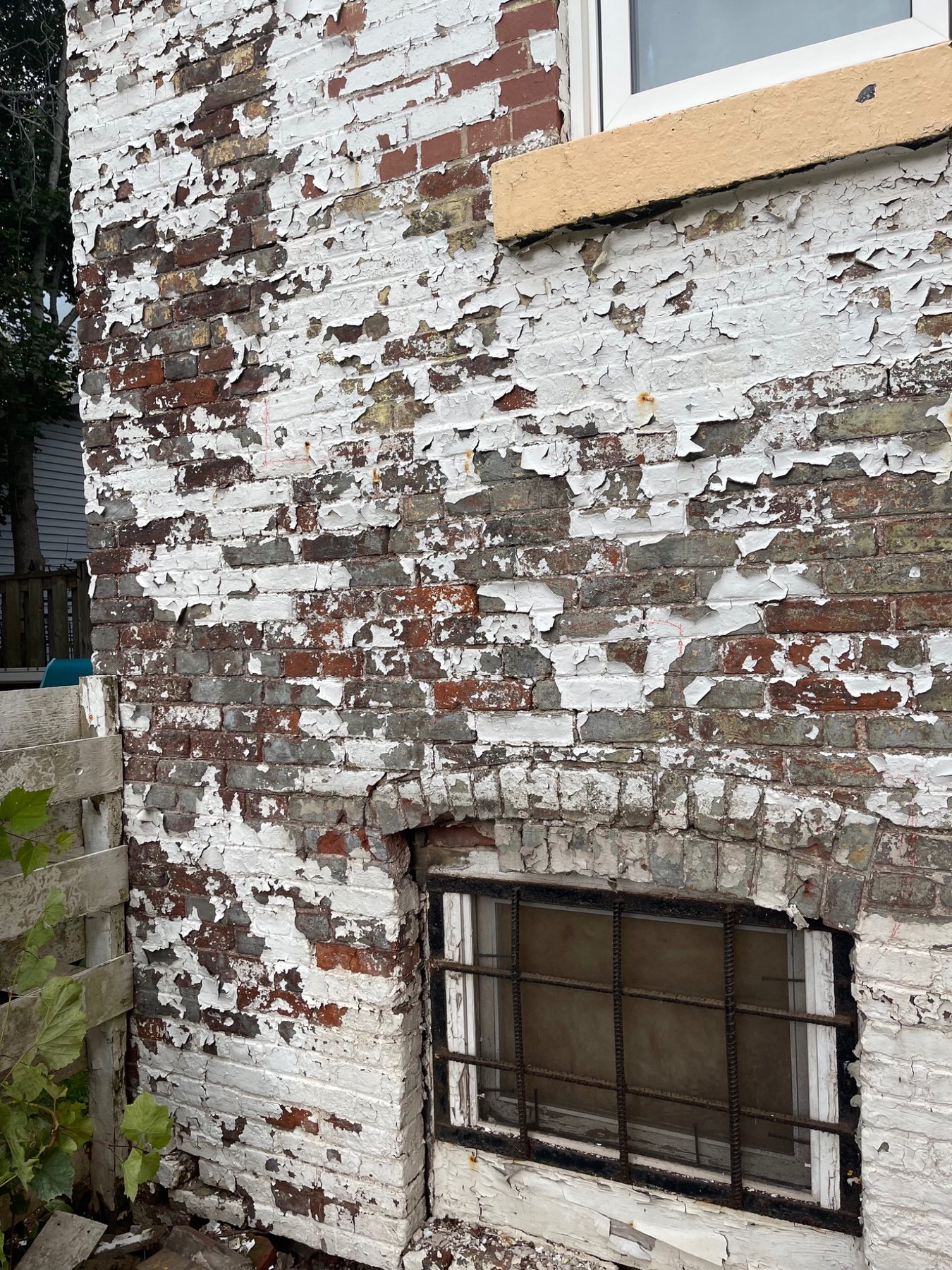
Peeling paint is evidence. Before scraping and repainting, look for water, salts and damaged masonry under the coating.
Rain penetration, flashing defects, rising damp, roof runoff or interior moisture can push vapour and salts toward the painted surface.
Salts transported by moisture can accumulate below a coating and contribute to blistering, powdering and loss of adhesion.
When a coating slows drying, wet masonry may remain saturated long enough for winter freezing to accelerate surface loss.
Dust, chalking, old coatings, biological growth or loose mortar can prevent a new coating from bonding well.
Very dense films can reduce drying much more than traditional masonry tolerates, especially on older solid walls and soft stone.
Paint cannot stop a spalling brick face, crumbling sandstone or loose mortar joint from continuing to deteriorate underneath.
Exterior brick is designed to absorb and release some moisture. If water enters through joints, flashing or the back of the wall and the painted face dries slowly, deterioration can occur beneath the coating.
When paint is removed from spalled brick, the masonry may be rougher and weaker than expected because the fired outer face has already been lost. Repainting over that surface can delay recognition of the underlying deterioration.
Look below the film. The important condition is the brick and mortar underneath, not just whether the paint is peeling.
Sandstone and other softer stones may have uneven pore structures, weathered faces and delicate bedding planes. Paint can penetrate below the immediate surface, making complete removal difficult without taking some stone with it.
That is why aggressive blasting, grinding or high-pressure washing can cause more permanent damage than the coating itself. A slightly mottled result after careful removal may be a better conservation outcome than a uniformly stripped but heavily eroded surface.
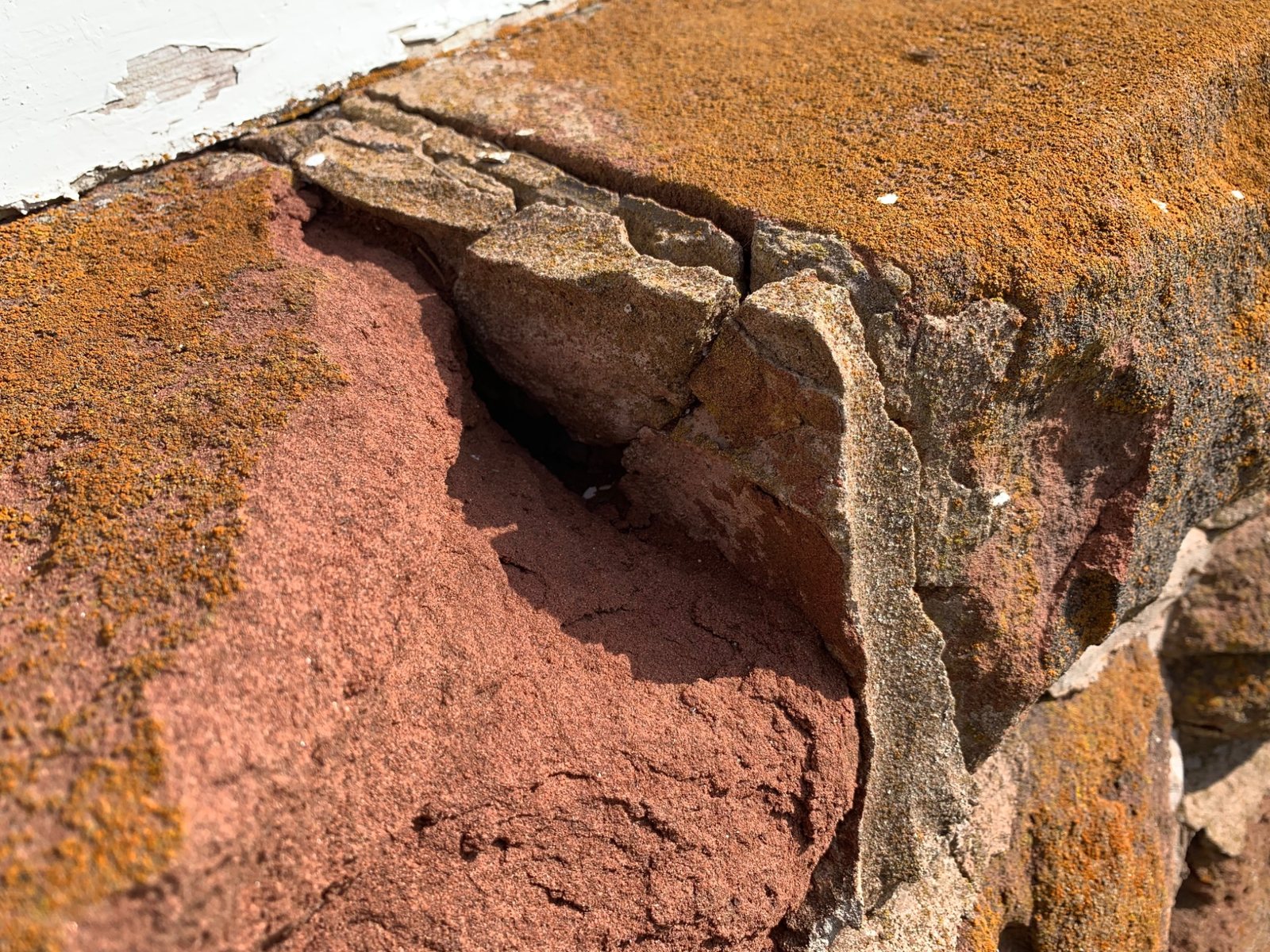
Soft stone needs restraint. Removal methods should be judged by what they do to the stone, not only by how fast the paint disappears.
Useful for loose flaking paint where the masonry surface is sound. Scrapers should not gouge soft brick or stone.
Can soften coatings for removal, but product chemistry, dwell time, neutralization, rinsing and adjacent materials all matter. Always test first.
Specialist systems can sometimes soften coatings or residues with less mechanical force than blasting, but they still require testing and trained use.
May support chemical removal after the coating is softened, but should not be confused with using pressure itself to strip paint.
Sandblasting, aggressive media blasting and grinding can permanently remove brick face, mortar and stone texture. They are generally inappropriate for fragile historic masonry.
Different elevations and repair generations can react differently. Test where the masonry condition and coating build-up actually vary.
A pressure washer can remove loose coating quickly, but it can also erode mortar, remove the fired surface of brick, roughen soft stone and drive water into cracks and cavities.
If water is used as part of a controlled cleaning or stripping process, the pressure should be limited to what the masonry can tolerate and the surface should already have been tested. The objective is rinsing, not blasting.
Once loose coating is removed, inspect mortar joints, brick faces, cracks, stone surfaces, lintels, sills, flashing and areas of recurring dampness. Repairing these defects before a new coating is applied gives the wall a chance to dry and prevents a fresh finish from immediately hiding the evidence again.
Mortar compatibility remains important. If the wall contains older soft brick or stone, hard cement-rich patching can create a new problem under the next coating.
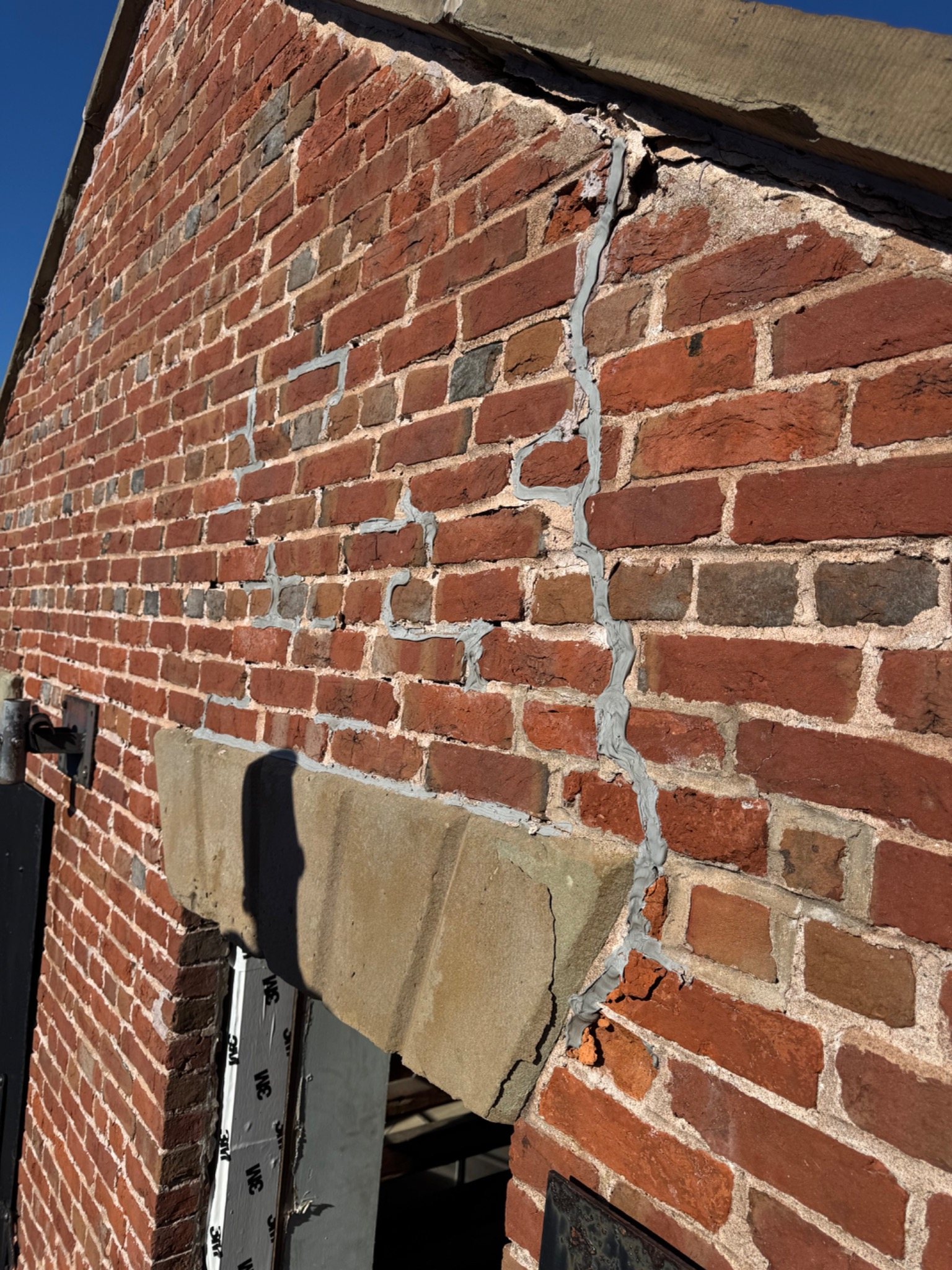
Previous repairs matter. Coating removal often reveals patches and incompatible work that should be addressed before refinishing.
Painted masonry that has been coated for decades may never return to a perfectly unpainted appearance without damage. If the existing wall is sound and a compatible coating system has performed well, repainting can be a reasonable choice after repairs and preparation.
On important historic masonry, the significance of the painted finish should also be considered. Not every coating is an accidental modern mistake. Some historic masonry was intentionally painted or limewashed.
The key is to distinguish paint as an architectural finish from paint being used to conceal a water or deterioration problem.
Paint is also a future-substrate decision. If brick or stone veneer may later be installed over the surface, the coating can affect adhesion and preparation requirements. Depending on the selected veneer system, the coating may need to be removed back to a sound mineral surface, the masonry may need repair first, or a separate compliant backing system may be required.
Wind-driven rain, wet shoulder seasons and freeze-thaw cycling make moisture management especially important across the Maritimes. A coating system that works on a sheltered dry wall may perform very differently on an exposed elevation that receives repeated saturation.
Inspect roof runoff, flashings, sills, parapets, chimney tops and grade before blaming the paint alone. Those are often the places delivering water to the wall.
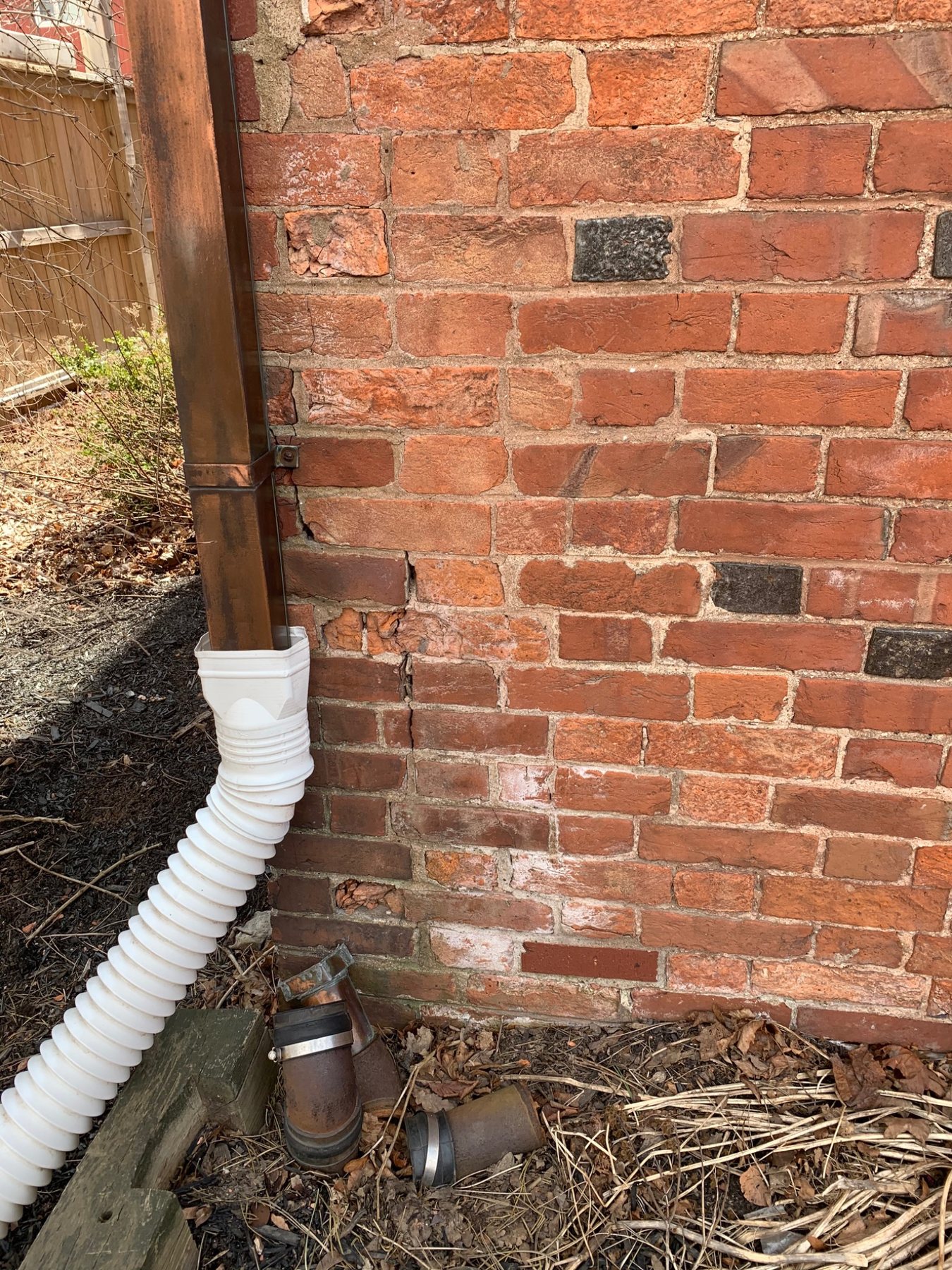
Follow the water. Coating failure below a drainage defect is often a water-management clue rather than a paint-brand problem.
National Park Service Preservation Brief 1 recommends the gentlest cleaning method that is effective and warns against treatments that damage the masonry surface. Preservation Brief 39 emphasizes correcting unwanted moisture sources instead of sealing them into historic walls.
NPS Preservation Brief 1: Cleaning Historic Masonry →
Dean is a third-generation mason with more than 20 years of hands-on experience working with brick, stone, mortar, moisture problems and heritage restoration in Prince Edward Island.
Last reviewed: August 28, 2026
Moisture, salts, preparation, coating compatibility or deterioration in the masonry itself may all be involved.
Not always completely. Safe removal may leave some colour in pores rather than sacrificing the masonry surface.
Abrasive blasting can permanently damage brick face, soft stone and mortar and should not be treated as a routine solution.
Yes in appropriate cases, once moisture sources and damaged masonry have been addressed and a suitable coating system is selected.
Include wide views, close-ups of peeling or blistering, masonry underneath, joints, nearby sills and flashing, roof drainage and the PEI property location. DinoMac can help identify whether the coating is failing by itself or because of a deeper masonry or moisture problem.