1. Is the unit stable?
Loose, fractured or displaced masonry requires more intervention than a weathered but stable face.
Old masonry often looks worse before it is actually beyond repair. Weathered faces, uneven joints, old patches and localized cracking can coexist with a wall that still has a large amount of sound original material.
The right question is what still works, what has actually failed, and how much intervention is needed to make the masonry durable again?
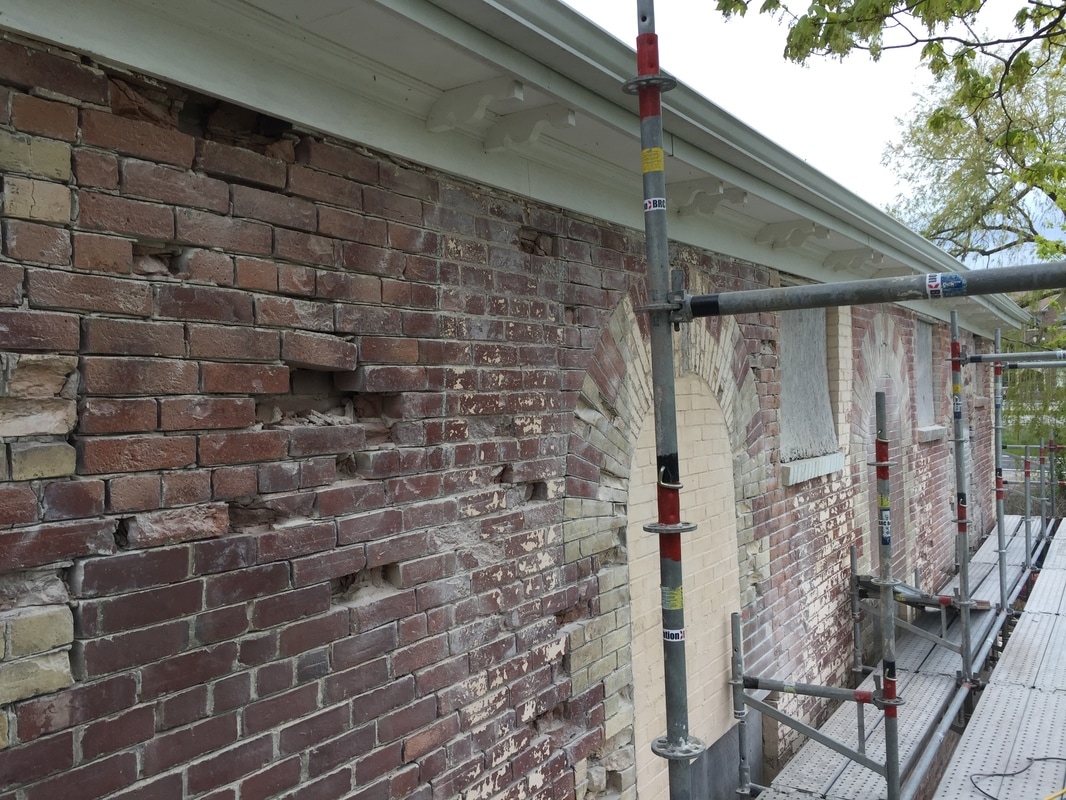
Old does not mean failed. The best repair keeps sound masonry in service while replacing only what can no longer perform.
That approach protects useful original material without pretending severely failed masonry can be saved by appearance alone.
Suitable when units remain sound enough and the main problems are mortar loss, water entry, localized damage or previous incompatible repairs.
Suitable where individual brick or stone units have lost too much material, bearing or water-shedding geometry to remain reliable.
Necessary where movement, wall separation, failed support or widespread instability means the masonry has to be reconstructed, often with salvageable original units reused.
Older brick and stone often develop rounded edges, colour variation, staining, shallow surface loss and irregular joints. Those changes may be evidence of age without meaning the masonry has lost its ability to perform.
Concern increases when material loss is deep and active, units are loose, walls are bulging, cracks are widening, lintels are failing, or water is entering through a detail that no longer works.
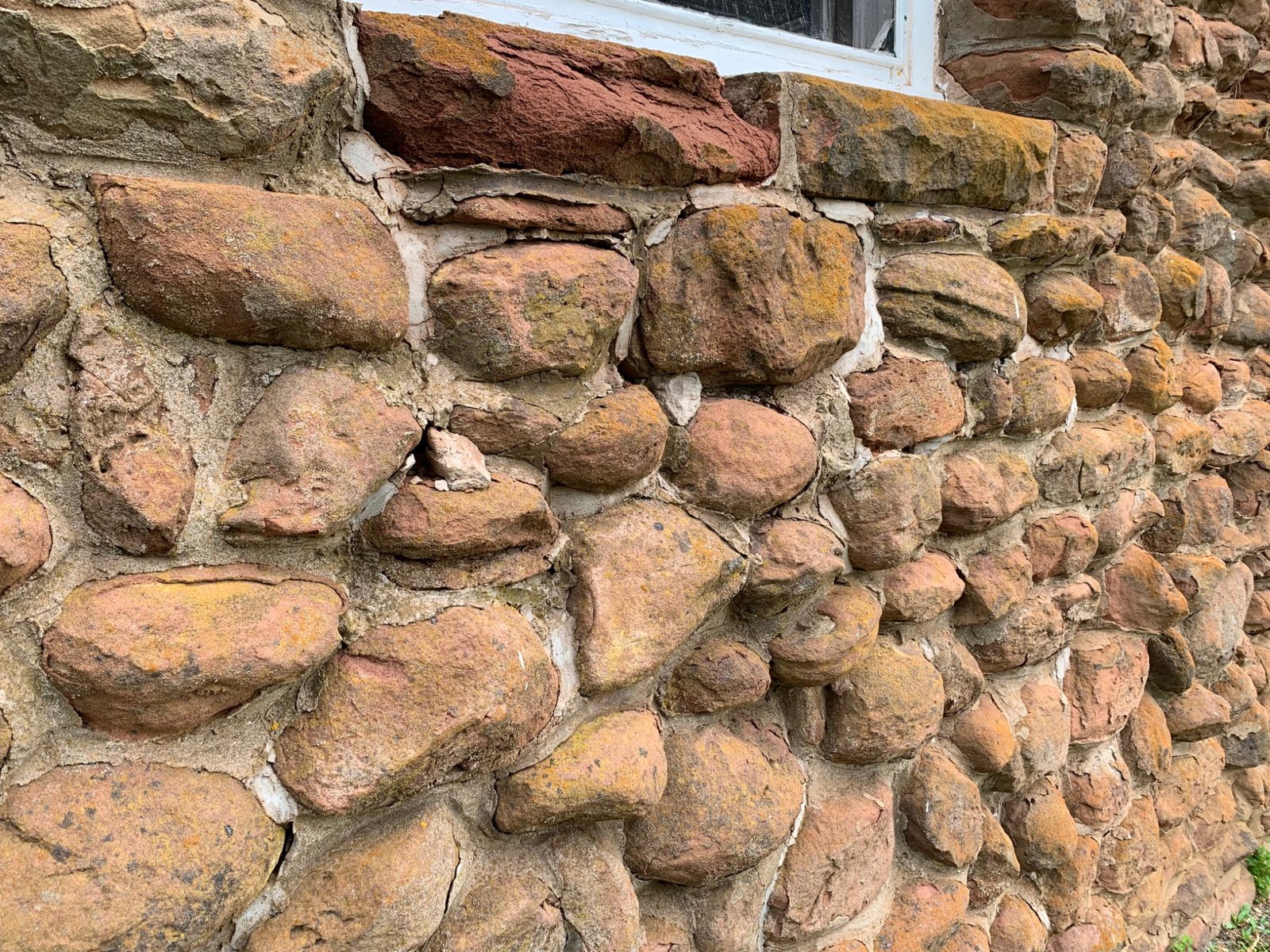
Age is not a demolition order. Repair decisions should be based on depth of damage, stability and performance.
Parks Canada's Standards and Guidelines emphasize evaluating condition, using the gentlest means practical, repairing character-defining elements and replacing extensively deteriorated parts in kind where necessary.
That conservation principle also makes practical sense outside designated heritage work. Selective repairs preserve the material that has already survived decades of exposure and reduce unnecessary disturbance to the wall.
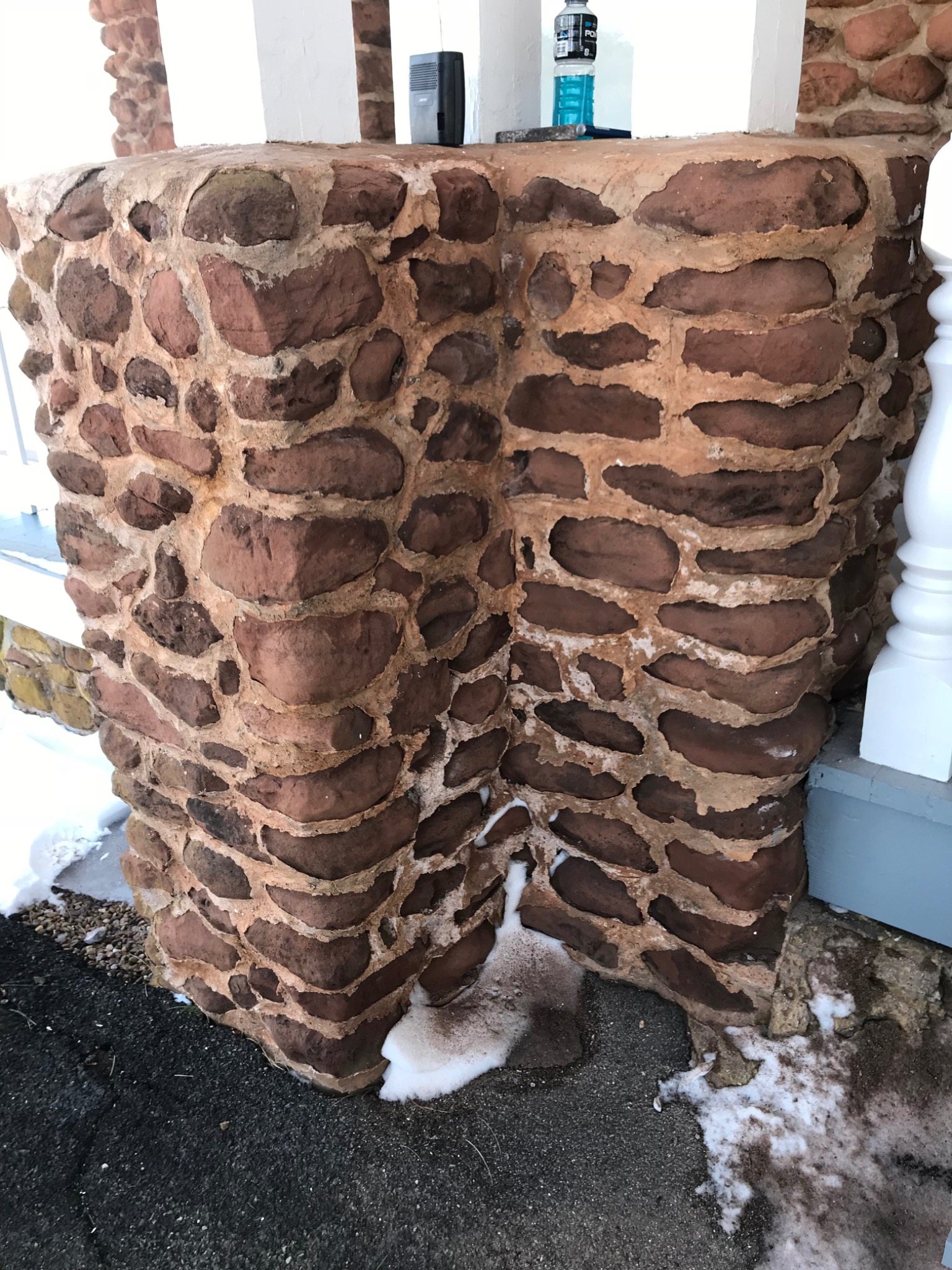
Selective work can be substantial work. Preservation does not mean doing less than necessary, it means avoiding more intervention than the condition requires.
Loose, fractured or displaced masonry requires more intervention than a weathered but stable face.
Shallow erosion is different from deep delamination, major section loss or failure through the full thickness.
Brick or stone carrying an arch, lintel bearing, coping, pier or foundation load deserves a different threshold than decorative veneer.
Failed sills, caps and copings may need replacement if their geometry can no longer move water away.
Correct drainage, flashing, mortar incompatibility or movement before judging whether replacement alone will solve the problem.
On visible or historic work, replacement should consider size, colour, texture, bedding, mortar and joint profile.
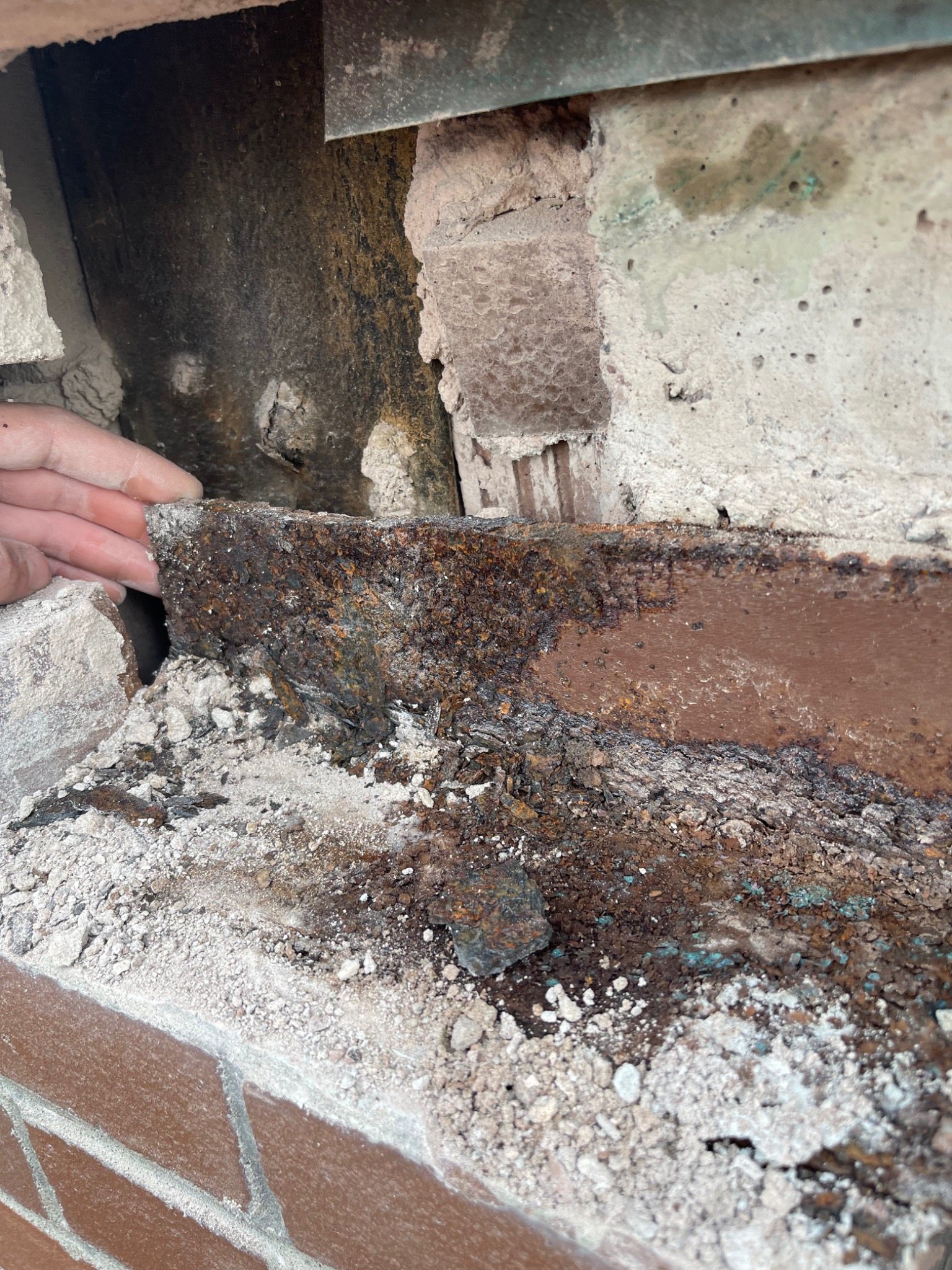
Sometimes the cause is behind the masonry. Replacement brick alone would not correct a corroded or failed support condition.
Common examples include replacing brick above a rusting lintel without replacing the lintel, rebuilding a wet chimney without correcting the crown or flashing, or installing new stone beside a drainage defect that keeps saturating the wall.
Repair scope should therefore identify both the damaged masonry and the condition that caused it.
Hard, dense previous pointing can accelerate edge loss in softer masonry or simply create an incompatible appearance. Where brick or stone remains serviceable, careful removal and compatible repointing may preserve much more original material.
Mechanical removal methods can also damage historic units when used carelessly, which is why the removal technique is part of the conservation decision.
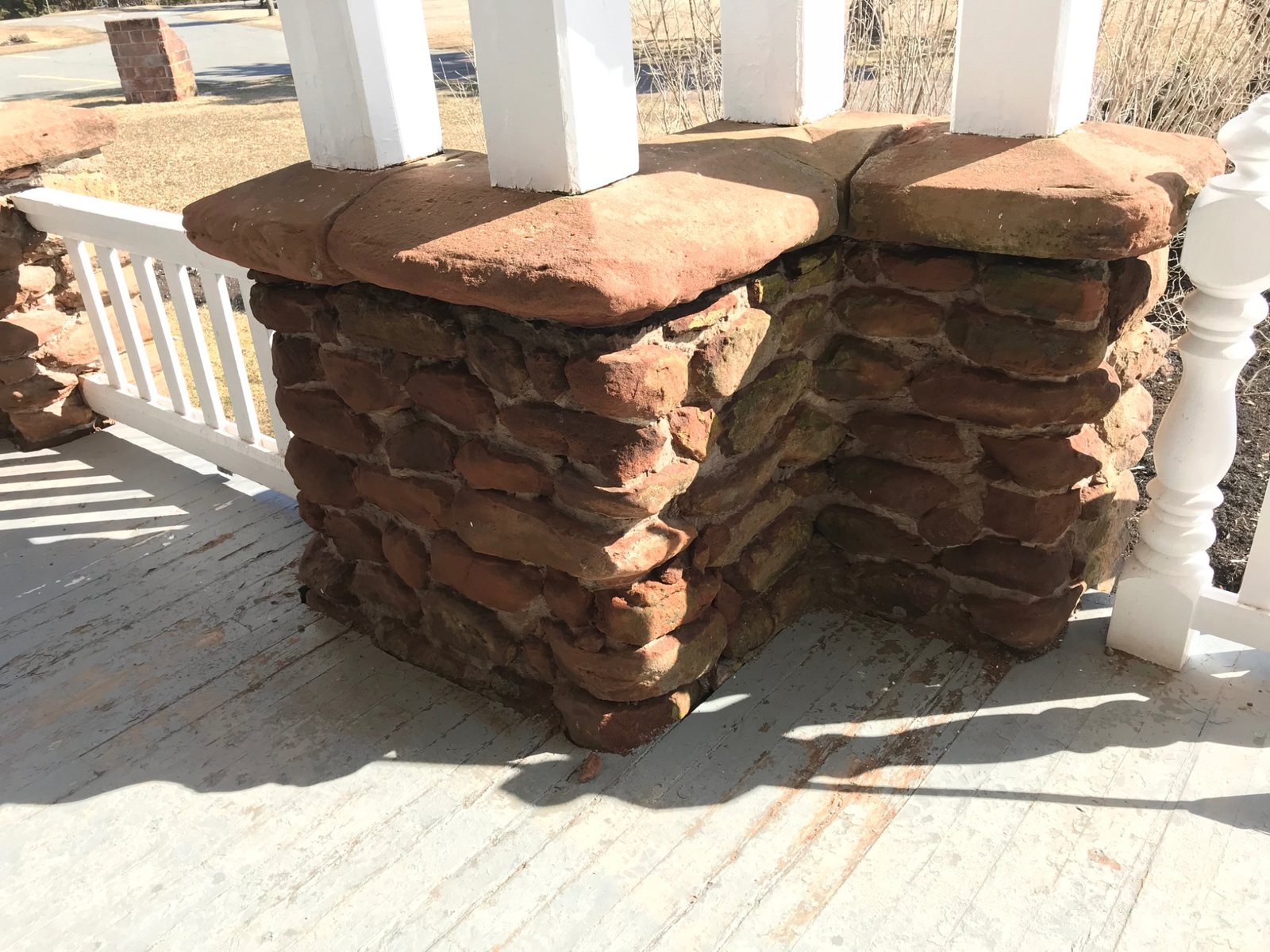
Compatibility can preserve units. Mortar should work with the masonry, not force the masonry to become the sacrificial material.
When a stone wall, chimney or opening has to be dismantled, sound units can often be cleaned, sorted and reused. This can preserve appearance and reduce the amount of new material required.
Reuse is most successful when units are documented and sorted, damaged material is rejected, and the rebuilt wall corrects the support, drainage or movement problem that caused failure.
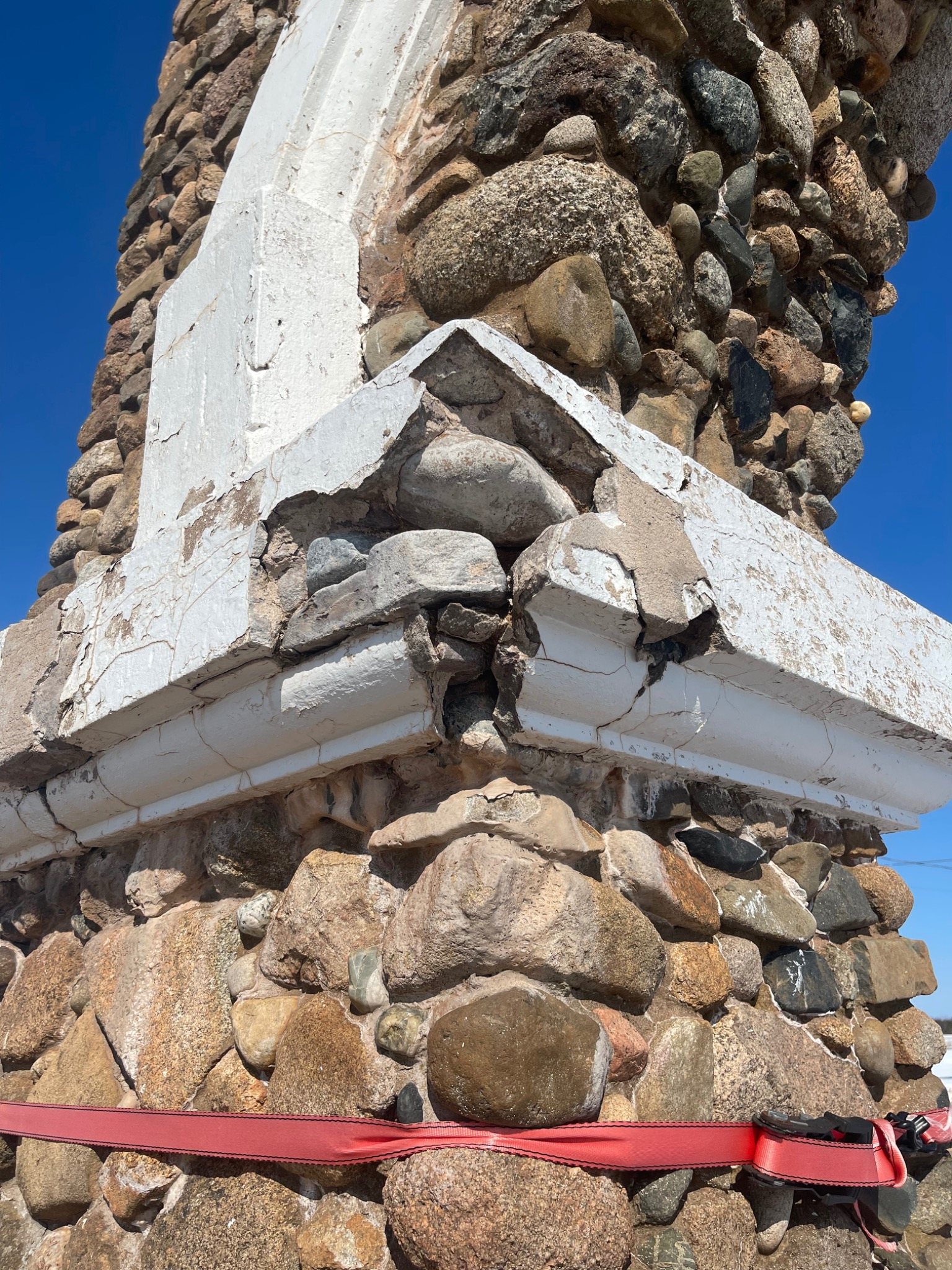
Rebuild only what needs rebuilding. Stabilization and selective reconstruction can retain far more original fabric than wholesale replacement.
Replacement is justified when a unit is unsafe, deeply fractured, structurally ineffective, severely delaminated, too eroded to shed water, or missing entirely. The same is true where the original material has been altered so extensively that it can no longer perform its intended role.
On heritage work, the replacement should be physically and visually compatible and should be based on surviving examples where possible.
Dalvay by the Sea, sandstone conservation and selective repair →
J. David Stewart Armoury, opening up brickwork to replace failed support →
Mont-Carmel monument, stabilization and rebuilding of failed stone areas →
Dean is a third-generation mason with more than 20 years of hands-on experience in masonry repair, rebuilding and heritage restoration.
Last reviewed: August 28, 2026
No. Age alone does not determine whether masonry should be replaced. Many older walls remain serviceable and can be repaired selectively if the units are sound enough and the causes of deterioration are corrected.
Replacement is more likely when a unit has lost structural bearing, is deeply fractured or delaminated, cannot shed water properly, is loose, or has lost so much material that repair would no longer be reliable.
Not necessarily. A wall can be dismantled and rebuilt using a large amount of original stone or brick. Rebuilding describes the work process, while replacement describes how much original material is discarded.
No. Conservation practice prioritizes preserving repairable character-defining material, but unsafe or extensively deteriorated parts can require compatible replacement. The goal is minimum necessary intervention, not preserving failure.
Usually the first question is whether the masonry units themselves remain sound. Incompatible mortar can often be carefully removed and replaced without sacrificing otherwise serviceable brick or stone.
Take wide photographs, close-ups of damage, images of previous repairs, water sources and dated photos where possible. On important older buildings, document original details before dismantling or replacement.
Send the whole wall or feature, close-ups of damaged units, previous repairs, cracks, water sources and any areas that are loose or displaced. DinoMac can help define whether the likely scope is repair, selective replacement or reconstruction.